
Archive: Dec 2023

A room of empty desks. Image by Pixabay from Pexels is licensed under Pexels license.

Racism is found everywhere in America – from neighborhoods to the criminal justice system, and even in classrooms, where Black boys are more than three times as likely to be suspended or expelled from school than White boys are. In a recent article, Dr. Jayanti Owens looked into one possible explanation for this disparity: differences in how Black, White, and Latino public school teachers assign blame to their male students for minor classroom misbehaviors.

Dr. Owens conducted her study on 1,339 teachers who were nationally representative of racial and gender demographics from 295 schools across the United States. To test the impact of teacher blaming bias, Dr. Owens and professional videographers worked with 11 high school-aged, undercover actors (four Black boys, four Latino boys, and three White boys) to film short clips of an actor from each racial group either throwing paper, texting during class, or slamming the door in the classroom. Owens then asked the teachers to evaluate and describe the behaviors of the students in a textbox after viewing one of the nine possible videos (three misbehaviors and three racial groups, creating nine unique vignettes).

Owens found that, on average, White teachers were more likely to assign blame to Black students than White students for identical classroom misbehaviors. However, these assignments varied by the race of the teachers. When White teachers were asked to describe the behaviors of the Black students in the video clips, they tended to use language that assigned blame to the personality of the student, rather than the potential factors outside the student’s control. In contrast, Black teachers assigned blame equally across all student races, while Latinx teachers assigned significantly more blame to Black students than White and Latino students.

Owens suggests that the higher attribution of blame by teachers of color to Black and Latino students could be a result of what she terms ‘tough love,’ where Black and Latinx teachers hold their students of color to higher behavioral standards to “prepare [their] minority students for the realities of racism.”  

Looking beyond the classroom, Owens emphasizes that these different standards for attributing blame can have real and long-term effects on students. The more blameworthy that teachers see their students, the greater the chance that students will be disciplined by the school. Students who are suspended or expelled from school have a higher likelihood of dropping out, which studies show leads to higher rates of incarceration and other lifelong disadvantages. 

An older couple walking closely together along a gravel path on a cloudy autumn day. Image by EddieKphoto from Pixabay is licensed under Pixabay license.

Are you looking for love? Above the age of 60? Well, you’re in luck. With the advent of online dating, older singles are beginning to reenter the dating world. Social science research has mainly focused on the online dating experiences of twenty-somethings, but new research from Lauren Harris explored the dating preferences and patterns of older adults.

Harris interviewed 50 men and 50 women, ages 60-85, through four online dating sites. Three of the sites were for the general public and one was specifically targeted towards older adults. Harris asked participants questions about their motivation and interests in online dating such as: “What are you looking for in a romantic partner?,” “Do you have any deal breakers?,” and “What do you notice when looking through someone’s online dating profile?”

Harris discovered that family caregiving responsibilities played an important role in how older singles viewed potential matches. Oftentimes, older adults will still provide care for their adult children or grandchildren. Harris found that these caring responsibilities actually changed the desirability of singles online in gendered ways. 

Women with family care obligations were seen as less desirable. For example, one of the men interviewed explained his irritation with this dynamic saying, “Why are you teasing me and wasting my time when you have the responsibilities? …It just gets frustrating. Do you want a relationship or do you not? So if you’re always taking care of your grandkids, why are you on a dating site when you don’t have time to get into a relationship?”

In contrast, men who had similar care responsibilities were seen as more desirable to women. As one woman explained in her interview, “A lot of times they’ll say something about how they love their children and their families and spend a lot of free time with their family. I like that. I like a family man.” At the same time, however, if men appeared to be in poor health or have young children of their own their desirability decreased. Women tended to shy away from men which might add to their care work responsibilities. As one woman described,  “What they’re looking for is women to take care of them… Or they’re having health problems. Maybe the wives [were] taking care of them in life or whatever…I’m not your nurse.”

Harris highlighted the gendered role family care responsibilities play in selecting potential love interests at an older age. Many older adults have care responsibilities and are subsequently experiencing unequal gendered impacts on their dating life. Because romantic relationships can be a major source of support and improve overall well-being, the influence of gender inequality on the dating experiences of older adults is important to consider. Technology has allowed more older adults to re-enter the dating world, but it has also highlighted the persistent caregiving double standard. 

A collage of social media icons with a blue haze by geralt. Image from Pixabay is licensed under Pixabay license.

Your Tweets, pictures, and messages may be used against you. Social media, a common way to connect and share our lives, has become a common form of courtroom evidence. Jeffrey Lane, Fanny A. Ramirez, and Desmond U. Patton explored in their research how social media data in criminal trials harms low-income defendants – who are commonly represented by public defenders. The researchers interviewed New York City public defenders, lawyers appointed to represent people who cannot afford to hire private attorneys, about their experiences preparing for trial and defending clients in cases involving social media data. 

The public defenders shared three main disadvantages they experienced while defending their clients. First, they were frustrated by overly broad search warrants that allowed the prosecution to access years of social media data to use as evidence. This overwhelmed public defenders with data, which increased their uncertainty about what evidence might be used, their fear of missing important data, and the amount of time preparing the case. Describing prosecutors’ use of these search warrants, one public defender said: “They were just fishing…they looked at everything and they found something they liked. That’s not how it’s supposed to go.”

Next, public defenders told the researchers that social media companies generally “bend over backwards for law enforcement,” but do not cooperate with public defenders in sharing individual profile data. While law enforcement could request a wide range of data (including data unavailable to the public, like location data), public defenders have limited access to data that may help their clients.

Lastly, public defenders described how social media data is used to paint their clients in a negative light. This pattern of using social media against people even involved using racial stereotypes. For example, one public defender told researchers about a case where the prosecution selected a photo from Instagram to identify the defendant at trial. Although the Instagram account had plenty of options, including family pictures, the prosecution selectively chose a photo that made the defendant appear ‘thuggish’ and ignored others. 

Due to these disadvantages, public defenders in this study said that they consistently had to defend against social media and lacked opportunities to use social media data to help their clients. While social media data could negatively impact any defendant, this research suggests that low-income defendants are particularly vulnerable due to the time and resources it takes to review social media data, putting increased strain on public defenders.  

A man driving a forklift in a warehouse, unloading a pallet of drinks. Image by Elevate from Pexels is licensed under Pexels license.

In the United States, every state has different laws regulating the strength of unions. About half of states have anti-union laws – somewhat deceptively called “Right to Work” (RTW) laws – that make union membership and the payment of union dues for workers optional and limit other union organizing. In contrast, pro-union states mandate workers join unions at workplaces with existing unions and pay dues. Supporters of these RTW laws argue that workers should not be obligated to join a union at their workplace or pay dues. Opponents argue all workers at unionized workplaces should have to join the union because they benefit from bargaining agreements, including pay, benefits, and working conditions. 

Tom VanHeuvelen compared these RTW laws in anti-union states and pro-union states using a nationally recognized data set of 5,000 American families and 18,000 individuals to see if there were different economic outcomes for workers. His results suggest that pro-union policies are good for workers whether they are in unions or not. Specifically, VanHeuvelen found that states with RTW laws had lower average pay (5-12% less), lower union premiums (benefits, working conditions, promotion policies, etc.), and more pay inequality between employees. In other words, these anti-union states had poorer economic outcomes for workers than pro-union states.

VanHeuvelen suggests that anti-union laws have lasting impacts on the overall economy and political landscape of states. To support his theory, VanHeuvelen looked at workers who travel between states for work, e.g. someone who lives on the border of two states: residing in a pro-union state, but working in the neighboring anti-union state. This analysis revealed a sharp decrease in average pay and pay equality in anti-union states — even when workers lived in a pro-union state but worked in an anti-union state. 

Broadly speaking, this research suggests that so-called ‘Right To Work’ laws not only lead to a weaker union presence but also that workers in RTW states are actually somewhat worse off than those in ‘pro-union’ states. For those who were optimistic about RTW laws benefiting workers, it might be time to rethink policies for both unions and workers.

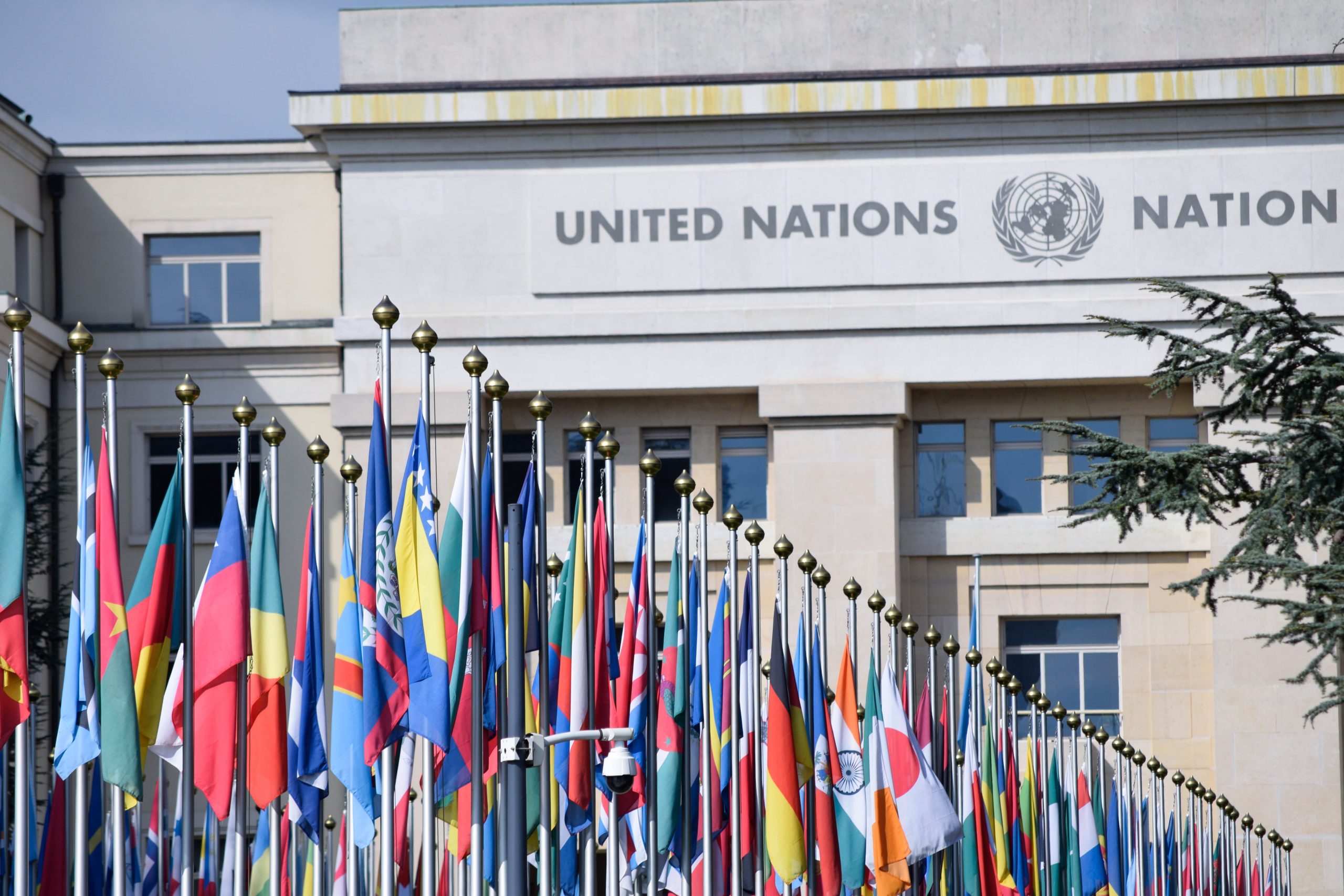
A building with United Nations carved into the top in the background, with flags from numerous countries in the foreground. Image by Xabi Oregi from Pexels is licensed under Pexels license.

How do the big, rich countries usually get what they want even when international organizations encourage representation and try to level the playing field? Many may assume it is the usual exercise of wealth and political power on the global stage. However, recent research from Danielle Falzon reports that in the case of the United Nations another, overlooked factor may be at play: namely, that the standards required for delegates and delegations present unique challenges and barriers for those from developing countries.

During UN sessions, representatives of various countries hold a series of meetings concerning each discussion topic. To be a part of these discussions, nations must maintain delegates and delegations to represent their country on each of these specific issues. In observing over 200 hours of climate negotiations at the United Nations and conducting interviews with dozens of representatives, Falzon identified at least four factors that affect a delegation’s involvement and impact: the size of the delegation, English-speaking language requirements, knowledge and expertise in Western science and legal standards, and long-term, multi-year representation. Suffice to say, each of these requirements are difficult for representatives and delegations from poorer, less developed nations to meet consistently.

Many interviewees focused on the lack of consistent and English-proficient representation, and especially the smaller number of delegates that developing countries were able to send. As a representative from a developing country explained:

“Just the amount of people that can devote time to a single issue makes such a huge difference… . It’s an enormous inequality. People who are tired, haven’t slept or eaten … they can’t argue as well as people who have.”

Falzon argues that these standards and expectations create a systemic inequality in access and representation at the UN that calls into question the status quo of the organization’s common operating practices. Do negotiations have to take place in person and require that delegates are always in attendance in order to have say? This sort of institutional change, while it would be a large transition, may make it easier for developing countries to have their voices heard.