
Archive: Apr 2020

Zafer Buyukkececi, Thomas Leopold, Ruben van Gaalen, and Henriette Engelhardt, “Family, Firms, and Fertility: A Study of Social Interaction Effects,” Demography, 2020
A woman holding a newborn baby
Photo by Jake Guild, Flickr CC

Everyone is stuck inside, so we will see a baby boom in nine months . . . right? There’s actually not a lot of evidence that interruptions to normal life cause baby booms, but there is evidence that the decision to have kids spreads through personal networks. In a recent article, four researchers found new evidence that both siblings and co-workers affect individuals’ fertility decisions. 

Zafer Buyukkececi, Thomas Leopold, Ruben van Gaalen, and Henriette Engelhardt used detailed statistical data from the Netherlands to identify how two networks, siblings and co-workers, affect whether or not an individual decides to have a baby. The longitudinal data covers the entire Dutch population and allows researchers to link individuals to families and workplaces. 

Demographers have long known that siblings and coworkers make similar decisions about fertility. Those similarities could be because siblings and coworkers share contexts and experiences, or because the choices of those around us actually help us make our own choices. In this study, the researchers found evidence that the actions of individuals we know does change decision-making, at least for women.

Women were more likely to become mothers after others in their sibling and colleague networks became parents. The sibling effect was stronger, but because most people have more colleagues than siblings, more births in colleague networks might make up for the strength difference. Colleague effects were only significant for women with other female colleagues. 

Networks affect fertility decisions in part because individuals learn what to expect from others. So, rather than a universal baby boom, expect potential mothers to be watching the experiences of their siblings and coworkers during this pandemic.


Image: low camera angle photo of church pews facing the front of a sanctuary. Image courtesy of pixabay/marcino.

The Rev. Dr. Martin Luther King Jr. famously proclaimed that Sunday mornings contain the most segregated hour in America. MLK was talking about churches in 1960. Today, a small but growing reality is a move toward multiracial churches. These churches create a unique situation in which Black pastors have a seat at the table in predominantly white institutional settings. But, as recent research demonstrates, white pastors benefit more from leading a multiracial church. 

 Christopher Munn conducted a qualitative analysis using a national, stratified sample of 121 religious leaders to understand how race shapes inequality in multiracial churches. He looked at multiple social contexts (i.e. mentorship, leadership positions) and material resources (i.e. grant funding) that each leader described, weighing each social relationship by its potential benefit and perceived durability. Munn found clear racial differences in social capital, or the resources that come from social relationships.

First, white pastors hoard capital. They trap resources by sharing primarily with other white network members. This looks benign on the surface, as it commonly takes the shape of things like peer mentor programs, sharing social ties, and informal exchanges of resources in general. But access to these embedded resources is mostly limited to white men, and to a lesser extent white women. 

Second, Black pastors found a more symbolic seat at the table, in which their contributions were devalued and their access was restricted. For example, they could be paid a small sum for leading a diversity workshop for other church leaders, but were unlikely to find the more sustainable funds that white pastors were more able to access. 

In a telling example, a white male pastor serving on the board for a local healthcare system befriended the hospital’s CEO, and now his church’s nonprofit housing initiative receives $100K/year from that hospital. Racial inequality in wealth and access continues to matter, even in the leadership of religious organizations. 

Photos of female Democratic presidential candidates Amy Klobuchar, Elizabeth Warren, Kamala Harris, and Tulsi Gabbard. Photos via Wikipedia.

In October there were four women out of twelve presidential candidates on the Democratic debate stage, and Joe Biden has committed to selecting a woman as his vice president. But women are still underrepresented in political and business leadership. Why does this continue to be the case, 100 years after female suffrage and 50 years after the women’s movement went mainstream? New experimental research finds that anticipating harsh consequences for failure may be one reason women do not say yes to leadership opportunities.

Susan Fisk and Jon Overton performed three studies to test how the belief that female leaders are punished more harshly than men affects women’s leadership ambitions. They first confirmed through a survey that both men and women believe female leaders will face harsher consequences for failure. They then tested whether “costly” failure would decrease leadership ambitions as compared to “benign” failure, using survey questions about whether the respondent would be willing to take on a hypothetical leadership opportunity at their job. In the “benign” circumstance the respondent’s supervisor had encouraged them to take the leadership opportunity and had expressed that the respondent could return to the original team if the initiative failed. In the “costly failure” circumstance the respondent had not received support from their supervisor and did not know what would happen if the initiative failed. 

Both men and women were less likely to say yes to the leadership position in the costly failure circumstance, but women’s leadership ambitions decreased an additional 20% over the men’s decrease. These results demonstrate that simply encouraging women to say yes to more opportunities misses why they might say no. Women in the workplace are aware that they may be judged more harshly and face more reputational or employment consequences if they fail. This study helps us understand the micro-level reasons behind the stalled gender revolution and how gender inequality can continue to exist within gender-neutral organizations.  

Photo by Lori Newman, public domain

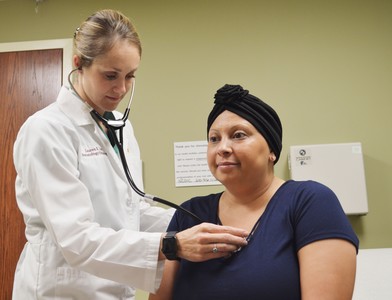
We know that children’s health depends on their parents in many ways, from genetics to life experiences. New research shows that the reverse is also true: children’s experiences impact their parents’ health. Specifically, this research shows that children’s experiences of discrimination influence their mothers’ health. 

Cynthia G. Colen, Qi Li, Corinne Reczek, and David R. Williams used data from the National Longitudinal Study of Youth, a survey following women and their children. They looked at mothers’ self-rated health assessments from the mid 2000s, when mothers were 40 and 50 years old, to determine how their health changed. The sample of mothers’ health assessments varied significantly by race. By age 50, only 17% of white mothers reported poor health, while 31% of Black and 26% of Hispanic mothers reported poor health. 

The researchers also looked at data on children’s experiences of unfair treatment when the children were young adults. Unfair treatment fell in two categories: major experiences or “acute discrimination,” and everyday or “chronic discrimination.” Acute discrimination included specific incidences like being unfairly fired or denied promotion and being unfairly searched or abused by police. Chronic discrimination highlighted the frequency of unfair treatment, like how often respondents had been treated with less respect than others, called names or harassed, or how often other people had treated respondents as if they were not smart. 

Overall, children’s exposure to discrimination — both acute and chronic —  was associated with significant declines in their mothers’ health at midlife (from age 40 to 50). This is an important finding because most research on intergenerational health focuses on how parents affect their children’s health. Studies like these can help us to understand how disadvantage is reproduced through generations.

The researchers wondered whether Black and Hispanic mothers’ poor health was a result of their children experiencing more discrimination than children of white mothers. They found this to be true for Black mothers, but not for Hispanic mothers. Specifically, children’s experiences of discrimination explained about 10% of the Black-white health gap, but very little of the Hispanic-white health gap for mothers.

In addition, Black mothers’ health declined at a slower rate compared to white mothers’ health, even when their children experienced high levels of discrimination. One explanation for this finding is that Black mothers spend a lifetime preparing to and dealing with discrimination, whereas white mothers may not and thus have fewer coping skills to deal with feelings of helplessness when their children experience discrimination.

This research helps us to understand how discrimination is more than just an individual experience. Stressors, like unfair treatment, can have “spillover effects” — in this case, leading to declines in the health of family members.

A young girl about to receive a vaccine. A parent holds her hand.
Photo by SELF Magazine, Flickr CC

The anti-vaccine movement has persisted for some time, perplexing scholars and medical practitioners alike. Based upon anti-vaxxers’ strong sentiments, one would expect these same parents to reject other pharmaceutical interventions. In a recent study, however, Jennifer Reich finds that parents often have contradictory views on their children’s health care. These parents use pharmaceutical interventions for some illnesses while simultaneously refusing to vaccinate their children for others.

Reich interviewed 34 parents from 2007 to 2014 in Colorado (the state with the lowest rates of vaccination). These parents had challenged or rejected expert recommendations on vaccines but consented to other forms of medical intervention for their children in the cases of ADHD medication, seizure disorder medication, and cancer treatments. 

Reich finds that anti-vaxxers “call the shots,” but they don’t make these decisions alone. Parents’ decisions regarding medication use for their children results from individual, interactional, and institutional contexts. Thus, the refusal to vaccinate is not a categorical rejection of pharmaceutical intervention.

Reich finds that some parents used individual strategies in which they differentiated between necessary treatments to protect their children from harm, such as ADHD medicine, and unnecessary medications, such as vaccinations. Alternatively, for some parents, negotiations with healthcare providers led to the use of medication. For example, one family shopped for healthcare providers they liked and felt respected by, and paid more for medications that they believed were safer.

Parental consent to medication may also result from institutional insistence. For example, one family was convinced to let their child receive medical treatment for cancer through the threat of legal coercion and the hospital requirement for all patients to receive the flu vaccine. 

Finally, Reich finds that privileged parents are both more likely to challenge expert advice regarding vaccines, and more likely to receive respect from healthcare providers and have their views taken seriously.