
Archive: Dec 2019

Jessica Finlay, Michael Esposito, Min Hee Kim, Iris Gomez-Lopez, and Philippa Clarke, “Closure of ‘Third Places’? Exploring Potential Consequences for Collective Health and Wellbeing,” Health & Place, 2019
Photo of men in a barbershop via pxhere.

Third places, or gathering spaces that are neither work nor home, are important social sites for many Americans. Third places can often act as buffers against loneliness, physical inactivity, and alienation. Yet since the start of the Great Recession, communal spaces like nail salons, diners, barbershops, and sites of religious worship have closed at increasing rates across the U.S. At the same time, other categories of third places,
such as libraries and commercial banks, have grown in number. In a new paper, researchers highlight the role of third places in promoting wellbeing and public health. 

By analyzing U.S. business trends from the National Establishment Time-Series (NETS), the authors examine changes in sectors including food and beverage, civil and social organizations, religious institutions, and arts and entertainment. Almost all categories–especially privately-owned establishments–have declined since 2011. Some of the declines are striking (for instance, grocery stores, bakeries, farmers’ markets, and butcher shops decreased by 23 percent and hobby shops by 28 percent) and seem counterintuitive, given ongoing and persistent gentrification movements and their emphasis on shopping local.

Against a backdrop of the “retail apocalypse,” rising rents, and the food delivery boom, what do widespread third place closures mean for health and well-being? The authors find that by creating a sense of belonging, third places can build security and rapport. As a “home away from home,” third places not only foster social connections, but also encourage physical activity, particularly for the elderly. Over time, some third places have evolved to act as community centers, as in the case of some libraries which train staff to administer Narcan to those who have suffered an opioid overdose.

This study took a “bird’s eye” view of national business trends, and raises interesting questions about when and where third place closures are occurring, whose role it is to protect against them, and how they impact communities. It provides one example of how increased attention on vanishing third places matters not only for socialization and wellbeing, but for our understanding of the social and geographic determinants of health.

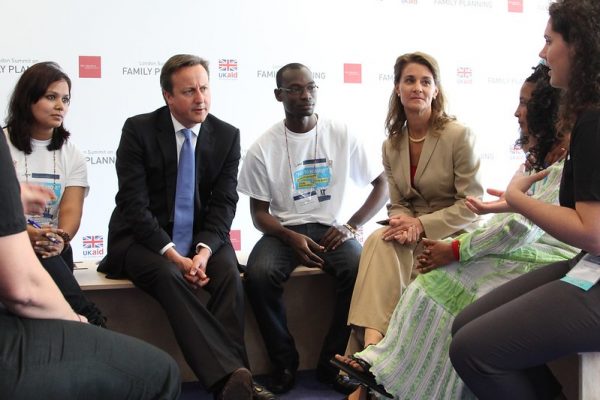
Photo of a bronze cast of an intrauterine device (IUD). Photo by Sarah Mirk, Flickr CC

Originally posted February 5, 2019.

Throughout history, concerns about women’s sexual behavior and reproduction have often been tied to mental health. For example, in the Victorian era, doctors believed that women’s bodies were incapable of physical exertion and mental activity, and they diagnosed many women — typically white women– with “hysteria.” Hysteria was a catch-all term often used to police women’s sexuality and bodies, and was characterized as a mental disorder in the American Psychiatric Association’s Diagnostic and Statistical Manual until 1980. While diagnosing women with hysteria may seem like an outdated practice today, mental health professionals still exercise control over women’s sexuality and reproductive choices. A recent study finds that clinicians today use both coercive and non-coercive techniques in facilitating reproductive decisions for their clients — especially female clients — diagnosed with mental illnesses like schizophrenia and major depression.

Using interview data with 98 patients at two state hospitals and three community mental health centers, Brea Perry, Emma Frieh, and Eric Wright examine clients’ interactions with service providers and family members regarding their sexual behavior and contraceptive use. The authors find that mental health professionals use strategies ranging from full client participation (what the authors call “enabling”) to no input by the client (what the authors called “coercion”).  

Providers used coercive techniques more frequently with women than with men. In the most extreme cases, this took the form of unwanted and traumatic sterilization procedures. More frequently, providers and female clients’ family members did not include women in key decisions, provided misinformation, or did not gain consent for the birth control medications prescribed. For male clients, providers used education through classes or group therapy more frequently. While these sessions often framed sex as risky for male clients, this technique allowed men much more reproductive freedom than many women experienced. The researchers also found that providers used “enabling” strategies (those that included full client participation), like  providing condoms or sex starter kits, for both genders at similar rates.

These findings demonstrate that women’s mental health remains inextricably linked to concerns about women’s bodies and their sexual behavior. Gender norms and expectations, especially those regarding sexual behavior and reproduction, have enduring impacts on our understanding of mental illnesses, as well as the medical decisions made for or by people diagnosed with a mental illness. To avoid these patriarchal patterns in the the future, Perry and colleagues suggest providers focus more on sex positivity rather than risk avoidance for their clients.

The 2012 London Summit on Family Planning resulted in Family Planning 2020 Initiative (FP2020). Photo by Russell Watkins/Department for International Development, Flickr CC.

Supporters of global family planning initiatives argue these programs can empower women in (mostly) low-income countries by giving them options to control their reproduction. New research shows that the structure of these programs may actually constrict women’s choices. 

Leigh Senderowicz conducted 49 in-depth interviews with women in a low-income sub-Saharan African country that is engaged in a variety of family planning initiatives. These initiatives are part of the global FP2020 initiative  — its goal is to add 120 million contraceptive users worldwide by the year 2020. The focus and structure of these initiatives shape how health clinics operate and how providers interact with patients. For example, health centers are evaluated based on national- and district-level quotas for contraceptive uptake. Providers can only get “credit” towards these quotas if a patient accepts a form of contraception, not if providers inform the patient about contraceptive options and the patient declines. In other words, the structure of the programs incentivize providers to convince patients to use contraception.

Senderowicz 2019

In turn, providers use a range of coercive tactics to convince women to use contraception. On one end of the spectrum, providers offer a limited selection of contraception options to patients. In this study, the most common forms were contraceptive pills, implants, and injectables. Instead of tailoring the method to a patient’s specific needs, providers primarily emphasized the advantages of a few long-term contraceptive methods without giving other options, and sometimes even failed to disclose risks of use. Few women in this study were ever told about barrier methods, IUDs without hormones, or fertility-based awareness methods. 

Providers also used more overt forms of coercion, like threatening to deny women future care and refusing to remove an IUD at one woman’s request. These actions do the opposite of empowering women through introducing contraception as one option of many. Instead, these family planning initiatives’ focus on quotas meant that contraception was the only option.

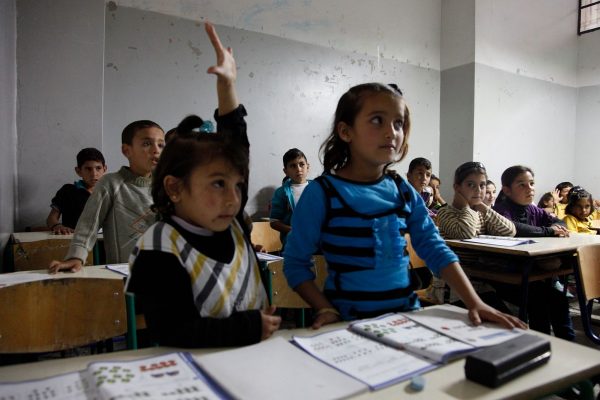
Syrian refugee children study in a Lebanese school classroom. Photo via Wikimedia Commons.

Today, the average length a refugee spends in a foreign country is between 10 and 25 years, which is three times longer than it was 30 years ago. Historically, refugees sought temporary residence in a foreign country until it was safe to return. But because violent conflicts are lasting much longer, refugees often never return home. Thus, host countries must decide what the future looks like for refugees. Countries view education as an agent of socialization — creating ideal citizens and incorporating children into the nation’s fabric — which makes access to education a key factor in how a country will seek to integrate refugees. 

In their most recent article, Dryden-Peterson and authors ask: if the purpose of education is to create a better future for students and the nation, then what does this look like in the context of refugee education? The authors study 14 refugee-hosting nation-states, conducting interviews, participant observation, and content analysis of educational documents and policies. Global actors like the UN focus on getting refugees into national education systems, but the authors find that inclusion means different things to different countries.

Countries like Malaysia and Bangladesh do not officially resettle refugees, so they assume refugees will leave the country and not become integrated into their societies. As a result, refugees attend their own schools. In countries like Uganda and Pakistan where the refugee population has become urbanized instead of living in isolated refugee camps, refugees are incorporated into the existing school systems due to convenience. While these countries recognize the prolonged exile of refugees, these countries believe that refugees’ long term futures would eventually be outside of the host country. Lastly, in host countries like Chad, refugees are integrated into schools because it is assumed that refugees will integrate into their society. This model of inclusion is driven by a lack of predictable external funding, and thus, national actors integrate refugees into schools to mitigate some of the volatility of international funding. 

Despite these national differences, at the school level nearly all schools struggled over whether and how refugee education was to enable belonging. The inclusion of refugees into their host country’s national education systems is merely inclusion into a low quality education system. Thus, the authors find that just because refugees have been able to access education through these different systems, education does not promote a route to belonging, nor does it guarantee a quality education or better future.