Archive: Sep 2018

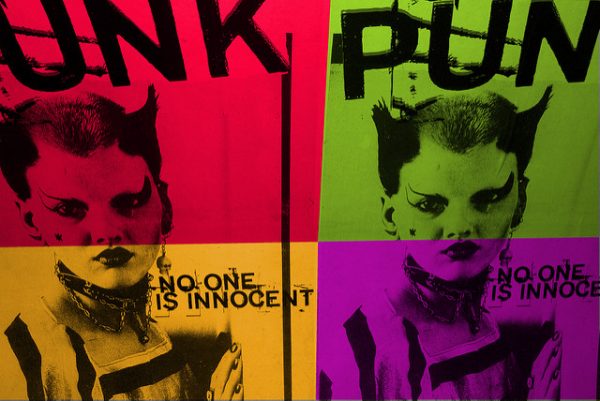
Punk pop-art. Photo by Mihai Bojin, Flickr CC

Counter-culture movements like punk have gone global, but that doesn’t mean they look the same across the world. Bands like the Ramones long defined the U.S. punk scene, while recent scholarly work documented the emergence of Muslim punk rock. In new research, Paula Guerra investigates the distinct, local elements of of the punk movement in Portugal by examining the DIY (do-it-yourself) elements of Portuguese punk, which emphasize small-scale or handmade production of fashion and merchandise. These elements show how the rise of Portuguese punk included both participation in an interconnected “world culture” after years of isolation, as well as a youth counterculture resistance to the growth of capitalism.

In Portugal, the punk movement caught steam in the 1970s during a democratic shift that followed decades of fascism. Guerra conducted interviews with individuals who participated in this punk movement, speaking with over 200 fans, musicians, and producers or distributors of music, art, and clothing. Guerra then assessed what punk meant to the participants. Most commonly, they saw punk as resistance. Others desired to move past resistance into the reconstruction of society entirely. In this sense, DIY serves as a physical example of their desire to create a new, more authentic world. The production of punk products, like homemade belts or band merchandise, physically represents their counter-culture, anti-capitalist message.

Guerra’s findings about Portuguese punk provide deeper insight into a post-revolutionary context while challenging assumptions about counterculture. Local manufacturing of punk merchandise helped industry grow after decades of fascist isolationist policy, while also serving as a way to resist capitalism as economic systems shifted. In other words, Guerra captures how movements are simultaneously global and local — though they might appear to be primarily global at first — emphasizing the need for comparative understandings to expose unique, localized elements of resistance.


Headstones in a Cemetery. Photo by Bart Everson, Flickr CC

The expansion of the U.S. criminal justice system is often justified in the name of public safety. While incarceration does have crime-reducing capabilities, it also has numerous negative effects, such as decreased likelihood of employment and other “collateral consequences” for those incarcerated. Thus, it’s hard to say whether incarceration does more good than harm. This is a tricky question to answer, as the outcomes of incarceration are often hard to compare. However, Michael Light and Joey Marshall use a bevy of administrative panel data to compare whether incarceration saves more lives through reducing homicides than it costs lives through increases in infant mortality.

Overall, they find that the incarceration rate both decreases the homicide rate and also increases the infant mortality rate. The authors estimate that the “net benefit” of incarceration is much smaller when the mortality costs are taken into account. In other words, there seems to be a very weak or even non-existent return on incarceration when considering mortality. Thus, while it appears that incarceration does indeed “save lives,” incarceration also causes deaths, muddying the picture of the benefits of imprisonment. This research challenges claims that increased imprisonment will greatly enhance public safety and human well-being, and gives a glimpse into the varying effects the criminal justice system can have.

Graffiti on a dumpster in Minneapolis, MN. Photo by De Andre’ T. Beadle

Graffiti is common in urban spaces. Some city residents view it as art, many are apathetic, and others think it as a major nuisance that must be dealt with. Researchers often frame graffiti as either a form of vandalism that facilitates more disorder and crime or as acts of resistance. In recent research, however, Theo Kindynis argues that graffiti is a much more complex subculture, and graffiti creation is a social and symbolic practice that both shapes and is shaped by urban spaces.

Kindynis draws from three years of ethnographic research among graffiti writers in London. Most of his participants identified as “bombers,” and many were well known to local authorities as “serious graffiti vandals.” Some had even served jail time for graffiti writing. Graffiti writers’ main goal is to achieve subcultural status by “getting their name up” throughout the city, by placing their graffiti in every district and public transit line in the metro. The most important form of graffiti to writers is the “tag” or the bombers’ personal signature of letters, often alongside other embellishments like arrows, crowns, or RIP in remembrance of a deceased writer. The bombers in Kindynis’ research see their work as much more than simply “scribbles and scrawls.” According to one participant, writing often has “energy” or “presence” that is representative of each writer’s personal style and background. In other words, tags and other forms of graffiti are important subcultural symbols.

Tracks, and especially subway cars, are the most prized canvas for bombers in London, and the British Transport Police (BTP) respond by cracking down on graffiti crews there. Kindynis argues that this tough approach had some unintended consequences, and actually led to more destructive practices when graffiti writers retaliated with practices like etching, scratching, and using paint thinner. So on one hand, graffiti offers bombers a new way of envisioning their social surroundings — including their own language and alternative histories of urban space development and transformation, while on the other hand, graffiti tends to be at odds with social control in urban spaces and thus faces constant threat. 

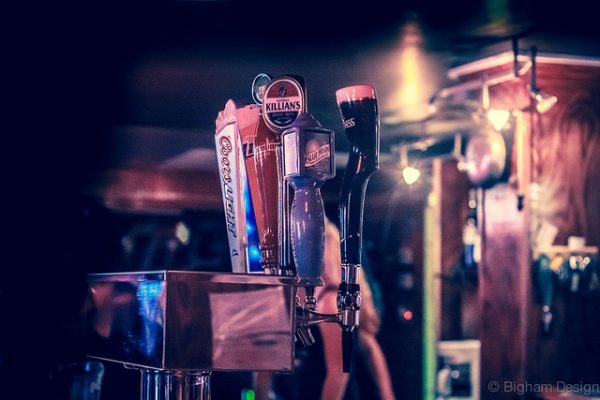
Beer Tap at a Bar. Photo by Ted Bigham, Flickr CC

The gender gap in alcohol consumption is narrowing — research suggests women now drink just as much as men. This change may be partially attributed to declining prices or targeted efforts by alcohol companies to market their products to women. But just because women are drinking more, doesn’t mean that alcohol is marketed equally, especially when it comes to beer. New research finds that consumers consider certain beers masculine and others feminine,  and women often face stigma when choosing a beer, while men rarely do.

The author first analyzed references to gender and beer on 50 beer blogs, then surveyed 93 people at craft beer bars near New York City. She asked participants what they think of when they hear “feminine beer” or “masculine beer” and what kind of people they associate with each term. Both men and women agreed that feminine beer is light or flavored, while masculine beer is strong and heavy. Following this logic, fruit beers or coffee-flavored beers are feminine, and IPAs and unflavored lagers are masculine. While men are typically thought to have more knowledge about beer, female participants used technical terms and craft beer jargon about taste profiles and beer categories far more often than the male participants.

However, the way men and women view beer consumers differed considerably. For example, female participants praised women who prefer masculine beer (“she’s a badass bitch”), while men tended to sexualize women who prefer masculine beer. Some men thought it made women sexier, while others thought it made women too much like “a dude.” Participants did not scrutinize men’s choice of beers. They agreed that if a man orders a feminine beer he’s making an informed choice, but if a woman orders it, she knows nothing about beer. In other words, “any beer can be the right beer when men are consumers,” but women lose no matter what beer they choose.