

The TtW12 Twitter back channel. Photo by Rob Wanenchak
Theorizing the Web 2012 was great. Everyone involved did a bang-up job. I certainly learned more in a single day than I usually do at weekend-long establishment conferences. I have said a lot about conferences (here, here, and here) as have fellow cyborgologists (Sarah, Nathan, and PJ). All of these posts have a common thread: academia is changing, but conferences seem out of date in some way. They are needlessly insular, they rely on hefty attendance fees that are increasingly cost-prohibitive, and they rarely take advantage of social media in any meaningful way. The relative obduracy of conference styles come into high relief once they are compared to the massive changes to institutional knowledge production. Universities have adopted many of the managerial practices of private companies. They are also acting more like profit-seeking enterprises: putting massive resources into patenting offices and business incubators, hiring less tenure-track teaching staff, and employing armies of professionalized managers that run everything from information technology services to athletic facilities. Conferences, on the other hand, have seen few innovations beyond what I call Tote Bag Praxis. more...
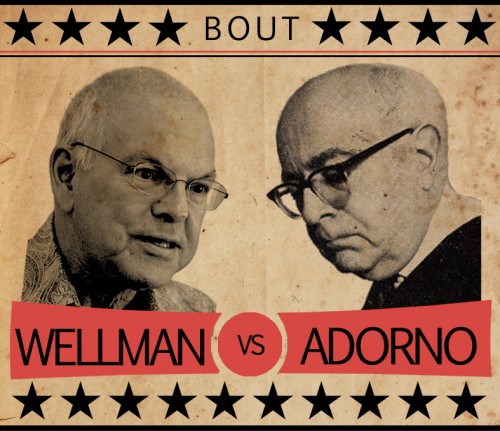
On September 18th, 2011, Barry Wellman, the early and rather prescient scholar of the Internet, posed a somewhat tongue-in-cheek question to the Communication and Information Technology Section of the American Sociology Association (CITASA): “‘Critical’ – aren’t we all?” This post was precipitated by a call for papers for special issue of tripleC entitled Marx is Back: The Importance of Marxist Theory and Research for CriticalCommunication Studies Today (no affiliation with the author). Specifically, the call invited papers that address (my emphasis):
what it means to ask Marx’s questions in 21st century informational capitalism, how Marxian theory can be used for critically analyzing and transforming media and communication today, and what the implications of the revival of the interest in Marx are for the field of Media and Communication Studies.
Shortly after it was sent, Wellman responded to the call, saying:
Not meant personally, but the use of the word “critical” by a subset of scholars always bothers me as leading to unconscious smugness? If I’m “critical”, your lot isn’t? Who, except flacks and twerps, isn’t critical? Can we criticize the criticalists?
This sparked a debate over the utility and appropriateness of the phrase “critical theory.” Critics of the phrase raise the following objections: more...
Just came across the personal blog of Nick Pearce, a scholar at Durham University’s Foundation Centre, who is doing some very interesting research on higher education, technology, and zombies. I discovered his website while researching existing work on zombies and higher education, and I discovered that he is one of the scholars putting together the much-awaited anthology “Zombies in the Academy: Living Death in Higher Education” (to be published in 2012).
I was particularly drawn to an old post on “Zombies, Technology, and Capitalism,” because of Pearce’s use of the zombie metaphor in depicting some of the recent trends in higher education. He states rather eloquently:
The very general thrust is that VLEs (such as Black(magic)board, and VOODLE) replace face-to-face ‘human’ learning with undead digital teaching. These VLEs have rapidly spread across the sector (virally?) without being explicitly demanded by either teachers or students. The embedded pedagogy of these VLEs is restrictive and they offer a level of social control and conformity not possible with more traditional teaching practices.
In Pearce’s words, the Virtual Learning Environments (VLEs) of today’s academy sap the human element out of the classroom (or computer screen in this case). more...
About Cyborgology
We live in a cyborg society. Technology has infiltrated the most fundamental aspects of our lives: social organization, the body, even our self-concepts. This blog chronicles our new, augmented reality.