Sociologist Margee Kerr (Faculty Lecturer at the University of Pittsburgh) was quoted in an Axios article on why people either love or hate horror movies. Kerr discusses how personal experience can affect how people respond to a jump scare. If you have positive memories of Halloween fun, you may have many “environmental context cues that tell you that in this situation, [the fear response] feels good,” Kerr explains. However, people who have experienced life-threatening situations may avoid fear in any situation.
In rural Norway, a haunted grocery store (reportedly plagued by flying potatoes, electrical mishaps, and ghostly figures) captured the attention of sociologist Lars Birger Davan (PhD Candidate at Oslo Metropolitan University). Questioning how the unexplainable experiences of the staff and customers affected their relationship to society, Davan found that they were cautious in divulging details of experiences so as to not appear “crazy.” However, conversations with others who also had unexplainable experiences provided reassurance. Other sociologists weighed in on the effects of brushes with the paranormal. Marc Eaton (Associate Professor at Ripon College) noted that saying you’ve seen a ghost often comes with an assumption of irrationality or mental illness, making people hesitant to share paranormal experiences. Dennis Waskul (Professor of Sociology at Minnesota State University Mankato) stated that while paranormal experiences can be terrifying, they can also add intrigue into “a world that’s overly mechanized and a world that’s dominated by very predictable outcomes… a world of monotony where every day is just like the next damn day. And suddenly now, you’ve got a ghost in your house. Well, that is really friggin’ interesting.” This story was covered by Atlas Obscura.
The National Academies of Science, Engineering, and Medicine (NASEM) released a new report including recommendations to help the United States achieve significant carbon emission reductions. A key recommendation is that the energy transition should help people and communities most affected by climate change–particularly poor communities and communities of color–and address historical harms. Multiple sociologists were authors on the report. Patricia Romero-Lankao (Professor of Sociology at the University of Toronto and one of the report authors) noted that the focus on equity is important because energy transitions are “social, and political, and institutional” and require community support. This story was reported by NPR.
Alexei Levinson (Head of the Socio-Cultural Department at the Levada Center) was interviewed by The Bell on public opinion in Russia regarding Putin and the war in Ukraine. Levinson noted that the war is generally popular, as many Russians see it as an indirect conflict with the West. While Putin remains popular in Russia (in part due to his informal use of jokes), Levinson speculates that losing the war would end Putin’s career.
On Oct. 3rd, Kevin McCarthy was voted out as Speaker of the House of Representatives. Theda Skocpol (Professor of Government and Sociology at Harvard University) was interviewed in Politico, discussing the history of the Tea Party movement and how it connects to McCarthy’s removal. “It represents the culmination of [the tea party movement],” said Skocpol. “All the research that I and other political scientists have done on the movement shows that by the 2010s — just before Donald Trump emerges — the tea party had taken the shape of a just-say-no, blow-it-all-up, don’t-cooperate, do-politics-on-Twitter faction — and this is the perfect expression of it. This is where it leads.”
Noura Insolera (Assistant Research Scientist at the Institute for Social Research at the University of Michigan) wrote a piece for The Conversation on the benefits of the Special Supplemental Nutrition Program for Women, Infants and Children (WIC) – a federally funded nutrition program. In 2019, at its peak, WIC helped feed over half of newborn babies in the U.S. Children who received benefits from WIC or the Supplemental Nutrition Assistance Program (SNAP) from 1984-2019 “were four times more likely to report improved food security years later, as young adults.” Insolera notes that WIC assistance could be jeopardized by a government shutdown.
David Schieber (Assistant Professor of Sociology at Northwestern University) wrote an opinion piece for The Daily Northwestern in response to the recent allegations of racialized hazing in the Northwestern football program. Schieber discusses sociological work on rituals and group initiation processes, noting how small groups with initiation processes can “easily become sites of insidious abuse and hazing.”
Karida L. Brown (Professor of Sociology at Emory College) and visual artist Charly Palmer are releasing The New Brownies’ Book: A Love Letter to Black Families – a contemporary take on W.E.B. Du Bois’ monthly children’s magazine which centered on Black children. The new book is “an anthology showcasing the power of community and the foundations of the Black family via drawings, poetry, short stories, and other artistic formats.” Brown hopes the book will “put out that bat signal to Black children: we are thinking about you and you are not forgotten.” This story was covered by Publisher’s Weekly.
In response to the ongoing conflict, Maha Nassar (Associate Professor of Modern Middle East History and Islamic Studies at the University of Arizona) wrote a brief history of the Gaza Strip for The Conversation.
ABC’s new season of The Bachelor centers around a 72-year-old “Golden Bachelor.” Deborah Carr (Professor of Sociology at Boston University) wrote an opinion piece for CNN on what dynamics we may see unfold over the season based on her expertise on aging. Carr anticipates that: 1) discussions of health will be important bonding moments, as managing health is salient in older adults’ lives; 2) family approval of the relationship will be crucial, as older adults are often merging two families in romantic relationships; and 3) marriage may be less of a focus, as increasing numbers of older adults are cohabitating or “living apart together.” To learn more on this subject, read a recent TSP Discovery on Older Adults on the Dating Market.
The New York Times featured new research from Nick Graetz (Postdoctoral Research Associate at the Princeton University Eviction Lab), Carl Gershenson (Project Director at the Princeton University Eviction Lab), Peter Hepburn (Assistant Professor at Rutgers University), Matthew Desmond (Professor of Sociology at Princeton University), and additional colleagues from the Census Bureau. The study found that children – particularly children under 5 – are disproportionately affected by eviction filings. The article suggests that both the financial effect of having young children and discrimination from landlords (who often see children as an unwanted risk) contribute to this trend. “When I started writing about these issues, I kind of thought kids would shield families from eviction,” Desmond commented. “But they expose families to eviction.”
David Roediger (Historian and Professor of American Studies at the University of Kansas) wrote a piece for Mother Jones on the “mirage of the middle class.” Referencing C. Wright Mills’ work on the new middle classes of the 1950s, Roediger discusses how the imprecision of the term “middle class” is mobilized by politicians in election seasons.
For Hispanic Heritage Month, Mark Hugo Lopez (Director of Race and Ethnicity at the Pew Research Center) and Christina Mora (Associate Professor of Sociology at Berkeley) appeared onPBS News to discuss the terms “Hispanic” and “Latino” and how identity language has shifted over time. Mora discussed the push from Mexican, Puerto Rican, and Cuban populations in the 1960s/70s to get the United States to establish a panethnic census category. Lopez discussed how Latino adults use country of origin terms in discussing their identities.
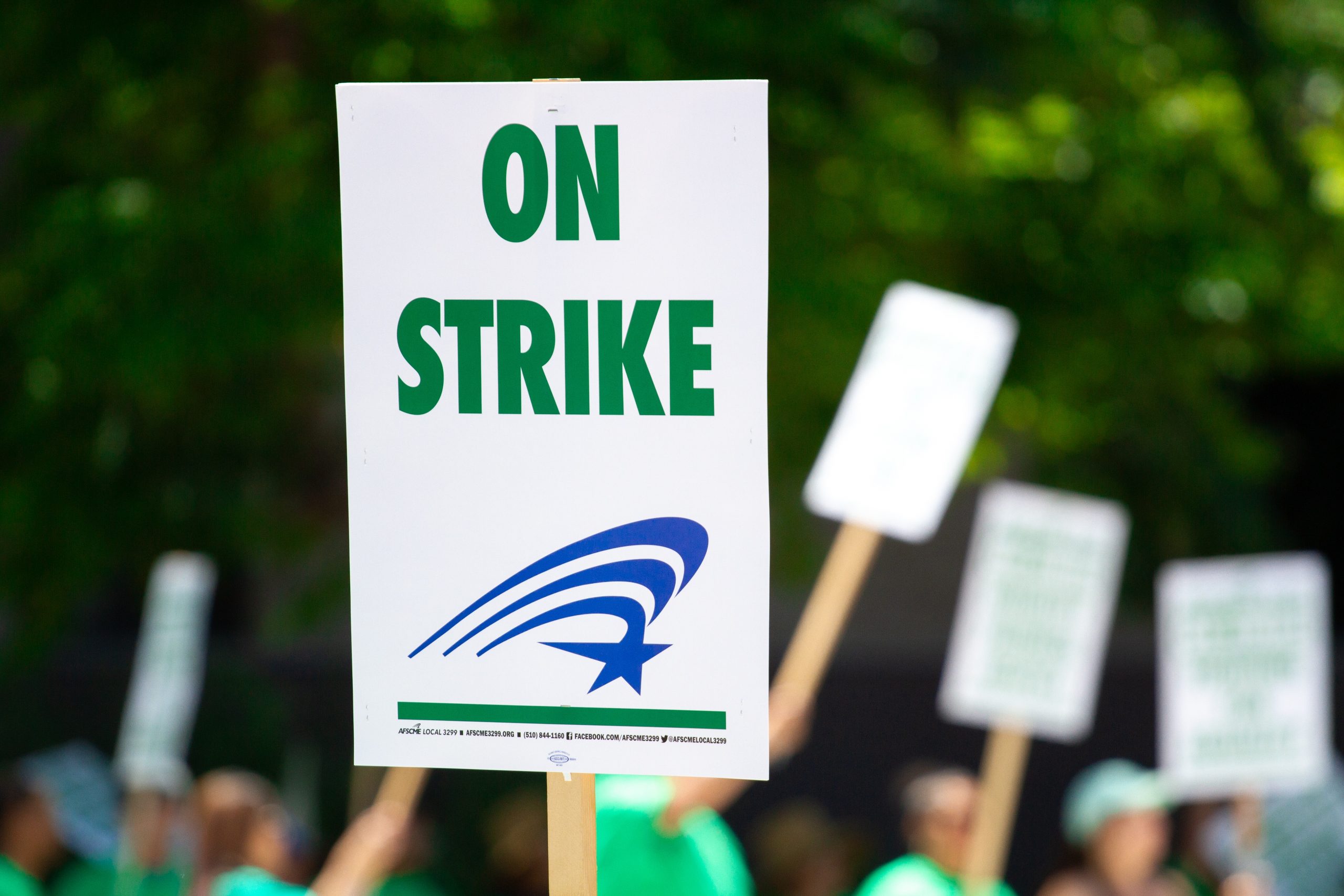
Aarushi Bhandari (Assistant Professor of Sociology at Davidson College) wrote an article for The Conversation, reflecting on how news of the strike-ending deal between the Writers Guild of America and the Alliance of Motion Picture and Television Producers was eclipsed by celebrity headlines. Six conglomerates own 90% of media outlets, giving them significant power over media narratives. Bhandari argues that the limited coverage of the WGA deal “fits into a longer historical pattern of tension between labor movements and corporate media” in which “corporate media has framed disproportionately negative narratives about strikes and union activities.”
Janet Vertesi (Associate Professor of Sociology at Princeton University) wrote an article for The Conversation discussing how NASA’s robotics can provide an example of an ethical future for AI. Vertesi notes three aspects of “strong human-robot teams”: technology that augments or extends human capabilities instead of replacing human work, respectful data harvesting and use, and a sense of care for the technology.
Matthew Desmond (Professor of Sociology at Princeton University) appeared on the ACLU’s At Liberty podcast. In conversation with Sandra Park (Senior Staff Attorney of the ACLU Women’s Rights Project), Desmond discussed the complexities of American poverty. “There’s a lot of propaganda out there about poverty, and […] it organizes us. It shapes our conversation, right, or kills the conversation. […] And so I think that means for me, shifting the aperture away from-from poor families and poor communities to us, to a lot of us who are living our lives, often unwittingly, in a way that contributes to poverty in our midst.”
Juliet Schor (Professor of Sociology at Boston College and lead researcher on the 4 Day Week Global trial studies) appeared on NPR’s TED Radio Hour to discuss the four-day workweek. Schor described how a four-day workweek can have positive well-being and climate outcomes without lowering worker productivity.
Neil Gross (Professor of Sociology at Colby College) wrote an article for Time, arguing that three “myths” about police reform are limiting productive conversation and policymaking: 1) the police can’t prevent crime; 2) police reform compromises public safety; and 3) because of policing’s racist origins, there is nothing we can do to improve it. Gross discusses how policing in combination with poverty reduction efforts can reduce crime, the complex connections between police defunding and crime, and his belief that “institutions can evolve beyond their origins.”
In Philadelphia, a former police officer is facing trial for over 200 sex crimes. While on the force, the officer was the subject of 12 citizen complaints. Nicole Gonzalez Van Cleve (Associate Professor of Sociology at Brown University), commented on the difficulty of creating accountability for police officers: “This officer, while he looks like ‘one bad apple’, a whole lot of players had to participate in emboldening such an egregious criminal activity that went on for years. That shows the flagrant nature. He knew there were no levers of accountability.” This story was covered by WHYY.
About Clippings
Sociology and sociologists in the news. Read more…