


Wisconsin Public Radio interviewed Allison Daminger (Assistant Professor of Sociology at the University of Wisconsin-Madison) about her new book, What’s on Her Mind: The Mental Workload of Family Life. The book examines how partners split “cognitive labor”, or, the mental effort that goes into running a household. This includes “anticipating issues, identifying options, making decisions and monitoring the results.” While most couples in the study aimed for a 50/50 split of household labor, Daminger found that cognitive labor was typically imbalanced. Among heterosexual couples, women tend to take on more cognitive labor.
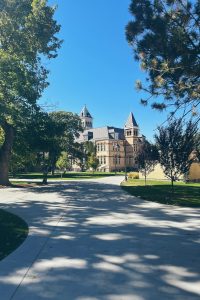
Conservative activist Charlie Kirk was shot and killed at a speaking engagement at Utah Valley University. Ruth Braunstein (Associate Professor of Sociology at John Hopkins University) appeared on WUSA9 to discuss the broader pattern of political violence in the United States. Braunstein commented that political violence has a “tremendous chilling effect on people’s willingness to go into political life, to stand up and speak out for what they believe in.” She also discussed how distrust in political institutions may lead some individuals to violence, which can further erode trust in insituions–a “vicious cycle.” Braunstein also expressed concern to the New York Times that Kirk’s murder could mobilize right-wing groups (including militia organizations): “All it will take is the slightest hint from the political leaders, including the president, but also anyone else, that this is the moment that they’re needed.”


Laura Garbes (Assistant Professor of Sociology at the University of Minnesota) wrote an op-ed for the Minnesota Star Tribune discussing how ‘elitism’ in public media stems from a lack of public funding. “Due to decades of budget cuts led by Republican administrations, public radio has become reliant on a set of mostly white, affluent donors for its financial survival,” Garbes explains. Programming, then, is catered to donor-listeners, leaving behind working-class audiences.


Protests are sweeping across France as a part of the Block Everything Movement–a campaign driven by anger over major cuts to public spending. The movement began online among right-wing voices, but has since been embraced by the political left. Quentin Ravelli (Sociologist at the French National Centre for Scientific Research) discussed the movement’s lack of a clear political identity in an RFI article: “Many movements avoid being labelled left or right. This isn’t just strategic: participants often feel that consensus around economic demands matter more than political allegiance. Urgent issues like public services, wages or inflation are seen as priorities.” The movement is drawing comparisons to the 2018 Yellow Vest Movement. Antoine Bristelle (Sociologist at the Jean Jaures Foundation) commented on the demographic differences to The Gazette: “In the ‘Yellow Vest’ movement, we had a rather vulnerable France that was struggling to make ends meet, a lot of workers, a lot of retirees. Whereas here, in terms of age, it’s many young people [that have] a certain vision of the world where there is more social justice, less inequality and a political system that functions differently, better,” Bristielle said.
Comments 7
Adham hesham — November 24, 2025
Pest Control Company in Qatif – Immediate and Safe Solutions to Eliminate All Types of Insects
Insect infestations in homes or offices cause significant inconvenience and affect comfort, hygiene, and health… But with the best pest control company in Al-Khobar, you won't have to worry anymore!
https://thecleaningideal.com.sa/%d9%85%d9%83%d8%a7%d9%81%d8%ad%d8%a9-%d8%ad%d8%b4%d8%b1%d8%a7%d8%aa-%d8%a8%d8%a7%d9%84%d9%82%d8%b7%d9%8a%d9%81/
Adham hesham — November 24, 2025
⭐ Sofa Cleaning Company in Jeddah – Superior Cleaning That Makes Your Sofa Look Brand New!
Sofas are among the most frequently soiled pieces of furniture, accumulating dirt, stains, dust, and odors from children and pets… and with Jeddah's heat and humidity, the problem is even worse!
That's why the best sofa cleaning company in Jeddah has emerged, offering professional cleaning solutions using the latest equipment and advanced materials to restore your sofa to its original condition, leaving it smelling fresh and its original color vibrant.
🧼 Why Choose Our Sofa Cleaning Company in Jeddah?
✔ Modern Steam Cleaning Equipment
We use high-pressure steam cleaning equipment that can reach the deepest layers of the fabric, removing bacteria and odors.
✔ Removal of Any Stains, No Matter How Tough
Food stains? Tea? Coffee? Grease? Children's stains?
Our team specializes in removing the toughest stains without damaging the fabric.
✔ Safe Cleaning Materials
We use English and German cleaning products that are safe for:
Sofas
Carpets
Leather
Velvet
Linen
Suede
And are suitable for children and pets.
✔ Extensive experience in cleaning all types of sofas.
We clean fabric, leather, velvet, classic, modern, living room, and Arabic-style sofas.
✔ Fast home service in Jeddah.
We deliver to your doorstep wherever you are:
Al-Hamdaniya, Al-Rawdah, Al-Safa, Al-Shati, Al-Muhammadiyah, Al-Naeem, Al-Naseem, Al-Marwa, Al-Bawadi, Al-Faisaliyah, and more.
🛋️ Sofa cleaning services in Jeddah:
Steam cleaning for sofas
Leather sofa cleaning
Arabic-style sofa cleaning
Tough stain removal
Sanitizing sofas against bacteria
Fragrance for sofas with long-lasting scents
Matthe, carpet, and rug cleaning
🌬️ Is steam cleaning effective?
Yes!
Steam cleaning:
Removes 99% of germs
Kills odor-causing agents
Breaks down grease and dirt
Preserves fabric without damage
That's why most professional cleaning companies in Jeddah rely on it.
💎 Special offers for Jeddah customers today!
Book now and get:
Special discount on cleaning multiple items
Free sanitization on select items
Very competitive prices
https://www.elnogom.com/sofa-cleaning-jeddah/
Adham hesham — November 25, 2025
Pest Control Company in Dammam – 100% Guaranteed Permanent Insect Elimination
Are you looking for a pest control company in Dammam that provides a fast and effective solution to your insect problem in your home or business?
With rising temperatures and the spread of cockroaches, bed bugs, and termites in the Eastern Province… the solution needs to be professional and guaranteed.
https://thecleaningideal.com.sa/pest-control-dammam/
Adham hesham — November 25, 2025
Furniture Moving Company in Abu Dhabi – Precision, Safety, and Speed Every Step of the Way!
Moving furniture isn't just about loading and unloading… it's a process that requires expertise, safety, and organization to ensure your furniture arrives without a single scratch.
With the best furniture moving company in Abu Dhabi, you're guaranteed a comfortable, fast, and safe service from the very first minute until you receive your furniture at your new location.https://alaatharalaraby.ae/
e-zpassri — December 12, 2025
This is so beautifully crafted. This article is just wow and so informative. e-zpassri
Haslnora — March 30, 2026
Developing advanced techniques in geometry game 2 requires understanding how different modes interact within a single level. Smooth transitions between cube, ship, ball, and wave reduce hesitation and preserve rhythm flow. Practicing these changes individually improves adaptability during full runs.
Olena Sergeyeva — June 9, 2026
Clippings are a great way to keep important information organized and easy to revisit later. Managing saved content becomes much smoother when there’s also reliable customer support behind the services being used. Anyone looking for feedback about support experiences can check https://www.pissedconsumer.com/company/custom/customer-service.html, which offers useful consumer reviews and insights. Keeping both information and service resources handy makes the overall experience much more efficient.