zuccotti park

“Those who make revolutions half way only dig their own graves.”

“Power to the imagination.”

“I don’t like to write on walls.”

-Graffiti in May of 1968 Paris, France. 

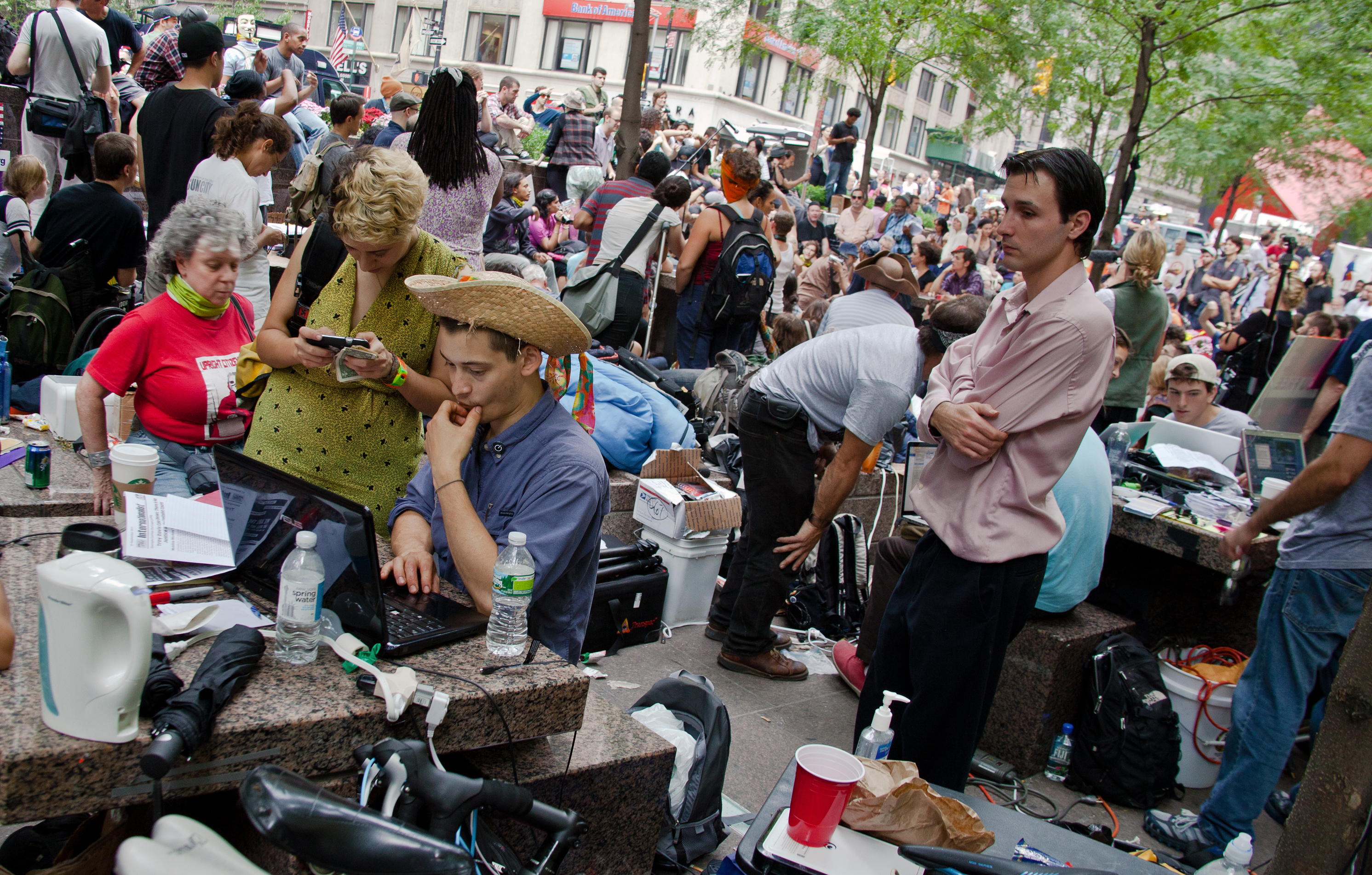
I was gonna write something about how I appreciate Procatinator more than everyone else, but I can’t bring myself to do it. Not today anyway. Remember when the United States had this popular uprising and everyone was talking about it and the political establishment was actually afraid of what it could accomplish?  When hundreds of thousands of Americans were exposed to political organizing and direct action for the first time? That started a year ago today, and while the summer did not see massive protests, the Fall promises a new start. A resurgence built upon… arbitrary calendar dates, I suppose. Truthfully, I see no reason why Zuccotti park should be re-occupied, nor should anyone feel the need to act out of a fear of “losing momentum.” Momentum is important for steering large ships, but direct action is all about swimming against the tide. Anarchist movements (and Occupy undeniably fits this category) are by their very definition: voluntary, small, functional, and temporary. We don’t need another occupation of Zuccotti Park. We need something new. more...
Is this an Oxymoron?

Most of our interactions with technology are rather mundane. We flip a light switch, buckle our seat belts, or place a phone call. We have a tacit knowledge of how these devices work. In other words, we have relatively standard, institutionalized, ways of interacting with familiar technologies. For example: if I were to drive someone else’s car, even if it is an unfamiliar model, I do not immediately consult the user manual. I look around for the familiar controls, maybe flick the blinkers on while the car is still in the drive way, and off I go. Removal of these technologies (or even significant alterations) can cause confusion. This is immediately evident if you are trying to meet a friend who does not own a cell phone. Typical conventions for finding the person in a crowded public space (“Yeah, I’m here. Near the stage? Yeah I see you waving.”) are not available to you. In years prior to widespread cell phone adoption, you might have made more detailed plans before heading out (“We’ll meet by the stage at 11PM.”) but now we work out the details on the fly. Operating cars and using cell phones are just a few mundane examples of how technologies shape social behavior beyond the actions needed to operate and maintain them. The widespread adoption of technologies, and the decisions by individual groups to utilize technologies can have a profound impact on the social order of communities. This second part of the Tactical Survey will help academics, activists, and activist academics assess the roll of information technology in a movement and make better decisions on when and how to use tools like social media, live video, and other forms of computer-mediated communication. more...


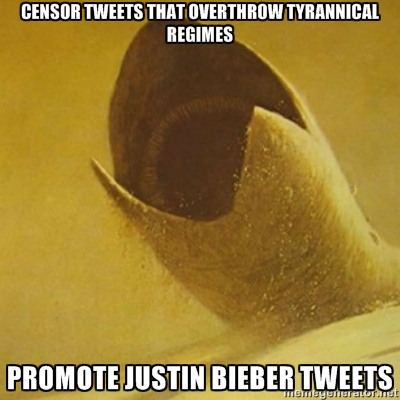
I took the liberty of making a new meme: "Censorship Sandworm". http://memegenerator.net/Censorship-Sandworm

“I must rule with eye and claw — as the hawk among lesser birds.”

-Duke Leo Atreides in Book 1: Dune

Over a week ago, Twitter announced a new censorship policy, stating that it would comply with any “valid and applicable legal request” to take down tweets. The announcement came just as we were still digesting Google’s unified privacy policy and were still debating the (now confirmed) rumors that Facebook was releasing an IPO. Twitter has since been applauded, denounced, and dissected by a variety of scholars, media critics, and business leaders. In this post I will give a brief summary of the controversy, briefly weigh in with a commentary of my own, and conclude with a discussion of what all this means for theorizing online social activity.

more...

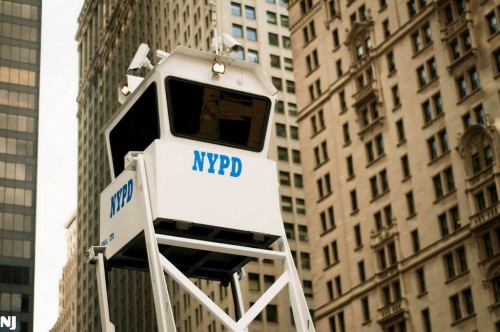
A modern day panopticon. Photo by Nathan Jurgenson.

The first post I wrote for Cyborgology concluded that many of the dominant socio-technical systems in our world look and behave in a similar fashion. The entertainment industry, advanced military surveillance, search algorithms, and academic reference tools are swapping hardware and best practice in such a way that the carrying out of a military invasion, or the Super Bowl begins to look disturbingly similar. Around the time that I wrote that post, USAToday ran a disturbingly cheerful story about police departments’ desire to acquire similar technology. Miami’s police department acquired the  Honeywell’s T-Hawk Micro Air Vehicle (MAV) a few moths later. The only regulations that prevented the MPD (or any police force) from acquiring such technology were FAA regulations about where and how it could be flown. Such acquisitions have gone largely unquestioned by the media as well. In fact, local coverage of the purchase was supportive. A local CBS affiliate led with the headline, “Dade Cops Waiting To Get Crime Fighting Drone Airborne.” This all seems very bleak, but just as powerful actors have increased their abilities to engage in surveillance, the individual has more tools than ever to watch the watchers. more...

Photo Credit: Wyatt Kostygan

Cyborgology editor Nathan Jurgenson will be in Zuccotti park Saturday, and contributing author David Banks will be participating in a new occupation in Albany, NY. Nathan will be providing his insights on social media and the OWS movement. David will be watching closely and commenting on the birth of a local occupation.

more...