
the matrix

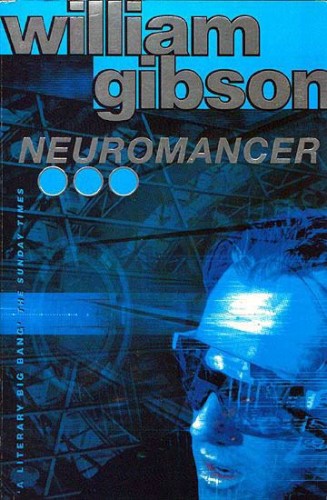
The words and ideas we use to make sense of the Web owe as much to science fiction (particularly, the cyberpunk genre) as they do to the work of technicians or to rigorous scientific inquiry. This by no means a bad thing; the most powerful of such literary works call upon our collective imagination and use it to direct society to prepare for major transformations looming on the horizon. William Gibson’s (1984) Neuromancer was, no doubt, one such work. Neuromancer features  the exploits of a “console cowboy” (i.e., a computer hacker) named Case, who travels across a dystopian world serving a mysterious employer. The work is notable for popularizing the term “cyberspace,” which Gibson coined a couple years earlier in a short story called “Burning Chrome.”

In Neuromancer, Gibson described cyberspace as a”consensual hallucination” and more specifically: “A graphic representation of data abstracted from the banks of every computer in the human system. […] Lines of light ranged in the nonspace of the mind, clusters and constellations of data.” Rather than just staring into a computer screen, hackers “jack in” directly interfacing with these visual representations of data in their minds. The images described here are reminiscent of those portrayed in movies such as Tron (1982),  Hackers (1995), and, to a lesser extent, The Matrix (1999). more...
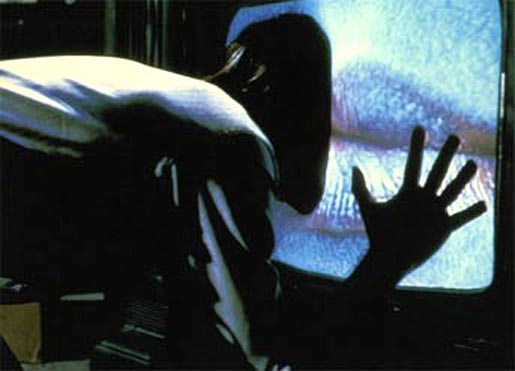
The power of social media to burrow dramatically into our everyday lives as well as the near ubiquity of new technologies such as mobile phones has forced us all to conceptualize the digital and the physical; the on- and off-line.

And some have a bias to see the digital and the physical as separate; what I am calling digital dualism. Digital dualists believe that the digital world is “virtual” and the physical world “real.” This bias motivates many of the critiques of sites like Facebook and the rest of the social web and I fundamentally think this digital dualism is a fallacy. Instead, I want to argue that the digital and physical are increasingly meshed, and want to call this opposite perspective that implodes atoms and bits rather than holding them conceptually separate augmented reality.

In a 2009 post titled “Towards Theorizing An Augmented Reality,” I discussed geo-tagging (think Foursquare or Facebook Places), street view, face recognition, the Wii controller and the fact that sites like Facebook both impact and are impacted by the physical world to argue that “digital and material realities dialectically co-construct each other.” This is opposed to the notion that the Internet is like the Matrix, where there is a “real” (Zion) that you leave when you enter the virtual space (the Matrix) -an outdated perspective as Facebook is increasingly real and our physical world increasingly digital.

I have used this perspective of augmentation to critque dualism when I see it. For instance, more...