storytelling

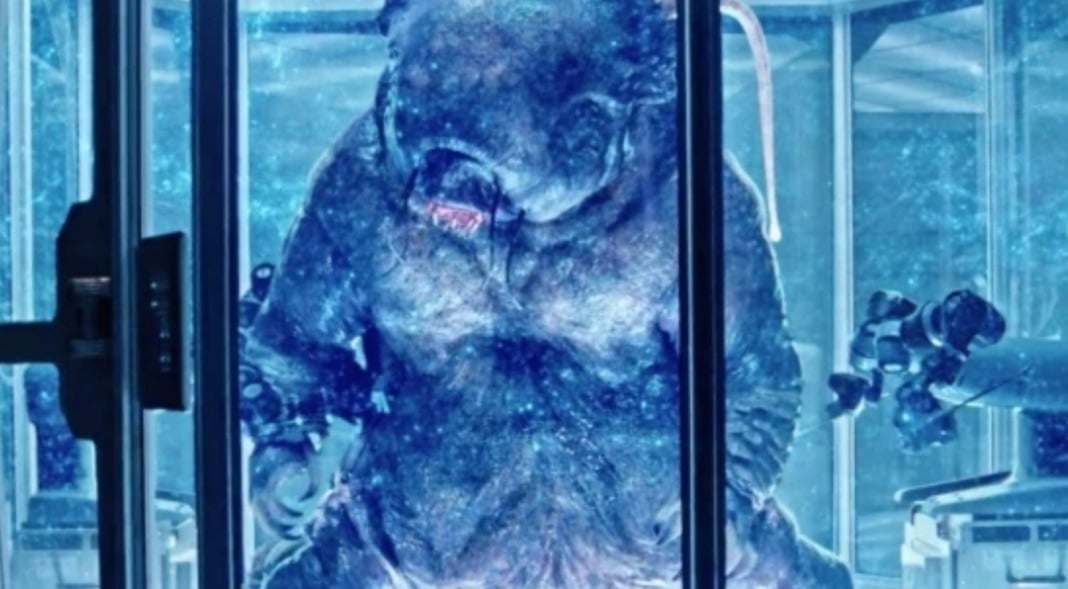
I’ve written about Star Trek a few times (here and here). I think I still agree with most of what’s written there. PJ Patella-Rey also wrote about Star Trek on the blog here. My favorite commentary on Discovery, which I’ll do my best not to simply repeat is by Lyta Gold which you can read at Current Affairs. What follows are some vaguely connected thoughts I’ve had about Discovery‘s relationship to the rest of the canon after having just gotten caught up with the series. more...
I love speculative fiction, especially when it includes a mystery. So imagine my excitement this past Saturday when I learned that Netflix released the new original series Between, premised on a mysterious illness that kills everyone over 21 years old. Blue skies could wait, this day was for binge watching. Or, as it turned out, for watching a single episode and then taking the dogs for a walk. Contrary to their usual season-dump format[i], Netflix is releasing Between on a weekly basis.

This got me thinking about how release schedules affect television for both producers and consumers, and wondering why Netflix would revert to the more traditional model. more...

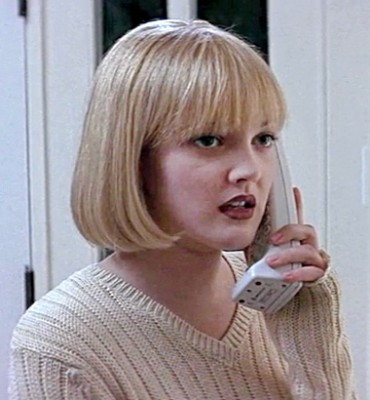
The plot of Scream is impossible without cordless phones.

In Children of Men Clive Owen’s character Theo is trying to secure “transfer papers” from his cousin Nigel who seems to be one of the few rich people left in the no-one-can-make-babies-anymore-dystopia. The two older men are sitting at a dining table with a younger boy, presumably Nigel’s son, who seems to be inflicted in some way. He’s pale and stares vacantly at somewhere just past his left hand which is eerily still in between the twitches of fingers that are adorned by delicate wires. He doesn’t respond to others in the room and isn’t eating the food in front of him. After Nigel yells at him to take his pill we notice that they boy isn’t really sick or particularly disturbed, he’s playing a game attached to his hand. more...

Image by Brad Lindert

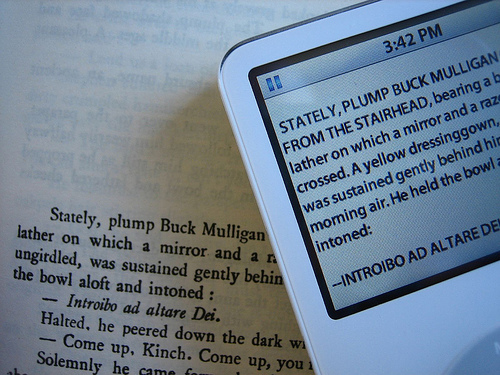
A couple of weeks ago, my interest was piqued by an article boasting the intriguing headline: “‘Losing yourself’ in a fictional character can affect your real life.” Essentially, researchers at Ohio State University have evidence that suggests very strongly that people who become emotionally engaged with a character in a story are more likely to alter their behavior according to how that character behaves, even if only temporarily. This piqued my interest first and foremost as a writer of fiction because it reflected my own experience so directly: When considering the mannerisms, speech, attitude, and choices of a character, it’s not uncommon for me to find my own behavior changing slightly to reflect those considerations, especially if I’m really trying to get inside a character’s head.

But then the piece piqued my interest in an entirely different way: the headline — if not the study itself — seems to be operating on the assumption that there is a distinct difference between a reader’s experience of a character in a work of fiction and the reader’s embodied experience of their own lives; in other words, that there’s a qualitative difference between the world of the imagination and the “real world”. And I’m inclined to view this assumption as flat-out incorrect.

Furthermore, I think the reasons why this assumption is incorrect have some things to say regarding the problematic assumption of digital dualism.

more...

This is the complete version of a previously posted two-part essay. Part one is here; part two is here.

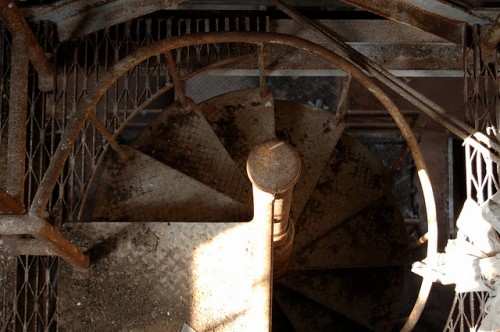
Photo by Matthew Christopher

Objects have lives. They are witness to things. –This American Life, “The House on Loon Lake”

Atlantic Cities’ feature on the psychology of “ruin porn” is worth a look–in part because it’s interesting in itself, in part because it features some wonderful images, and in part because it has a great deal to do with both a piece I posted previously on Michael Chrisman’s photograph of a year and with the essay that piece referenced, Nathan Jurgenson’s take on the phenomenon of faux-vintage photography.

All of these pieces are, to a greater or lesser extent, oriented around a singular idea: atemporality – that the intermeshing and interweaving of the physical and digital causes us not only to experience both of those categories differently, but to perceive time itself differently; that for most of us, time is no longer a linear experience (assuming it ever was). Technology changes our remembrance of the past, our experience of the present, and our imagination of the future by blurring the lines between the three categories, and introducing different forms of understanding and meaning-making to all three – We remember the future, imagine the present, and experience the past. The phenomenon of “ruin porn” is uniquely suited to call attention to our increasingly atemporal existence, and to outline some of the specific ways in which it manifests itself.

more...

This is the second part of a two-part essay; the full version of the essay — both parts — can be found here.

Photo by Jim Potter/Blind Owl Underground

In part one of this essay, I focused on the atemporality of the physical spaces from which “ruin porn” images are made. This may have seemed like a bit of an aside from a take that purports to be technology-focused, but I want to emphasize the importance of physicality here–one of the crucial – if not the most crucial – ideas behind atemporality in the sense in which I use the word is the profound connection between our perception and understanding of time and our relationship with the enmeshed physical/digital world that our technology is increasingly helping to create. In short, we cannot discuss the digital in this case without first establishing why and how the physical matters.

But now I want to focus on that move from physical to digital, the point of entanglement where one shades into another and the relationship between the two becomes truly complex. I want to talk about the image itself, both in terms of its production and its consumption.

more...