
non-optionality

There’s a song on the 1997 Chemical Brothers album Dig Your Own Hole that reminds one of your authors of driving far too fast with a too-close friend through a flat summer nowhere on a teenage afternoon (windows down, volume up). It’s called “Where Do I Begin,” and the lyric that fades out repeating as digital sounds swell asks: Where do I start? Where do I begin?*

Where do we start, or begin–and also, where do we stop? What and where is the dividing line between “you” and “not you,” and how can you tell? This is the first of a series of posts in which we will try to answer these sorts of questions by developing a theory of subjectivity specific to life within augmented reality.

As a thought experiment, consider the following: Your hand is a part of “you,” but what if you had a prosthetic hand? Are your tattoos, piercings, braces, implants, or other modifications part of “you”? What about your Twitter feed, or your Facebook profile? If the words that come from your mouth in face-to-face conversation (or from your hands, if you sign) are “yours,” are the words you put on your Facebook profile equally yours? Does holding a smartphone in your hand change the nature of what you understand to be possible, or the nature of “you” yourself? Theorists such as Donna Haraway, N. Katherine Hayles, Bruno Latour, and others have asked similar questions with regard to a range of different technologies. Here, however, we want to think specifically about what it means to be a subject in an age of mobile computing and increasingly ubiquitous access to digital information. more...
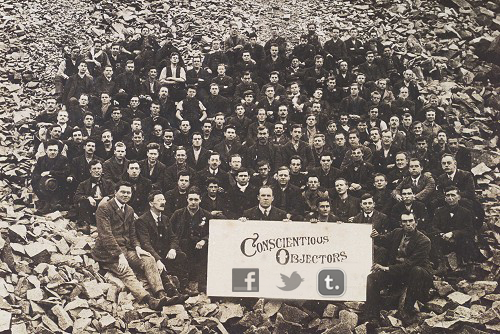
We all know them: the conscientious objectors of the digital age.  Social media refusers and rejecters—the folks who take a principled stance against joining particular social media sites and the folks who, with a triumphant air, announce that they have abandoned social media and deactivated their accounts. Given the increasing ubiquity social media and mobile communications technologies, voluntary social media non-users are made increasingly apparent (though, of course, not all non-users are voluntarily disconnected—surely some non-use comes from a lack of skill or resources).

The question of why certain people (let’s call them “Turkle-ites”) are so adverse to new forms of technologically-mediated communication—what Zeynep Tufekci termed “cyberasociality”—still hasn’t been sufficiently addressed by researchers. This is important because abstaining from social media has significant social costs, including not being invited to or being to access to events, loss of cultural capital gained by performing in high-visibility environments, and a sense of feeling disconnected from peers because one is not experiencing the world in the same way (points are elaborated in Jenny Davis’ recent essay). Here, however, what I want to address here isn’t so much what motivates certain people to avoid smartphones, social media, and other new forms of communication; rather, I want to consider the more fundamental question of whether it is actually possible to live separate from these technologies any longer. Is it really possible to opt out of social media? I conclude that social media is a non-optional system that shapes and is shaped by non-users. more...