Law

Did I request thee, Maker, from my Clay
To mould me Man, did I sollicite thee
From darkness to promote me, or here place
In this delicious Garden?

Adam in John Milton’s, Paradise Lost 1667 (X. 743–5)
In John Milton’s Paradise Lost we see a poetic retelling of the biblical story of humanity and temptation. The excerpt above is from Adam, who mourns his fate as one who was brought into the world unwittingly, and then forsaken by his maker.   Adam blames his creator for designing a fallible subject, with vulnerabilities that manifest in the ultimate fall from grace. From this classic story of creation, willfulness, and abandonment, I can’t help but think about robots, their creators, and what happens once robots become sentient and autonomous.

Although the precise trajectory of robotic advancement is difficult to pin down,  Stephen Hawking claims that within a few decades robots will achieve sentient thought and will be able to question their existence and position in human society. With such a prospect on the (potentially quite close) horizon, legal systems have begun to think about how to classify, treat, and regulate intelligent machines. more...
screen-shot-2016-12-21-at-7-38-43-am

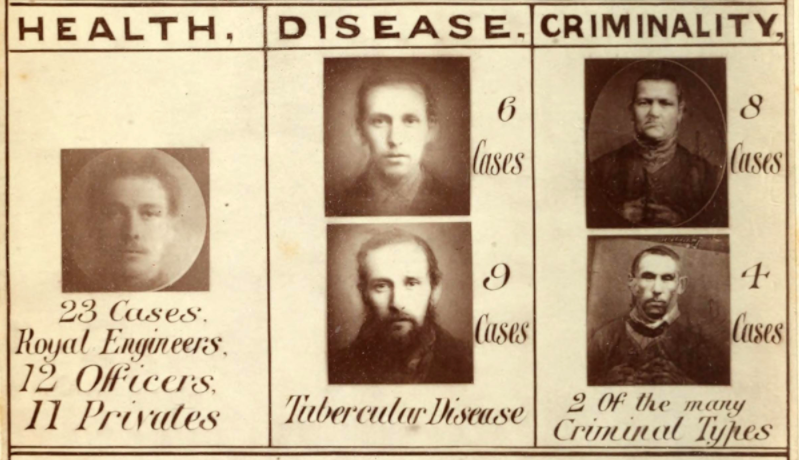
Over at The New Inquiry, an excellent piece by Trevor Paglen about machine-readable imagery was recently posted. In “Invisible Images (Your Pictures Are Looking at You)”, Paglen highlights the ways in which algorithmically driven breakdowns of photo-content is a phenomenon that comes along with digital images. When an image is made of machine-generated pixels rather than chemically-generated gradations, machines can read these pixels, regardless of a human’s ability to do so. With film, machines could not read pre-developed exposures. With bits and bytes, machines have access to image content as soon as it is stored. The scale and speed enabled by this phenomenon, argues Paglen, leads to major market- and police-based implications.

Overall, I really enjoyed the essay—Paglen does an excellent job of highlighting how systems that take advantage of machine-readable photographs work, as well as outlining the day-to-day implications of the widespread use of these systems. There is room, however, for some historical context surrounding both systematic photographic analysis and what that means for the unsuspecting public.

more...

I thought for reruns week I would re-post something I wrote back in February that fits with our ongoing CFP on Small Town Internet. Problems of governance, especially of small, geographically defined groups, is surprisingingly understudied especially when it comes to our present state of augmented reality. 

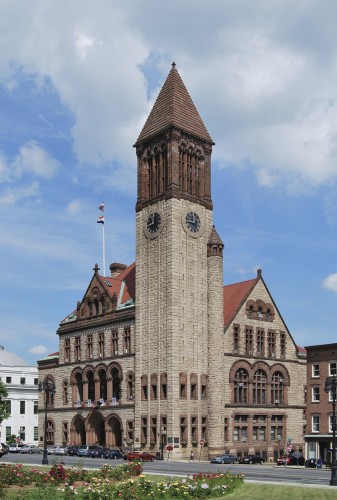
The Albany New York Town Hall


It is certainly good news that the Obama Administration has come out strong for net neutrality. The President recently made an announcement that his office would help promote local broadband competition as part of a broader effort to improve the country’s data infrastructure. More specifically, the federal government plans to help municipalities develop their own data networks, fight state laws that prevent municipal governments from offering public broadband options, and help small businesses compete in local markets with companies like Verizon and Time Warner. The chairman of the FCC followed suit by announcing (in WIRED Magazine…?) yesterday that he would be circulating a proposal to apply Title II to telecom companies and mobile phone carriers, effectively making it illegal to throttle connections based on what sorts of services you are connecting to. This is all good news but I’m also hesitant to trust local authorities with my internet connection. Aren’t these the same governments that defend murderous police forces and cooperated with the federal government to shut down political dissent? Why should these organizations control the network? While I am definitely not a fan of huge telecom corporations, I don’t trust my local government either.  more...

martin verdict

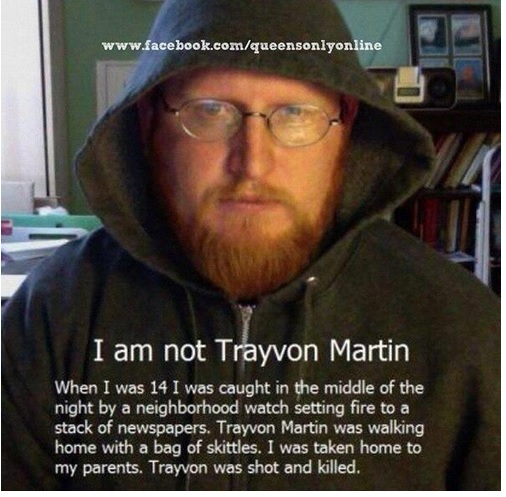
George Zimmerman was found not guilty in the murder of Trayvon Martin. And yet, Martin, a 17 year old boy, is dead. Killed by Zimmerman’s lethal gunshot. Protestors have taken to Twitter, Facebook, and the streets. Here, I want to try to make sense how this case is far more complex legally than it is morally. In what follows, I argue that both bodies and laws are technologies—or more specifically—materialized action, and that the intersection of their imbedded values and assumptions afford justices processes which feel, at a visceral level, generally unjust. more...

genes

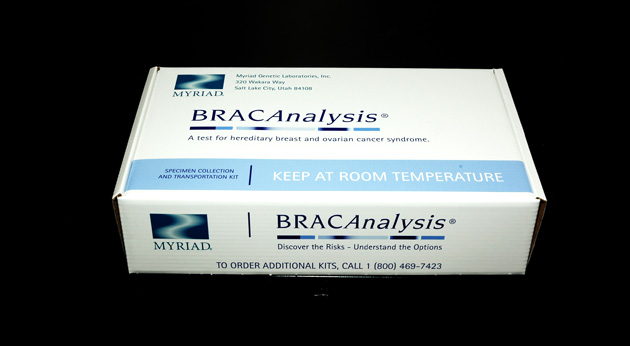
Are human genes patentable? At the beginning of this week, the Supreme Court (SCOTUS) heard arguments to answer just that question. Specifically, the biotechnology company Myriad Genetics, Inc. wants to defend their patent on the isolation of BRAC1 and BRAC2—two genes related to hereditary breast and ovarian cancers. Such a patent grants the company 20 years of monopoly control over the genes for research, diagnostic, and treatment purposes. A group of medical professionals, scientists, and patients are challenging the patent.

The criteria for a medical patent are such that while tools, medications, laboratory produced chemicals etc. can be patented, “Nature” cannot be patented. That which is patented must therefore be created, not merely discovered (regardless of how costly or effortful the discovery). Opponents of the BRAC patent often evoke Jonas Salk, who famously said in response to the potential patent of his Polio Vaccine: “There is no patent. Could you patent the sun?” more...

Via National Postal Museum

Most Wanted posters, having lost their long standing place at the Post Office, have found a new home on Pinterest. Following the Philadelphia Police Department, police in Pottstown PA, are now electronically pinning  images of those with outstanding arrest warrants. Yes, the same place people exchange recipes and DIY home tips is increasingly also place in which police officers disseminate photographs of felons on the lam (time out: I just got to use the phrase “on the lam” in an academic-ish piece of writing.  *self high-five*).

This use of Pinterest for mugshot dissemination is theoretically interesting in a number of ways. Here, I denote three key interrelated insights: more...


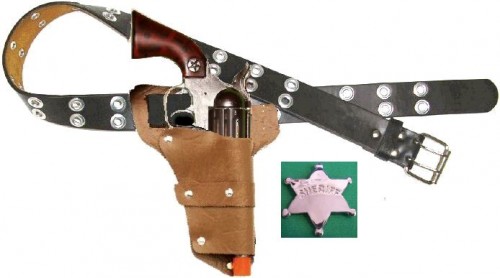
The Sheriff says “Likeing” isn’t speech, but he’ll fire you if you “Like” the wrong thing.


Ann Swidler argues that we operate using complex cultural repertoires. These are the propensities, scripts, frameworks, and logics—the tools with which to navigate everyday life. Our repertoires are vast, and often contradictory—and yet we deftly pull what we need, when we need it, easily ignoring contradictions. She illustrates these practices through narratives of romantic love, in which participants, within the same interview, draw seamlessly on logics of independence (e.g. we are separate people and we need our separate space), intertwinement (e.g. we have grown together over the years, our marriage is a true union of two souls), fate (e.g. we were meant to be) and rationality (e.g. marriage is a product of hard work and sacrifice).

With Swidler’s cultural tool kit as a framework, we can begin to make sense of  the logical gymnastics that enabled a Virginia Sheriff to fire his subordinates for hitting a Facebook “Like” button in support of an opposing candidate and then argue successfully in court that this firing was not a violation of free speech. more...

What is an identity worth? According to PhoneDog, a ‘personality-driven’ tech-review site, Noah Kravitz’s identity is valued at $42,500 per month. A former employee of PhoneDog, Kravitz successfully acquired a large following on the microblogging site Twitter—17,000 at the time of his leaving. In an attention economy, each follower becomes a valuable and tangible asset. The legal dispute between Kravitz and PhoneDog is over ownership of these 17,000 assets.

When Kravitz left the company, he changed his Twitter handle from @PhoneDog_noah to @noahkravitz and took his growing list of followers with him (I became his 24,390th follower/asset today). Complicating the issue further, he now writes  for TechnoBuffalo, a competing tech news site which presumably benefits from Kravitz’s vast following. Last week, a federal judge granted permission for the case to move forward. The existence of such a case, as well as its outcome (which remains yet unseen) both demonstrates and further constructs the shifting relationship between identity, labor, private rights, and worker obligations.

PhoneDog argues that Kravitz’s extensive network was built on the company’s foundation—and on the company’s dime. The notoriety of the site and the legitimacy of the name (i.e. the attachment of PhoneDog to his Twitter handle) facilitated the growth of Noah’s online persona. Moreover, they invested in a sizeable PR campaign to grow PhoneDog’s social media presence, and promoted Noah as the representative. Not only did this help raise Noah to micro-celebrity status, but made him an influencer—or someone who has enough influence to sell ad space. In short, PhoneDog argues that Kravitz gained his followers under the PhoneDog name and under the PhoneDog payroll, making these followers the property of the company. They estimate that each of his followers is worth $2.50 per month, and they seek reparations. In a message to readers dated January 3rd 2012, PhoneDog describes Noah’s rise to fame as follows: more...