
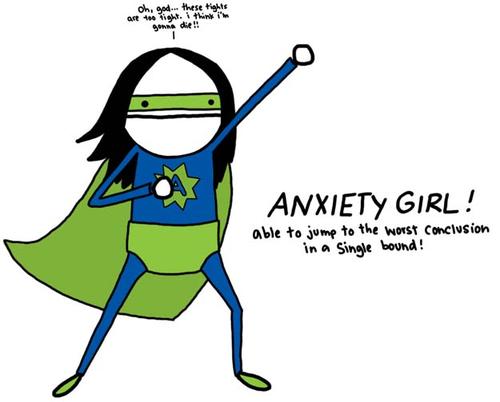
invisibility

Several weeks ago, I wrote about the “fear of being missed (FOBM).” The flip side of FOMO (fear of missing out), FOBM captures the anxiety surrounding a complex and fast moving online realm in which it is easy to be buried, ignored, and/or forgotten. This anxiety is amplified by the online/offline connectedness, through which invisibility online can lead to neglect offline (personally and professionally). FOMO and FOBM speak to the difficulty of deleting social media accounts, the discomfort of a dead cell/laptop/tablet battery, and the drive to livetweet, status update, tag oneself in pictures, and be physically present for tagable photo-ops.

Soon after posting my piece on Cyborgology, I read Tiana Bucher’s article in New Media & Society about Facebook algorithms and the fear of invisibility. Bucher’s work offers a useful theoretical frame (Foucault’s Panoptican) for FOBM, and an equally good (if not better) term for the phenomena (fear of invisibility). In what follows, I describe Bucher’s piece and its utilization. I then offer critiques of her work. In this way, I hope to further the theoretical substance of FOBM, framing it with the tools suggested by Bucher, and refining it through juxtaposition to Bucher’s arguments.    more...
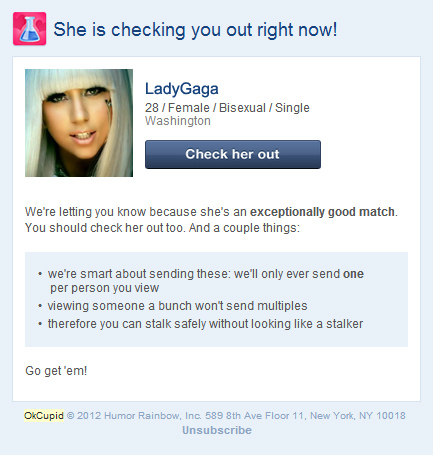
Let’s start with a simple question: Would you use Facebook the same way if you knew others were notified when you viewed their page? Certainly, Facebook collect this sort of data on your viewing habits, and the decision not to share information about who has visited you profile is an intentional one. In fact, many sites—perhaps, most notably, dating sites like OkCupid—make the ability to track visitors a central part of their site design. OkCupid regularly sends emails to users when a good match views their profiles. The idea is to turn passive lurking into active interaction. Of course, the purpose of a dating site is to connect strangers.

Lurking, however, has become a definitive part of the Facebook experience. As we now know, most Facebook friends are people we have meet in person. Facebook doesn’t need to break the ice. Yet, users rarely interact with many, if not most, of their Facebook friends. So, why be friends at all? Of course, the answer is that we love to stalk the people in our social networks, especially those weak links on the margins whose live we aren’t keyed into through regular interaction. Today, Facebook stalking plays the same role (albeit more efficiently) that gossip chains played in generations past: It keeps us connected through heavily-mediated and indirect forms of interaction. And, both gossip and Facebook share the unique property of making us more visible to each other. more...