economics

Original: http://instagram.com/p/R0mwsdzeVH/

There’s nothing particularly glamorous about Troy, New York. Troy is a city that, in an alternative universe, might have been a major metropolitan region. It stumbled early though, one of the first places to suffer the oxidation of the iron belt. What it lacks in size or elegance it makes up for in internal contradictions and a special brand of awkward coquettish charm.  It is the home of Uncle Sam and the setting for Kurt Vonnegut‘s novels. Its buildings have been painted by Norman Rockwell and torn down by public officials in search of progress. The local university has one of the highest-paid presidents, but also hosts the Yes Men. My campus office is on the fifth floor of a 19th century chemistry laboratory. The former lab sits atop a steep hill, providing a view that, on clear days, can go for miles.  The view from my office (above) is an eclectic blend of multiple decades of technological achievements and blunders. Highways, public housing, suburban enclaves, and the husks of Victorian factories stand in conversation with one-another like old friends. It is obvious that they need each other.  Some get along better than others, but they would be lost without the others’ continued existence.  New technology may be introduced to us as singular entities; improvements and replacements that make the old obsolete and irrelevant. More often than not however, these technologies find themselves sitting next to veterans of past technological revolutions. I have lived in Troy for almost three years now, and each day is a lesson in the history of technology.  more...
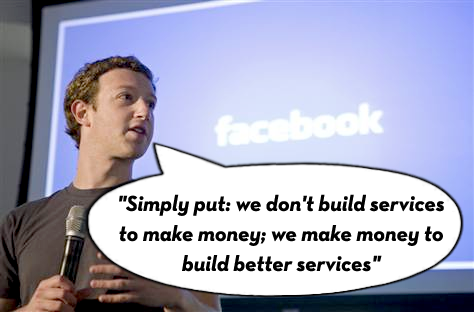
Tomorrow’s initial public offering of Facebook stock has both business and tech commentators chattering away (though, in most mainstream publications, there isn’t meaningful distinction between the two). Technology coverage is too often reduced to the business of technology. Consider the top four tech headlines on the New York Times site today: “Long Odds on a Big Facebook Payday,” “Ahead of Facebook I.P.O., a Skeptical Madison Ave.,” “Spotify Deal Would Value Company at $4 Billion, “Pinterest Raises $100 Million.”

Buried in the all the personal investing advice, some interesting quesitons are being raised. For example: How can a company with few employees and so little material infrastructure generate so much value? What is it that Facebook actually produces? Is an economy based in immaterial products and services sustainable (especially given that it’s profitability is largely dependent on it’s ability to drive additional consumption in other sectors through advertising)?

But there are also a lot of questions that aren’t being asked—the kinds of culturally significant questions that business folks and economists aren’t (though perhaps should be) interested in. Here, I want ask one such question: Will Facebook’s transition to a public corporation change the way users perceive their participation on the site? While I can only speculate about how this institutional change will effect users, I want offer a few reasons I think Facebook’s IPO may cause users to see themselves in more of an explicit work-like relationship with Facebook (based on rationalistic principles of minimizing cost and maximizing gain) and less a part of some sort of non-rationalized gift economy (based on principles of sharing and reciprocity). I should be clear, here, that I am talking about users’ relationship to the platform, not their relationships with each other. Users are, of course, primarily motivated to use the platform because of their relationships with other users; however, as recent privacy debates have illustrated, a user’s perceptions of Facebook are important in determining how users use the platform and whether they use it at all. more...

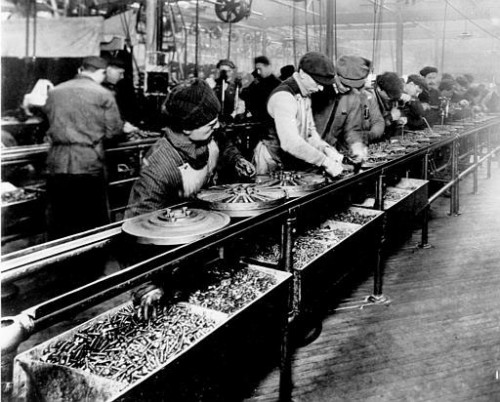
I just published a piece in a special issue of American Behavioral Scientist on the topic of Prosumption and the Prosumer. The article will likely be of interest to many of Cyborgology blog readers. In it, I consider the applicability of Marx’s two main critiques of capitalism—alienation and exploitation—to social media. Though Marx was describing the materialist paradigm of factory production, it is useful to see how far these concepts can be stretched to account for the immaterial paradigm of digital prosumption, because, even if we observe weaknesses in how the concepts graft on to social media, these observations become a starting point for new kinds of theorizing.

Additionally, I found it important to try to bring alienation into the conversation surrounding social media. Thus far, most Marxian analysis has focused solely on exploitation (many hyperbolically claiming that we have entered an era of hyper- or over-exploitation). I argue that exploitation has remained a constant between material and immaterial modes of production and that what is most remarkable is the fact that productivity occurs on social media with so little alienation.

You can access the article on the publisher’s site or as a .pdf here.

PJ Rey (@pjrey) is a sociologist at the University of Maryland working to describe how social media and other technology reflect and change our culture and the economy.

The Organizations, Occupations, and Work blog (associated with the American Sociological Association) organized an interesting panel discussion between Chris Prener, Christopher Land, Steffen Böehm and myself. I’ll summarize/critique the positions here and provide links for further reading.

Chris Prener initiated the conversation by asking “Is Facebook “Using” Its Members?” Prener claims that, though the company gives users “access to networks of friends and other individuals as well as social organizations and associations,” Facebook—with it’s advertising revenue “somewhere in the neighborhood of $3.2 billion”—” benefits far more in this somewhat symbiotic relationship.” He concludes that Facebook, and social media more broadly, represent “a [new] space where even unpaid, voluntary leisure activities can be exploited for the commercial gain of the entities within which those activities occur.” more...

This piece is posted in cooperation with the Organization, Occupations, and Work Blog.

Facebook’s IPO announcement has stirred much debate over the question of whether Facebook is exploiting/using/taking advantage of its users. The main problem with the recent discussion of this subject is that no one really seems to have taken the time to actually define what exploitation is. Let me start by reviewing this concept before proceeding to examine its relevance to Facebook.

Defining exploitation. The concept of exploitation came to prominence about a century and a half ago through the writings of Karl Marx, and he gave it a specific, objectively calculable definition—though, I’ll spare you the mathematical expressions. Marx starts from the assumption that value is created though labor (most people today acknowledge that value is contingent on other factors as well, but we need merely to accept that labor is one source of value for Marx’s argument to work). According to Marx, humans have an important natural relationship to the fruits of our labor, and our work is a definitive part of who we are. Modern capitalist society is unique from other periods in history because workers sell their labor time in exchange for wages (as opposed to, say, creating objects and bartering them for other objects). Capitalists accumulate money by skimming off some of the value created by worker’s labor and, so that the wages a worker receives is only a fraction of the total value he or she has created. The portion of the value created by a worker that is not returned back to that worker (after operating costs are covered) is called the rate of exploitation. more...

Here, in this prelude panel discussion to the Internet as Playground and Factory conference, Tiziana Terranova presents a brief and excellent summery of how contemporary Marxist theory—particularly, Italian Marxist theories of socially-produced value—is useful in understanding the social and economic conditions of the Web.  It’s a bit dense, but, in brief, she argues that much of the value produced in modern capitalist societies now comes from outside the workplace.  Markets have learned to capture value from our everyday social activities.  The ideology of neo-liberalism has moved society even further away from the traditional wage-for-labor relationships that used to characterize the workplace by convincing people to view their individual labor-power as a (sometimes risky) investment that may or may not result in satisfying returns.

Terranova was an early advocate of viewing cyberspace and the material world as co-determining (what we describe, on this blog, as “augmented reality”).  Consider her (2000) statement:

I am concerned with how the “outernet” – the network of social, cultural, and economic relationships that criss-crosses and exceeds the Internet – surrounds and connects the latter to larger flows of labor, culture, and power. It is fundamental to move beyond the notion that cyberspace is about escaping reality in order to understand how the reality of the Internet is deeply connected to the development of late postindustrial societies as a whole.

The intrinsic materialism of Marxism proves quite productive in this case insofar as it draws Internet theorists toward viewing the material implications of digital politics. more...