architecture

LeeAt this point everyone is undoubtedly aware of the school shooting at Umpqua Community College in Oregon, though I am certain the method by which we came across the news varied. Some of us were notified of the event by friends with fingers closer to the pulse, and still more of us learned about it first-hand through a variety of content aggregation platforms, such as Reddit.

I would hazard that the majority of people learned about it first and foremost through social media;  primarily Facebook or Twitter. I certainly did. A friend first told me about it through Facebook Messenger, and almost immediately after she did, I started to see articles trickling into my newsfeed in the background of my Messenger window. And the moment that happened I shut my Facebook tab down, despite the fact that I compulsively, addictively, have it open almost all the time.

Facebook, when taken on the whole, is a fantastic way for people to compare each others’ lives and share pictures of kittens and children, but when it comes to a tragedy, the platform is woefully inadequate at allowing its users to parse and process the gravity of events as they unfold. It is a thorough shock to a system that thrives on irreverent links and topical memes, and when faced with an item that requires genuine reflection and thought, it is often simpler – indeed, even more beneficial – for users to turn their heads until the kittens may resume. more...
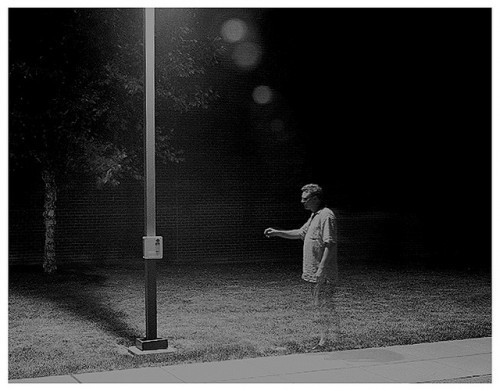

Photo by Bill Ohl
Photo by Bill Ohl

There has been a lot of talk about magic lately in critical, cultural and technological spaces; what it does, who it is for, and who are the ones to control or enact it. As a way of unpacking a few elements of this thinking, this essay follows on from the conversations that Tobias Revell and I, and a whole host of great participants had at Haunted Machines, a conference as part of FutureEverything 2015 which examined the proliferation of magical narratives in technology. With our speakers we discussed where these stories and mythologies reveal our anxieties around technology, who are the ones casting the spells, and where – if possible – these narratives can be applied in useful ways.

As an ex-literature student, I’m quite interested in ghost stories as analogy, because they can reveal, or be an interesting way of exploring, these anxieties; where the voices in the static are coming from, where the pipes are creaking, and what they tell us about what our technology is doing or can potentially do to us.

I’m going to use a load of slightly ham-fisted contemporary narratives to signpost the anxieties that come out of two personal and increasingly algorithmically mediated spaces: the social network and in the home. Where does the role of narrative in magic, the supernatural, and the unknown allow us to get a better grasp of technology’s power over us?  Where are the uncertain terrains of our technologies creating the capacity for hauntings, and where can techniques used to imagine future scenarios better equip us for the ghosts to come? When we think of a haunting, we think of the unseen forces acting upon our domestic space, and when considering technology, a reappropriation of Clarke’s third law that Tobias Revell summoned with his work on Haunted Machines can apply– Any sufficiently advanced hacking is indistinguishable from a haunting. But where else are we haunted? more...

Image by Th3 ProphetMan

I’d like to start off with an admittedly grandpa-sounding critique of a piece of technology in my house: My coffee maker’s status lights are too bright. My dad got it for my partner and I this past Christmas and we threw-out-the-box-immediately-wanna-keep it, but the thing has a lighthouse attached to it.  We live in a relatively small (and very old) place and our bedroom is a small room right off the kitchen. The first night we had the coffee maker I thought we had forgotten to turn off the TV.  We don’t really need alarm clocks anymore either, because when it finishes brewing it beeps like a smoke detector. Again, we love the coffee maker (Dad, seriously we love it.) but sometimes it feels like wearing a shoe that was designed for someone with six toes. more...

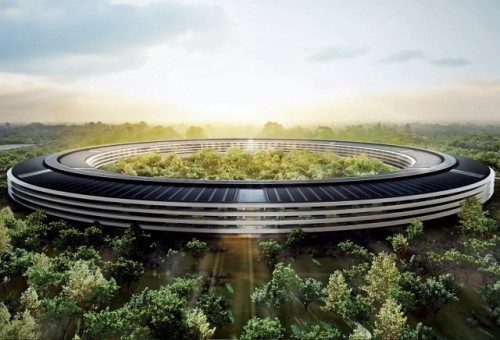
The Planned Headquarters of Apple Inc.

The year is 1959 and a very powerful modern art aficionado is sharing a limousine with Princess  Beatrix of the Netherlands. The man is supposed to be showing off the splendor of the capital of what was once —so optimistically— called New Amsterdam. His orchestrated car trip is not going quite as he had hoped and instead of zipping past “The Gut” and dwelling on the stately early 19th century mansions on Central and Clinton Avenues, Beatrix is devastated by the utter poverty that has come to define the very center of this capitol city now called Albany, New York. The art aficionado, unfortunately for him, cannot blame some far away disconnected bureaucrat or corrupt politician for what they are seeing because he is the governor of this powerful Empire State and he has done little to elevate the suffering of his subjects. He resolves, after that fateful car trip, to devote the same kind of passion he has for modern art to this seat of government. Governor Rockefeller will make this city into a piece of art worthy of his own collection. more...

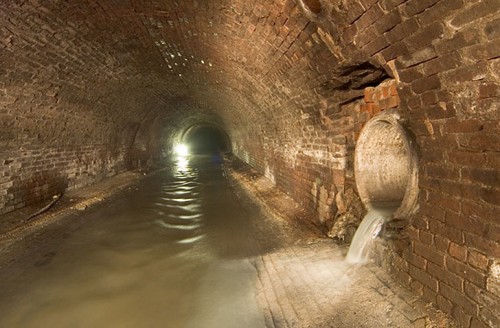
c/o inhabitat.com

Science and Technology studies scholars have long understood that the physical structures and architectures of everyday life both reflect and construct human values, propensities, lines of action, and behavioral and social constraints. This was famously described by Langdon Winner with regards to the segregationist role of Robert Moses’ low bridges on the New York highway system.  Recently on this blog, David Banks (@DA_Banks) wrote a beautiful essay on the technology, and technological artifacts of Troy New York.  Indeed, the architectures of spaces in which we move shape how we move and reflect normative expectations about how we ought to move. more...

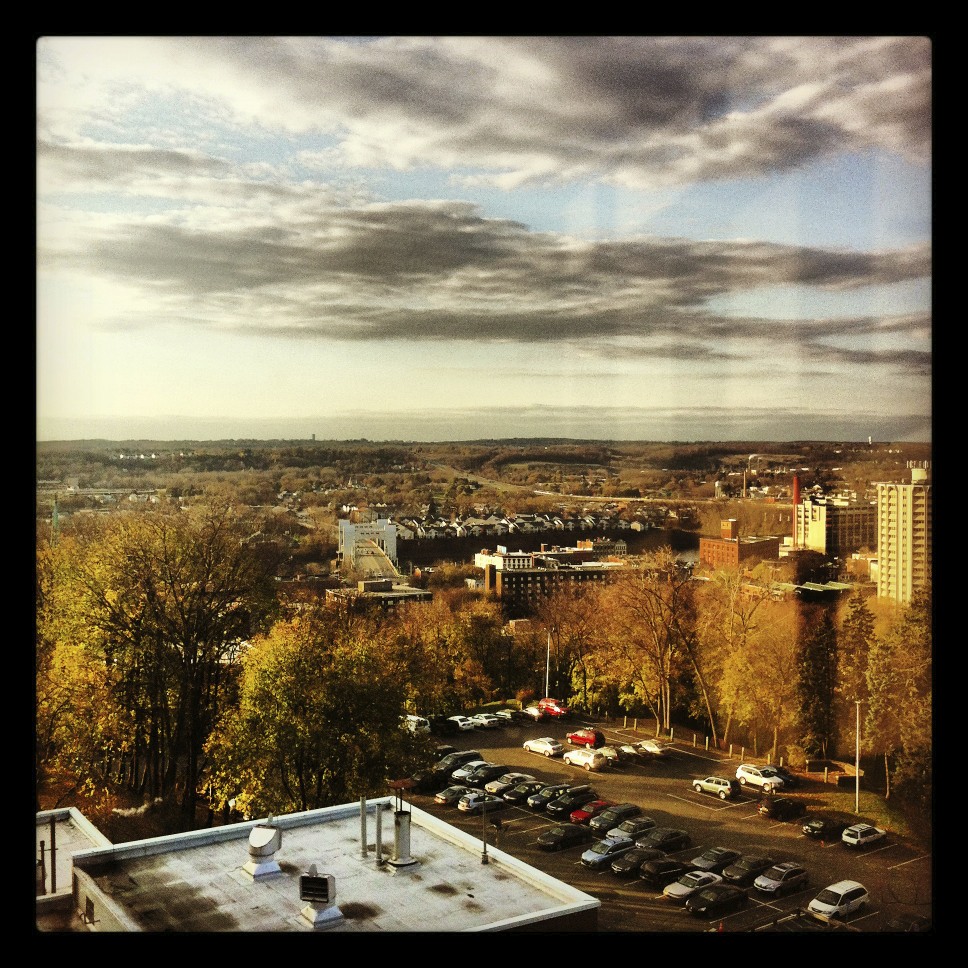
Original: http://instagram.com/p/R0mwsdzeVH/

There’s nothing particularly glamorous about Troy, New York. Troy is a city that, in an alternative universe, might have been a major metropolitan region. It stumbled early though, one of the first places to suffer the oxidation of the iron belt. What it lacks in size or elegance it makes up for in internal contradictions and a special brand of awkward coquettish charm.  It is the home of Uncle Sam and the setting for Kurt Vonnegut‘s novels. Its buildings have been painted by Norman Rockwell and torn down by public officials in search of progress. The local university has one of the highest-paid presidents, but also hosts the Yes Men. My campus office is on the fifth floor of a 19th century chemistry laboratory. The former lab sits atop a steep hill, providing a view that, on clear days, can go for miles.  The view from my office (above) is an eclectic blend of multiple decades of technological achievements and blunders. Highways, public housing, suburban enclaves, and the husks of Victorian factories stand in conversation with one-another like old friends. It is obvious that they need each other.  Some get along better than others, but they would be lost without the others’ continued existence.  New technology may be introduced to us as singular entities; improvements and replacements that make the old obsolete and irrelevant. More often than not however, these technologies find themselves sitting next to veterans of past technological revolutions. I have lived in Troy for almost three years now, and each day is a lesson in the history of technology.  more...

Several weeks ago, I wrote a post about how we not only manage our image (outgoing) but also curate our view (incoming). As a very brief summary, I argued, based upon data from my own ongoing social media study, that despite the potential for social media to expose us to a variety of perspectives and opinions (creating a public sphere, or at least a public space), we discriminately select which perspectives and opinions to let in, and which to exclude. In doing so, we curate reality. Though this manifests in a variety of ways, a prevalent manifestation is the management of one’s Facebook News Feed.

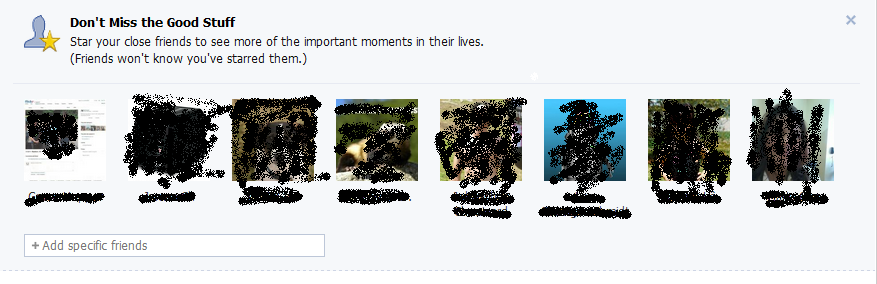
A new push for the (apparently long present) feature on Facebook, in which users are asked to “star” the Friends whose content they want to make more visible, further supports this trend. More importantly, however, it demonstrates the mutually influential relationship between physical architectures, normative social structures, and personal practices.

The physical architecture of a space (online or offline) simultaneously shapes, and is shaped by, those who use it. For instance, the typical classroom is set up with an instructor who stands at a high desk in the front of a room, facing students, who sit in low desks, with their bodies and eyes oriented forwards and upwards towards the teacher. This both creates and reflects a particular power dynamic, and guides how participants in the interaction think about and act towards themselves and one another. Similarly, architectures of online spaces reflect and guide who we are and what we do in those spaces.

more...

Mediating Mediums, an architectural augmented reality video. Via Wired’s Beyond the Beyond.

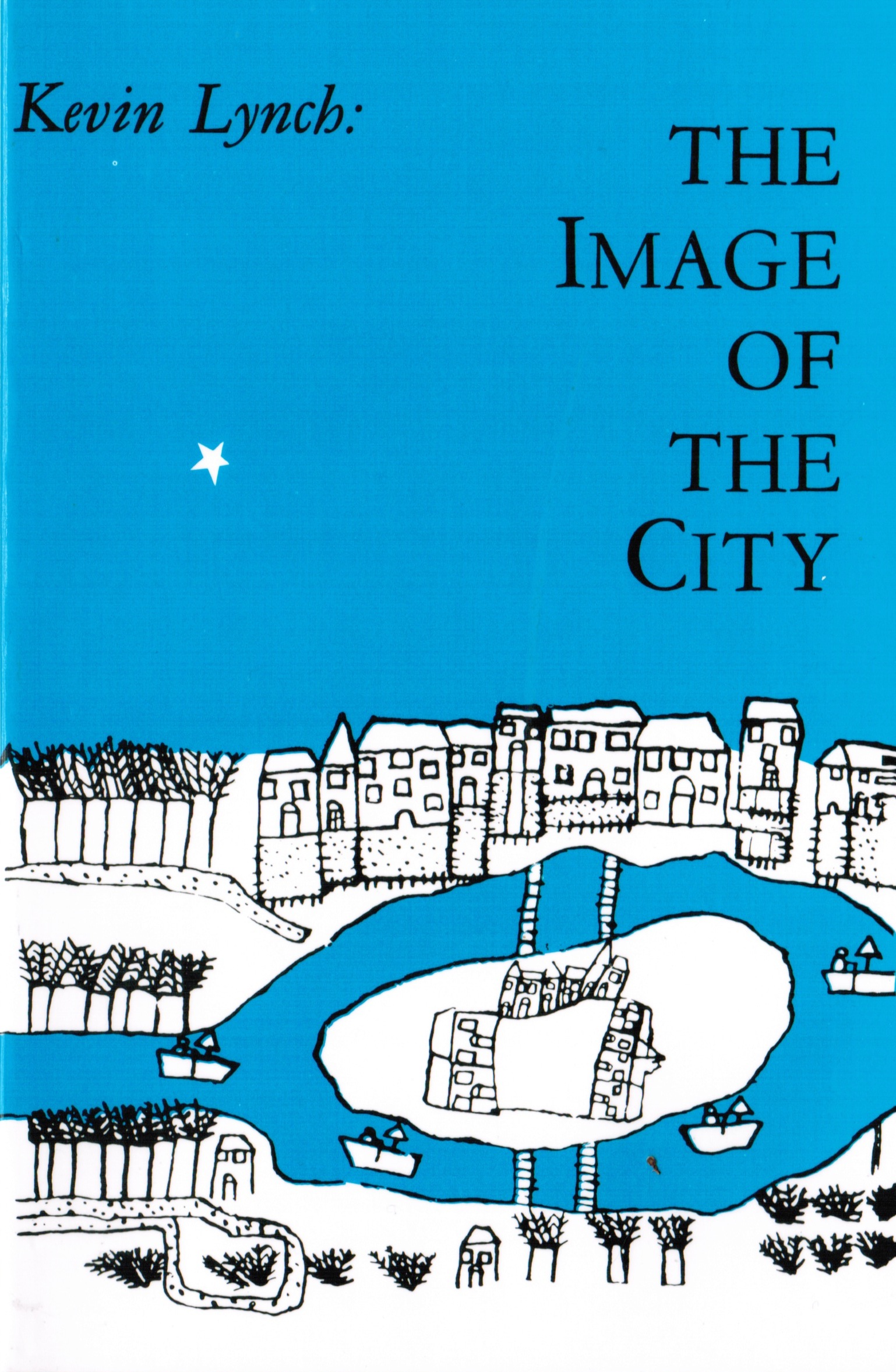
Kevin Lynch’s Original Study (Copyright MIT Press 1960)

In 1960 an architect by the name of Kevin Lynch embarked on a fascinating three-city study of how urban dwellers keep mental pictures of their hometowns. He and his team identified five “elements” of the city: 1) paths, 2) edges, 3) nodes, 4) districts, and 5) landmarks. These five components constitute most of the ways individuals think about and navigate their city. As smartphones become more and more ubiquitous, the way we navigate cities has changed. We have GPS devices, interactive maps, social networking applications that tell us where our friends are and where they like to go for pizza. The city exists in physical space, it exists in our minds, and now it exists in the digital “cloud.” How does this new layer of bits effect the way our cities look, act, and feel? To know more about the How to update the maps on your Garmin device , go through this.

I want to briefly discuss the five elements before conjecturing how access to information changes what these elements look like and how we organize the city in our heads. Paths can be more...