
Editors & Authors
Meet the folks who make the Cyborgology Blog happen.
Editors
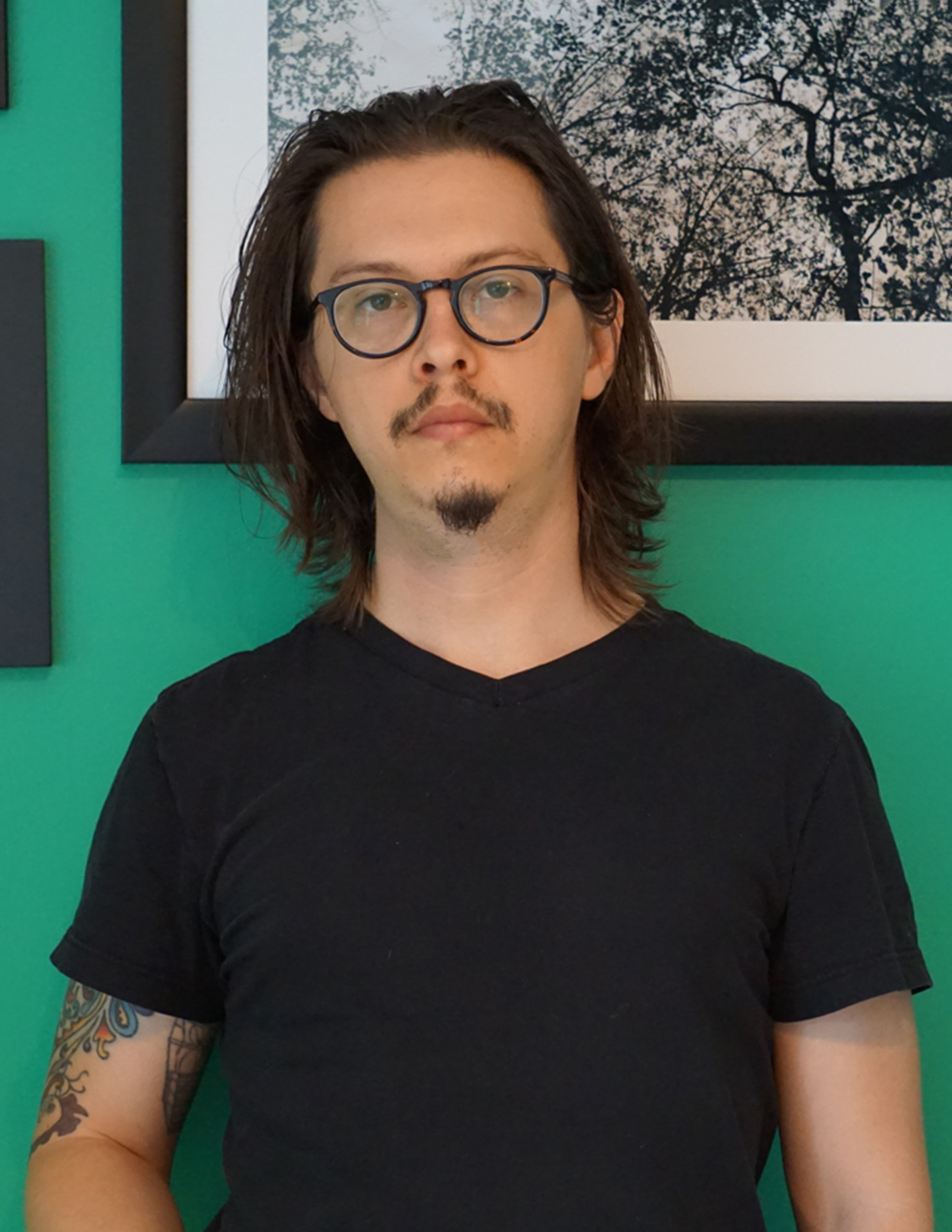 David A Banks (@da_banks) is a writer, researcher, and teacher. He is co-chair for Theorizing the Web, editor-at-large for Real Life, and Associate Research Advisor for the Social Science Research Council. His work has also been featured in Real Life, The New Inquiry, The Baffler, Tikkun Magazine, The Alt, and McSweeney’s Internet Tendency. David’s work focuses on the geographies of authenticity: how places buy and sell their histories to visitors and potential new residents, usually on social media. He’s also interested in the ideological training of engineers. When he isn’t writing he is watching Star Trek with his partner Britney and their two cats.
 Jenny Davis (@Jenny_L_Davis) is a lecturer in the School of Sociology at the Australian National University. She studies identity, culture, and technology. She approaches her research theoretically and methodologically from multiple directions, utilizing formal theory and experimental work, participant observation and ethnography. She is engaged in several ongoing projects which often make guest appearances—in varying forms—through the content of her blog posts. Her publications appear in Sociology, Communication, and Interdisciplinary journals. An active proponent of accessible scholarship, you can find select articles un-paywalled on her academia.edu page. When she’s not teaching, writing, or editing Cyborgology, she’s running amok after three particularly high-energy dogs.
Regular Contributors
 Crystal Abidin (@wishcrys) Dr Crystal Abidin is an anthropologist and ethnographer. She researches vernacular internet cultures and study young people’s relationships with internet celebrity, self-curation, and vulnerability. Her current projects look at contemporary internet folklore, grief and death in digital spaces, romance and coupling in public spaces, and mixed heritage. She is presently finishing up two monographs on blogshop culture and the Influencer industry. Crystal is Postdoctoral Fellow with the Media Management and Transformation Centre (MMTC) at Jönköping University, Researcher with the Swedish Retail and Wholesale Development Council, and Adjunct Research Fellow with the Centre for Culture and Technology (CCAT) at Curtin University

Nathan Ferguson (@natetehgreat) is a writer who lives in Columbia, MO. He has a BA in creative writing and is interested in narratives – their affordances as a technology and in conjunction with other technologies, e.g. mass media and digital platforms, but also race, gender and carceral systems. When he’s not writing for Cyborgology or occupied at his desk job, he is active in the Mid-MO DSA chapter, learning to cook, hanging out with his girlfriend B or probably somewhere petting a cat.
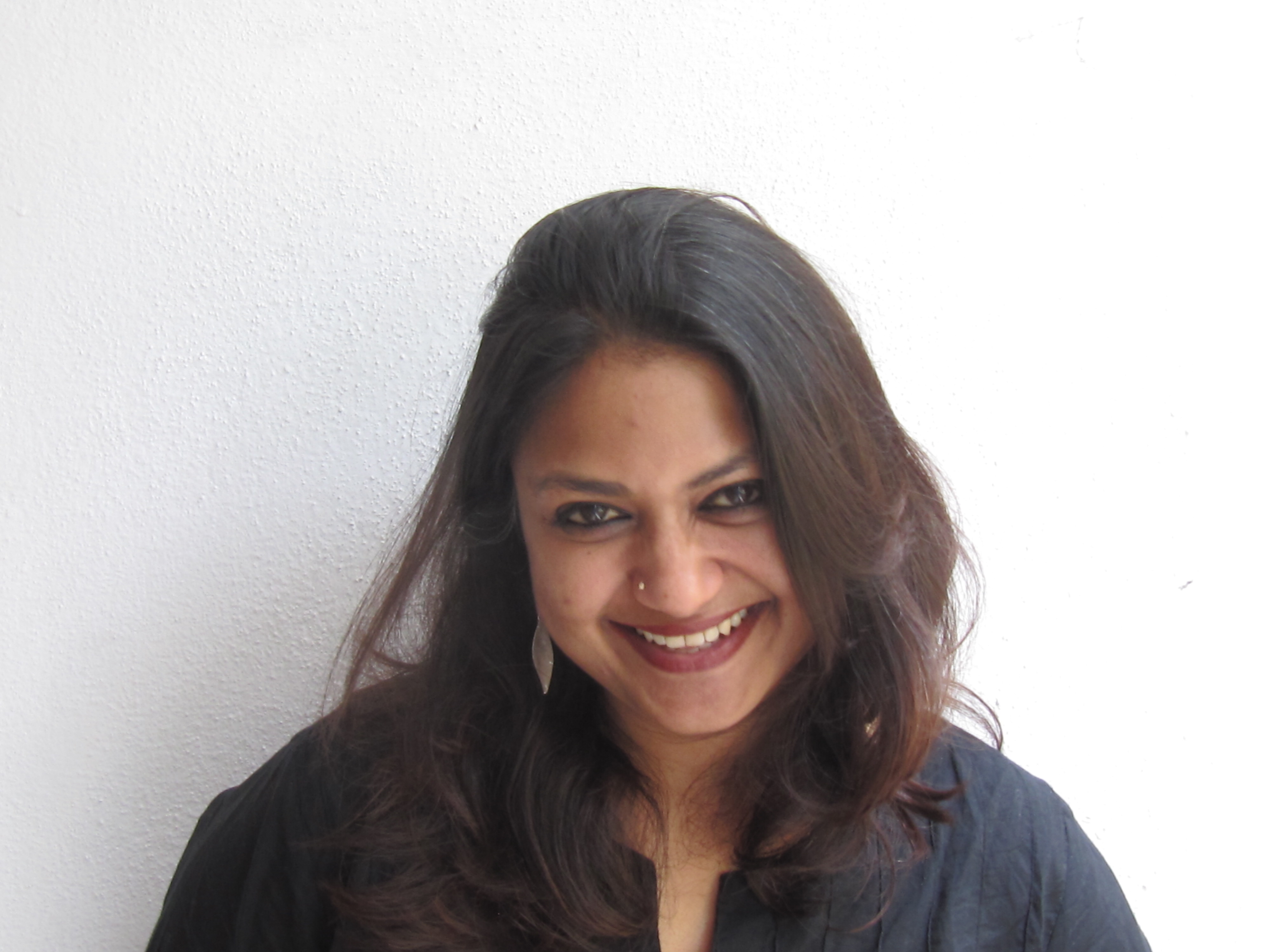 Maya Indira Ganesh (@mayameme) Maya is an Indian feminist researcher, writer, and activist living in Berlin where she works with Tactical Technology Collective as the Director of Applied Research. At Tactical Tech, she works as an in-house writer, leads the organisation’s projects on Gender and Technology, and does research to support the organisation’s work on the social and political implications of living in a data society. She has a particular interest in ethnographic approaches to how individuals and communities interact with technology, from in-depth portraits of mobile phone use by women, and queer people in Bombay, to how LGBTQ, black, mixed race, and working class activists in Kenya and South Africa negotiate privacy and security in using technology for organising and activism. She conducted one of the first studies of Indian women’s online spaces in 2008, identifying patterns of online harassment, and intimacy, in the Indian internet. She has Masters degrees in Applied Psychology (Delhi, 1997) and Media and Cultural Studies (Sussex, 2007), and is a doctoral candidate at Leuphana University, Lüneburg studying how ethics is being shaped in terms of accountability for artificial intelligence in autonomous vehicles.
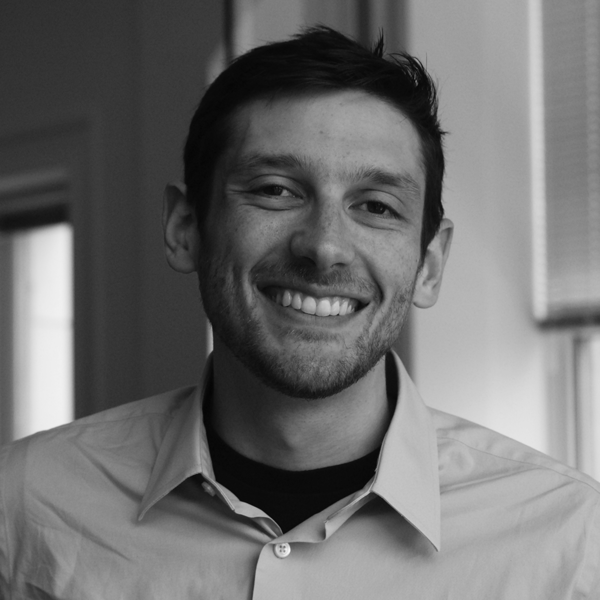 Gabi Schaffzin (@GabiSchaffzin) is pursuing his PhD in Art History with an Art Practice concentration at the University of California San Diego. His art and research consider the visual representation of pain and illness in a technologically mediated world dominated by a privileging of data over all else. You can see the emerging dialog between his research and artistic practice—much of which draws on the imagery and rhetoric of advertising and product design—at utopia-dystopia.com.
 Marley-Vincent Lindsey (@MarleyVincentL) is a doctoral student in history at Brown University. He was happily studying Medieval Europe and the Hispanic Atlantic in college when he took a class called “Critical Videogame Studies.” Upon realizing people could (and should!) take the web seriously, he started writing about games, digital media and the digital humanities. Currently, he’s thinking about how the web transforms old questions asked by historians, how historical tropes are currently used and transformed online, and how people will write histories in the future (hint: with archives of memes and messengers.) In his spare hour, he’s probably playing Pokémon or exploring cities.
 Jessie Sage (@sapiotextual) is an independent scholar interested in sex work advocacy, feminism, and reproductive justice. She has received an MA in Philosophy from Duquesne University, a Graduate Certificate in Women’s and Gender Studies from Duquesne University, an MA in Theology from the Graduate Theological Union at UC Berkeley, and a BA in philosophy from the University of San Diego. She has taught philosophy, ethics, and women’s and gender studies at Duquesne University and Chatham University, and has also worked as a doula. She currently works as a Pittsburgh based alternative model, clip producer, phone entertainer, and feminist activists. She is the co-creator, producer and host of the Peepshow Podcast (peepshowpodcast.com), a podcast which brings together sex workers, writers, activists, artists, and journalist to talk about issues of sex and social justice; and the co-founder of Pittsburgh’s Sex Worker Outreach Project (@PghSWOP).
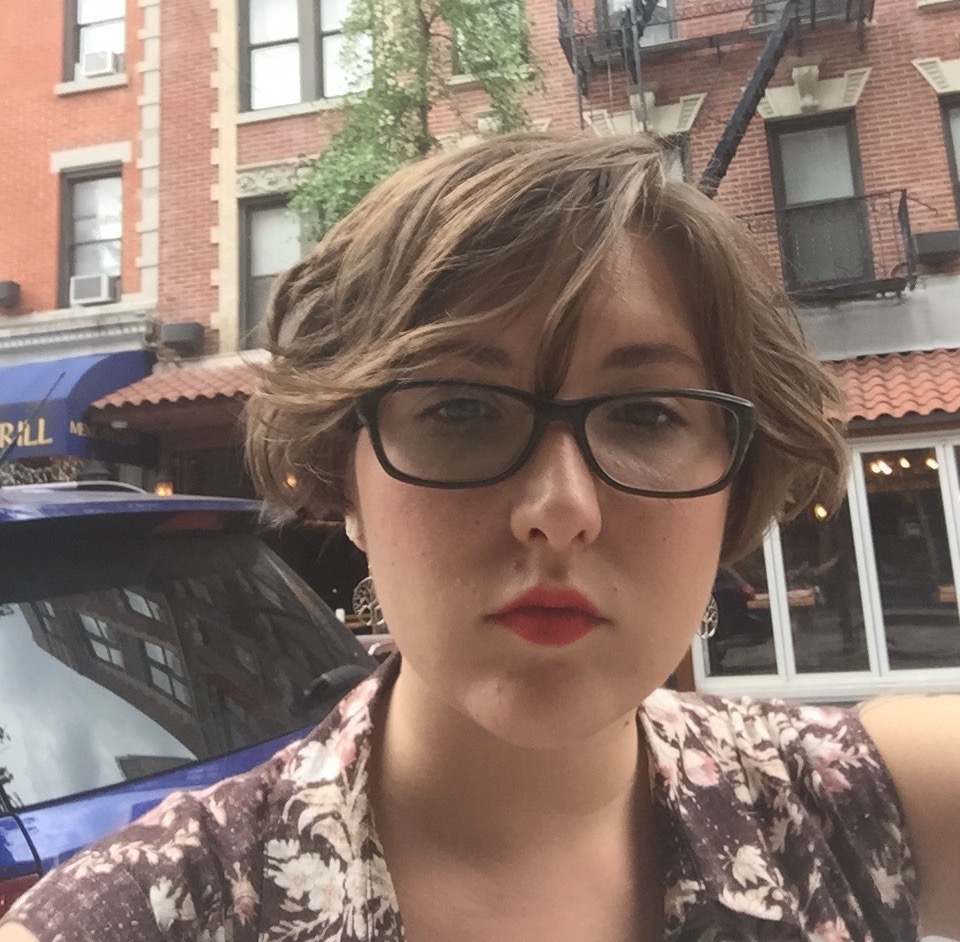
Britney Summit-Gil (@bsummitgil) is a PhD student in Communication and Media at Rensselaer Polytechnic Institute. Her research includes mass media representations and the negotiation of identity in digital environments, specifically constructions of masculine identities. She’s interested in bridging traditional humanities-based approaches with qualitative sociological methods, such as textual analysis informed by ethnographic inquiry. Her academic focus includes community building online, the “postfeminist” media landscape, and the various ways people interpret mass media texts from television and film to inform their understanding of the world. Using affect theory, rhetorical theory, and cultural and media studies approaches she tries, with varying degrees of success, to map the intersections of mass media, digital media, and capitalist ideologies. She lives in upstate New York with two awesome cats and her spouse David Banks. In her spare time she makes cookies, watches trash TV, and browses Reddit because “research.”
 Sarah Wanenchak (@dynamicsymmetry) is a doctoral candidate in sociology at the University of Maryland, where their work concerns technology and social movements and how emotion and meaning evolve when the two merge. They have also written extensively on the intersections of social justice, narrative, and video games, and their essay work has been featured in The New Inquiry. They write science fiction and fantasy under a pseudonym and have published several novels to date, and their short fiction has appeared in numerous anthologies and magazines, as well as in multiple Year’s Best collections. They spend way too much time yelling about things on Twitter.
Past Contributors
 Whitney Erin Boesel (@weboesel) is a researcher at both the Berkman Center for Internet & Society and the MIT Center for Civic Media, where she uses qualitative methods and network analysis to study framing and influence in online media (particularly as related to sexual and reproductive health and rights). She is a co-chair of the International Workshop on Misogyny and the Internet (Cambridge, June 2015), an organizer of the annual conference Theorizing the Web (NYC), and an organizer of the unconference Point to Point Camp (Cambridge, May 2015); in her “spare time,” she continues her ongoing (since 2010) ethnographic study of the group Quantified Self and does occasional freelance writing. Her Masters thesis focused on direct-to-consumer genetic testing, personal genomics, and self-tracking practices as part of a new form of biomedicalization that she cheekily terms “biomedicalization 2.0”; her undergraduate thesis was a three-act play. Her other major (academic) interests include social media, sex and gender, and the sociology of emotion; her theatre scripts have been performed in Cambridge, MA, and her creative writing has appeared both under her legal name and under various pseudonyms. [Whitney uses her full name in professional or formal contexts, and her last name is pronounced “basil”—like the herb.]
 Robin James (@doctaj) is Associate Professor of Philosophy at UNC Charlotte. She is author of two books: Resilience & Melancholy: pop music, feminism, and neoliberalism will be published by Zer0 books in early 2015, and The Conjectural Body: gender, race and the philosophy of music was published by Lexington Books in 2010. Her work on feminism, race, contemporary continental philosophy, pop music, and sound studies has appeared in The New Inquiry, Noisey, SoundingOut!, Hypatia, differences, Contemporary Aesthetics, and the Journal of Popular Music Studies. She is also a digital sound artist and musician. Her website, which has PDFs of all her publications, is its-her-factory.com.
 David Paul Strohecker (@dpsFTW) is getting his PhD from the University of Maryland, College Park. He studies under Patricia Hill Collins and George Ritzer, focusing on issues of intersectionality, consumption, and popular culture. He got his BA in 2009 from Texas A&M University, where he studied under Joe R. Feagin, and wrote for the blog RacismReview.com. He currently studies popular culture, but remains interested in issues of race relations, white privilege, and gender inequality. He is currently doing work on the popularization of tattooing, a project on the revolutionary pedagogy of public sociology, and more theoretical work on zombie films as a vehicle for expressing social and cultural anxieties.
Founding Editors
Nathan Jurgenson (@nathanjurgenson) is a social media theorist, contributing editor at The New Inquiry, a researcher at Snapchat, and a sociology graduate student at the University of Maryland. The research is driven most fundamentally by the understanding that we increasingly live in an “augmented reality,” a perspective that views the digital and physical as enmeshed, opposed to viewing them as distinct (what he calls “digital dualism”). Nathan is also interested in and has published on how social media has triggered the rise of the digital “prosumer” (one who produces that which they consume and vice versa). Most recently, Nathan has been writing about surveillance, privacy, visibility, and the self. This is being applied to social media and photography for a forthcoming book, and in other work, the design of social platforms around ephemerality and metrics.
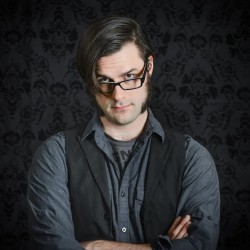 PJ Rey (@pjrey) is a PhD candidate at the University of Maryland. He co-founded the annual Theorizing the Web conference and the Cyborgology Blog together with Nathan Jurgenson. His MA thesis argued that social media is an environment where exploitation thrives in a relative absence of alienation. He is beginning dissertation research examining digitally-mediated sex work with a particular interest in how such work is experienced as embodied interaction. When not dissertating, he dabbles in portrait/event photography and hifi geekery.
Guest Authors
Nilofar Ansher (@culture_curate) is pursuing her Master of Arts in Ancient Civilizations from the University of Mumbai, India. She is an editor, writer and researcher and blogs at http://www.trailofpapercuts.wordpress.com.
Jeremy Antley (@jsantley) is a writer/student/gamer who currently lives in Portland, OR and writes on all sorts of interests on his blog, Peasant Muse.
Sally Applin (@AnthroPunk) is a Ph.D. Candidate at the University of Kent at Canterbury, UK, in the Centre for Social Anthropology and Computing (CSAC). Sally researches the impact of technology on culture, and vice versa.
Mike Bulajewski (@MrTeacup) is a Master’s student in Human-Centered Design & Engineering at the University of Washington.
Piergiorgio Degli Esposti (@pgde) studies Market and Consumption Behavior and is Assistant professor at Bologna University, Italy and a Marketing Consultant.
Ned Drummond (@maneatingflower) is a designer and artisan currently living in Washington, DC.
Nathan Fisk (@nwfisk) is a danah boyd fanboy and adjunct lecturer teaching “Youth and Teens Online” in the Science & Technology Studies department at Rensselaer Polytechnic Institute.
Doug Hill (@DougHill25) is a journalist and independent scholar who has studied the history and philosophy of technology for fifteen years. More of this and other technology-related topics can be found on his blog, The Question Concerning Technology.
Rob Horning (@marginalutility) is an editor of the New Inquiry.
Airi Lampinen (@airi_) is a graduate student in Social Psychology at the University of Helsinki, Finland, and a researcher at Helsinki Institute for Information Technology HIIT. Currently, she is interning at Microsoft Research New England.
Tanya Lokot (@tanyalokot) is a second-year PhD student at the University of Maryland, College Park, pursuing a degree in journalism and media studies. Her interests include social social movements, urban protest in post-Soviet countries, digital media, augmented dissent, memes and data visualization.
Cheri Lucas (@cherilucas) focuses on literary nonfiction and memoir on her blog, Writing Through the Fog, and explores ideas on the self, relationships, social media, memory, and home in a physical-digital world. She is based in San Francisco.
Timothy McGettigan is a professor of sociology at Colorado State University – Pueblo.
Christine Moore (@thisthingblows) studies sexuality and is currently pursuing her Masters in sociology at the University of Texas San Antonio. She reluctantly tweets.
Sang-Hyoun Pahk is a sociology student at the University of Hawaii at Manoa.
Dave Parry (@academicdave) studies how the digital network transforms our political relations. He is an assistant professor of Emerging Media at the University of Texas at Dallas. His work can be found at http://www.outsidethetext.com.
Matt Rafalow is a Ph.D. student in Sociology at University of California, Irvine, studying intersections of technology, youth, and social inequality.
George Ritzer is a distinguished professor at the University of Maryland and the author of many books including The McDonaldization of Society and Enchanting a Disenchanted World.
L. M. Sacasas (@FrailestThing) is a PhD student in the University of Central Florida’s “Texts & Technology” program exploring the intersections of bodies, spaces, and technology. He blogs at The Frailest Thing.
Evan Selinger (@evanselinger) is an associate professor of philosophy at Rochester Institute of Technology.
Behzod Sirjani (@beh_zod) is a PhD Student in Media, Technology, and Society at Northwestern University. He thinks out loud frequently on Twitter and on his blog.
Marc Smith (@marc_smith) is a sociologist specializing in the social organization of online communities and computer mediated interaction. Smith co-founded the Social Media Research Foundation, a non-profit devoted to open tools, data, and scholarship related to social media research.
Bonnie Stewart (@bonstewart) is an educator, writer, and Ph.D student exploring social media subjectivities at the University of Prince Edward Island, Canada.
Francesca Tanmizi is an ex-Sociology major at Loyola Marymount University who only realized she missed writing Sociology essays after graduation.
Samuel Tettner is a Venezuela-born globally situated cyborg, interested in science, technology and their critical and empowering understanding, currently pursuing a Masters degree in Society, Science and Technology in the Netherlands.
James Vincent (@jjvincent) is a writer and journalist from London. He tweets in a generally noncommittal fashion.
Samuel Zwaan (@mediawetenschap) is a teacher and student in Media Studies at Utrecht University.