
technology

Image: A group of people wait in line, it’s raining. Image via Lars Plougmann, CC BY-SA 2.0.

At this very moment, as you read this, you are waiting on something. We all are waiting on something, always. As anthropologist Ghassan Hage wrote, we wait for “an ice cream and for final judgment.” The coronavirus pandemic has illuminated waiting. We waited to hear guidelines from government and health officials. We waited for our stimulus checks. And, now, we wait for our turn to get a vaccination.

A difficult part of waiting is that we often do not know how long we will wait. For example, how long will we wait for a coronavirus vaccine? Research has found the importance of temporal specificity, meaning the presence or absence of a deadline as an assurance of action. A specific timeframe, telling a person when the waiting will end, gives “some degree of control over the situation, through knowledge” (Rotter, 2016).
Time is an irreplaceable and finite resource. Waiting can feel like a waste of time. Researchers have observed that, thanks to technology, waiting can be “more than empty time” (Sebald, 2020). Digital media and “speed of connectivity is the antipode to waiting” (Wexler, 2015). Digital connection makes waiting more tolerable.
While waiting is universal, the experience of waiting is not the same for everyone–and, in fact, waiting is rife with inequalities. Sociologist Barry Schwartz perhaps has done the most to illustrate these inequalities, writing “the distribution of waiting time coincides with the distribution of power” (1974). Pierre Bourdieu (2000) writes that “making people wait” – or “delaying without destroying hope” and “adjourning without totally disappointing” – are primary elements of domination. Ultimately, those who have the power to make others wait demonstrate that their time is more valuable than someone else’s time.
Photo by Sasha Kimel, Flickr CC

We at The Society Pages have written about the study of “white supremacy” in social science. This term can be used to describe overarching patterns of privilege and power that favor whites or a term that bigotry, prejudice, and belief that whites are a superior race. It may be easy to think that this latter meaning has become less relevant in the contemporary, “post-racial” world, but this is not the case.

In recent years, beliefs about the superiority of whites have actually re-emerged within the political mobilization of populist attitudes, anti-immigrant sentiment, and Right-wing political beliefs in Western democracies. To capture these distinctive and troubling realities, scholars, reporters, and cultural commentators have increasingly begun to use the term “white nationalism.” White nationalism is not just a remnant of outdated, obsolete prejudice; rather, it is has been reconfigured and revitalized for the new global world.

Modern white nationalist rhetoric constructs the image of a historically white country and populace under attack amidst a world of 21st-century immigration, globalization, and shifting racial landscapes. By advancing nativist rhetoric and mobilizing such sentiments in the political arena, white nationalist organizations forwarded understandings of “white” that draw on the idea that the Western world is meant for white people. This has had important political consequences in the USA and Europe; politicians and parties who advance anti-immigration platforms have been bolstered by these dynamics.
Even though relatively few politicians and political parties have openly endorsed white nationalist statements, research shows that white nationalist rhetoric and nativist messages can impact political discourse even among moderate groups. In essence, the presence of white nationalist rhetoric can shape the contours of political discourse more generally. Research has studied such dynamics with an eye to common digital media of the 21st century; the discursive impacts of white nationalist rhetoric are particularly visible in studies of the Internet, social media, and other such platforms. In the 21st century, prominence in the digital sphere is important to how contemporary white nationalist groups make their presence felt. 
It is important to remember white nationalism and right-wing beliefs are not simply empty rhetoric without material consequence. Authors have described how white nationalist rhetoric and organization can affect electoral results — the “Brexit” vote being one of the most obvious current examples. In addition, upticks in white nationalism and nativist sentiment have been paralleled by increased hostility and violence against minority and immigrant populations, as well as the institutionalization of laws that restrict such groups’ rights by targeting their cultural and religious practices. For example, the push for “burqa bans” in several European countries reflects mobilization by nativist groups that has cast the burqa as a symbolic challenge to national identity. This and example and ones like it highlight the white nationalist belief that the nation should be defined by whiteness and designed for whites.

Photo by Kandukuru Nagarjun, Flickr CC

This post was created in collaboration with the Minnesota Journalism Center.

Technology has its share of perks and benefits. Past articles on The Society Pages demonstrate how artificial intelligence and technology can help enhance journalism and curb trafficking and trolling online — but scholars have also found technology has a dark side. Meredith Broussard calls it, “technochauvinism,” a belief that tech is always the solution to the world’s problems. It is a red flag, she says, because “there has never been, nor will there ever be, a technological innovation that moves us away from the essential problems of human nature.”
One of these problems is unequal access to the internet. On The Society Pages, we highlighted how access to the internet influences activism. Other research shows how access to the internet influences various societal practices including predictive policing, real estate markets, affordable housing, social services and medical care. For example, predictive policing is a developing area of inquiry. This practice has come under scrutiny for its lack of transparency and potential to assign inaccurate risk scores to individuals that may become a victim or offender in a violent crime, which can lead to the overpolicing of already marginalized areas.
Scholars have also discovered that blue-chip companies, including Google, produce search results that marginalize underrepresented populations. Further, there is fear that algorithms are writing people out of jobs. While algorithms do have the potential to write people out of jobs, different fields may experience this to various degrees. This may be true for professions including paralegals: Up to 69 percent of paralegals’ time could be automated. In the journalistic profession, reporters and editors are in better shape due to their ability to animate algorithms to their advantage: As a human-centered process, algorithms have the potential to increase reporting outputs with less human effort. But algorithms aren’t neutral — they are produced by people, and they have the potential to reproduce marginalization.
Photo of a drone flying in the air near a statue of Joan of Arc.
Photo by Ted Eytan, Flickr CC

This post was created in collaboration with the Minnesota Journalism Center.

The landscape of journalism is changing every day. The Pew Research Center reported that newspaper newsroom employees declined by 45% between 2008 and 2017, and Nieman Lab argues that newsrooms are in the midst of a “do-or-die moment.” As traditional newsrooms lose hundreds of reporters and editors annually, content creators including WikiLeaks and Deadspin are coming alongside legacy media outlets including CNN, the BBC, and The New York Times to provide information to the public. All of these players publish content online in a journalistic fashion, raising the question of what journalism is as a profession.

In the midst of a shrinking workforce, scholars are starting to pay attention to “interlopers” and “intralopers:” Interlopers are actors or institutions who may consider the work they do to be part of news media, though they do not always define themselves as journalists; web analytics companies are one current example. Intralopers are similar to interlopers, but instead work from within news organizations as specialists in digital and social media and often produce emerging technology meant to complement journalists’ work. Both play increasingly key roles in journalistic spaces.
Machines and software packages are beginning to play a more central role in news gathering, news selection, news writing, news editing, and news distribution in newsrooms worldwide. Drones are one example of machines occupying space traditionally held by journalistic actors. 2016 was a turning point for the institutionalization of drones in newsrooms in the United States, when the Federal Aviation Administration (FAA) amended aviation regulations to allow for widespread experimentation with drones in American journalism. Since that date, journalists from outlets including The New York Times and The Washington Post have produced compelling stories, photos and videos but have also go through a comprehensive federal certification process (Columbia Journalism Review recently wrote about this phenomenon).
Analytics and metrics also play a key role in newsrooms nationwide. However, journalists have varying opinions of how influential their role is in their daily routines, with some arguing that analytics challenge journalists’ authority to decide which stories are newsworthy.
Beyond analytics and metrics, journalists and technologists often collaborate with each other on a regular basis to create open-source software programs. One example is “hackathons” — events where coders and journalists come together to find solutions to journalistic problems in the interest of creating a brighter future for news outlets worldwide.

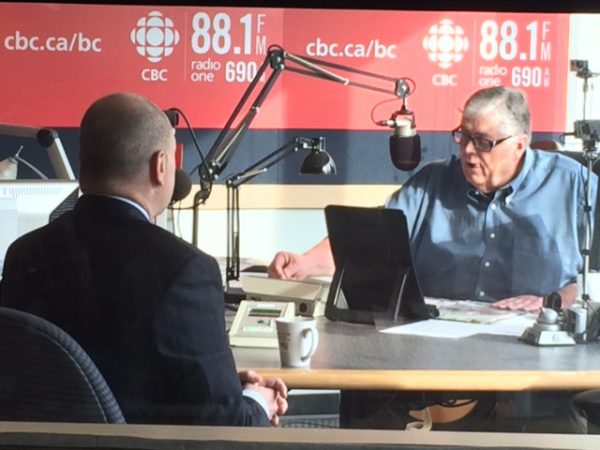
Photo of a radio interview by US Embassy Canada, Flickr CC

On January 31, The New York Times responded to a letter from Kimberly Probolus, an American Studies PhD candidate, with a commitment to publish gender parity in their letters to the editor (on a weekly basis) in 2019. This policy comes in the wake of many efforts to change the overwhelming overrepresentation of men in the position of “expert” in the media, from the Op-Ed project to womenalsoknowstuff.com to #citeblackwomen.

The classic sociology article “Doing Gender,” explains that we repeatedly accomplish gender through consistent, patterned interactions. According to the popular press and imagination — such as Rebecca Solnit’s essay, Men Explain Things to Me — one of these patterns includes men stepping into the role of expert. Within the social sciences, there is research on how gender as a performance can explain gender disparities in knowledge-producing spaces.

Women are less likely to volunteer expertise in a variety of spaces, and researchers often explain this finding as a result of self-esteem or confidence. In 2008, for example, only 13% of contributors to Wikipedia were women. Two reasons cited for this gender disparity were a lack of confidence in their expertise and a discomfort with editing (which involves conflict). Likewise, studies of classroom participation have consistently found that men are more likely than women to talk in class — an unsurprising finding considering that classroom participation studies show that students with higher confidence are more likely to participate. Within academia, research shows that men are much more likely to cite themselves as experts within their own work.
This behavior may continue because both men and women are sanctioned for behavior that falls outside of gender performances. In the research on salary negotiation, researchers found that women can face a backlash when they ask for raises because self-promotion goes against female gender norms. Men, on the other hand, may be sanctioned for being too self-effacing.
Knowledge exchange on the Internet may make the sanctions for women in expert roles more plentiful. As is demonstrated by the experiences of female journalists, video game enthusiasts, and women in general online, being active on the Internet carries intense risk of exposure to trolling, harassment, abuse, and misogyny. The social science research on online misogyny is recent and plentiful.

Social media can also be a place to amplify the expertise of women or to respond to particularly egregious examples of mansplaining. And institutions like higher education and the media can continue to intervene to disrupt the social expectation that an expert is always a man. Check out the “Overlooked” obituary project for previously underappreciated scientists and thinkers, including the great sociologist Ida B. Wells.

For more on gendered confidence in specific areas, such as STEM, see our TROT on Gendering Intelligence.

Photo of a protester holding a sign that says, “Stop deportation! I need my daddy,” with a picture of a child. Photo by Fibonacci Blue, Flickr CC

This post was created in collaboration with the Minnesota Journalism Center

A Way Out of the Immigration Crisis.”Like it or Not, Immigrant Children are Our Future.” “Trump Talks Tough on Immigration in Nevada but it Could Backfire.

All three of these news headlines were published by mainstream news outlets in the United States in September 2018. All three portray immigration in a negative light. While much news and media coverage across the globe portrays immigration negatively, researchers who study this area also identify media outlets that include more positive coverage. 

One thing scholars have found is that immigration coverage has increased rapidly since 2004. In U.S. coverage, there is a heavy focus on “immigration reform” and “tougher border control” as solutions to the immigration “problem.” Across the pond in the United Kingdom, polls have ranked immigration as one of citizens’ top concerns, with coverage of immigration being overwhelmingly negative and centered on conflict through utilization of crime frames and discussion of immigrants as “illegal” or “failed.”
But not all publications discuss immigration in the same way. For example, scholars have found that African-American media outlets publish immigration stories with racial frames that depict immigrants as allies, while other major mainstream media outlets frequently utilize crime frames that discuss the legal status of immigrants.
Research also shows suggests that the conflict-oriented news coverage of immigration contributes to polarized public opinions about immigration policies in digital spaces as well as comment sections of mainstream news sites. Conversely, social and mobile media in Australia has been used as a platform for asylum-seekers in detention to share their experiences with the public directly. Journalists and citizens alike have collaborated with detained asylum-seekers to create journalistic narratives that raise awareness of human rights violations unfolding in offshore detainment centers. Though not embraced by all consumers, such stories about immigration appear to cultivate expressions of empathy from audiences.

Photo by Becky Stern, Flickr CC

The newest Apple Watch can now warn users when it detects an abnormal heartbeat. While Apple may be on the cutting edge, many people have been using apps to track their food intake and exercise for some time. Social science research demonstrates that health-tracking technology reflects larger social forces and institutions.

These health-tracking apps are part of a larger trend in American medicine that researchers call “biomedicalization,” which includes a greater focus on health (as opposed to illness), risk management, surveillance, and includes a variety of technological advances.
Benefits of using these apps include empowering patients and not having to rely on doctors for knowledge about one’s body, which — as many of the apps advertise — may save time and money by potentially allowing them to avoid doctor visits. However, self-tracking may put more onus on the individual to maintain their health on their own, leading to blame for those who do not take advantage of this technology. Further, using this technology could lead to strain in doctor-patient relationships if doctors believe patients are undermining their authority.

As more and more Americans use smartphones, the promise of digital technology, including health-tracking apps, for reducing existing health disparities grows. However, the Pew Research Center shows large income and educational gaps still exist in smartphone use, meaning the health benefits of using such technology — as well as potential downfalls — for the greater population, may be a long way off.

Photo by André Zehetbauer, Flickr CC

During PRIDE month Americans celebrate gender and sexuality spectrums, but many social arenas still rely on a rigid binary. Athletics is one of the spaces where gender segregation still dominates. In fact, its strict separation of sports into male and female competitions actually requires sport administrators to set and police the boundaries between the sexes and has created many controversies and conundrums in recent years. Sociological research illustrates how actors use gender verification, or sex testing, in athletics as a weapon of nationalism, sexism, and racism, thus reinforcing a medical view of the gender binary in an attempt to ensure “fair play.”

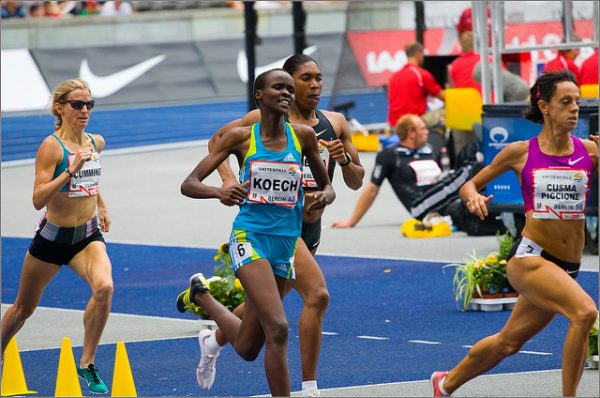
Gender verification in international athletics was part of the battlefield of the Cold War. Systematic sex testing in the Olympic Games began in 1968, largely in response to concerns about the dominant performances of the East German women and fears or rumors of men posing as women. In addition to being used as a weapon of nationalism, gender verification testing targeted athletes who did not conform to white, Western norms of femininity. Even after systematic sex testing was (briefly) eliminated by the International Olympic Committee in 2000, “suspicious” athletes such as the middle-distance runners Santhi Soundarajan and Caster Semenya were forced to undergo gender verification in 2006 and 2009.
Sport federations continue to defend gender verification of women — but not men — on the basis of “fair play,” or the idea that women competing against men face an unfair athletic disadvantage. Feminist scholars have critiqued the fair play reasoning as a smokescreen for the policing of women, especially as sex segregation and drug testing are two of the only ways that sport federations attempt to enforce a level playing field. Additionally, sex testing forces a medical definition of sex and draws sharp lines that punish individuals who are intersex, have chromosomal abnormalities, or have higher than average levels of androgens.

How sex has been defined and verified has shifted as the medical understanding and technology available has advanced, but all gender verification methods will continue to struggle with how to fit the wide spectrum of gendered individuals into only two boxes.

Photo by faungg’s photos, Flickr CC

As the fall final exam season creeps up, students are returning to their notes and — hopefully — recalling everything they learned this semester. But what kind of notes do they have, and will those notes be helpful? We wondered whether taking notes via pen and pencil versus typing made a difference for students. Here’s what we found!   

Technology isn’t going away in the classroom. School districts across the country are getting grants from governments and tech companies to expand their technology options, especially increasing access to technology for traditionally underserved populations and experimenting with new forms of content delivery. But researchers have looked into the potential negative effects of technology on learning, especially the multitude of potential distractions for students using laptops in class. They find that college students who have laptops in lectures are on average less engaged, less satisfied with their education, and perform worse than other students.
In experimental studies, students who used laptops were more likely to write down exactly what was said, which involved less thinking and processing during the notetaking process. Students who took notes longhand were better prepared to answer conceptual questions on the content, even when those who took more extensive notes on laptops were able to study their notes before the quiz.
On the other hand, researchers have argued that technological innovation and changes in classrooms may make notetaking an out-of-date skill altogether. This research focuses on inclusion and the potential ability for technology to assist students with physical or cognitive disabilities.

Just when we thought the season’s hottest tablet or smartphone picked up on Black Friday might be a new FBI black site, The Economist reports some tech giants are working extra privacy measures into their gadgets to protect user data. By making services like text encryption available by default, this trend provides extra privacy for some users (mostly those who aren’t already targeted for surveillance), despite criticism from law enforcement that it shields criminal networks from investigation. While we usually think about privacy as an individual right to be left alone, social science shows why these trends are important for a public conversation about what privacy should be.

Americans’ emphasis on the right to privacy remains high, and while public opinion did tend to favor increased government surveillance immediately following September 11th, 2001, support for these practices has declined since.
But privacy isn’t just isolation from governments or other people. Classic research argues it is an ongoing social relationship where we negotiate interactions with others, and more current work shows this relationship changes across time and place.
Current studies of how people use technology show that privacy concerns kick in when people share information online. It also finds this focus on individual behavior ignores structural privacy concerns about the devices themselves and how people learn to interact with them. The “encrypted by default” trend starts a new conversation about what our shared, social definition of privacy should be.