Archive: Aug 2009

I just learned about the brilliant site Kickstarter today. On Kickstarter, artists, musicians, inventors, journalists, or whoever can post a project they want to fund. The web site encourages generous people (with disposable income) to make small contributions to the projects. A few examples:
-Two brothers need $10,000 to finish their documentary about Fred Rogers (of “Mr. Rogers Neighborhood”)
-A singer-songwriter needs $3500 to record his debut album.
-A writer needs $5000 to fund a road trip to see various examples of folk architecture for a book.

In exchange donors get rewards from the project planners. If it’s a band, maybe you’ll get a sticker for a $5 donation, a digital copy of their album for $10, and a live performance at your house for $1000. The rewards depend on the project.

It occurs to me that this would be a fantastic way to fund research. It would mean that research was conducted for which there was genuinely popular demand. Maybe the public wants an ethnography of transgendered cowboys in the rodeo circuit, but has little interest in funding a survey on TV viewing habits. It would mean research went forward that matters to people.

Heck, I’d put one of my own future projects up there for funding, but I’m not sure what rewards I can offer. What’s the limit on how many people you can thank in a journal article’s acknowledgement?

While I tend to agree with Paul Krugman that the Obama healthcare proposal is most akin to a Swiss-style healthcare programme {Hat Tip:: KM}, I think it’s useful to look at systems comparatively.  This clip is not from Sicko, but from CBS Sunday Morning::

While the French model is having its problems on the financing side and it is indeed embedded with French culture, I think it provides insights into thinking about healthcare as an institution.  I’m interested in how policy can shape innovation and if the federal government has monopsony power, it can create incentives for improvements in delivery.  The diagnostic approach and the housecalls are interesting approaches, but this would necessitate change.  Sociology predicts that there will be institutional resistance to change, but health care reform has the unique opportunity to shape new institutional logics.  I saw a presentation at ASA on compliance with a law limiting the hours of medical residents.  You would think it was a no-brainer.  It’s the law, hence there would be compliance.  Wrong.  The social construction of the medical establishment overrode this, shaping actual praxis.

Twitterversion:: Clip from #CBS Sunday Morn. on French healthcare. While not directly applicable, food 4 thought re: innov. & improvements.http://url.ie/28qf @Prof_K

Song:: La Mer

La Mer – Francoise Hardy

Pointing out the obvious

Anyone curious on how how pro-single payer physicians think about the issues, I encourage you to check out the Physicians for a National Healthcare Program {PNHP} FAQ.  Here’s a list of PNHP single-payer resources, as well.  As stated in an earlier post, I view health care as infrastructure that can spur innovation, creativity, and entrepreneurship and like many in the biotech. industry, I see a single-payer model {public finance of healthcare, as opposed to provision} as important for implementation of genomic medicine.

I won’t go into the healthcare debate and media circus, but will link to an article on a recent NBC poll.  Interestingly, 36% believe that Obama’s reform efforts are a good idea, but 53% support a paragraph describing his plans.  It’s a communication problem.  If you think all of the cacophony at the town halls is helping the GOP, you’re wrong.  The NBC poll reports 62% disapprove of their handling of health care.

The PNHP is highly critical of the administrative costs of healthcare and are no fans of the insurance industry.  Insurance also affects how healthcare providers do their jobs.  I have access to hospital data that’s used to “manage care” to maximize insurance reimbursement.  Moreover, there are powerful incentives in the insurance industry to maximize profits by denying claims.  The PNHP recognizes that a single-payer system will adversely affect insurance::

“The new system will still need some people to administer claims. Administration will shrink, however, eliminating the need for many insurance workers, as well as administrative staff in hospitals, clinics and nursing homes. More health care providers, especially in the fields of long-term care, home health care, and public health, will be needed, and many insurance clerks can be retrained to enter these fields. Many people now working in the insurance industry are, in fact, already health professionals (e.g. nurses) who will be able to find work in the health care field again. But many insurance and health administrative workers will need a job retraining and placement program. We anticipate that such a program would cost about $20 billion, a small fraction of the administrative savings from the transition to national health insurance.”

So, shouldn’t we be concerned about insurance ?  Are they getting a bad rap?  Are they really evil?  Isn’t it a part of financial intermediation, providing the critical function of polling resources and spreading risk?

Malcolm Gladwell in a 2005 New Yorker article did a good job of explaining two forms of insurance:: social and actuarial.  Social insurance pools money from many for a public good, regardless of usage, in order to sustain an infrastructure.  Actuarial insurance is quite different and has been the pathway that US healthcare has been going::

“How much you pay is in large part a function of your individual situation and history: someone who drives a sports car and has received twenty speeding tickets in the past two years pays a much higher annual premium than a soccer mom with a minivan.”

Think pre-existing conditions.  The actuarial model is why biotech. wants a single-payer system.  Genomics identify risks and will eventually match individuals, diseases, and therapies on the basis of genetic information.  Doctors see this on the horizon and Robin Cook, MD offered this NY Times op. ed. on how he had revised his views on universal health care.

But, if you were to craft a business model, which would you choose to invest in, if you wanted to make the most profit?::  {1} social insurance that pools equal premiums from all and allocates care to all or {2} actuarial insurance that charges more for people who have a higher likelihood of becoming ill and can deny care for pre-existing conditions or treatment deemed unwarranted.  The actuarial model can easily align with a set of values of individualism, as well as moral judgments about treating certain diseases {e.g., a smoker with lung cancer}.  I’ve seen people on discussion boards claim that “I can take care of my own” and perplexed why everyone else cannot.  How I see it, the current debates are really about using individualism to protect corporate interests.  I see plenty of incentives for the actuarial insurance industry and politicians to fan the argumentative flames about wild-eyed hypotheticals, as opposed to substantive debates about implementation. The devil is in the details.

Gladwell concluded his article with the following::

“In the rest of the industrialized world, it is assumed that the more equally and widely the burdens of illness are shared, the better off the population as a whole is likely to be. The reason the United States has forty-five million people without coverage is that its health-care policy is in the hands of people who disagree, and who regard health insurance not as the solution but as the problem.”

Twitterversion:: Who will weep 4 actuarial US health insur. indstry? Are they/backers obfuscating real debates on implmntatn w/histrionics?http://url.ie/28qa @Prof_K

Song:: Pay For It – Lloyd Cole

Cool stuff for the day.

From the Good Magazine blog, Inhabit.com and Dwell have announced the finalists of a fantastic competition called Reburbia.  Participants were invited to consider how we could re-envision declining suburbs.  According to the contest description:

In a future where limited natural resources will force us to find better solutions for density and efficiency, what will become of the cul-de-sacs, cookie-cutter tract houses and generic strip malls that have long upheld the diffuse infrastructure of suburbia? How can we redirect these existing spaces to promote sustainability, walkability, and community? It’s a problem that demands a visionary design solution and we want you to create the vision!

Here are the  winners:

Turning McMansions into Biofilter Water Treatment Plants,

Rezoning suburban residential areas to include commercial ventures

and

Creating Big Box agriculture defined as: turning big box store parking lots into farms, the interior of the stores into greenhouses and restaurants, and many of the existing structural details into renewable energy generators.

Looks nice, but the big question is how you frame these changes so that local governments and NIMBY types are receptive. If anyone knows of any places where these types of ventures are happening, shoot me an e-mail.

Bee Lavender has a poignant piece in guardian.co.uk on why she prefers the British health care system (NHS) to the American version.  Here’s the key passage in her essay.

In the US, the greatest restriction on personal freedom that I have ever encountered in my own life, or witnessed in the lives of friends, all comes down to health insurance. Creative, innovative, talented people are unable to change jobs because they need the insurance. Small companies collapse because they cannot afford employee insurance. People die because they do not have insurance.

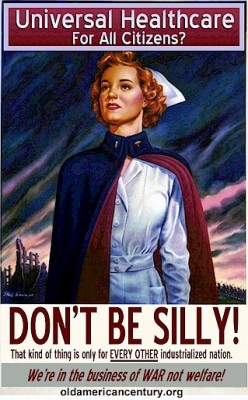
This to me seems the critical issue we need to work through as we move forward in the U.S. health care debate. Has the U.S. system reached a ceiling in its desire to create the underlying conditions for a free society? We’ve always had a struggle with spending on public goods in this country, but have lurched towards funding basic services to create a just society (education, Medicare, Social Security, etc.). There are lots of ways to cover everyone and the NHS has its critics, but I’m not sure if we as a nation think that access to health services is a precondition for living in a free society. I fear we become too fragmented or skeptical of government’s ability to provide public goods? I’m not sure if we in the social sciences can do more to help drive the debate since the question of universal coverage is about value orientations.

My Ph.D. alma mater, Boulder, Colorado, is home to the best performing housing market in America, which I why I had to live in a basement on Baseline and Dartmouth for four years 🙂  Check out how many of these markets are in college towns:

The Top 30 Housing Markets in America.

HT: Planetizen

HT: Planetizen

Civic engagement denizens, be careful what you wish for. A New York Times article elaborates on the Strange New World of Public Participation resulting from the traveling “town-hall-meeting-palooza” of the past two weeks:

The result was a series of made-for-YouTube moments, with video clips played endlessly on the Internet and cable television, the logical extreme, perhaps, of an era when Joe the Plumber is really named Sam. Along the way, another kind of Joe — Joe Six-Pack, the average Joe — seemed to disappear, pushed into the background by crowds bearing scripted talking points and signs.

“We’re living in the era of the viral town meeting,” said Ross Baker, a political scientist at Rutgers University who once worked as a Senate aide. “I remember back in the ’70s getting identically worded telegrams in the thousands. What’s happened now is the technology of protest has metastasized, and it threatens to overwhelm the relationship between members of Congress and their constituents.”

The advent of the Internet has created “hyper-public” spaces where the object of “discourse” (I’m being generous calling it that) is an audience of millions even if the pretext is a town hall meeting of dozens. Here’s Arlen Specter getting bum-rushed (I know, I’m 39, what do you want!) by his constituents.

The combination of a contentious issue, public forums, cell phone cameras and You Tube is a primeval soup for loud, outrageous rhetoric that can fill the 24 hour news hole. The question is whether members interpret this as the pulse of their constituents or an orchestrated set of activists using new technology effectively. I find all of this wanting…. If you’re going to make a scene at a town hall meeting, it should look like this:

Zuma Dogg Fights City HallWatch today’s top amazing videos here

I’d like my own Johnnie Cochrane team

Click on image to play clip
Click on image to play clip - Judd Nelson in The Breakfast Club on family life

I’ve been wanting to blog about John Hughes for some time and with his recent passing I’ve given it a bit more thought.  Andrew’s blog on generation was the most recent time, as I was thinking about how each generation has its cultural touchstones.  Gen-Xers might recall their reactions to:: coming of age in the era of Reagan or Mulrooney, the AIDS scare, seeing John Hughes films, hearing the ubiquity of pop stars like Springsteen, Madonna, and Michael Jackson, the crumbling of the Berlin Wall, the Tiananmen massacre, political correctness, being typified by a slacker young-adulthood, relating to Cobain’s angst, relating to someone from the cast of Friends, living the era of diminished expectations, dot com to dot bomb, seeing Ferris Bueller 15 years later as a broken Jim McAllister {Election}, relating to the dysfunction of life through Palahniuk or the neurosis of it through David Sedaris, 9-11, celebrating failure with Wes Anderson and the Venture Brothers, the bubble economy, market meltdowns, and seeing that shift from W to O.

I was never a fan of John Hughes films.  The experiences portrayed didn’t resonate with me and the message was about the status quo masquerading as rebellion.  A few years later I would be in a French lit. course realizing that I had the same reaction to the overblown sentimentality of romanticism.  Hughes has a deft hand at skewering adults, portraying them as buffoons, and showing slabs of teenage life with all of its and pain injustices {See above clip of Judd Nelson in The Breakfast Club}, but at the end of the day, the universe gravitates towards a social equilibrium of winners and losers.  Of course, with a cool soundtrack.

My “heroes” at that time were in the UK, in the likes of Geoff Travis of Rough Trade Records, Tony Wilson of Factory Records, and designer Peter Saville, all iconoclasts of a sort, whose ideals would eventually clash hard with the vagaries of market capitalism.  In the mid-1980s, I felt these guys were onto something, an æsthetic and an ethos that was far removed from the suburban milieu of Hughes’ territory, which at the end of the day was just more identity posturing on my part.  I remember wanting to go to university in order to start the next Rough Trade, back when alternative was post-punk or new music.  So, imagine my chagrin upon seeing Hughes coöpt music that mattered to me back in the day, e.g., The English Beat {Ferris Bueller racing to get home running through yards to “Rotating Heads”, Psychedelic Furs {“Pretty in Pink”}, and the Smiths {The Dream Academy covering “Please, Please Please Let Me Get What I Want”}.

Hughes’ mid-1980s was squarely in the Reagan era and his films are evocative of the zeitgeist of the times.  I think several of Hughes’ films capture this well and I can’t help but wonder how growing up in this era has affected Gen-X.  Hughes was a conservative himself and the defunct Premiere magazine dubbed him as a Normal-Rockwell-in-Hollywood type of guy.  I think this 2006 Slate article has it right, his “conservatism” wasn’t one that celebrated old money elitism and stuffiness, but rather an optimistic Reagan Republicanism with a party-animal twist.  Put another way, a middle-of-the-road “moderatism” of quiet desperation punctuated by good times.  Rebellion was an incrementalist affair and our individualistic identities navigate seemingly treacherous waters of acceptance, but at the end of the day, nothing really changes.  Misguided as it may have been, this is how I perceived many of my peers.  Aware of the hypocrisy of society, but far too complacent to do anything about it.  I would meet revolutionary characters from Gen-X years later, but it dawned on me that in a generation that often values the status quo, iconoclasts are going to be hard to spot, as they’re often content to be flying under the radar.

On a ThickCulture note, I finally had the pleasure of meeting Andrew Lindner at this year’s ASA.  I now feel pressure to get up to speed with soccer in order to have something reasonably intelligent to say when he and José start talking about the game.

Twitterversion:: Pondering political conservatism of #JohnHughes, captured 80s zeitgeist& a GenX touchstone. Does this inform who GenX is? http://url.ie/27hk  @Prof_K

Alleged destruction as a result of Pranknet

Crossposted on Rhizomicon.

Just a short blog, as I’m on the road en-route from Toronto to San Francisco for ASA. So, I got into Iowa City around 9PM last night and I saw a tweet from CBC, linking to a story on the “mastermind” behind Pranknet, Tariq Malik. The Smoking Gun goes into great deal outing Pranknet {with media clips} and their nefarious activities and BoingBoing and Canoe.ca have a short articles on the matter.

In a nutshell, Tariq and others used Skype to make various prank phone calls getting unsuspecting people to do destructive things based on appeals to authority for chatroom audiences. In a sense, it’s reminiscent of the Stanley Milgram experiments on obedience. It also reminds me of ethnomethodological “breaching experiments” but this isn’t about social science, this is for the “lulz.” See this NYTimes article on “lulz” and “malwebolence” that a friend forwarded to me last summer {HT: Terri}.
Tariq wanted to build an audience based on his comedic “genius,” but since being outed, he’s cowering in his mom’s Windsor, Ontario apartment.
Twitterversion:: {Twitter is was down, 6 August 2009 9:55 CDT}  Canadian Web 2.0 “terrorist” outed by The Smoking Gun http://url.ie/26mf & http://url.ie/26mg #ThickCulture #CBC @Prof_K