In her book Ethnic Options: Choosing Identities in America, Mary Waters discusses the ways in which White Americans are able to pick and choose among their various ancestries, deciding which (if any) ones to actively claim and in what context. Certain White ethnicities tend to be quite popular, so that people are likely to actively identify themselves as, say, Italian or Irish, whereas others, such as Scottish or Scots-Irish, are relatively unpopular and people are likely to drop those ancestries from their ethnic identity.

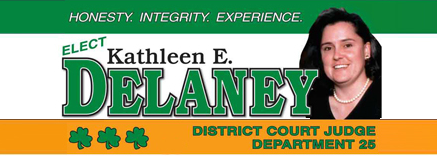
Here is a screenshot from the website of Kathleen Delaney, a candidate for judge here in Las Vegas:

Although there is no explicit mention of it anywhere in her campaign materials, I presume, by the shamrocks and the use of the colors of the Irish flag, that she is Irish American. By using these symbols, she is able to signal her ethnicity, which she clearly is proud of and also feels will not impact her campaign negatively (thus her willingness to actively bring attention to it when there is no clear reason to do so).

This illustrates some important aspects of Waters’ argument. Whereas non-Whites often cannot get others to ignore or forget their race, Whites generally have the option of going unmarked–as just “plain” Americans, if you will. That doesn’t mean White ancestries are meaningless or unimportant, but it does mean they have different consequences. Whites can choose when to emphasize their ethnicity, and doing so has few negative consequences. Today there are no significant differences among White ethnic groups in terms of major indicators of quality of life or economic status. So the vast majority of the time there are no real downsides to claiming a White ethnicity, since being White trumps being German or Norwegian or Irish (although of course in the past there was significant discrimination aimed at certain groups of European immigrants, particularly the Irish, Italians, and eastern Europeans).

On the contrary, claiming an ethnic identity lets Whites feel special and interesting. One of the weird things about our racial system is that, though non-Whites are often stigmatized and Whites are at the top of our racial hierarchy, Whites are also often portrayed as culture-less and boring (see this post for an example). So being not just “plain” American but instead Swedish-American seems neater.

This might make a good contrast to the ways in which Barack Obama’s race has been discussed in the presidential election. Whereas he has had to actively address issues of race, and try to downplay it and portray himself as a “post-racial” candidate, Delaney can actively bring attention to an ethnicity that would otherwise probably go unnoticed by most voters, and she clearly thinks that doing so isn’t going to harm her chances of getting elected.

UPDATE: In a comment, Megan pointed out that the ability to “mark” yourself with symbols of your ethnicity can be limited by whether or not those symbols are known well enough by the general public to be recognizable. She says,

Being Swedish-American may be “neat” as you say, but putting some Swedish symbols on a bumper sticker won’t really be understood outside of the upper midwest.

It’s a good point–whereas the shamrock is widely recognized as a symbol of Irishness, I can’t think of any similar symbols of Swedishness off the top of my head, and blue and yellow, the colors of the Swedish flag, certainly don’t immediately signal “Sweden” to me when I see them. So of course anyone can use symbols to signify their ancestry, but not all of those symbols are going to be meaningful to observers. If the Delaney sign had been blue and yellow, and she had some Swedish symbol in place of the shamrocks, I probably never would have written this post because I wouldn’t have even recognized it as ethnic signalling.

Thanks, Megan!

A recent installment in the Sexist Body Wash Ad category [see any Axe ad for others], Old Spice’s Double Impact body wash uses a centaur [man/horse hybrid] to suggest that the hybrid product will boost users’ sexual potency. The centaur calls himself “two things at once.” The first time, he says he’s “a man AND a smart shopper.” The second time, he says that he’s “a man AND a provider.” The viewer thus easily links the “man” with the human part of the centaur and the “smart shopper,” along with the “provider,” with the equine part by process of elimination. Drawing in the idea of a particularly potent man being “hung like a horse,” the ad implies that users of Old Spice body wash are not only “smart shoppers” and good “providers,” but also that they are heterosexual [notice the woman as prop, signifying the centaur’s heteronormative orientation] dynamos in the sack [stall?] with really big penises! The message, however, is complicated by the fact that the centaur is apparently composited from a male model and a female horse, who is obviously not hung. Hooray for polysemy!

[youtube]http://www.youtube.com/watch?v=YtN9CW01QDM[/youtube]

For further interesting hybrids, you can see video at the product’s Web site shows the same male model combined with different animals, including a slug, an octopus and a snake, as well as non-animal things, such as a tree, a cannon and a fish stick [?]. I’m not sure what to think about them….

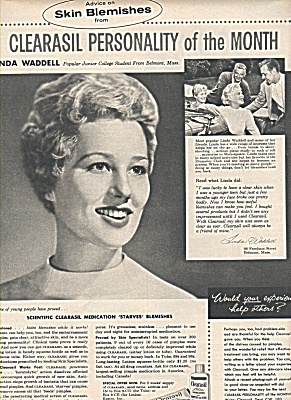
In the 1950s, Clearasil started a new marketing campaign called Clearasil Personality of the Month. These were ads disguised as advice columns that ran in magazines. They featured the stories of real girls who wrote in to Clearasil to talk about their own struggles with acne and, of course, how they finally overcame this horrible affliction with the help of Clearasil. Here is an example (found here), a piece on a college student named Linda Waddell:

Sorry, the resolution isn’t good enough for me to be able to read all the text, so I don’t know what it says. The general layout was that teens and young women wrote in with little bios about themselves and descriptions of the problems they’ve experienced with pimples.

Notice the connection between clear skin and popularity–we see a picture of Linda surrounded by friends in the upper right corner (and, most importantly, a guy is clearly paying attention to her).

I originally read about this feature in Joan Jacobs Brumberg’s book The Body Project: An Intimate History of American Girls. She discussed it in the context of talking about increasing concern about acne and the rise of a whole host of products to combat it. However, I think it would be great for a discussion about advertising, particular about efforts to disguise advertising as simple information or entertainment (it’s still often difficult to distinguish these categories in women’s magazines). It’s also a good example of a marketing campaign that attempts to appeal to consumers by getting them to think of a product almost as a friend–here, the product is personified by nice, wholesome-looking girls who were just providing friendly advice to other girls just like them.

You still see the strategy of portraying products as friends that help women–for instance, ads for food products or cleaners that depict them as friends that help women get everything done, since apparently no one in their families will. See this post for a humorous take on some of these ads.

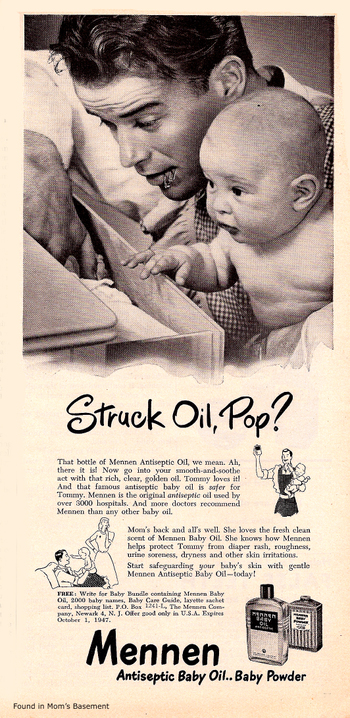
Next time you feel all warm and fuzzy about how far we’ve come since the bad ol’ days when men weren’t encouraged to take of of children like they do now (by the way, they largely do not), remember this ad (found here):

I don’t detect a hint of sarcasm here. Do you? Or am I oh-so-not-in-touch with 1940s comedic culture?  I could be wrong.  Am I wrong?

I saw this shirt online at a site advertised on YouTube. It also comes in “women’s cut” tees and spaghetti string tank tops. The story here is old…

Also see the last t-shirt in this post: “I like my women like my chicken, battered.”

In her book The Body Project: An Intimate History of American Girls, Joan Jacobs Brumberg has a chaptered titled “Perfect Skin” in which she looks at the rise of acne as a significant concern among adolescent girls. Because pimples and blackheads were believed by some people to be a sign of immorality–masturbation, lascivious thoughts, or promiscuity–both teenagers and their parents were quite distressed at the appearance of teen acne. Though teens had long been concerned about their appearances, the widespread use of mirrors in bathrooms starting in the Victorian Era gave them many more opportunities to examine their faces and find themselves lacking. And girls tended to be more concerned about their faces than boys, perhaps because girls were judged more harshly for any perceived sexual immorality. A whole industry arose to sell generally useless products to teens, particularly girls, to cure their acne.

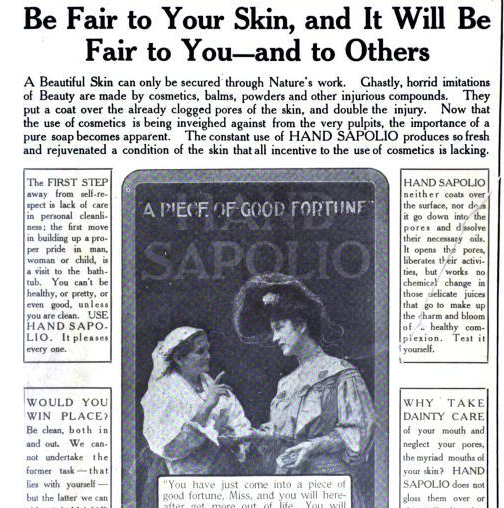
Marketers for soap and other products used concerns about morality in their ads. Here is an ad for Hand Sapolio, a popular soap in the early 1900s (found in a 1906 issue of McClure’s Magazine):

Notice how the text in the top box mentions that cosmetics, which might be used to cover pimples, were being “inveighed against from the very pulpits,” meaning good moral girls couldn’t use cosmetics to hide their acne. Also I like how the title (“Be Fair to Your Skin, and It Will Be Fair to You–and to Others”) implies that if you aren’t fair to your skin, it is going to do something dreadful to the people around you…presumably busting out into a hideous display of pimples that will pain people to look upon.

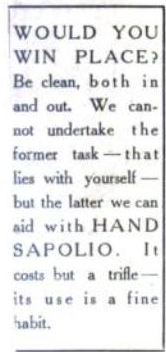
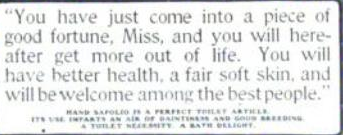
I zoomed in and did a couple of smaller screen captures of some sections of the text that also stress morality or “goodness”:

Be clean, both in and out. We cannot undertake the former task–that lies with yourself–but the latter we can aid with HAND SAPOLIO.

This section of text makes it clear that good skin is essential for popularity, at least among the “best” people:

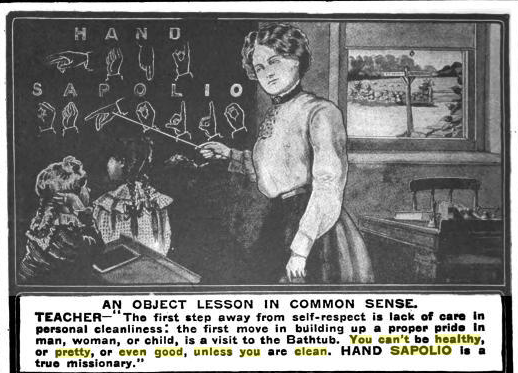
This Hand Sapolio ad (from a 1903 issue of New England Magazine), sums it up:

The first step away from self-respect is lack of care in personal cleanliness: the first move in building up a proper pride in man, woman, or child, is a visit to the Bathtub. You can’t be healthy, or pretty, or even good, unless you are clean. HAND SAPOLIO is a true missionary.

So there we see a connection being made between having good skin and being “good,” which means that, like missionaries who help save heathens, Hand Sapolio is a “missionary” spreading moral goodness and self-respect. Because what could build up self-respect more than being told that if you have less than perfectly clean skin, you can’t be pretty or good?

These could be useful for discussions of how physical appearances were steadily connected to ideas of morality and how biological processes, like getting pimples in adolescence, were turned into diseases that required (often expensive) intervention to “cure.” They could also be good for a discussion of marketing, particularly how ideas of morality were tied to particular products, such that goodness was commodified–by buying the item, you were buying goodness.

Eric S. sent us a link to the webpage for the Sun-Maid Girl, the girl used to represent Sun-Maid raisins. Here is the original painting of the first Sun-Maid Girl, Lorraine Collett Peterson:

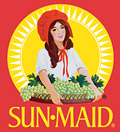
The logo was most recently updated in 1970; here is the current incarnation:

In discussing the original painting, the website says,

Sometimes we forget that in 1915 there were no electric hair dryers, that television would not be invented for decades to come, and that automobiles were not in every home. Life was much simpler, more rural, a lot less hectic and sunbonnets were still part of women’s fashion in California.

I like the romanticization of the past there. In 1915…World War I was going on. I guess life was “less hectic” in that you didn’t have a Blackberry to check every 15 seconds, but overall, I’m not sure I’d say it was “simpler” in a way that implies everyone had time to just sit around eating raisins and drying their hair in the sun.

Also from the website:

To Payne, the sight of the red sunbonnet and the pretty girl in the morning sun was the ideal personification of E.A. Berg’s brand name SUN-MAID.

This might be an interesting addition to some of the images in this, this, and this post about the sexualization of food. Whereas the women in those instances are mostly explicitly sexualized, in this case, the product is being associated with an idealized, non-sexual “maiden” version of femininity. I just thought it might make a good contrast if you’re discussing connections between women and food–the use of female sexuality and idealized female chasteness as marketing tactics related to food products. I wonder if Sun-Maid has stayed with the de-sexualized icon because raisins are associated with children?

FYI, Sun-Maid was one of the companies boycotted by United Farm Workers of America, the group let by Cesar Chavez.

Thanks, Eric S.!

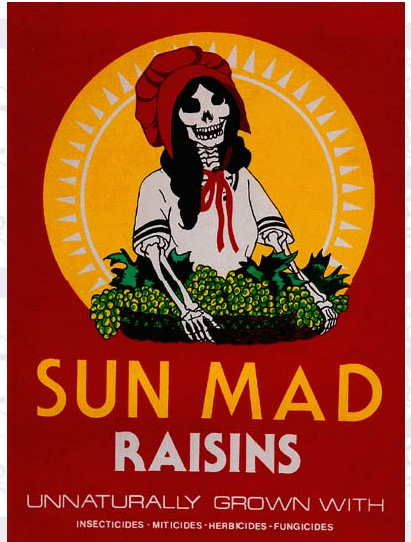
NEW: In a comment Adriana pointed us to Ester Hernandez’s parody of the Sun-Maid girl:

Thanks, Adriana!

Found here thanks to tmt.