Philip Cohen, at Family Inequality, posted an interesting graph displaying 30-44-year-old women’s share of their household’s income by level of education:
The graph shows that, on average, women with higher levels of education have incomes closer to that of their husbands than women with lower levels of education. Cohen writes:
It captures nicely both how women’s earning power within married couples has increased, and how that shift has been much greater for women with higher education.
In other words, the figure suggests that efforts to close the wage gap between men and women have been much more successful at the top of the economic ladder than the bottom.
For years biologists, anthropologists, and sociologists have all agreed that racial categories are social constructs. Recently, however, new genetic information about human evolution has required that scientists re-think the biological reality of race. In this 6-minute video, sociologist Alondra Nelson describes this re-thinking:
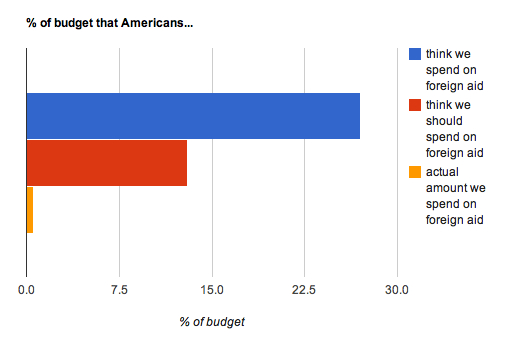
Abi, a professor of Materials Engineering at the Indian Institute of Science, pointed out an interesting graph posted by Ezra Klein at the Washington Post. The graph, using data from a survey of public opinion about the U.S. budget, shows how much of the U.S. budget respondents believe goes to foreign aid, how much they think should go to foreign aid…and how much actually does:
In this video we see people trampled at a 4am opening of a North Buffalo Target on the Friday after Thanksgiving. There is an analysis to be made here, and it involves something about American materialism and the orgy of consumption that is called “Christmas.” But I would be happy if we would just stop calling sales “Doorbusters” given that, y’know, sometimes people actually break down doors and people die.
One of the things that continually stuns me about the U.S. wars against Iraq and Afghanistan is how little the average American is expected to sacrifice. Yes, many Americans are losing loved ones in this war. Other than those immeasurable sacrifices, however, most Americans are not asked to change a thing about their lives.
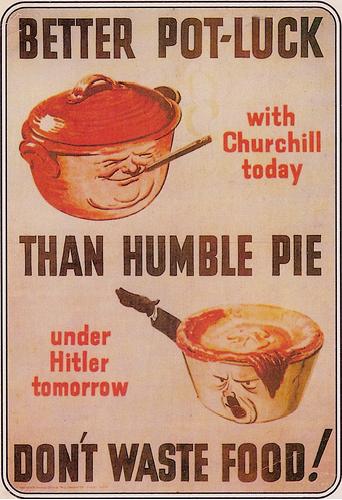
In contrast, during World War II, Americans were asked to make significant sacrifices, changing their daily lives and consumption patterns. Carpooling, for example, to save gas and rubber and staying off the phones.
Vintage Ads posted another great example of government propaganda encouraging the average person to change their lives for the war effort. In this case, the propaganda is British and they implore citizens not to waste food:
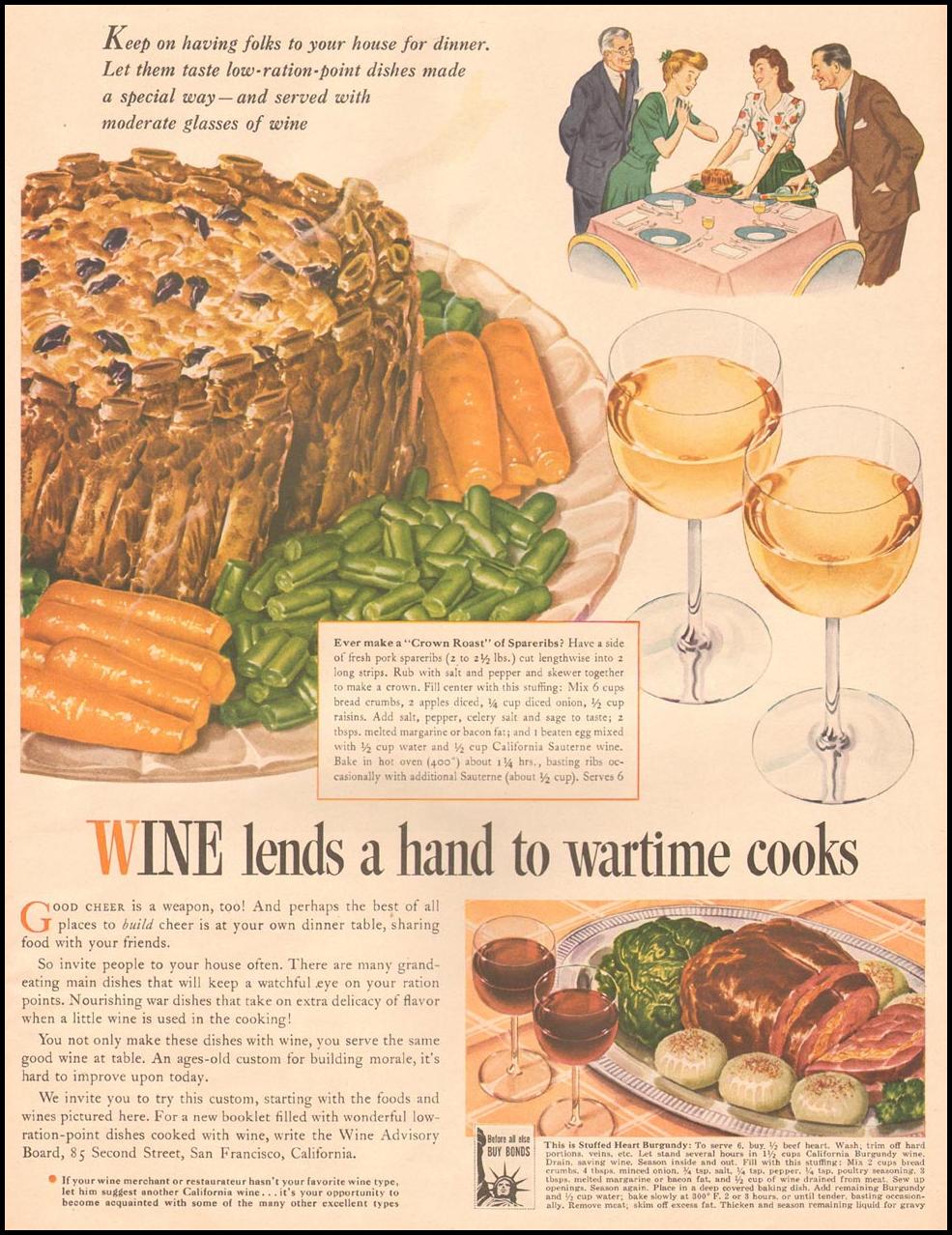
U.S. propaganda and advertising similarly encouraged citizens (i.e., women) to save food and stretch their rations (both from 1943):
Abby Kinchy, Assistant Professor at Rensselaer Polytechnic Institute, Richard M., and Alana B., who blogs at Pecan Pie, sent us a link to a post by Maya at Feministing about an anti-domestic violence PSA from South Africa. The group that created the ad, People Opposing Women Abuse, set up an experiment of sorts. A man first played drums loudly in his townhouse, quickly leading to multiple complaints by neighbors about the noise and a written warning. On a different night, the group loudly played a tape of what sounded like a violent dispute between a man and a woman. The reaction? Watch:
Aside from the obviously horrifying implications about domestic violence, I think it’s an interesting illustration of what people feel comfortable intervening or complaining about. As Maya points out in the original post, we all like to think we would immediately be at the door or on the phone with police, but many of us have, at one point or another, encountered a situation where we didn’t know whether to intervene or not:
…I once sat in a subway station in Manhattan late at night and watched a man try to get a sobbing, drunk woman to leave with him. I hesitated, not sure what to do. A few minutes later the police arrived; someone had acted, but it wasn’t me. Just last week, I saw a man aggressively slap a woman’s butt as she walked past in my neighborhood. I looked the other way, and she didn’t say anything either. I ignore sexual harassment—directed at me or others—pretty much every day.
I suspect what is going on here is a mixture of factors: that we put violence between partners into a different, less serious category than, say, a fist-fight between strangers at a bar, an unwillingness to intervene in what many think of as a private family matter, and fear about our own safety if we get involved or call authorities, among others.
For a thorough discussion of the so-called “bystander effect,” and the complex reasons people may not report behavior they find inappropriate, check out this article (free of charge) from the Journal of the International Ombudsmen Association.
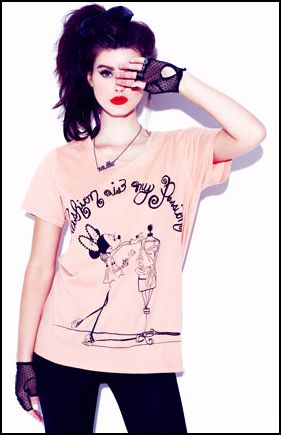
Both Linda Jay and a colleague of mine, Dr. Caroline Heldman, drew my attention to the new Minnie Mouse-themed line at Forever 21. The line is a collaboration between Disney and the fashion outlet and the mouse has been re-modeled, so to speak.
What must one do to Minnie to make her an acceptable fashion icon? Starve her down to a stick figure, apparently.
Annie Leonard tackles e-waste (what happens after we’re done with our computers, cell phones, etc) in the latest 7-minute edition in her Story of Stuff series (see also her first story of stuff and her analysis of bottled water and cap and trade).
Sociological Images encourages people to exercise and develop their sociological imaginations with discussions of compelling visuals that span the breadth of sociological inquiry. Read more…