Tom Schaller at FiveThirtyEight posted this graph showing different types of federal taxes as a percent of total U.S. GDP (estimated through 2014 based on the current tax code):

Photobucket

Despite widespread beliefs that we’re all taxed to death, and that taxes are strangling the business sector, we can see that the only taxed that have clearly trended upward since 1935 are payroll taxes (SSI/Retirement). And corporate and excise taxes have actually decreased over time.

Total federal taxes make up less than 20% of our total GDP. Interestingly, a (non-random convenience) sample of Tea Partiers at a recent protest found that half of the attendees thought that federal taxes make up over 40% of GDP, and the mean answer was 42% (the highest answer being 99%).

This reminds me of watching The Price Is Right with some of my relatives as a kid. We’d watch, and inevitably someone would win a car or at the end get the Showcase Showdown package, and being kids my sisters and I would be agog over their riches. But one of the adults in the room would then give us a lecture about taxes, saying you’d have to pay a tax of 50% of the value of the winnings, so you’d really just end up owing money. The implication was that this was really unfair and robbed people like us of our birthright to go on TV and try to win stuff because we wouldn’t be able to come up with the money to pay the taxes on our winnings (though they did wonder if you could convince Bob Barker to just give you the cash value of the items rather than the things themselves so you’d have the cash to pay the taxes).

So basically, they would get riled up and resentful over the amount of taxes they thought they would have to pay if they flew to L.A., got on The Price Is Right, and won something of value. They were complaining about something that didn’t exist, a theoretical tax in a situation they were not going to face, ever.

The point is, a lot of the opposition to and anger about taxes strikes me as completely theoretical: it’s not derived from specific knowledge of tax codes or tax rates or how many services you got in return for the taxes you paid. It’s a more diffuse anger based on assumptions that the government is always out to over-tax you and that your life would be a lot better off if you could just reduce the tax burden and take the ski boat and bedroom set you just won on CBS home in peace, unmolested by the IRS.
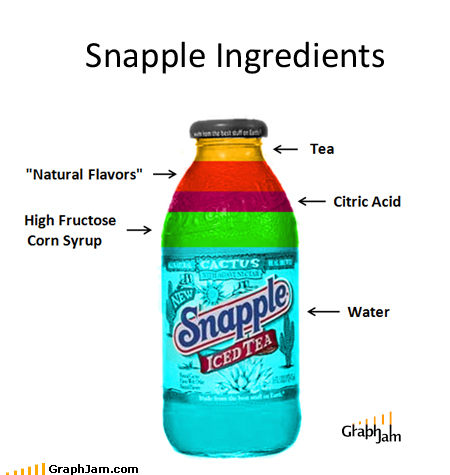
UPDATE: Drat! It appears this graph is out of date, at least. Reader Ben O.  points out a NYT article saying that Snapple no longer uses high fructose corn syrup. ChartPorn is generally pretty good about attributions and all, so I didn’t look into it thoroughly before posting it. Sorry! I’m leaving the post up just so it doesn’t look like I’m trying to hide my mistake, but be aware of the sketchiness here.

From ChartPorn, a neat little graphic illustrating the relative amounts of different ingredients in a Snapple iced tea:

Ah, high fructose corn syrup. What would we consume in copious amounts without really thinking about it if we didn’t have you?

Crossposted at Jezebel.

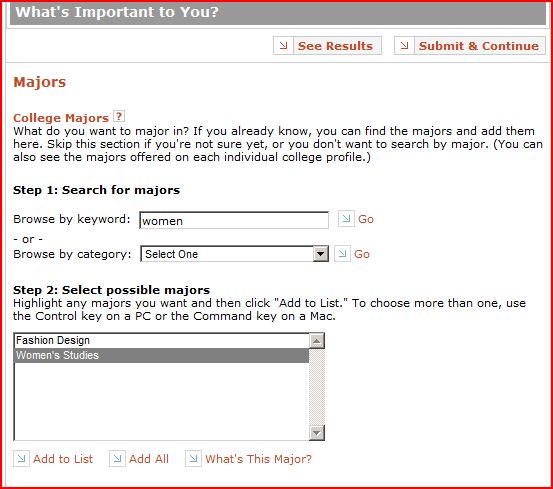
Ajax was searching for majors on College Board, a website aimed at helping people get into and through college.  She wanted to search for colleges with women’s studies majors and when she typed “women” into the keyword field, the search function returned two majors: women’s studies and fashion design.

This would make perfect sense if the search function returned only women’s studies since it has “women” in the name and all.  But fashion design?  It suggests that somehow fashion design has been marked as a major-for- or about-women, but no other major has.

What about, say, history?  Nope, no women in that.
Psychology?  Well, there is a Psych of Women class.  But, otherwise no.
Economics?  Don’t make me laugh!
Queer Studies? Afro-Am? Wait? Women are gay!? And black!?
Politics?  Oh honey, don’t worry your pretty little head about it!
Literature?  Oh yeah!  We forgot literature!   Let’s slap a “women” tag on that one and call it a day.

UPDATE: Brenden L. went to the website and typed in men. Guess what he got?

Lisa Wade, PhD is an Associate Professor at Tulane University. She is the author of American Hookup, a book about college sexual culture; a textbook about gender; and a forthcoming introductory text: Terrible Magnificent Sociology. You can follow her on Twitter and Instagram.

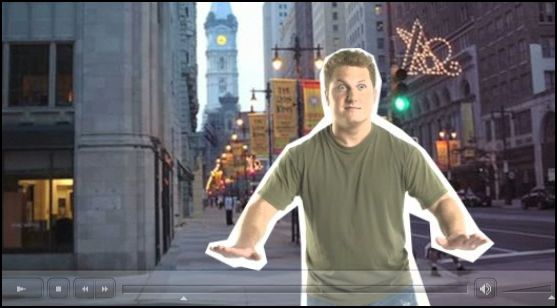
rachel56 sent in a fascinating story. Charley’s Grilled Subs is a super-successful franchise with locations in 16 countries. The restaurant specializes in Philly-style cheese steaks. If you go to their website and watch the video telling Charley’s story (here), this guy plays Charley:

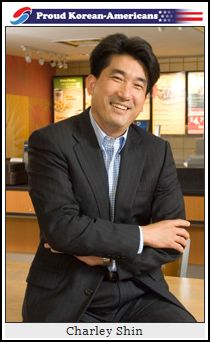
But, in fact, that’s not Charley.  This is:

So here we have a Korean-American owner of a business that is Philadelphia themed.  I’m going to assume, and feel free to call me out on this, that he decided to portray “Charley” as white because he (or his marketers) imagined that Americans (whoever they are) think like this: Philly = America = white.  The idea that Charley is Korean might cause cognitive dissonance.  Cognitive dissonance is the state of holding two contradictory thoughts at the same time, such as Charley = Philly = America and Charley = Korean, when American does not = Korean.

When I lived in Madison, Wisconsin, I used to frequent a fast food noodle place called “Chin’s Asia Fresh.”  I always wondered if there was really a Chin or if it was a made-up character.  According to the website there is a Leeann Chin who, growing up in Canton, China, “learned cooking traditions from her mother and an eye for the best ingredients from her father.”  Of course, as is clear from Charley’s story, the “history” sections of restaurants can be fiction so… I guess I still wonder.   Of course, it would be advantageous for the Chin’s chain to market itself as authentically Asian, just as it is apparently advantageous for the Charley’s chain to market itself as “authentically” “American” (i.e., white).

All of this is a great example of how image is constrained and enabled by racial and ethnic stereotypes.

Lisa Wade, PhD is an Associate Professor at Tulane University. She is the author of American Hookup, a book about college sexual culture; a textbook about gender; and a forthcoming introductory text: Terrible Magnificent Sociology. You can follow her on Twitter and Instagram.


Kevin I. sent in a great short clip instructing women workers newly employed in industrial factories during World War II on how to do their hair to maximize safety. It assumes both ignorance and vanity on the part of women and speaks to the lack of efficiency caused by efforts to remain attractive on the line. Pretty great:

Lisa Wade, PhD is an Associate Professor at Tulane University. She is the author of American Hookup, a book about college sexual culture; a textbook about gender; and a forthcoming introductory text: Terrible Magnificent Sociology. You can follow her on Twitter and Instagram.

Monica C., who teaches ethnic studies and works with survivors of interpersonal violence, sent in this 9-minute satirical video (posted at Consent Turns Me On) she created for Sexual Assault Awareness Month. It highlights the way that rape prevention campaigns often put the onus on women to avoid being raped, providing lists of things to avoid doing (that basically add up to never doing anything where a man is present, ever), rather than focusing on educating men about not raping women.

Nice work, Monica!

Get rid of it so that she will love you completely and without reserve (so long as you remain physically perfect):

Thanks to Marie-Claire for sending this in!

Lisa Wade, PhD is an Associate Professor at Tulane University. She is the author of American Hookup, a book about college sexual culture; a textbook about gender; and a forthcoming introductory text: Terrible Magnificent Sociology. You can follow her on Twitter and Instagram.

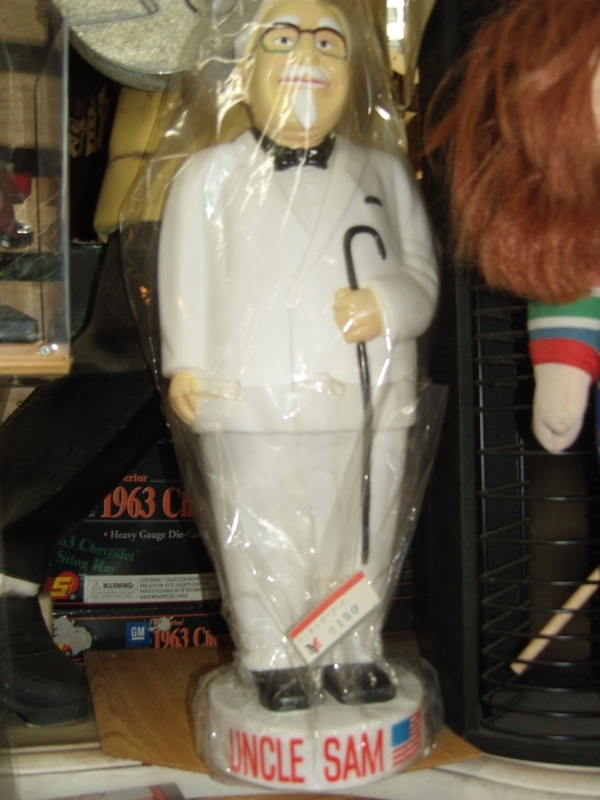
Over at Buzzfeed, Peggy posted this photo of a piece of kitsch she found on sale in Japan:

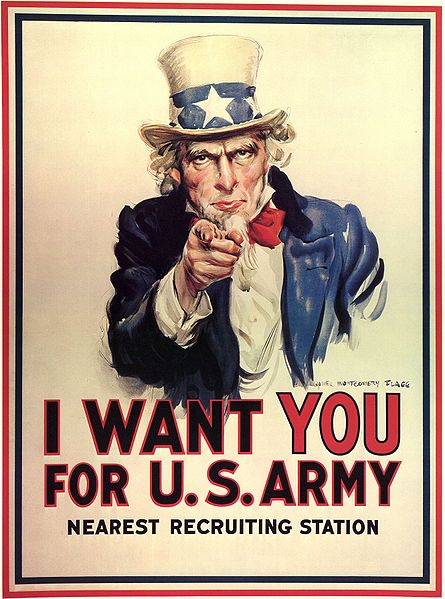
Thanks to Dmitiry for the link!  To clarify…

Uncle Sam, icon of American freedom:

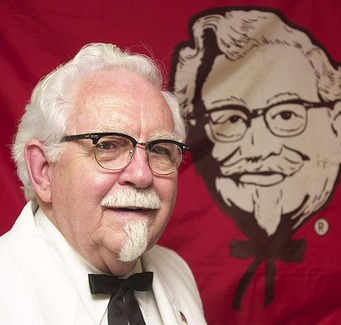
Colonel Sanders, mascot for the fast food restaurant Kentucky Fried Chicken (the suit is the giveaway):

So what does this mean?  Well, perhaps nothing.  But it suggests that America is associated with capitalism and greasy food at least as much as the idea of freedom.  It also means that, at least in this instance, the U.S. has lost control of its brand.

Lisa Wade, PhD is an Associate Professor at Tulane University. She is the author of American Hookup, a book about college sexual culture; a textbook about gender; and a forthcoming introductory text: Terrible Magnificent Sociology. You can follow her on Twitter and Instagram.