Archive: Aug 2017

Originally posted at Gender & Society.
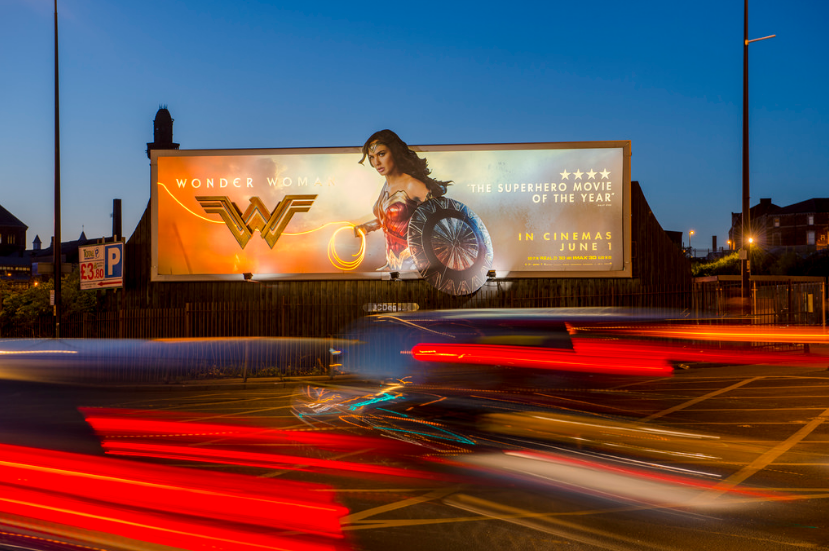
Photo by JCDecaux Creative Solutions flickr creative commons.

I recently took in a poignant guest lecture on hookup culture by Lisa Wade. During the talk, Wade detailed the link between rape culture and hookup culture. While hooking up encourages women to behave “like men,” it simultaneously creates an environment that rejects feminine traits (kindness, care, empathy). Since then I’ve continuously noticed how we celebrate women who display traditionally masculine characteristics (be aggressive! lean in!). But, we often do so in ways that devalue feminine attributes. It is with this framework in mind that I went to see Wonder Woman.

Donning my “feminist mama” sweatshirt, I expected to be underwhelmed given the mediocre reviews describing the film as just another boilerplate superhero movie. With my critical 3D glasses on, I understood why many were frustrated. Steven Trevor always has a protecting arm over Diana, even after she demonstrates that she’s indestructible. The persistence of the male gaze was also disappointing. I recognize the need to reflect Marston’s 1940’s creation, but expecting Diana to run through forests, scale mountains, and beat down villains in a sensible wedge was as laughable as Steven Trevor’s ridiculous assurance to the audience that his genitalia was “above average.” It is no coincidence that Wonder Woman’s strong but “sexy” image was the one chosen by Douglas to represent her concept of enlightened sexism nearly a decade ago.

At the same time, I think it is important to recognize the film’s strengths. The women cast as Amazonians are athletes in real life with muscular bodies that challenge anglocentric beauty ideals. Diana is a unique combination of sex appeal, acumen, and wit. She is fierce but nurturing, emboldened to take down Ares but driven by her desire to protect children. Her outfit choices are elegant but practical and she even managed to stash a sword in her stolen evening gown. Diana asserted confidence and ability while her male sidekicks over-promised and under-delivered. In short, Wonder Woman seems to encapsulate the kind of feminism Wade described as lost: embracing aggression and kindness, strength and beauty.

Given Diana’s character complexity, I find language lauding the film for its ability to break the “curse of Catwoman” particularly offensive. Perhaps if Hollywood had chosen to produce Joss Whedon’s version of Wonder Woman, where Diana’s uses a “sexy dance” to thwart the villain, it might warrant a film comparison. After all, the Catwoman “plot” was a lurid focus on Halle Berry in a tight-fitting costume, a hypersexualized (de)evolution of a female protagonist. It tanked in the box office because, like most female characters in superhero films, Patience Phillips was a two-dimensional stereotype of femininity – meek, fickle, a tease. She had to “overcome” her feminine traits to succeed and used sex appeal as a weapon. Comparing the films conflates the presence of a female lead with the notion that both films were made for women. It’s like those who questioned if Clinton supporters might vote for McCain in 2008 because he put Palin on the ticket. Having a woman lead doesn’t mean women’s interests are being considered.

Despite these attempts at male wish fulfillment, Wonder Woman’s success was not due to men aged 15-25. Unlike other superhero flicks, Wonder Woman’s audience was roughly 52% women, and women and older audience viewers continue to build its momentum. When the Alamo Drafthouse risked litigation to host an all-female screening it sold out so quickly it added more women-only events to respond to the demand. Nevertheless, the comparison to Catwoman persists as does the dominant narrative that films outside of the Captain America framework are a “gamble.”  Ignoring the success of films like Wonder Woman (Arrival or Get Out or Moonlight) allows executives to deflect the fact that most “flops” were made with an exclusively white, heterosexual, male audience in mind (I’m looking at you Cowboys & Aliens).  Yet celebrating Wonder Woman as a “triumph,” allows us to pretend that similar female protagonists dominate the screen instead of calling more attention to the fact that women still only accounted for 32% of all speaking roles in 2015 or that non-white actors are continuously overlooked at the Oscars.

Diana showcases a physical resilience seldom credited to women – let’s celebrate that. She encapsulates a kind of feminism that Wade rightfully notes is nearly nonexistent. Diana is a warrior who is agentic, driven, nurturing, protective, and merciful. She exhibits masculine strength without having to cast aside her feminine traits.  She voices concern for those who cannot protect themselves but she is a trained killer. By labeling Wonder Woman not feminist enough we overlook the crux of the problem: Wonder Woman’s empowerment narrative was likely tempered because Hollywood doesn’t really care about appealing to women. Highlighting the importance of Diana’s feminist dichotomy challenges Hollywood to build on that momentum and make a sequel without pandering to young, heterosexual, male audiences. In doing so, my hope is that in the future we have so many superheroes like Diana (strong because of their femininity, not strong despite it) that critics will have ample — and equivalent — characters for comparison.

Francesca Tripodi, PhD is a sociologist who studies how participatory media perpetuates systems of inequality. This year she is researching how partisan groups interact with media and the role community plays in legitimating what constitutes news and information as a postdoctoral scholar at Data & Society. Francesca would like to thank Caroline Jack and Tristan Bridges for their helpful feedback on this piece.

This week FOX commentator Melissa Francis was brought to tears while trying to defend Trump’s assertion that “many sides” were to blame for the fatal violence in Charlottesville, VA during a white supremacist, anti-Semitic, pro-Confederacy demonstration and counter-demonstration. She was challenged by two of her fellow panelists who argued that Trump was drawing a false equivalence to suggest that each side was responsible. Oddly, Francis took their comments on Trump personally, began to cry, and said this:

I am so uncomfortable having this conversation… because I know what’s in my heart and I know that I don’t think that anyone is different, better, or worse based on the color of their skin. But  I feel like there is nothing any of us can say right without without being judged!

At this point, a fellow FOX commentator, Harris Faulkner, who is African American, interrupted to console her:

You know Melissa, there have been a lot of tears… It’s a difficult place where we are… [but] we can do this. We can have this conversation. Oh yes, we can. And it’s okay if we cry having it.

But is it okay for white people to cry in the midst of conversations about racism?

Education scholar Frances V. Rains has argued that it is not okay. In her essay, Is the Benign Really Harmless?, Rains discusses several types of reactions white people frequently have to difficult conversations about race, ones that undermine meaningful progress. In one, she talks about white people’s tears.

When a white person cries in response to frank discussions of racism, Rains explains, it derails the conversation, refocuses the attention on the white person, and holds anti-racist speakers accountable for attending to his or her feelings. The most important thing in the room, in other words, becomes a privileged person’s hurt feelings, not generations of systematic racial oppression, exploitation, and violence.

This is exactly what happened in the clip above.

  1. The panelists were debating whether Trump’s comments amounted to a false equivalence that was supportive of racism and anti-Semitism.
  2. A white woman rejects the notion that Trump’s comments endorsed bigotry.
  3. When some disagree, she cries and begins discussing what it feels like for her personally to be having this conversation.
  4. The conversation turns away from racism, anti-Semitism, and the possibility that the President of the United States is a Nazi sympathizer, and toward the white woman and her feelings.
  5. Her discomfort become the problem to be resolved.
  6. A member of the disadvantaged group steps in to comfort her.

This is just as Rains would have predicted.

Amazingly, an earnest conversation about oppression turns into an opportunity to give solace to the oppressor… and it’s a member of the oppressed who must do the comforting.

Lisa Wade, PhD is an Associate Professor at Tulane University. She is the author of American Hookup, a book about college sexual culture; a textbook about gender; and a forthcoming introductory text: Terrible Magnificent Sociology. You can follow her on Twitter and Instagram.

Originally posted at Montclair Socioblog.

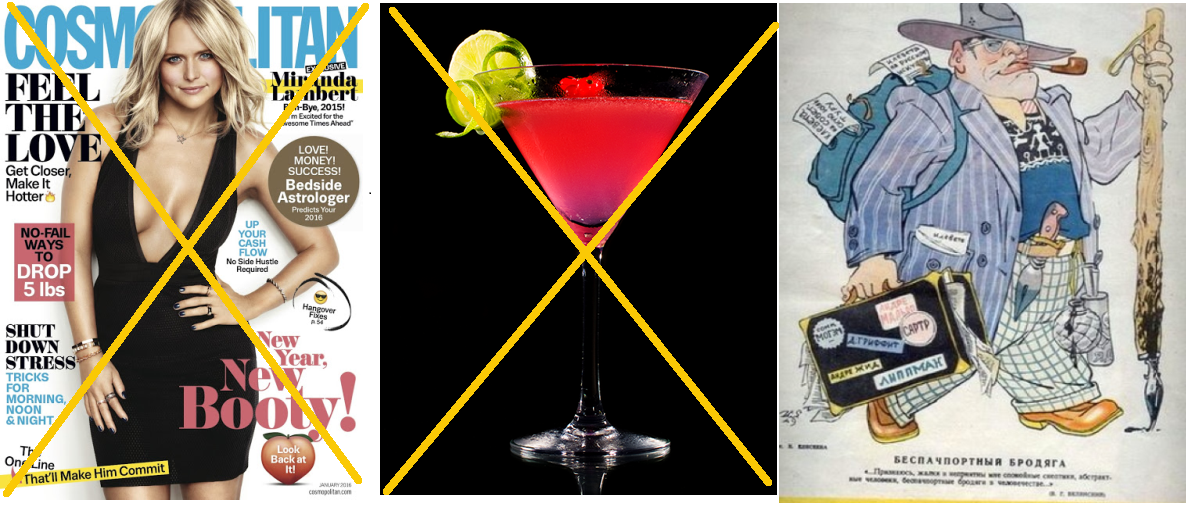
Why did White House advisor Stephen Miller call CNN reporter Jake Acosta “cosmopolitan”?

At the end of last week’s press briefing, Acosta asked about the Trump administration’s new proposals on immigration – reducing the total number of green cards by half and giving preference to people who are more skilled and people who speak English well.

ACOSTA:   The Statue of Liberty has always been a beacon of hope to the world for people to send their people to this country. They’re not always going to speak English.. . . Are we just going to bring in people from Great Britain and Australia?

MILLER: I have to say, I am shocked at your statement that you think that only people from Great Britain and Australia would know English. It reveals your cosmopolitan bias to a shocking degree.

Cosmopolitan? Acosta’s question suggests the exact opposite – provinicialism. A worldly and sophisticated person would know that countries in Asia and Africa have English as their national or dominant language and that people all over the world learn English as a second language. Only a rube would think that English proficiency was limited to Great Britain and Australia.

What did Miller mean by cosmopolitan? The question sent me back to the article that put “cosmopolitan” into the sociological lexicon – Alvin Gouldner’s 1957 “Cosmopolitans and Locals.”

 Cosmopolitans:

  • low on loyalty to the employing organization
  • high on commitment to specialized role skills
  • likely to use an outer reference group orientation

Locals: 

  • high on loyalty to the employing organization
  • low on commitment to specialized role skills
  • likely to use an inner reference group orientation.

Gouldner was writing about people in organizations. Miller is concerned with politics. The common element here is loyalty. Miller, along with Steve Bannon, engineered Trump’s “America first” doctrine, and by “cosmopolitans” he seems to mean people who are not putting America first. On immigration, people like Acosta are thinking about what might be good for an uneducated but hard-working Guatemalan, when instead they should be thinking only about what’s good for the US.

Jeff Greenfield put it this way at Politico: “It’s a way of branding people or movements that are unmoored to the traditions and beliefs of a nation, and identify more with like-minded people regardless of their nationality.”

The alt-Right has been using cosmopolitan for a while now, and perhaps it was Miller’s familiarity with White nationalist discourse that made the word so available as a put-down of Acosta even though Acosta’s question seemed based on the kind of ignorance about the world that is much respected over on the right.

Like “America first,” “cosmopolitan” has a history of holding hands with anti-Semitism. In Stalin’s Russia, the phrase “rootless cosmopolitan” was a synonym for Jew, and he murdered quite a few of them. In the US today, the antipathy to “cosmopolitan” embodies this same fear of rootlessness and the same dislike of Jews. Here is one website’s take on yesterday’s press briefing:

The twist here is that Acosta, the alleged cosmopolitan, is not Jewish, but Miller is. (The alt-Right uses the triple parentheses around a name to designate a Jew.) I don’t know how Miller resolves the dissonance other than to claim that he has never had anything to do with White nationalists (a claim that is probably false).  For the anti-Semites, the website has this:

While not a Jew himself, Acosta is the end result of the education and programming pushed by the Rootless Cosmopolitans wherever they dwell – even Stalin grew wise to them near the end of his life.

So Acosta cosmopolitanism came from being educated by Jews.

Miller and other Jews must surely understand the overtones of the term. And finally, let’s throw in a good word for Stalin: an anti-Semitic Russian autocrat – what’s not to like?

The rootless cosmopolitan on the right is from a Soviet humor magazine 1949.

Jay Livingston is the chair of the Sociology Department at Montclair State University. You can follow him at Montclair SocioBlog or on Twitter.