
Shamus K. posted this clip from the show QI, in which Stephen Fry provides a 3 1/2 minute primer on the truly stunning statistics about U.S. imprisonment rates:
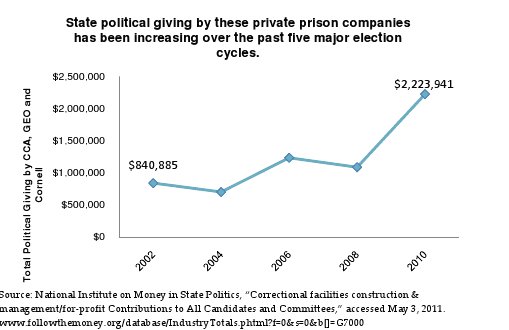
Relatedly, Tara B. provided a link to data posted at Think Progress about the growth in lobbying by private prison operators, who receive contracts to house prisoners; their political contributions nearly tripled between 2002 and 2010:
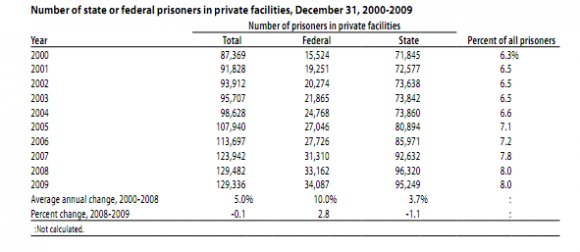
Private prisons are still a minor, but growing, segment of the U.S. prison system. As of 2009, they housed 8% of all federal and state prisoners:
For more on private prisons and their lobbying efforts, see our earlier post on the role of Corrections Corporation of America in passage of the Arizona anti-immigration law.
Comments 12
Yrro Simyarin — September 27, 2011
Prison corporation lobbying, police and prison warden union lobbying, prosecutors and judges making a name for themselves, and "tough on crime" politicians. Is it any wonder our justice system is messed up?
Melanie S. — September 27, 2011
I appreciate how horrified all the panelists are--Jan Ravens gasping at the three strikes rule, Jimmy Carr unable (well, nearly) to make an inappropriate joke. It seems so commonplace if you live in the US that you often don't see that, even among people working to change the system.
Larrycharleswilson — September 27, 2011
Private jails were not unknown during the Anglo-American Colonial Period. A similar public-private system of dealing with paupers continued in some States as late as the 1820s.
Kellicox1 — September 27, 2011
slavery by the back door, indeed.
oddboyout — September 27, 2011
TIL: The alternate British spelling of "jail" is "gaol."
Millicent — September 27, 2011
Why compare the numbers for 17 year old black males in college vs jail? Most college freshmen are 18 as matriculating freshmen or turn 18 during freshman year, and so one would expect the number in college at 17 to be low. Here's a more fair look at the overall numbers:
http://voices.washingtonpost.com/fact-checker/2007/10/young_black_males_headed_for_e_1.html
Karl Rover — September 27, 2011
It's all about Human Capital, baby.
Joseph J Kane — September 29, 2011
Would it be different if felons could vote?
Leon Evan — July 2, 2026
This is a thoughtful overview of how the U.S. prison system operates and why accurate public information matters. People often need reliable records for legal, personal, or research purposes, and https://bibbcountyinmatesearch.org can be a useful resource when looking for publicly available information. Clear access to official records helps improve transparency and supports informed decision-making.
hayes1_cole6 — July 2, 2026
The discussion on the U.S. prison system really highlights how complex issues like incarceration rates, rehabilitation, and transparency are deeply connected. For those who want to better understand how inmate and custody information is organized at the local level, resources like Flathead Jail Records can provide helpful public insight. Having access to structured records can support more informed conversations about justice and accountability. Overall, greater awareness and clarity around detention data can encourage more balanced perspectives on the system as a whole.