
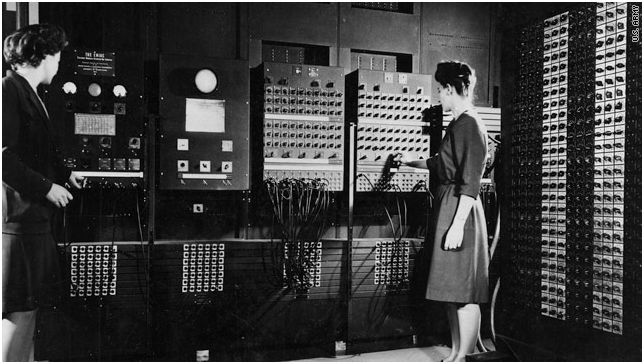
Many of us are familiar with the female blue-collar workers that took jobs in factories during World War II. It turns out, however, that women were also employed as mathematicians and computers (that’s “compute-ers”). In this photo, Jean Jennings Bartik and Frances Bilas Spence get ready to present an early computer to military officials in 1946:
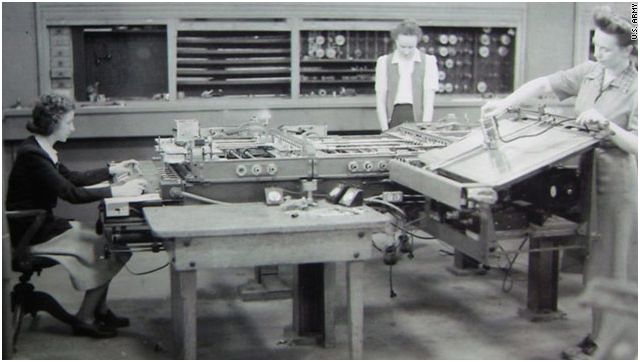
Women operating a “differential analyzer,” often checking the machine’s work by doing the math by hand:
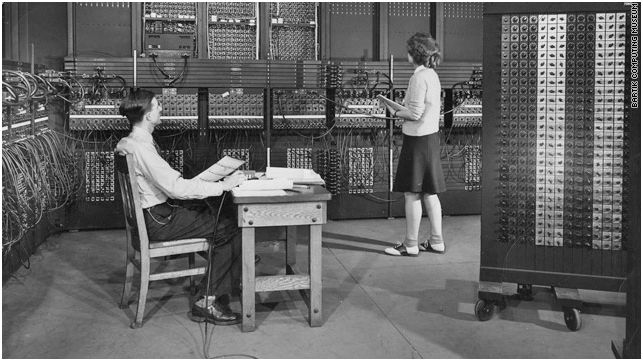
Jean Jennings Bartik in 1946 with an early computer and Arthur Burks:
Their work was top-secret and so they weren’t part of the “Rosie the Riveter”-style propaganda at the time. Post-World War II disinterest in women’s accomplishments allowed their stories to remain untold.
A new documentary, forwarded to us by Jordan G. and Dmitriy T.M., reveals these high-tech Rosies:
Via BoingBoing, photos from CNN.
See also our post on the feminist mythology surrounding the iconic “Rosie the Riveter” image (hint: it was about class, not gender). And you can buy Jean Jennings Bartik book, Pioneer Programmer, here.
Lisa Wade, PhD is an Associate Professor at Tulane University. She is the author of American Hookup, a book about college sexual culture; a textbook about gender; and a forthcoming introductory text: Terrible Magnificent Sociology. You can follow her on Twitter and Instagram.
Comments 81
Marianne — February 16, 2011
As a mathematician, I'd like to point out that the calculations carried out by hand by these ladies are really huge and complex. I read about these women in my university's newsletter, and they all had, what would now be, at least a masters degree.
People now a days find it funny to check the computer's work, but it's often a smart move to do it from time to time, due to roundoff errors, truncation errors and such. Especially when working with differentials and approximations to complex functions.
So girls, when guys says "girls can't do maths/computers/science in general", tell them to shut up. These womens were the first computers, and the math carried out is really complex. I bet the guys telling you "girls can't do math" can't do anything near what these women do.
It is taught at my local University, but we generally don't do it by hand any more, and especially not with more complex functions than easy fourier-series and such. Wich is WAY below what these women did.
:)
Anonymous — February 16, 2011
Very interesting article, though I'm a bit confused about when the descriptions refer to by 'computers'
Leigh — February 16, 2011
My husband posted this story to Drupalchix :) -- I have to say it was such a (pleasant) surprise to a decent article on CNN.
Pswingset — February 16, 2011
Anyone interested in the topic should definitely read about Grace Hopper!
HP — February 16, 2011
I can't find it now, but I once saw a picture of the U.S. Army's "Computer Room" (seriously, that's what the sign said on the door) from the First World War. Hundreds of young women (and, IIRC, one man) lined up at adding machines, with uniformed boys to pass the output of one calculation to the input of the next.
When the first electronic computers came online in the late 40s, all the computer operators were women, because they had the most practical experience with processing data and crunching numbers. It wasn't until the 1960s (when my Dad got involved) that working with computers was regendered as "men's work."
Ragnvaeig — February 16, 2011
While they were definitely blue-collar workers, the "Calutron girls" of the Manhattan Project outproduced their more highly-educated male coworkers. They're another interesting part of the spectrum of women workers in the WWII war effort.
While the quickest internet source I've found for this story is in the Wikipedia entry on the Calutron, it cites The Road to Trinity by Ken Nichols.
Elena — February 17, 2011
For the sake of completeness, an earlier (and scientifically outstanding) example of women computers was the charmingly nicknamed Pickering's Harem, a group of initially unskilled women hired to visually process astronomy photographic plates. The women went on to develop a classification of stars by spectral characteristics and discover the period-luminosity relation of Cepheid variable stars, besides discovering an astounding number of astronomical objects.
links for 2011-02-17 « Embololalia — February 17, 2011
[...] High-Tech Rosies in World War II » Sociological Images Their work was top-secret and so they weren’t part of the “Rosie the Riveter”-style propaganda at the time. Post-World War II disinterest in women’s accomplishments allowed their stories to remain untold. (tags: geek.feminism ww2 women mathematics) [...]
shirley stellhorn — February 19, 2012
We have a History Club at our condo in St James - we meet once a month. Our leader (a retired history teacher) told us about the "ROSIES OF WW II). We were all inspired by their work. Too bad they hav'nt gotten more recognition. Let's hope future women's contributions do not get overlooked.
Harry — July 25, 2019
Hello, While they were definitely blue-collar workers, the "Calutron Girls" of the Manhattan Project outproduced their more highly-educated male coworkers. I think another interesting part of the spectrum of women workers in the WWII war effort.
lisa — April 8, 2020
I realize it was my decision to peruse, yet I really thought youd have something fascinating to state. All I hear is a cluster of whimpering about something that you could fix in the event that you weren't excessively bustling searching for consideration. For more check this website
lisa — May 28, 2020
Have with extremely low tone, and therefore, difficulties writing for long. He desires some kind of software with a purpose to be effective for high faculty math. check website to get any type of information about technology.student laptops
lisa — June 27, 2020
I feel like I had I’ve become way more reliant on technology over the past few years…these days, between school and blogging, I’m literally on my computer ALL the time, and like you, and there are few things more nightmarish than forgetting my phone at home.tech
lisa — June 28, 2020
I definitely need to challenge myself to be quiet more. I have forte a lot better but there is surely room for improvement! I feel like an old lady shaking my cane at a young whippersnapper when I say this, but what I wouldn’t give to have people in my real, every day, non virtual life who make it necessary not to spend all my time plugged in. Great post.
lisa — July 4, 2020
Technology has impacted our way of living nowadays big time. There are a lot of benefits we can get from there, but as great as those benefits are, we should also be aware of the danger they bring, no matter how minimal they are.Lisa
steve — July 19, 2020
Hello, each car has around 2000 passive components due to the tech. Personally, all the tech is not for me, I enjoy driving and always will enjoy driving, no need for all the aids and self-driving cars, etc. Click here for more infomration about technologyfor more
lisa — July 28, 2020
I have with tech in meetings, certainly using laptops or iPads to take notes etc during them is that unless recording the meeting is critical, I just won’t trust that they are not playing around with other apps rather than focusing on the purpose at hand. At least with pen and paper, if someone is doodling it is pretty obvious to all (a fact that, as a constant doodler, I am always very aware of).Laptops
lisa — August 3, 2020
Students nowadays have more access to important information than ever, meaning that technology has opened up a whole new set of opportunities for them to learn.
lisa — August 13, 2020
I have a close family member who is an agent and she receives all of her commissions from the airlines – not from the traveller, just as the above poster mentioned. As with any time you work with someone in 'sales', as your friends and families for recommendations, but using an agent should not cost you more money than booking anything yourself via the web. However, they will probably save you considerable time with the knowledge that they already have. For more Check here
lisa — September 16, 2020
Hi, I turned off my device and only left my email open on my laptop to check once a day for any important information. They were fun as I even had time for myself and my family. It gave me time to unwind and think things through. Not to mention that my eyes weren’t red at the end of the day.best laptops virtual machine
lisa — September 22, 2020
According to my point of view, children's museums and museums, in general, are overlooked. We started taking Mason to the Pember Museum in Granville to see the animals every few months because he loves seeing the stuffed bear and the birds.Best Budget Laptop for Adobe Creative Cloud
lisa — November 20, 2020
When you think about it, the way we do things now seems so primitive in comparison. The human-computer interface is still such a vicious battleground, with the computer often being the victor.shimeji-ee.com
lisa — November 27, 2020
I think technology is an important part of our life. Technology has impacted our way of living nowadays big time. There are a lot of benefits we can get from there, but as great as those benefits are, we should also be aware of the danger they bring, no matter how minimal they are. Tech
lisa — December 9, 2020
This is the best piece I have read, when everyone else addressing this won’t deviate from the formulaic doggerel. You have a way with words, and I will follow you as I enjoy your writing.Budapest flat
lisa — January 15, 2021
However, with these tips and suggestions, I think that I can re-group, review and reconnect with my goals, dreams and reasons for what I am doing. And thanks for the 10 High Performance Tips post as well, great stuff in it!Android
lisa — January 15, 2021
I feel like I had I’ve become way more reliant on technology over the past few years…these days, between school and blogging, I’m literally on my computer ALL the time, and like you, and there are few things more nightmarish than forgetting my phone at home.Digital Agency Ireland
lisa — February 20, 2021
Fantastic post!! I agree that we all, including myself can use a technology detox regulargly. Great facts, information and more important reminders about the fact that life is happening all around us NOW, not in our Android phones. For more visit Ethiopian News Today.
jack — February 28, 2021
More people have to look at this and understand this side of
the story. I was surprised you aren’t more popular because you
certainly possess the gift.Technology
WILLIAM — March 7, 2021
you’ll see how traveling alone is not only an incredible life experience- it’s often a necessary life experience. Your work is very good. For more Tech News
clarke — March 14, 2021
Given your expertise, perhaps you can help me with a high school student I have with extremely low tone, and hence, difficulties writing for long. He needs some kind of software that will be effective for high school science. Tips and Tricks
expert — April 5, 2021
I started not using my phone before bead a few months ago and it’s so much more relaxing. I try to limit how much I use it during the day too. It’s hard when you work from home, but I really try to get up and get out of the office for a few hours each day.รถยนต์มือสอง
john — May 23, 2021
I had I’ve become way more reliant on technology over the past few years…these days, between school and blogging, I’m literally on my computer ALL the time, and like you, and there are few things more nightmarish than forgetting my phone at home.cosmetic beauty facial mask raw material
Business Strategy — July 9, 2021
Business Strategy are the broad primary outcomes towards which effort and actions are directed in a business. They are whats, not hows and a business might have multiple goals to achieve. For example, "we must be a leader player and increase our share in the home loan market". Normally there is no measurement in the definition of a goal and only gives you the general direction of the company.
Athletics News — August 17, 2021
Athletics is a group of sporting events that involves competitive running, jumping, throwing, and walking. The most common types of athletics competitions are track and field, road running, cross country running,Athletics News and racewalking.
lisa — September 14, 2021
The second itch I wanted to scratch was communications with home. I carry an Iridium satellite phone, but it has two disadvantages – it’s expensive and it’s frustrating enough to make me want to pitch it into the nearest river once in a while. So when I saw my friend John Marriott using a DeLorme inReach Explorer at Cape Churchill this year, I was pretty sure I’d found my solution.best crossbow for beginners
lisa — October 10, 2021
I start running round with a exquisite pace seeking to get the whole thing accomplished and nevertheless forgetting a few matters later. It’s simply unfair that so many unimportant things maintain to scouse borrow our time at the internet as this stuff will maximum possibly no longer upload whatever to us. iPhone 13 Pro
lisa — October 24, 2021
I definitely need to challenge myself to be quiet more. I have forte a lot better but there is surely room for improvement! I feel like an old lady shaking my cane at a young whippersnapper when I say this, but what I wouldn’t give to have people in my real, every day, non virtual life who make it necessary not to spend all my time plugged in.public safety technology
Radhe — November 4, 2021
I would like to say that this blog really convinced me to do it! Thanks, very good post.
I love it to recommend Status-Video.Com the users
lisa — December 13, 2021
I assume era is an important a part of our lifestyles. Technology has impacted our manner of residing in recent times large time. There are a lot of benefits we can get from there, however as fantastic as those benefits are, we ought to additionally be aware of the hazard they bring about, no matter how minimal they may be.Ctr bot
lisa — December 25, 2021
People now a days find it funny to check the computer’s work, but it’s often a smart move to do it from time to time, due to roundoff errors, truncation errors and such. Especially when working with differentials and approximations to complex functions. IT company Durban
lisa — January 2, 2022
I’ve end up manner more reliant on technology during the last few years…in recent times, among school and running a blog, I’m actually on my pc ALL the time, and prefer you, and there are few matters more nightmarish than forgetting my cellphone at domestic.How to rate an app
lisa — January 13, 2022
Technology is just another tool in the educator’s tool belt. Technology is a means to provide additional opportunities to enhance the overall impact of the lesson and/or activity.
Website Lamp
John Thomas — January 15, 2022
Unexpectedly interesting article - and I did actually both get and like the play on words with "computers and compute-ers" - although based on the comments it seemed to right over a lot of people's heads lol.. anyway I do like this website so far, and will be back to read more of your articles!
jasmine wiltor — January 18, 2022
HP wireless printer is a versatile printing device that helps you print, scan, copy and fax your documents as per the requirement.
www.hp.com/go/wirelessprinting
lisa — March 8, 2022
People now a days find it funny to check the computer’s work, but it’s often a smart move to do it from time to time, due to roundoff errors, truncation errors and such. Especially when working with differentials and approximations to complex functions.ytmp4
lisa — April 5, 2022
Certainly using laptops or iPads to take notes etc during them is that unless recording the meeting is critical. I’ve become way more reliant on technology over the past few years… these days, between school and blogging, I’m literally on my computer all the time.Bluetooth Mic
lunabeth4598 — April 15, 2022
Canon fully support and assists for all compatible products for Windows. canon.come/ijsetup
lisa — May 25, 2022
Technology provides students with easy-to-access information, accelerated learning, and fun opportunities to practice what they learn. It enables students to explore new subjects and deepen their understanding of difficult concepts.IT companies in Durban
Daniel — June 14, 2022
I have to tell you, your blog giving the best and awesome information. And I would like to thanks for this information that I had been looking.click here
lisa — August 5, 2022
I think the current technological advancements available are great and very helpful, especially for busy people. For me, I like Digit, but like you, I also still like to reconcile my accounts by hand per month.https://www.guangduanpresses.com/
Adam R — August 26, 2022
If you want to know more about Ireland Beach, I suggest you visit this Most beautiful Ireland Beach blog. You will get information about Ireland Beach.
lisa — October 2, 2022
Great information that you mention in the above. Given your expertise, perhaps you can help me with a high school student I have with extremely low tone, and hence, difficulties writing for long. He needs some kind of software that will be effective for high school science. PC Components
lisa — October 7, 2022
Technology also have a ton of other self-exploratory and hands-on stations throughout the museum for kids of all ages to enjoy. It is the best technology for the children.rugs
lisa — October 25, 2022
The new era providers are accessing the technological help to design merchandise that can in shape the requirement and price of the consumer. As the shoppers want progressive designs to make profits, consequently the dealer needs revolutionary products to attract buyers.Les screen hire
Product Animation — December 6, 2022
3D product animation is the process of creating three-dimensional moving images to explain your product uniquely and creatively. Good product animation videos can be an effective way to grab viewers' attention and provide them with a more personalized experience that's closer to reality. With these types of videos, you can make sure all aspects of your products are showcased in a compelling way that will entice people into buying it or taking some other action, like signing up for your newsletter.
Geelong Wealth Advisers — December 24, 2022
Geelong Wealth Advisers is the best Financial Planners and Wealth Advisors in Geelong, VIC. We are committed to providing high-quality advice that is tailored to your specific needs and goals. Visit Us for Retirement Advisor
Link Slot Habanero Gacor — January 18, 2023
Link Slot Habanero Gacor
Lisa — May 8, 2023
Hi
It's impressive that you're working to limit your phone usage during the day, especially when working from home. Taking breaks and stepping away from the office for a few hours each day is an excellent way to recharge and stay focused. Keep up the great work!Free Backlink Checker
lisa — July 14, 2023
Hi,Lastly, artificial grass is an excellent option for individuals with allergies or sensitivities to pollen. Since it does not produce pollen or harbor allergens like natural grass does, it provides a comfortable outdoor environment for those who suffer from hay fever or other allergies.artificial grass cost calculator
lisa — August 10, 2023
Hi,
Both amateur and professional, recognize the rotary tool as a means of unleashing their creativity. Its wide range of applications and attachments facilitate sculpting, carving, and detailing on materials like wood, clay, and even stone. This adaptability has resulted in intricate sculptures and art pieces that bear the mark of an artist's vision brought to life through the rotary tool's mechanical prowess.6-inch mini chainsaw
Before It's News — September 11, 2024
This is an awesome and helpful article for me. I appreciate your work providing such useful information; thank you so much! Before It's News
Alvis — September 27, 2024
The latest travel news on the most significant developments in the travel industry. Sweden TOP 10 TRAVEL DESTINATIONS</a
«Компьютерные девушки»: как мужчины вытеснили женщин из программирования - [[My_notes]] — April 4, 2025
[…] секретарской работой. До создания ЭНИАКа женщины занимались рутинными вычислениями: многие фирмы покупали […]
Aileena Bela — June 12, 2025
What a fascinating glimpse into history! It’s incredible to see how women like Jean Jennings Bartik and Frances Bilas Spence were not only breaking gender norms but also pioneering in technology during WWII. Stories like these really highlight the hidden contributions of women in STEM. Platforms like DoctiPlus are great for continuing the conversation and educating more people about these lesser-known, yet powerful, chapters of history.
lisa — August 2, 2025
Hi,
Device compatibility is another major factor. The best IPTV providers make it easy for users to stream on smart TVs, Android boxes, Firesticks, iPhones, and tablets. This kind of flexibility allows viewers to enjoy their programming wherever and whenever they want, without being tied down to a specific device.
To get more Inofrmation visit best iptv providers.
offermaids — February 10, 2026
Good articleMaid services in Dubai