women

Asking if the “G-spot” exists can be a bit like asking if God (the other G-spot) exists: It depends on who you ask. And in both cases, science is (thus far) ill equipped to adequately measure either G-spot.

For the women’s G-spot, lack of scientific data is due mostly to a lack of guts or interest in measuring a woman’s vagina while being penetrated (no one has done anything close to this since Kinsey). As a result, tales of the G-spot is to this day are seen by scientists as anecdotal at best.

In an attempt to study to G-spot empirically yet “safely” (given the testy political climate for sex researchers), a group of British researchers decided to investigate the question by …

  • Observing women having penetrative sex?
  • Asking women to keep detailed sex journals?
  • Giving women physical exams looking for variations in vaginal interiors?
  • Asking women to test for themselves the area known as a G-spot, and report back to researchers?
  • Investigating a possible relationship between women’s level of curiosity and openness to sexual pleasure, and their understanding of their “G-spot”?

No. The researchers simply created a survey and asked a bunch of female twins if they “believed” they had a “so called G-spot.” Guess what they found?

They found that 56 percent of respondents answered “yes” and that there was no genetic correlation (CNN).

To translate: by “genetic correlation” researchers simply mean that identical twins didn’t give the same answer to the question of whether or not they believed in a “so called G-spot.” (Even though this could simply mean that these twins haven’t had exactly the same sexual partners, exactly the same sexual experiences, and exactly the same sexual education).

Let’s put this into context. What if researchers asked instead if subjects “believed” there is a “so called God”? And what if there was not a statistically significant correlation for twins who both believed in God? Would this mean that scientific researchers could conclude that  a) God is not real, and b) that God (not a belief in God, but that God) is NOT is genetic?  Of course not. The question itself is absurd, as belief systems are not genetically ingrained. They are learned within particular social contexts.

Here’s the point: data about “beliefs” can only be generalized to beliefs and not extended to make absolute truths claims. Despite news headlines now claiming that the “G-spot doesn’t exist,” all this survey tells us is that some women believe in the G-spot, and some don’t. While a sample of identical twins offer researchers the joy of being able to control for biological variation, in my opinion that this study was a waste of the twins’ time.

These are the kind of sexual research methods that drive critical sexuality researchers CRAZY.

Thank “god” there are other sexual researchers who can help us interpret these results. These critical researchers include Debby Herbenick (quoted below in an article from CNN):

The definition of G-spot in the study is too specific and doesn’t take into account that some women perceive their G-spots as bigger or smaller, or higher or lower, said Debby Herbenick, research scientist at Indiana University and author of the book “Because It Feels Good.”

“It’s not so much that it’s a thing that we can see, but it has been pretty widely accepted that many women find it pleasurable, if not orgasmic, to be stimulated on the front wall of the vagina,” said Herbenick, who was not involved in the study.

Thank “god” we also have sex-positive sexual health educators to also help interpret these data, such as the folks at Babeland, a women-owned sex toy store. Babeland bloggers immediately hit upon this story yesterday (they were also interviewed for a local TV news show in their Manhattan location). Babeland blogger Dallas had this to say about the British study:

I have to take serious issue with this research. First, the researchers (or the author of the article) apparently don’t know what the G-spot is. It’s not nerve endings only, but a collection of glands and ducts that surrounds the urethra. Anatomical dissection has already proven that this exists. Defining the G-spot as nerve endings leads me to believe what the research really wanted to know is “do all women experience pleasure from G-spot stimulation?” which is a very different question. Every day when I talk to customers, I have to remind people that everyone is different. What may work for one person won’t work for the next. Thus, I would not be surprised to find that many women didn’t really feel much pleasure when stimulating the G-spot. That’s not the same thing as saying it doesn’t exist.

That said, the researchers relied on women’s self report of whether or not they felt anything. Although I’m all for listening to what women have to say about their bodies, I’ve also talked to hundreds of women about their G-spots and many of them had misunderstood where their G-spot was or how to stimulate it. They were under the impression that their G-spot did nothing for them when in fact, it may have just needed a different touch. Self report can be a terrific way to do research, but in a world where misconceptions about the G-spot abound, it may not accurately reflect women’s G-spot pleasure potential.

I’d love to see a study measuring the changes in G-spot sensations after reading a good book about the G-spot or after attending one of our G-spotworkshops.

gspot-anatomy

Sounds like a perfectly reasoned challenge to me! Scientific G-spot researchers: I encourage you to collaborate with Babeland educators in your next round of investigations.

____

ABC news recently featured a story about “Pure Fashion,” a U.S. faith-based program that leads 14-18 year-old girls “through an eight-month course in which they are encouraged to ‘dress in accordance with their dignity as children of God.'” The eight month course ends with a “‘purity preserving’ fashion show.”

The obsession with, monitoring of, and handwringing over girls’ (sexualized) appearance is of course not new, but this particular iteration comes from an ironic source: a fashion model and former Miss Georgia, Brenda Sharman. Sharman may be preaching “purity” but she also understands that her message will be considered more hip if she can dissociate from conservative and/or mainstream culture. Hence, Sharman is on a mission to reframe “pure” girls as “radical” girls:

Brenda Sharman: model, former Miss Georgia, and founder of Pure Fashion.


“The idea with Pure Fashion is very countercultural,” said Brenda Sharman … “It takes a girl who is brave and gutsy…This is not for the weak and wimpy girl … to say, ‘I’m different, and I’m going to preserve my innocence and virginity,’ that’s a girl who’s radical!”

Scene from the Pure Fashion catwalk


The problem is, radical, counter-cultural movements are supposed to challenge and pave new ground. In contrast, the leaders and proponents of Pure Fashion look to conservative established models for their inspiration. They are mothers, fathers, and church leaders who are deeply disturbed by the sexual displays (assumed to be impure) of their unmarried daughters. This may be a radical backlash to signifiers of sexuality or the de-coupling of sexuality and reproduction, but it’s not radical.

Concerns about sexually expressive girls and women is common amongst groups whose cultural and religious norms privilege men and/or believe that men and women have naturally different physical capabilites and personalities. As Shari Dworkin and I argued in a recent article,

“(c)ultural and religious traditions that privilege men always require intense regulation and surveillance of girls’ and women’s sexuality. In these contexts, the moral and social ‘worth’ of girls and women is based on their sexual availability, creating a good virgin-bad whore dichotomy. This tradition is thriving in many aspects of U.S.  culture, including the movement for abstinence-only education, virginity pledges, purity ball, and so on” (Lerum and Dworkin, 2009b).

It is clear that “Pure Fashion” can be added to the list of cultural institutions that support a hierarchical segregation between “virgins” and “whores.” For example, one mom who sent her daughter to “Pure Fashion” expressed her desire for men to look at her daughter in the same way that she looks at her daughter, as “pure and beautiful and innocent”:

“I don’t want her to be distracted by men. So I kind of don’t want men to look at her at all, not notice her,” Tina said. “But I recognize that they will, so I just want to make sure they look at her in the way that I see her, which is pure and beautiful and innocent.”

But conservative religious parents aren’t the only one sounding the alarm horns; many feminist and feminist-leaning academics and professionals are also concerned about sexy and sexual girls. This is because mainstream media appears to create the opposite problem of conservative religion: that is, rather than telling girls and women that their worth is based on their lack of sexual availability, the media appears to “tell” girls and women that their worth is based on their widespread sexual appeal and availability. They may leave God and purity talk out of it and they may not send their daughters to Sharman’s fashion reeducation program, but secular, feminist, and academic critics are still dismayed by girls who dress “sexy.” Indeed, it has become common for people across lines of politics, religion, and profession — at least in the US — to shake their heads in dismay over the increasing “sexualization” of girls, women, and of culture. This perceived shift in mainstream US culture is almost uniformly seen as harmful, something to critique and work against. It is in this cultural context that the American Psychological Association formed a task force on the Sexualization of Girls and wrote a highly publicized report (APA Task Force report on the Sexualization of Girls 2007).  (See below for the APA’s definition of “sexualization”).

In contrast to the APA task force and conservative religious groups, we think it is a mistake for scholars and activists to automatically assume that sexualized images and appearances are harmful to girls and women. We critique the methodological, empirical, and epistemological foundations of this argument in great depth in a recent article (Lerum & Dworkin, 2009a), but here I focus on just one point: how the concern about “sexualization” misses the boat on sexual health. While the APA task force briefly discusses what they consider to constitute “healthy sexuality,” we argue that the term “sexual health” is much more useful for social justice, feminist, and public health scholars/activists:

… we suspect that an ideological gulf may exist between the APA’s (2007) concept of healthy sexuality and the more widely recognized concept of sexual health. For one, the APA’s version of healthy sexuality seems to rely on the existence of a sexual partner: (‘‘intimacy, bonding . . . shared pleasure . . . mutual respect between consenting partners,’’ p. 2). In contrast, the concept of sexual health is often explicitly tied to a rubric of individual sexual rights (some of which may apply to both children and adults). Originally developed by the World Association for Sexual Health and now widely recognized (and modified) by other organizations including the World Health Organization, the concept of sexual rights may include the right to sexual pleasure (not necessarily with another person), the right to emotional sexual expression (including self-sexualization), and the right to sexually associate freely (Lerum & Dworkin, 2009, p. 259).

We further argue that “(s)ounding the alarms on sexualization without providing space for sexual rights results in a setback for girls and women and for feminist theory, and is also at odds with the growing consensus of global health scholars (Lerum & Dworkin, 2009, p. 260).

While the APA task force report virtually ignores sexual health, statistics about sexually transmitted infections (STIs) are widely embraced and utilized by conservative religious groups. The following quote comes from Brenda Sharman, director of “Pure Fashion”:

“If you are too steamy in your bikini, you will become a part of a statistic,” Sharman told a roomful of 40 girls at the Atlanta conference. “By the age of fifteen, 76 percent of teens are involved in a sexual relationship. What do we expect, really, when so many girls have displayed their bodies to the world? … For the first time teen girls have the highest gonorrhea rate in the nation, teen boys have the second. Approximately 400,000 teens have abortions every year. And according to UNICEF, half of all new HIV infections occur in young people 15-24.”

Of course, Sharman’s use of these statistics is alarmist and conflated (e.g., the UNICEF statistics are GLOBAL, reflecting more about conditions of access to contraception, early marriage, and/or extreme poverty than whether or not a girl has access to a bikini!), but it is also clear that conservatives are using them to shore up a particular theory of sexuality (i.e. bad things happen when girls get sexy). For critical scholars of sexuality, justice, health, and inequality, these statistics illustrate points and questions around a very different set of assumptions. We leave these interpretations to the conservatives at our own peril.

———————————–

The APA task force defines sexualization as a condition that occurs when a person is subjected to at least one of the following four conditions:

  • 1) a person’s value comes only from his or her sexual appeal or behavior, to the exclusion of other characteristics,
  • 2) a person is held to a standard that equates physical attractiveness (narrowly defined) with being sexy
  • 3) a person is sexually objectified – that is, made into a thing for others’ sexual use, rather than seen as a person with the capacity for independent action and decision making, and/or
  • 4) sexuality is inappropriately imposed upon a person          (APA Task Force, 2007, p. 2)

————-

Bibliography/Recommended Reading:


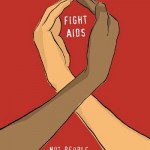
worldaidsday400_558On December 1, 1988, the World Health Organization declared its first observance of World AIDS Day. Since that day 21 years ago, every December 1st has been used to raise awareness about the global HIV/AIDS pandemic.  In 2006, the Political Declaration on AIDS set a goal to have “universal access to comprehensive prevention programmes, treatment, care and support by 2010.” While progress has been made, we are very far away from being able to trumpet that successes have been fully reached. For the year 2009, the theme of World AIDS Day is Universal Access and Human Rights.

Currently, approximately 33 million people are living with HIV/AIDS (for a full set of global epidemiology slides, click here). Women constitute one half of the people living with HIV/AIDS, and this percentage has risen rapidly from 35% in 1985 (for a slide on the percentage of women in the epidemic around the world, see the UNAIDS epidemiology slides above). Shockingly, young people constitute one half of the new infections each year. While there is no cure for HIV/AIDS, anti-retrovirals have offered hope, newfound possibilities for health and well-being, and added years of life to millions of individuals, households, and communities around the globe. In the case of treatment, while many (but certainly not all) in the United States have access to life saving anti retroviral therapies, the availability of treatment is widely variable around the world. Unfortunately, only a small proportion of those with HIV/AIDS have access to anti-retro viral therapy. (For more details on the prevention, treatment, and care dynamics of the epidemic around the globe, see the UNAIDS 2008 Report on the Epidemic.)

Universal access as a theme is pointing to the need to ensure that populations have access to HIV/AIDS prevention, treatment, and care.  This is easier said than done—in 2007 only 31% of people who needed treatment received it—and the rate of infection is far outpacing the increases in the number of people who are receiving treatment. Economic retractions around the globe threaten the progress that has been made and there are some reports that treatment programs are being halted or scaled back substantially given economic constraints (UNAIDS 2008 Report).

Because of the way that the number of infections is far outpacing those who have access to treatment, and because the epidemic is largely spread through drug use and sexual contact, the importance of prevention cannot be overstated. Prevention is well recognized as a key factor in slowing the pace of the epidemic—and this is not simply a matter of getting people much needed information and skills about condoms. Prevention is also about tending to the root causes of the epidemic, which involves issues related to social inequalities, homophobia, poverty, gender inequality, the criminalization of drug use and sex work, violations of human rights, and lack of health care access and infrastructure. And, then of course there are the complexities of culture and human behavior, and the fact that many prevention programs work for a short time, even up to a year, but these behavior changes are not often maintained in the long run. There is a great deal of promise in structural, interpersonal, cultural, and group level behavioral prevention interventions. However, the promise of these prevention interventions will not be fully realized without attention to social inequalities and human rights issues.

WAD09-Logo1-web1

This brings us to the second aspect of the theme of World AIDS Day 2009: human rights. While it may not be obvious to many, violations of human rights shape HIV/AIDS risks and access to prevention, treatment, and care around the world.  Men who have sex with men, sex workers, and drug users experience stigma and discrimination throughout the world. Many countries attempt to make HIV/AIDS a public health issue, but far too often, it is treated as a moral issue where populations are blamed for their fate (particularly sex workers, drug users, and men who have sex with men). Some countries do not even count “men who have sex with men” as a category in their surveillance systems and men who have sex with men have the lowest coverage of HIV prevention services of any category (UNAIDS, 2008). In numerous countries, women who are known to be HIV positive are thrown out of their homes  when they test positive for HIV/AIDS and do not have adequate access to education, property rights, or income generation to help them to survive (and these factors shape their risks to begin with)—this is the case even when their partners may have infected them. In my own travels and research in South Africa and Kenya, it is clear that many women will not bring their children back to health care centers or clinics to be treated with ARVs for fear of being thrown out of their households and families by their male partners, relatives, or community members. Many men do not come to clinics to be tested because of HIV/AIDS stigma and because of perceptions that clinics are women’s spaces. Men also do not test because of ideals of masculinity which teach men to avoid signs of “weakness” or need. In many countries HIV positive women and men are subject to forced sterilization. Sex workers and drug users are often arrested and viewed as criminals, and prisons do not have adequate access to drug rehabilitation, condoms, or ARV’s, exacerbating the epidemic among “high risk” populations. And the U.S. has been known to stop funding prevention programs that take comprehensive sex education and condom use into account, arguing (against a very strong evidence-base) that abstinence and be faithful approaches work best (for studies that show that comprehensive sexual education and condoms work better than abstinence only programming, there are too many to list, but see this for one). The list of the links between social inequalities, rights, and HIV/AIDS risks goes on and on.

There have been gains, and there have been many of them. The number of people on anti-retroviral therapy has increased 10 fold in the past 6 years alone (UNAIDS, 2009). Recognition of the role of gender inequality and homophobia in shaping HIV/AIDS risks is increasing, as has prevention programming which is increasingly gender-specific and transformative for both women and men. Defining ‘human rights’ and implementing changes in rights has newfound momentum and if this continues, may provide marginalized populations with increased protections, resources, legal recourse, and access to prevention, treatment, and care. The US has a centralized dissemination program to diffuse evidence based successes to community based organizations. There is global mobilization to eradicate mother-to-child transmission. The economic contributions to prevention and a global scale ups in treatment have been a stunning testament to the fact that the global community can rally much needed support.

Still, there is much work to be done both domestically (U.S.) and globally. The incidence rate of HIV/AIDS in Washington DC is similar to that found in Western Kenya. The age distribution in some countries on the African continent has shifted life expectancy downward by several decades in several countries due to the epidemic. AIDS is the leading cause of death right now among African American women aged 25-34 in the United States and African-American women are 21 times more likely to die of HIV/AIDS than Caucasian women. There are millions of orphans due to HIV/AIDS. Sub-saharan Africa constitutes 10 percent of the world’s population and over 65% of the cases of HIV/AIDS. Anti-poverty efforts and food security efforts have been slow to link up with HIV/AIDS prevention, treatment, and care and are much needed. National policies have been hampered in their implementation by a lack of coordination, technical skill, and competing economic and health needs. Young people need prevention efforts more than ever before and prevention efforts reach adults the most. To achieve universal access and human rights within the HIV/AIDS epidemic is a goal that all social sectors and countries must all strive for. At the same time, all must be mindful that recalcitrant issues such as social inequalities and social justice shape the epidemic profoundly and must be dealt with head on in action and not in rhetoric.

__________________

For more information on the AIDS pandemic and how you can get involved in advocacy, research, or activism see the following links:

If you are reading this blog from a computer or phone within the United States, you are well aware that health care reform debates are coming to a head. The latest controversy over just how, and for whom, health care reform will become institutionalized comes in the form of the Stupak amendment, which the The Wall Street Journal describes as “a last-minute amendment toughening abortion restriction in the House health-care bill….” backed by “(t)he U.S. Conference of Catholic Bishops, a powerful force behind the strong abortion language in the House.”  Meanwhile, The Wall Street Journal also reports that “Planned Parenthood …. has started a petition drive that has been promoted by Cosmopolitan magazine,” and that  “(a)ctivists hope to flood Washington to rally and lobby on Dec. 2, during the week that Senate floor debate begins.”

A protester in Los Angeles last Friday

To better understand this issue from the perspective of reproductive and sexual justice activists, I turned to a former student of mine, Courtney Bell. Courtney received her M.A. in Public Policy from the University of Washington, Bothell in 2008 and is currently working as a Public Affairs Field Organizer for Planned Parenthood of the Great Northwest.

————————————————————————————-

Message Number Three

by Courtney Bell

As a community organizer for Planned Parenthood of the Great Northwest, I have had the privilege of joining our supporters on the front lines of the debate over health care reform these past few months. Together, we have generated thousands of contacts into the offices of our members of Congress, expressing support for reproductive health care and advocating for its inclusion as part of any basic health care package.

And it’s been a bumpy ride. When Planned Parenthood Federation of America kicked off our organizing campaign for Health Care Reform early last summer, we had three primary messages to convey:

  1. Reproductive health care must be included in any health care reform package. Reproductive health care is basic health care and real reform includes women’s health.
  2. Essential community providers must be included in health plan networks so that patients can access health care from the trusted providers in their communities.
  3. Women must not be worse off after health care reform than they are today.

When I first heard Message #3, I thought to myself, “Duh! Isn’t that kind of a no-brainer of a goal to be working toward? Surely, if health care reform is passed, this is the only outcome to be expected.” I knew that health care reform was all about expanded access to care for millions of people, and currently there are more than 17 million women in the United States who are uninsured.

But now, having participated in three chaotic and infuriating (read: teabagger) Health Care Reform town halls in Western Washington, countless nationwide phone banks, and two advocacy days on the Hill in Washington DC over the past few months, I see that clearly, Message #3 has become our paramount concern. On November 8th, the House passed its version of Health Care Reform with the inclusion of the Stupak-Pitts Amendment. Under this amendment, millions of women will lose access to private insurance coverage for abortion care. And as reported in a study by the George Washington University School of Public Health and Health Services, “the treatment exclusions required under the Stupak/Pitts Amendment will have an industry-wide effect, eliminating coverage of medically indicated abortions over time for all women, not only those whose coverage is derived through a health insurance exchange.”

It has been a founding principle of Health Care Reform, as articulated by President Obama, that no one will lose the benefits they currently have. Make no mistake: this is exactly what will happen if the Stupak-Pitts Amendment makes it into the final version of the bill.

Fortunately, the Senate version of Health Care Reform currently excludes this disastrous language. We must do all that we can to ensure that when the final bill comes before our President for a signature, it is one that respects our fundamental rights.

———————————————————————

If you are interested in joining Planned Parenthood in this fight to ensure that women will not be worse off after health care reform than they are today, Courtney offers three action plans:

1. Sign the petition to President Obama, Majority Leader Reid, and Speaker Pelosi. It’s the first step to stopping the Stupak ban and protecting women’s access to abortion coverage.

2. Join Planned Parenthood in DC on December 2 for a National Lobby Day, when Planned Parenthood and allies will be taking this message straight to Congress.

3. Read the Issue Brief: Impact of Stupak Amendment on Access to Abortion Coverage and Care and share with others.

————————————————————————————-

Additional readings from reproductive health and justice experts on the Stupak amendment:

Debates about Gardasil (aka the “cervical cancer vaccine”) have up until this point focused on girls and young women. By focusing on cervical cancer,  rather than on HPV (what the vaccine is really for) — debates on this issue have completely sidestepped around the issue that, of course, boys and men get HPV too. Shouldn’t they also get vaccinated? What will happen now that the debate isn’t just about girls’ sexuality?

I came across this story through sister sociologist/Huffington post blogger, Abby Ferber. In her post, entitled “Cervix Not Required,”  Ferber interviews Adina Nack, professor of medical sociology and sexuality studies at California Lutheran University and author of the the book, Damaged Goods? Women Living with incurable Sexually Transmited Diseases (Temple U. Press, 2008). I quote from Ferber’s interview with Nack below:

headshotFerber: Last Friday, the FDA approved the Gardasil vaccine for use in boys and men ages 9 to 26 years old. When I heard this news, I was surprised. My daughter received the vaccine from her physician, and I had always thought of this as a “cervical cancer vaccine.” The reality, however, is that this is a HPV vaccine, to guard against the sexually transmitted Human Papillomavirus. Why, however, is it only now being approved for males, when it was approved three years ago for females? … Why do you think Merck first sought FDA approval of Gardasil only for women?

Adina Nack, Ph.D._11-08C1-1Nack: Only going through the FDA testing and approval process for women allowed Merck to brand Gardasil as a ‘cervical cancer’ vaccine. Prior to the recent FDA approval of Gardasil for use on male patients, most Gardasil ads have claimed to empower girls and young women with a new tool to protect against cervical cancer. But, it is not clear how many Americans have understood that they were being sold a vaccine designed to protect against a STI.

Ferber: In your book and blog posts, you talk about the stigma connected with sexually transmitted infections (STIs) being gender-based. How are attitudes about STIs reflected in the initial branding and marketing of Gardasil as a cervical cancer vaccine?

Nack: As early as 2005, some organizations have been outing Gardasil as a STI vaccine and arguing that inoculating young adolescents against HPV would encourage teenage sexual promiscuity. The heads of various “family values” groups publicly declared that they would not vaccinate their own children. So, some have questioned whether Merck’s decisions to only seek initial FDA approval for female use and to brand it a ‘cervical cancer’ vaccine may have been motivated by a desire to distance the vaccine (and those who receive it) from the negative stereotypes we have about STIs and the types of people who contract them. On one hand, it is reasonable to assume that most U.S. parents would not be eager to have their daughters, as young as 9 years old, vaccinated against 4 strains of a virus that is primarily transmitted by sexual contact. After all, studies have shown that we’re more likely to assign negative traits – like promiscuity, irresponsibility, naivety, and unintelligence – to girls and women who contract STIs than to boys and men who contract the same infections. The Council on Contemporary Families has a forthcoming study showing that, while equality has increased in many areas, sexual-behavior double standards persist. In the U.S. and many other countries, a female patient who seeks out a STI vaccine often has reason to worry that others will label her a ‘bad girl’ or ‘fallen woman.’ We are more likely to see a ‘cervical cancer’ vaccine as something that good girls and chaste women are justified in seeking out (emphasis mine).

Ferber: If this strategy might have increased the numbers of girls/women receiving the vaccine, then what is the problem?

Nack: It can be argued that the success of branding Gardasil as a cervical cancer vaccine has come with serious public health costs. How can we account for the boys and men who have been unable to legally access this for the last 3 years, a time period in which many of them (and their sexual partners) could have been protected against HPV-related diseases and cancers? Prevention and early detection is especially important for HPV infections because we do not yet have a true ‘HPV test’ or medical cure. By not seeking FDA approval for both male and female patients at the same time, this vaccine’s potential benefit to the public was limited. The FDA’s recent decision to approve male Gardasil has confirmed that Merck sold us a STI vaccine disguised as a cancer vaccine. Despite the messages in Merck’s successful female Gardasil campaign, cervical cancer has never been the only reason to care about the HPV pandemic: medical studies have connected HPV to oral cancers and anogenital cancers in both female and male patients (emphasis mine).

Ferber: You have made the point that the Gardasil ad campaign was a primary source of HPV information for many who had not previously been educated about this STI – what do you see as the downsides to this?

Nack: By obscuring the fact that HPV is a STI in its marketing of Gardasil, Merck missed a chance to educate us about this highly contagious family of viruses: one can contract HPV from the types of skin-to-skin contact that can take place even when sexual partners are using barrier methods, like condoms or dental dams. Given the current trends in U.S. teen sexual attitudes and behaviors, I’m also concerned about how many young people are at risk for contracting HPV because they are engaging in oral sex or anal sex to remain a ‘virgin.’ There has yet to be a large-scale public health campaign to educate the U.S. public about the truth of HPV, so Merck’s Gardasil marketing materials may have been the first (and sometimes only) ‘education’ about HPV for many Americans. For teens and young adults whose primary source of HPV information came from Gardasil ads, then what is the public health damage of not clearly understanding that HPV is sexually transmitted? What about not realizing that HPV can infect and have serious health consequences for boys/men? (emphasis mine).

Ferber: Why do you see de-stigmatizing STIs as key to improving sexual health in the U.S.?

Nack: With Gardasil now fully unmasked as the HPV vaccine it has always been, I’m hopeful that we will stop believing the myths that HPV is only a concern for females and that only promiscuous people get STIs. The availability of safe and effective STI vaccines is something to celebrate. Gardasil’s new approval for use by boys/men is an important opportunity to destroy longstanding myths. To de-stigmatize HPV is to stop viewing it – or any other STI – as a sign of immorality. Through my website, I receive emails every week from those whose genital HPV and herpes infections have damaged not only their health but also their self esteem, their relationships, and their social reputations. Eliminating the shameful stigma of STIs could free millions of infected women and men from social and psychological traumas and harm public health. Viewing these kinds of infections as medical conditions would allow STI patients to focus on pursuing treatment options that not only allow them to manage their own symptoms but also make them less likely to infect others. Destigmatizing STIs may also increase the odds that a newly diagnosed person will disclose their sexual health status to their sexual partner. New social attitudes and better public health education about STIs can prepare Americans to support future STI/HIV vaccination programs.

Ferber: As a result of marketing Gardasil as a cervical cancer drug for girls and women only, scores of males and their partners have unnecessarily contracted HPV over the past three years; the full range of health consequences of HPV have been ignored, and stereotypes and stigmas around STIs remain entrenched. Astoundingly, the American Social Health Association reports that “about 5.5 million new genital HPV cases occur each year — this is about 1/3 of all new STD infections.” Clearly, what we need is open and honest education about HPV and other STIs. We have allowed our stereotypes about women’s sexuality and STIs to put our public health at greater risk.

During the first week of October (National Sex Education week, and the beginning of Sex Education month) I posted a story about Orrin Hatch’s proposal to restore $50 million a year in federal funding to abstinence-only sex education. Now that we are in the last week of Sex Education month, it is oddly fitting that some of our STI education has been taken over by private industry (in this case, Merck’s marketing campaign about the Gardasil vaccine.) Let’s hope and lobby so that kids are not reliant solely upon on commercial advertisements for their sexual health information.

Caster SemenyaWhile Castor Semenya’s recent “news” seems to have shocked the world, the concern about “gender verification” in sport has taken place for quite some time. The tests have changed over time…but the point has not (e.g. when women are “too good,” they must not be women).



Some examples of other intersex track athletes include:


  • Stella Walsh, a 2 time Olympic medalist in the 1930s, running for Poland. She won a gold medal in ’36 in the 100 meter dash during the Berlin Olympics. It was only when she died that an autopsy revealed that she had male genitalia, XX chromosomes, and XY chromosomes as well.
  • Eva Klobukowska, a Polish sprinter who won a gold medal in the 1964 Tokyo Olympics failed a sex chromosome test in 1965. She was banned from competition. (She gave birth a few years later).
  • Maria Patino from Spain was a sprinter and failed a “gender” test in 1985—she was banned from sports competition but was reinstated later when it became clear that she was resistant to testosterone. Since she was deemed resistant to testosterone, the fear that she had an “unfair advantage” or was “a man unfairly masquerading as a woman” was squelched.
  • Santhi Soundarajan, an Indian runner who failed a gender test in Doha in 2006 and was stripped of a previous medal.maria patinoSanthi SoundarajanStella Walsh
    Eva Klobukowska

The list goes on and on. And then, most recently, there was South African Caster Semanya.

Semenya was subject to a “gender verification test” (it is a sex test not a gender test). She was born female, raised as a woman, identifies as a woman, and has no ovaries or uterus. She also has undescended testes. It was also found that while she produces “10 times less” testosterone than “most men,” she has exceeded the average of women by “3 times.” (Why are we comparing elite athletic women to “average women” who may not train as rigorously or build muscle mass as much)? Unlike many other countries which stand by and allow international governing bodies to carry out these tests and toss their athletes out of sports competitions forever more, the South African parliament filed a complaint with the United Nations Human Rights Commission. The International Association of Athletics Federation wants her to be disqualified from future events and has suggested to her that she should have “immediate surgery” because of the “grave health risks” of her “condition.”

This is a complicated issue, but I will be brief here and spread my thoughts over a number of posts.

Let me at least say this: The International Olympic Committee mandated “gender verification” of women since the mid 1960s but in 1990, the International Amateur Athletics Federation called for the abandonment of gender verification. A working group was developed, and the Women’s Sports Foundation website reports that the working group concluded that:

  • women with birth defects of the sex chromosomes did not possess an unfair advantage and should be permitted to compete as females; the only purpose of gender verification was to prevent men from masquerading as females;
  • people who have been both legally and psychosocially female since childhood (including pre-pubertal sex re-assignments) should be eligible for women’s competition regardless of their chromosomal pattern;
  • post-pubertal sex re-assignments should be handled on a case by case basis; and women athletes should undergo pre-participation health examinations.

Unfortunately, at IOC events, the IOC continues to sex test despite the discrimination it entails and the harm it causes to athletes.

What I would like to see is parallel gender verification treatment of male athletes:

Let’s determine the normal range of testosterone for men and if there are male athletes who naturally produce more than other male athletes—ban them from competition for being “too much of a man”? (Unnatural advantage).

The other men just don’t have a chance against them, do they?

All of the above trends are of course, contextualized in sport as a social institution, which, since its inception was formed by and for men, in order to make boys into men (for a history of these claims, see the following books: Michael Messner, Power at Play, Susan Cahn, Coming on Strong: Gender and Sexuality in 20th Century Women’s Sport, or Varda Burstyn’s, The Rites of Men. Another important piece of context: recognition that sport is constructed to explicitly segregate the sexes into two dichotomous beings who don’t compete with one another and to support ideologies of “the two sex system” (Ann Fausto-Sterling’s term, in her book Sexing the Body: Gender Politics and the Construction of Sexuality. She is a biologist, by the way). This is the case even though sport as an institution could be set up to reward the best sports performances (no matter where sex or sexes land).

For excellent work on the two sex system in sport (and for the inspiration for the title of this post), check out Ann Travers’ piece in Studies in Social Justice (2008, Volume 2, #1) “The sport nexus and gender injustice.”

…and don’t miss Mary Jo Kane’s 1995 “seminal” work in the Journal of Sport and Social Issues titled “Resistance/Transformation of the Oppositional Binary: Exposing Sport as a Continuum.”

Finally, if this topic is one that you just plain enjoy, I have a few of my own books on this topic, such as, Leslie Heywood & Shari Dworkin’s (2003): Built to Win: The Female Athlete as Cultural Icon (University of Minnesota Press), and Shari Dworkin and Faye Wachs (2009). Body Panic: Gender, Health, and the Selling of Fitness (NYU Press).