women’s health

With this coming Tuesday marking the 40th anniversary of Roe v. Wade, I’m inspired to post this month’s column early.

I encourage readers to check out the work of ANSIRH (Advancing New Standards in Reproductive Health), a UCSF research program “dedicated to ensuring that reproductive health care and policy are grounded in evidence.” So, rather than cover the breadth of political and social dynamics related to abortion policies, I’m focusing on one specific new study which has important implications for protecting women’s health:

A newly published landmark study by ANSIRH demonstrates that trained nurse practitioners, certified nurse midwives, and physician assistants match physicians in the safety of aspiration abortions they provide. We hope that these results will give policymakers the evidence they need to move beyond physician-only restrictions in order to enable more women to have their reproductive health care needs met in their local communities by health care providers they know and trust.

The results of this study are significant because PAs, NPs and CNMs have been shown to be important and accessible health care providers for rural and low-income women. ANSIRH’s new findings support policies which would reduce health care disparities and increase continuity of care because a larger group of health care providers would be able to offer early abortion care. For more on this topic, read the latest post by Tracy Weitz, Director of ANSIRH.  This research should inform health policy across the U.S.

For more on the realities of abortion in the U.S., watch Abortion in the United States, a short video from the Guttmacher Institute.

As many in the U.S. anticipate October “going pink” for Breast Cancer Awareness Month, I’m honored to feature a guest post by Gayle A. Sulik MA, PhD, Research Associate at the University at Albany (SUNY) and founder of the Breast Cancer Consortium, an international partnership committed to energizing the scientific and public discourse about breast cancer and to promoting collaborative initiatives.  She was a 2008 Fellow of the National Endowment for the Humanities and recently won the 2013 Sociologists for Women in Society Feminist Lecturer Award for her book, Pink Ribbon Blues: How Breast Cancer Culture Undermines Women’s Health (Oxford University Press).*

___________________________________________________

I too used to secretly look forward to October, when I would drape myself in pride with all manner of garish pink, survivor-emblemed merchandise and take my place in the Survivors circle whilst bopping out to “We Are Family” or whatever the cheesy designated anthem was for that year, at one of the many breast cancer fundraising walks.

But I’m not doing it this year or ever again. It’s just a load of bollocks and a great excuse for companies to market their products to the well-meaning consumer in the guise of “Breast Cancer Awareness” when all it really boils down to is profiteering at the expense of real people really suffering and really dying from this insidious disease.

— Rachel Cheetham Moro,
The Cancer Culture Chronicles, Sep. 19, 2009

Rachel Cheetham Moro used to write a lot about the bollocks of breast cancer on her blog, The Cancer Culture Chronicles, which she published from June 2009 until her death, from metastatic breast cancer, in February 2012.

Though Rachel’s blog posts covered an array of topics about her experiences with breast cancer and the curiosities of pink ribbon culture, she was particularly savvy in her descriptions of the pink-themed marketplace where strength, hope and courage come in the form of t-shirts, chocolates, figurines, and narratives of idealized survivorship. With snark-filled accuracy, Rachel catalogued how merchandisers blithely use the widespread desire for cure(s) to lull well meaning supporters into a state of consumptive bliss. Shopping for a cure never felt so good. If only “cure” were part of the transaction.

As a woman living with terminal cancer, Rachel knew that a “cure” for breast cancer was a figment of the collective imagination. Not only for her, but for all of those living with metastasis (when cancer spreads to distant organs of the body). Rachel had been diagnosed with breast cancer on three separate occasions. She had the typical array of treatments and brief periods of remission, but the third diagnosis changed  everything. There was no cure. There would be no cure. It was simply (and complicatedly) a matter of living with breast cancer until dying from breast cancer.

There are rare cases of people with metastasis who live twenty years, and no one knows which statistics will apply to them in the end. But the truth of the matter, which Rachel knew to her core, was that she would not survive this disease. What’s more, the treatments that were geared toward keeping her cancer at bay ended up damaging nerves, organs, and limbs until she had difficulty managing routine aspects of life. Walking, eating, cooking, typing, breathing. Activities many of us take for granted became everyday obstacles.

None of this stopped Rachel. She kept doing what she could. At the age of 41, she managed to retrofit her house to accommodate a limited range of motion and the inability to use her dominant arm. She cooked one-handed, henpecked her keyboard and, prepared for a day when she might be able to drive again, had hand controls installed in her vehicle. Rachel learned how to live life within the continually narrowing confines of patient-hood.

And it was patient-hood NOT survivorship that framed Rachel’s life. “I’m a cancer patient, Gayle. It’s what I do now. I spend hours in waiting rooms and chemo-chairs, hours on the phone to manage my health care, hours doing things that used to take me minutes. Being a cancer patient has become a job. It’s become my life. I don’t want it to be, but I don’t have a choice.”

During one of my visits with Rachel, I took her to a chemotherapy session. On the way home she directed me to a steep and narrow road that snaked in and around the Highlands of New Jersey. We ended up at a property nestled in the hills overlooking the Atlantic Ocean. Rachel wanted me to see her “dream house.” There it was. She had grown up near the ocean in Perth, Australia. Sand and saltwater were in her blood. Rachel smiled when we drove up to the house. Then she told me the truth. This was a pretend dream house. “The devastation of cancer,” she said, “is that it not only takes your life, it steals your dreams.” Then in a matter-of-fact tone Rachel repeated the statement. “That’s what cancer does, Gayle, it steals your dreams.”

I went silent. A sense of dread was a dead weight around my heart. They were my dreams too. Not the house by the ocean. The dream of having Rachel in my life.

For Rachel and me, our time together had been a full but short 16 months. We didn’t find each other until October 2010 when she emailed me after reading my book, “Pink Ribbon Blues.” We became fast friends and collaborators. Rachel was a rabble-rouser, an activist — a soul sister who got what I was about. She believed as strongly as I did that pink hype was not the answer to the breast cancer problem. It was in fact getting in the way. Profit motives and branding priorities led to a distortion of medical information, the misallocation of funds, and an overall misrepresentation of the disease, especially for those who were dying from it. These truths, which rarely made the headlines, infuriated both of us. We were committed to change. This reality swirled around in my head in that brief moment of silence.

Then I asked Rachel, “What gets you through the day if you no longer have your dreams?” Without pause she said, “You.” “You do, Gayle. And my beloved…and Sarah… my cyber-sisters…Newman [Rachel’s dog]…and screaming about this pink hypocrisy. It’s going to change, Gayle. The walls are going to tumble down. It’s just a matter of time.”

I left New Jersey after a few days and returned to Texas. We continued our work via email, phone, Skype, and other social media. Ten weeks later Rachel was in the hospital. Cancer had made its way to her spine, and her brain. It was the same week Susan G. Komen for the Cure announced its now infamous decision to stop giving grants to Planned Parenthood. The same week I was in Florida for an academic conference. As I learned what was happening to Rachel, the Komen story began to unfold.

Komen’s deceptions, misrepresentations, abuses of the public trust, and failures of corporate governance surrounding the Planned Parenthood scandal opened a proverbial can of worms. New investigations surfaced about Komen’s revenues and budget allocations, branding initiatives, questionable corporate partnerships, legal actions against other smaller nonprofits, distortions of scientific data, and long-standing partisan bias. None of this was surprising to those of us who had been working to reveal Komen’s shenanigans long before the Planned Parenthood debacle stirred the public interest. But it was news to many others. Normally Rachel and I would have been sending rapid-fire messages about each new public reveal, in constant communication with the “cancer rebels” to spur social commentary. Not this time.

There was a startling silence as Rachel went in and out of consciousness, her voice missing from one of the most crucial and catalytic public debates to date about Komen’s role in the breast cancer industry. I sent her messages. Reported updates. Did Rachel know that Komen’s true colors were finally coming to light? That her personal efforts to reveal the truth about breast cancer were having an impact? Her beloved Anthony assured me that she did.

My partner in activism died on February 6th, 2012. I hope that Rachel was right, that it’s only a matter of time until those pink walls come tumbling down. Maybe then, there will be a chance of getting closer to that elusive cure.

___________________________________________________

*The 2012 edition includes a new Introduction about the Komen for the Cure/Planned Parenthood controversy and a color insert of images of, and reactions to, the pinking of breast cancer. For more information please visit Gayle Sulik’s website at gaylesulik.com and her blog at pinkribbonblues.org.

** Rachel Cheetham Moro’s blog, The Cancer Culture Chronicles, has been compiled and edited by her mother Mandy Cheetham and her friend Sarah Horton. The book contains all of Rachel’s blog posts in their entirety, with notes, resources and tributes. Available in October 2012, this is a 5×8 hardback book, 384 pages and available at cost from Blurb.com, price $30.95 (£21.50) plus shipping.

Today’s extra edition of the monthly “Bedside Manners” column features a follow-up post from one of our past guest authors: Chloe E. Bird is a senior sociologist at the nonprofit, nonpartisan RAND Corporation and co-author of Gender and Health: The Effects of Constrained Choices and Social Policies (Cambridge University Press).

______________

In light of the current debate over women’s reproductive rights and care, it is increasingly clear that the benefits of the Patient Protection and Affordable Care Act (ACA) for access to comprehensive health care will not accrue equally to women across the country. Simply put: There is more agreement on what must be included in comprehensive health care for men than on whether and to what extent contraceptive and reproductive services must be included in comprehensive health care for women.

While it has long been recognized that comprehensive care for men includes sexual and reproductive health, the same has not been true for women. For example, women’s health insurance plans have typically allowed exclusions in this area even for pregnancy, and even when it is not a “preexisting condition”; indeed, there are no comparable accepted options for excluding entire aspects of health care for men while providing them for women.

Yet although the ACA assures women access to primary care and many reproductive services without copays, the debate over reproductive services continues. Recent political discussions on access have typically not included discussion of increases in women’s education, employment and career continuity attributable to contraception.

In the context of this debate, the Timely Access to Birth Control bill (AB 2348), which has been approved by the state legislature and is now awaiting Governor Brown’s signature, may appear to some to be a luxury that California can ill afford. But the reality is that over the mid to long run, AB 2348 would very likely save the state a significant amount of money. The bill allows registered nurses to dispense highly reliable hormonal contraceptives, including the pill. If enacted, doctors and nurse practitioners would be freed up to focus on more complex patient visits. If passed, the bill would increase women’s access to reliable contraceptives and reduce the costs of delivering that care.

In a Mother’s Day piece for Ms. Magazine Online, I pointed to the savings contraception generates for employers, insurers, and taxpayers. A public dollar invested in contraception saves roughly four dollars in Medicaid expenditures—or $5.1 billion in 2008—not to mention the broader health, social and economic benefits. Moreover, a 2010 study in California of a Medicaid family planning program found that every dollar spent saved the public sector over nine dollars (PDF) in averted costs for public health and welfare over five years. Rather than getting caught up in the national political debate over reproductive health coverage, California legislators should consider the significant cost savings as well as the social and economic benefits of improving timely access to reliable contraception.

On the national front, the goal of the ACA is to expand access to healthcare for Americans, especially those who currently lack health insurance; but the law also prioritizes improvements in the quality of care and reductions in costs. As we look for ways to provide efficient, high-quality, and cost-effective health care to more Americans, we can’t afford to ignore women’s health issues, including reproductive health care and the cost savings that contraceptive access provides.

______________

Cross-posted with the author’s permission from RAND’s blog


Last week, the NYT reported “Merck: Studies Boost Gardasil for New Uses“; this week the CDC’s Advisory Committee on Immunization Practices (ACIP) met to discuss these new results. It will be interesting to see what, if any, changes result from new clinical evidence that (1) the vaccine is effective in preventing anal precancers in males and (2) the vaccine is effective in women 27-45 years old.

Those who’ve followed HPV research for the past decade were not surprised by the findings of either study. What has surprised me is how little attention ‘male’ Gardasil has attracted since receiving FDA approval last October. Writing a feature article for the Winter 2010 Ms. magazine gave me the opportunity to more deeply explore this topic and hopefully raise awareness — not only about Gardasil, a.k.a. the “cervical cancer” vaccine, but also about the full range of male HPV-related cancers that it might also prevent. 

So, this month’s column is inspired by my desire to respond to some of the interesting questions, comments and accusations that I’ve received via the blogosphere (like WashingtonCityPaper and HugoSchwyzer) in these first days following the publication of my article. I’ll start by acknowledging that my article’s title seems to have pushed more than a few buttons: apparently not everyone wants to know “Why Men’s Health is a Feminist Issue.” One comment asked “Why does the burden for sexual health need to fall, yet again, to women?” My response: It’s a burden for only girls/women to be responsible for sexual health, so prioritizing equal access to STI/STD vaccines results in a more fair sharing of this ‘burden.’ From the opposite side, a comment criticized this angle as being self-interested: “…when feminists speak of male health issues, it is usually in the context of the way they affect women.” To that, I reply: if you read the full article, you’ll see that boys/men have plenty of reasons to care about having access to this vaccine that have to do with protecting their own health, regardless of whether or not they ever have a female sexual partner.

This leads to another trend in responses: What’s in it for men?  Or, as one comment put it, “The only reason for males to get the vaccine would be to prevent HPV in women.” Really? How about the variety of serious HPV-related male cancers (oral, penile, anal, and others) that are (1) on the rise, (2) often fatal due to lack of accurate testing/screening, and (3) in the U.S. likely result in more combined deaths in men than cervical cancers in women? (See my Ms. article for an overview of these stat’s or, if you love charts check out p. 4 of the American Cancer Society’s 2009 report).

And, media coverage of Gardasil would not be complete without questions/concerns focused on whether or not Gardasil does more harm than good. For the record: I have not taken a pro-vaccine or anti-vaccine stance on Gardasil or any other vaccine. But, I speak in favor of equal access to vaccines, support the conducting and media coverage of medical studies that reveal the full range of potential health costs and health benefits of any vaccine,  and argue for funding public health campaigns about HPV and other sexually transmitted epidemics. And, though some blog comments reveal confusion over the possibility of being “required” to get the Gardasil vaccine, I’m not aware of any current U.S. vaccination policy that does not allow for ‘opting out.’ (Note: as of December 14, 2009 Gardasil was no longer required for female green card applicants.)

A less popular theme, though one that intrigues me, came from those who took the angle of “What’s in it for big pharma?” One comment hypothesized, “…you can’t help but suspect Merck’s money motive is playing a role in the push for expansion to men.”  And, I reply, what PUSH? If money was their motive, then wouldn’t they have updated the Gardasil.com website to encourage male consumers? Visit that site prior to March 1, and you’d think that it was still only approved for girls/women.

I’ll end this post by expressing my thanks to all of the journalists and blog authors who are raising awareness about this topic, including Ms.‘s own Executive Editor Katherine Spillar on the Huffington Post. I also send out my gratitude to blog readers who add insightful, thoughtful, sociological, and truly feminist comments like Annie‘s. In my opinion, to be feminist is not to be pro-women, it is to be pro-equality and pro-justice (not to mention anti-sexism, anti-racism, anti-homophobia, anti-ageism…you get my drift). I don’t know if the pro- and anti-vaccine folks will ever see eye to eye, but there’s absolutely nothing to lose and everything to gain by being pro-HPV-education.

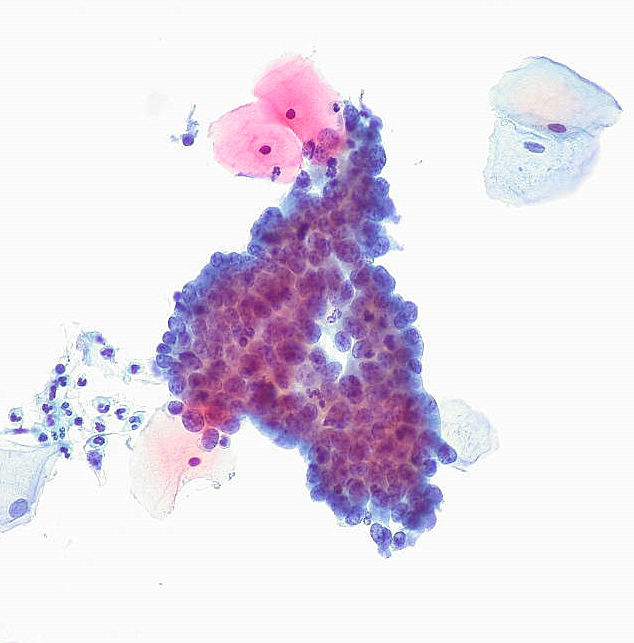
File:Cervical AIS, ThinPrep.jpgJanuary is Cervical Health Awareness Month, making it the perfect time to post a follow-up to Part I which featured my concerns about potential unintended consequences of new Pap test guidelines (from ACOG, the American College of Obstetricians and Gynecologists). To recap, it is vital that we do not confuse a recommendation of less frequent Pap tests with the unchanged recommendation of annual pelvic/sexual health exams (see the National Cancer Institute for explanations of both).


So, let’s look back at a letter dated November 20, 2009, in which the President of ACOG clarified:

Cervical cancer screening should begin at age 21 years (regardless of sexual history). Screening before age 21 should be avoided because women less than 21 years old are at very low risk of cancer. Screening these women may lead to unnecessary and harmful evaluation and treatment.

Medically speaking, why should this recommendation disregard an individual woman’s sexual history? His letter continues on to state:

Cervical cytology screening is recommended every 2 years for women between the ages of 21 years and 29 years. Evidence shows that screening women every year has little benefit over screening every other year.

Doesn’t this depend on how many new sexual partners a woman has in a given year? Are the revised guidelines assuming monogamy (or at least long-term, serial monogamous relationships) which decrease odds of a woman contracting a new cancer-causing strain of HPV in less than a 2-year period? Where are the conclusive findings of large-scale sexual-behavior surveys to support this assumption?


ACOG’s November 2009 press release featured these quotes from Alan Waxman, M.D.:

Adolescents have most of their childbearing years ahead of them, so it’s important to avoid unnecessary procedures that negatively affect the cervix. Screening for cervical cancer in adolescents only serves to increase their anxiety and has led to overuse of follow-up procedures for something that usually resolves on its own.

I agree with GWP reader anniegirl1138 who commented on my previous post that over-treatment is no joke. However, we have not been presented with data that a Pap test — the test, itself, not over-treatment based on test findings — is directly linked to significant increases of any negative health outcome.


Cervical HPV infections can be detected by Pap tests: ACOG acknowledges that, “the rate of HPV infection is high among sexually active adolescents, but counters with, “the large majority of cervical dysplasias in adolescents resolve on their own without treatment.”


Why should that smaller group of girls and young women (whose pre-cancerous lesions do not resolve without treatment) miss the annual opportunity to receive an early diagnosis? Early-stages of cervical HPV infection can often be resolved with less-invasive treatment options.


More-invasive treatment options, such as the “excisional procedures for dysplasia” that have been linked to increased risk of premature births, are one of several medical treatments for cervical HPV.


And, what about the possibility that an increased risk of premature births may not be the paramount concern for every female patient? Not all women want to or can biologically become mothers. What if an individual female patient would rather seek medical treatment for a HPV infection that has resulted in cervical dysplasia so that she has greater peace of mind in knowing that she has reduced her risk of cervical cancer and reduced the likelihood of transmitting HPV to her sexual partner(s) and/or future babies?


Call me a feminist, but I still believe that knowledge is power and that every sexually-active girl and woman should be encouraged to consider the benefits of annual Pap tests. When Pap smear results show “abnormal” cellular changs, then healthcare practitioners should explain the potential for false-positives and discuss the pro’s and con’s of moving forward with different diagnostic and treatment options.  


ACOG acknowledges that, “HPV also causes genital and anal warts, as well as oral and anal cancer.” A Pap test may be a girl/woman’s first chance to learn of a cervical HPV infection, which can result in her having a colposcopy exam. This procedure helps a practitioner find HPV-infected cells not only on the cervix but also in other anogenital areas (the vaginal canal, the labia, the perineum). Beyond the cervix, a Pap test that is positive for HPV may be a wake-up call to get a thorough oral screening for serious oral cancers which have been linked to sexually transmitted HPV.


In addition, my research and others’ studies have found that STI diagnoses can lead to attitudinal and behavioral changes which can decrease risks of contracting other STIs, including HIV. For all of these reasons, a Pap test that leads to a diagnosis of a sexually transmitted cervical HPV infection can bring unintended positive consequences.


In light of the new Pap smear guidelines, I hope that U.S. girls and women who get less frequent Pap tests will more frequently ask their healthcare practitioners to educate them about cervical cancer, about the full range of STIs, and about FDA-approved vaccines against viruses that can be sexually transmitted (HPV and Hepatitis B).


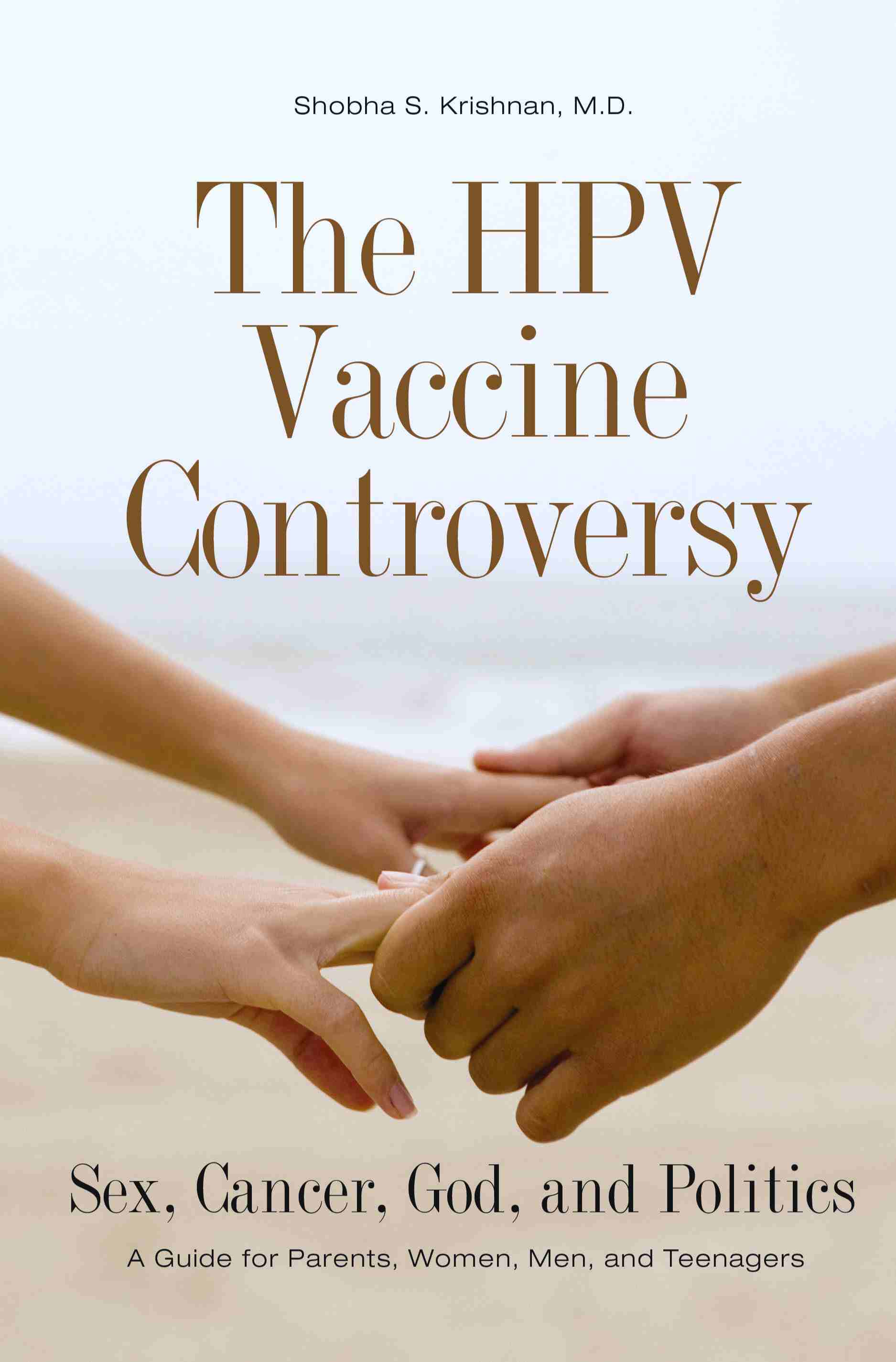
For the medical facts about HPV and HPV vaccines, check out the book The HPV Vaccine Controversy by Shobha Krishnan, M.D., a member of the Medical Advisory Board of the National Cervical Cancer Coalition


The Bottom Line: a recommendation for less frequent Pap tests does not mean you should forgo your annual pelvic exam. In our busy lives, e-reminders can make the difference:  PromiseToMe.com allows you to schedule an annual email reminder. [Note for boys/men: make sure to get an annual sexual health exam, too!]

Some would say this has been true since 2006, when the FDA approved Gardasil for exclusive use in girls/women, and finally the FDA agrees. Last week Merck received FDA approval for Gardasil to be used as a genital warts vaccine in boys/men (ages 9 to 26 years old). However, yesterday, the CDC Advisory Committee on Immunization Practices voted for only “permisive” use in boys, rather than voting for the stronger recommendation of “routine use,” as they had for Gardasil’s use in girls/women.

As reported in Bloomberg.com, this decision had been predicted by some experts:

William Schaffner, chairman of the department of preventive medicine at Vanderbilt University in Nashville, Tennessee, said the panel will be asking itself “if we vaccinate all the girls, how much additional benefit will we get by vaccinating the boys?”

The Atlanta Journal-Constitution cited a similar argument from a different expert:

Debbie Saslow, director of breast and gynecologic cancer at the American Cancer Society, agreed with the findings. “If we can vaccinate a high enough proportion of young girls, then vaccinating boys is not cost-effective,” she said.

This line of reasoning and the ACIP’s conclusion are problematic on two levels. First, there seems to be a privileging of female health over male health. There are compelling reasons “ other than the prevention of cervical cancer” for the ACIP to recommend “routine use” of a safe and effective male HPV vaccine. Second, there seems to be a heterosexist assumption in the ACIP’s decisions — that all boys/men are sexually attracted to (and sexually active with) girls/women and vice versa.

Maggie Fox of Reuters offered a more complete assessment in her article published yesterday:

The main reason the vaccine was approved was to prevent cervical cancer, which kills 4,000 women a year in the United States alone. But various strains of HPV also cause disfiguring genital warts, anal and penile cancers and head and neck cancers. “We know that the later the cancer is discovered, the lower the chance of survival is,” David Hastings of the Oral Cancer Foundation told the committee, asking for a recommendation to add the vaccine to the standard schedule for boys. However, ACIP decided only to consider its use based on its ability to prevent genital warts.

Did the ACIP adequately factor in the clinically proven causal links between certain strains of HPV and potentially life-threatening oral cancers — which do not discriminate on the basis of sex? This seems important, particularly if, “The death rate for oral cancer is higher than that of cancers which we hear about routinely such as cervical cancer” (Oral Cancer Facts)?

A recent New York Times article reports that the committee will “take up the issue of the vaccine’s effectiveness in preventing HPV-related male cancers at its next session in February, when more data should be available.”  But data has been available since 2007, when results of clinical studies were reported and the Oral Cancer Foundation issued a press release urging male HPV vaccination?

If the FDA believes Gardasil is safe and effective, then we deserve a more thorough explanation of why the vaccine’s potential to protect against oral cancers — in both men and women — is not reason enough for the federal advisory group to issue as strong a recommendation for male vaccination as for female vaccination.