body

By now you might have heard that the popular TV series Glee recently aired an episode entitled “Wheels,” which was all about disability. It was a mixed bag. For the most part it was better than the sorts of cloying, sentimentalized depictions of disability on television–shows often advertised as “a very special Punky Brewster” (or whatever).

The main premise is that one of the regular characters, Artie (played by Kevin McHale), uses a wheelchair, and is going to have to find his own way to a glee club competition because the school district doesn’t have any accessible buses. The episode starts with Artie being framed by an individualized rhetoric of triumph over adversity–Artie is used to overcoming obstacles, Artie doesn’t mind–but it quickly undermines these messages. Artie does mind, and for most of the show the nondisabled glee club members are required to get around in wheelchairs. This of course is a learning experience for them, and it has the effect of visually challenging the normality of bodies not in wheelchairs for the show’s viewers. The show ends with a wheelchair dance number that’s nicely done, and is a lot of fun.

So there are good things about this show. But I had a number of problems with it, too. The most obvious problem is that it became the disability episode. Not only do we have Artie and his wheelchair, but we have two characters with Down syndrome. And while I am delighted to see actors with Down syndrome on any mainstream TV show, these two characters were used in problematic ways. The first, Becky Johnson, played by Lauren Potter, tries out for the cheerleading squad and is accepted. The good aspect of this is that she’s pushed really hard by the coach, who says that Becky wants to be treated like the other cheerleaders: she refuses to coddle her because of her diagnosis. The bad aspect is that she’s terrible, just terrible. She can’t do even the most basic things that the rest of the squad does.

And the worst aspect of the inclusion of the characters with Down syndrome is that they’re ultimately used, as the New York Times Arts Beat blog argues, “as a prop in the continuing humanization of [cheerleading coach] Sue Sylvester.” We find out that the coach let Becky onto the squad because her older sister (played by Robin Trocki) has Down syndrome, and we find this out when Sue visits her sister and reads her Little Red Riding Hood. Again, a mixed bag: many folks in the world have people we love with disabilities, and it’s nice to put that message out there. The scene with Sue and her sister was trying to be very loving and affectionate, and it sort of worked, but sort of verged into that cloying, a very special Glee kind of place. Is it sweet that Sue was reading her sister–her older, very clearly adult, sister–Little Red Riding Hood, or was it infantilizing of the sister for the sake of making Sue seem sweeter?

Ultimately the show can’t fully escape from the individualized triumph over adversity rhetoric that permeates a lot of mainstream treatment of disability. Near the end of the show, the character Kurt, as part of another plot line, tells his dad, “Being different made me stronger.” In some ways this is the message that the show leaves with its viewers, and it’s a message I have strongly mixed feelings about.

Impossible Motherhood is a new memoir by Irene Vilar, editor of The Americas series at Texas Tech University Press and a writer who uses the history of her life and the lives of her mother and maternal grandmother to highlight critical relationships between colonialism, sexism, reproductive rights, and motherhood. But this will not be the headline that captures the interest of the public. Vilar’s fifteen abortions in fifteen years, on the other hand, seems to be causing quite a stir of attention.

In many ways, this is a memoir about misery. Throughout the book, Vilar critiques the idea that her success on paper — early graduation from high school and a move from Puerto Rico to the U.S. at the age of fifteen, marriage to a Syracuse University professor, book publishing – has not kept her from suffering with severe issues of depression, abuse, self-mutilation, and addiction. Her marriage to a highly regarded, intellectual writer several decades her senior, who defines “independence” by keeping her forever at an emotional distance from him and insisting that the couple cannot have children together, triggers a downward spiral which culminated in twelve abortions in an eleven year relationship, followed by three others with another partner after the dissolution of her marriage. However, with intense therapy and a happy second marriage, Vilar overcomes her painful ambivalence toward biological motherhood and gives birth to two daughters.

The seemingly happy ending of Vilar’s tale of thwarted motherhood will still raise ethical and moral red flags in readers, causing us to squirm uncomfortably as we embark on the author’s lifelong journey of recovery.  Vilar does not go for pat answers or self-satisfied conclusions about her decision to repeatedly abort unwanted pregnancies rather than utilize birth control (which was available during her time in the U.S.).  Instead, this a complex, emotional account of one woman’s emergence from cycles of oppression into an acceptance of her unique identity and experiences.

Cover of Impossible Motherhood: Testimony of an Abortion Addict by Irene Vilar

Vilar’s unhappy childhood – a distant philandering father and a mother who committed suicide when Vilar was only eight years old – contributes to her feelings of abandonment and a need to please authority figures, if only to ensure her survival. Vilar is not claiming to be a representative for pro-choice or pro-life arguments, though she does offer this disclaimer in the prologue:

“This testimony… does not grapple with the political issues revolving around abortion, nor does it have anything to do with illegal, unsafe abortion, a historical and important concern for generations of women.  Instead, my story is an exploration of family trauma, self-inflicted wounds, compulsive patterns, and the moral clarity and moral confusion guiding my choice.  This story won’t fit neatly into the bumper sticker slogan ‘my body, my choice.’  In order to protect reproductive freedom, many of us pro-choice women usually choose to not talk publicly about experiences such as mine because we might compromise our right to choose.  In opening up the conversation on abortion to the existential experience that it can represent to many, for the sake of greater honesty and a richer language of choice, we run risks.”

Reproductive justice movements, particularly in the U.S. and its territories, often have a tumultuous history with communities of color.  But many readers will likely approach the book with little, if any, background knowledge of reproductive justice movements in Puerto Rico. So how did colonialist policies and a U.S.-driven abortion counseling, abortion services, and abortion outreach contribute to these decisions?  In an interview with The L.A. Times, :

“Puerto Rico, at the time, was a living laboratory for American-sponsored birth control research. In 1956, the first birth control pills — 20 times stronger than they are today — were tested on mostly poor Puerto Rican women, who suffered dramatic side effects. Starting in the 1930s, the American government’s fear of overpopulation and poverty on the island led to a program of coerced sterilization. After Vilar’s mother gave birth to one of her brothers, she writes, doctors threatened to withhold care unless she consented to a tubal ligation.  These feelings of powerlessness — born of a colonial past, acted out on a grand scale or an intimate one — are the ties that bind the women of Vilar’s family.

/* Style Definitions */
table.MsoNormalTable
{mso-style-name:”Table Normal”;
mso-tstyle-rowband-size:0;
mso-tstyle-colband-size:0;
mso-style-noshow:yes;
mso-style-parent:””;
mso-padding-alt:0in 5.4pt 0in 5.4pt;
mso-para-margin:0in;
mso-para-margin-bottom:.0001pt;
mso-pagination:widow-orphan;
font-size:10.0pt;
font-family:”Times New Roman”;
mso-ansi-language:#0400;
mso-fareast-language:#0400;
mso-bidi-language:#0400;}

How did the pro-choice movement fail to help a survivor of abuse like Vilar?  Is there a theoretical and activist disconnect between three major intersections — martial strife/violence, psychological trauma, and reproductive justice?  Pro-choice communities would do well to examine books like these and form outreach for women who have experienced multiple abortions.  Vilar understands the stigma which confronts women who have had multiple abortions and does not shame these women, but tries to provide a lens of her own experiences with repeat abortions as a way to personalize this sensitive issue.  In a 2006 Salon.com Broadsheet post, Page Rockwell notes that:

Liberal message-makers would probably have an easier time if repeat abortions were rare, but the truth is, they’re not: According to a report (PDF) released last week by the Guttmacher Institute, which we found thanks to a flare from the Kaiser Foundation, about half of the women who terminated pregnancies in 2002 had previously had at least one abortion. (The report notes that because many women do not accurately report their abortion experiences, these findings are “exploratory.”) Rates of repeat abortion have been on the rise since Roe v. Wade, and ignoring that fact isn’t doing women who need multiple procedures any favors.

In the anthology Making Face, Making Soul, Gloria Anzaldúa wrote that, “[W]omen of color strip off the mascaras [masks] others have imposed on us, see through the disguises we hide behind and drop our personas so that we may become subjects in our own discourses.  We rip out the stitches, expose the multi-layered ‘inner faces,’ attempting to confront and oust the internalized oppression embedded in them, and remake anew both inner and outer faces…. We begin to acquire the agency of making our own caras [faces].”  This is one of those books that rips out the metaphoric stitches and exposes Vilar’s process of multilation and healing, addiction and recovery, for readers to examine.  This is not an easy or light book; it will trigger and it will probe and it will leave readers feeling as if they’ve been punched in the stomach, repeatedly.  But it also has the power to transform and expose previously hidden oppressions.

The outer face of Vilar is a brave one and so is the inner face.  Impossible Motherhood is a book for any pro-choice believer who wants a deeper understanding of the complex issues surrounding reproductive rights in the U.S. and its territories in the twentieth century.  This is also a book for people who believe in the power of personal redemption.  It will leave readers aching, hopeful, and perhaps a little more empathetic to Vilar’s life.

Some would say this has been true since 2006, when the FDA approved Gardasil for exclusive use in girls/women, and finally the FDA agrees. Last week Merck received FDA approval for Gardasil to be used as a genital warts vaccine in boys/men (ages 9 to 26 years old). However, yesterday, the CDC Advisory Committee on Immunization Practices voted for only “permisive” use in boys, rather than voting for the stronger recommendation of “routine use,” as they had for Gardasil’s use in girls/women.

As reported in Bloomberg.com, this decision had been predicted by some experts:

William Schaffner, chairman of the department of preventive medicine at Vanderbilt University in Nashville, Tennessee, said the panel will be asking itself “if we vaccinate all the girls, how much additional benefit will we get by vaccinating the boys?”

The Atlanta Journal-Constitution cited a similar argument from a different expert:

Debbie Saslow, director of breast and gynecologic cancer at the American Cancer Society, agreed with the findings. “If we can vaccinate a high enough proportion of young girls, then vaccinating boys is not cost-effective,” she said.

This line of reasoning and the ACIP’s conclusion are problematic on two levels. First, there seems to be a privileging of female health over male health. There are compelling reasons “ other than the prevention of cervical cancer” for the ACIP to recommend “routine use” of a safe and effective male HPV vaccine. Second, there seems to be a heterosexist assumption in the ACIP’s decisions — that all boys/men are sexually attracted to (and sexually active with) girls/women and vice versa.

Maggie Fox of Reuters offered a more complete assessment in her article published yesterday:

The main reason the vaccine was approved was to prevent cervical cancer, which kills 4,000 women a year in the United States alone. But various strains of HPV also cause disfiguring genital warts, anal and penile cancers and head and neck cancers. “We know that the later the cancer is discovered, the lower the chance of survival is,” David Hastings of the Oral Cancer Foundation told the committee, asking for a recommendation to add the vaccine to the standard schedule for boys. However, ACIP decided only to consider its use based on its ability to prevent genital warts.

Did the ACIP adequately factor in the clinically proven causal links between certain strains of HPV and potentially life-threatening oral cancers — which do not discriminate on the basis of sex? This seems important, particularly if, “The death rate for oral cancer is higher than that of cancers which we hear about routinely such as cervical cancer” (Oral Cancer Facts)?

A recent New York Times article reports that the committee will “take up the issue of the vaccine’s effectiveness in preventing HPV-related male cancers at its next session in February, when more data should be available.”  But data has been available since 2007, when results of clinical studies were reported and the Oral Cancer Foundation issued a press release urging male HPV vaccination?

If the FDA believes Gardasil is safe and effective, then we deserve a more thorough explanation of why the vaccine’s potential to protect against oral cancers — in both men and women — is not reason enough for the federal advisory group to issue as strong a recommendation for male vaccination as for female vaccination.

One of the things I like most about blogging is that your subject can change as you do. This summer I’ve been blogging pregnancy, and now, with just a few weeks more to go, and to keep up with the changes going on here at GWP, I’m changing the theme to (drum roll) Mama w/Pen. From here on in, keep an eye out for monthly contributions from me on the topic of emergent motherhood, feminist and otherwise, on the first Monday of each month.
And speaking of becoming a mama, I just put an “away” message on my email, in preparation for The Big Event. In the meantime, you’ve not heard much from me this past month because I’ve been either in the hospital or on bedrest, spending much of my time lying on my side (best for babies’ circulation for some reason)—all of which makes it rather difficult to type on anything but an iPhone.

What started as a very cutting edge pregnancy—all those high-tech fertility interventions!—has ended up an anachronism. I now understand, in a very personal way, why pregnancy was once called “confinement,” or “lying in.” Hospitalized for early contractions at 30 weeks, I’ve spent the past 3.5 flat on my side, holed up with Marco, Tula (pictured here), my parents for a little while, and the occasional intrepid visitor from Manhattan and beyond. While Tula thinks bedrest is the cat’s meow, for me, it hasn’t been easy. Never in my life have I felt so limited by my body. I’m a a 21st century woman on a 19th century cure.

There are days when I think, “I can’t believe women, everyday, everywhere, go through this kind of thing, have gone through this, from the beginning of time.” Intelligent design? I think not. There are days when I’m in awe of my sisters who bear pregnancy gracefully, stoically, and without complication. Granted, some pregnancies are easier than others. For me, all attempts at grace and stoicism went out the window with those early contractions, which seem to only intensify as the weeks go by. My knees buckle from the weight of me. I have dark, dark circles under my eyes.

But I’m trying not to complain. Or rather, at least not in public, not out loud. I still can’t believe the technology worked. I’m still in awe that at ages 40 and 48, we’re lucky enough to become first time parents, and that we’re having not just one but two.

So rather than kvetch, which I confess is indeed my inclination right now, I’m trying instead to embrace the absurdity of it all while I bide my time and courageously hope not to give birth for a few weeks more—even though I’m more than ready to be done. Though it’s become increasingly hard to breath, there have been moments of buckling laughter. Like the night Marco wheeled me in a wheelchair with no leg support to the church down the block where Kol Nidre services were being held. Like the other day, when Marco walked me over to stand in front of the full-length mirror. “See? You’re still hot,” he said. “In a funhouse mirror kind of way.”

Funhouse aside, I feel like a character from a Margaret Atwood novel—an incubator and not much else. “Having children is sacrifice,” says Shari, one of the kind nurses I see regularly when I go to the hospital for my twice weekly monitoring appointments to check on the status of my contractions and the babies’ heart rates. “It starts right here, right now.” But what about the incubator? I want to ask, incredulous that becoming a mother has to involve such prolonged discomfort and pain. Instead, I hold my tongue, think of my roommate during my stay at the hospital, who gave birth to twin boys at 26 weeks, and feel immensely grateful to be here, with babies still inside me, at week 34.

Welcome to the first official post for Bedside Manners. As a sexual health researcher and book author, I receive a lot of emails from women and men who are dealing with sexually transmitted diseases. Yesterday, I replied to Liza, a 25 year-old married, monogamous woman who had just been diagnosed with a serious cervical HPV infection and treated via LEEP. She could not understand how this had happened, since she had been getting pap smears during her annual gynecological exams for the past 10 years, and her husband had never been diagnosed with genital warts. Her doctor told her it was “bad luck,” and now she is worried about the possibility of having an oral HPV infection, wondering whether her cervical infection is cured, and trying to figure out how to this will affect her marriage.

By getting annual pap smear exams, Liza has been doing the right thing. Unfortunately, most medical practitioners don’t explain that pap smears only sample a small area of a woman’s cervix. So, it is possible to receive a “normal” pap smear result when there are HPV-infected/abnormal cell changes in other portions of the cervix.

With Liza’s husband as her only sexual partner, it’s key for him to get thoroughly examined for HPV/genital warts. If HPV-infected cells are found, then he should have them removed via one of several treatment options. Once both of their bodies have healed from treatments, the couple should strongly consider using condoms during sex (note: condoms reduce but do not eliminate the risk of HPV transmission).


Given Liza’s concern about oral HPV, a ‘HPV test’ can determine the specific strain of the virus. HPV 16 has been linked to cervical cancer and to oral/head/neck cancers. So, an important follow-up exam after receiving a genital HPV diagnosis is to see a dentist: I encouraged her to share that she’s been exposed to HPV orally and request a thorough exam.


As I concluded my reply to Liza, I realized that I needed to address the stress that she was clearly experiencing. Medical sociologists have often written about how disease can cause dis-ease, an illness often causes a patient to lose her sense of wellbeing. In the case of socially stigmatizing and medically incurable infections, like HPV, stress is almost unavoidable for newly diagnosed patients. In my book, Damaged Goods?, I detail specific strategies for handling the variety of stressors that come with a genital HPV or herpes infection, but I’ve decided to wrap up today’s post with a general note about stress.


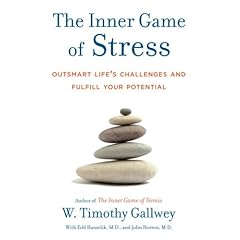
The Inner Game of Stress: Outsmart Life's Challenges and Fulfill Your Potential


I was fortunate to attend a talk last night by the authors of a new book, The Inner Game of Stress. Tim Gallwey has teamed up with two physicians, who practice a patient-centered approach to integrative medicine, to combine medical research with his executive coaching techniques. The result is a thoughtful self-help approach to stress management that encourages readers to be assertive patients. As a medical sociologist, I have written about the health impacts of practitioner-patient interactions and was familiar with the body of research showing how stress can weaken a person’s immune system.


For people, like Liza, who are battling a virus, it is important to not only empower yourself with knowledge about your particular illness but also to strategize how to strengthen your immune system. In addition to the obvious recommendations of decreasing unhealthy behaviors and increasing healthy ones, I encouraged her to find sources of emotional and social support. Some who are facing a stigmatizing illness may find comfort by talking with trusted friends, while others may prefer the neutrality of a therapist, and many may find empowerment in a book. 

Richard E. Nisbett, a psychology professor from the University of Michigan, wrote an op-ed that appeared in the New York Times last weekend about the importance of funding educational programs that really work. All this stimulus package talk has breathed new life into an old conversation: how do we measure the effectiveness of educational interventions?

Nisbett insists that we not overlook the little things, namely boosting children’s self-esteem through high expectations. He writes:

Consider, for example, what the social psychologists Claude Steele and Joshua Aronson have described as “stereotype threat,” which hampers the performance of African-American students. Simply reminding blacks of their race before they take an exam leads them to perform worse, their research shows.

Fortunately, stereotype threat for blacks and other minorities can be reduced in many ways. Just telling students that their intelligence is under their own control improves their effort on school work and performance. In two separate studies, Mr. Aronson and others taught black and Hispanic junior high school students how the brain works, explaining that the students possessed the ability, if they worked hard, to make themselves smarter. This erased up to half of the difference between minority and white achievement levels.

In the age of Barack and Hillary, this is exciting news. The days of “you can’t be what you can’t see” are over for little girls or black kids destined for positions of powerful leadership.

But it’s also got me thinking of other implications for the “stereotype threat.” Is part of why young women are so plagued by eating and anxiety disorders that we are constantly reminded of a stereotypical version of ourselves (emotional, overwhelmed, perfectionist)? Would we be healthier if we were told that our quality of life was, indeed, under our control? How can we pull apart the cultural associations of femaleness and self-sacrifice/internalized anger/stress?

I struggle with this because I wrote a book that traces some of the contemporary causes of perfectionism behavior and disordered eating and exercise. Is Perfect Girls, Starving Daughters: How the Quest for Perfection is Harming Young Women inherently reinforcing an unhealthy perfect girl paradigm just by exploring it? It’s a pretty paralyzing thought, especially for a  feminist and cultural critic. I’ve always believed strongly in the importance of speaking tough truths, naming things, giving voice to pain. But what if, by mirroring the most painful aspects of my generation’s struggle, I’ve inflamed it?

Where is the balance?

–Courtney Martin

Naked women. What’s not to love, right?
Well…Let’s talk about Frank Cordelle.

Cordelle is a photographer with a long-running exhibit he calls The Century Project. It’s a collection of pics — nude girls and women ages birth through 100. (Get it? One hundred years of naked women = The Century Project.) The line-up for 2009 includes shows at the University of North Carolina, Wilmington, Rhodes College in Memphis, and the College of William and Mary in Williamsburg, VA.

The pics are supposedly a celebration of the naked female body in a variety of shapes, sizes, races, and ages. Each photo comes with a little story about the featured female. Many of these “moving personal statements,” as Cordelle calls them, are first-person blurbs about overcoming abuse, eating disorders, etc.

Cordelle’s Mission Statement describes his exhibit as a project that “aims more generally to stimulate thought and discussion about subjects that are often taboo in our culture, or otherwise too personal, too painful.” An 8-year-old girl certainly has lots to tell us. But why does she have to do it in the nude?

Visual artist Karen Henninger comments, “if men REALLY got the issues, they would refrain — as in take a break — from female nudity. There is NO need for men to do female nudity — unless it SERVES them. It’s pretty much a mainstream art thing. Female nudity is acceptable and will get you attention. So much for art being a place of ‘creativity,’” Henninger says. Check out the Met. Or any other museum. As the Guerrilla Girls have noted for years, themes of female nudity melded with rape or sexual assault — regardless of how the art is intended — have been a constant theme in art history. Think Rubens’ Rape of Europa or Hayez’s Susannah at her Bath. Depicting women naked, vulnerable, or linked in some way to abuse has been “a constant way for women to be portrayed” in the art world Henninger comments.

But back to Cordelle.

The problem is not female nudity or female sexuality. The problem is that The Century Project uses naked female bodies, eating disorders, and abuse in ways that promote voyeuristic interest. While childhood nudity should be free and joyful, in our culture that’s a big challenge because girls are already hypersexualized at younger and younger ages. As a result we — as a culture — often don’t know how to see a naked female body (regardless of age) other than in sexualized terms. Is she available? Arousing? Sexually interesting? Or not?

I am anti-censorship. I’m a huge fan of feel-good sexual exploration and the freedom to accept our own bodies on our own terms.

The Century Project is not it.

It’s the same old-same old: girls’ and women’s naked bodies on display. I saw the exhibit and talked to the photographer. For the most part, the “moving personal statements” moved me to want to vomit. The exhibit visually exploited women and put their stories on display for no apparent productive end.

Check the photographer’s website and see what he has to say under the FAQ “Why Women?” I remain unconvinced that he gets the issues. Cordelle’s explanation for exhibiting naked female bodies reinforces assumptions about women as different and needing special attention or unique protection. There’s something really off about it. He puts girls and women on display while claiming concern for our well being. Really, Frank: Don’t.

And P.S., Therese Shechter (Trixie Films) has continued this convo over at the blog American Virgin. Drop by and take a look!

That’s right, sportsfans. Botox is now being used by men.

According to an article in Time magazine, “The number of men in the U.S. who paid to get a series of tiny injections in their face nearly tripled from 2001 to 2007–to 300,000, or about 7% of the total Botoxed population. And despite the recession, those numbers aren’t going down yet; one of the many things the laid-off cannot afford is to look their age.”

And now here’s an interesting tidbit:

“Men do, however, fret a lot more about the pain. ‘They get so jacked up worrying that it will hurt,’ says Botox enthusiast and nine-time Olympic gold medalist Mark Spitz. ‘Maybe that’s why women have babies and we don’t.'”

And speaking of which, one of my dear dear dear friends had her baby last night.  Welcome to the world, Baby Maxanne Evelyn!  And what does this have to do with Botox?  Hmm..how bout this: May you long stay away.  (Coming over to meet you, right now!)

Thank you, Laura Sabattini, as always, for the heads up.

The other day I stumbled across Rafael Casal on YouTube and was blown away. The first thing I did was to send out an email to a bunch of my friends that said: If you knew about this guy and didn’t tell me about him, y’all are in some deep shit.

A slam champion poet, recording artist, and educator, Rafael Casal is turning up the political heat. His message is steaming hot. And now that I’ve found Casal, I want to tell as many people as possible about this amazing hip-hop influenced poet who cuts straight to the heart of so many issues.

Take the Bill of Rights. You know, those 10 amendments to the U.S. Constitution that were ratified as a package deal in 1791? Remember those 10 gems that are supposed to protect us from an overzealous federal government? Freedom of speech, the right to peacefully gather, freedom from cruel and unusual punishment or unreasonable search and seizure. Yeah, that Bill of Rights.

Well, “I’m billing them for my rights,” Casal says.

more...


Here today is Adina Nack with a fantastic guest post on how STD stereotypes have led to the mismarketing of the HPV vaccine as a cervical cancer vaccine. An associate professor of sociology, who has directed California Lutheran University’s Center for Equality and Justice and their Gender and Women’s Studies Program, and author of Damaged Goods?, Adina asks some provocative questions about the consequences this gendered mislabeling will have for public health awareness. –Kristen

The “Cervical Cancer” Vaccine, STD Stigma & the Truth about HPVby Adina Nack

You’ve probably seen one of Merck‘s ads which promote GARDASIL as the first cervical cancer vaccine. Last year, their commercials featured teenage girls telling us they want to be “one less” woman with cervical cancer. GARDASIL’s website features new TV spots which say the vaccine helps prevent “other HPV diseases,” too, and end with, “You have the power to choose,” but do you, the viewer, know what you are choosing?


A clue that this is a STD vaccine appears briefly at the bottom of the screen: “HPV is Human Papillomavirus.” Merck’s goal may have been to appeal to parents who are squeamish about vaccinating their daughters against 4 types of virus which are almost always sexually transmitted. This marketing strategy means that the U.S. public, currently undereducated about HPV, is none the wiser about this family of viruses which infect millions in the U.S. and worldwide each year. When the ads briefly mention “other HPV diseases,” how many realize they’re talking about genital/anal warts and that recent studies link HPV with oral/throat cancers? [You don’t need to have a cervix (or even a vagina) to contract any of these “other” HPV diseases.] Why don’t they want us to know the whole truth about the vaccine?

Branding GARDASIL as a cervical cancer vaccine was aimed at winning public support. But, what are the consequences of a campaign built on half-truths? Today, only females, ages 9-26, can be protected against strains of a virus that may have serious consequences for boys/men and women past their mid-20s. If public health is the goal, then let’s question how our STD attitudes shaped a marketing plan which has, in turn, influenced drug policy.

Marketing a “cervical cancer” vaccine may have appeased some social conservatives who don’t want their daughters vaccinated against any STD, fearing it might promote premarital sex. But, the vaccine will likely soon be available to males, and their anatomy does not include a cervix — will girls get a “cervical cancer” vaccine and boys get a HPV vaccine? The current gender-biased policy supports a centuries old double-standard of sexual morality. Most view STD infections as more damaging to women than to men. Many believe that STDs result from promiscuity — girls/women deserve what they get. So, are we ready to embrace any STD vaccine (including a future HIV vaccine) as a preventive health measure?

Having studied women with HPV, I know that a person can contract the virus from nonconsensual sex or from their first sexual partner — you could still be a ‘technical’ virgin since skin-to-skin contact, not penetration, is the route of transmission. In my new book, Damaged Goods?, I take readers inside the lives of 43 women who have struggled to negotiate the stigma of having a chronic STD. One chapter delves into stereotypes about the types of people who get STDs: these beliefs not only skew our perceptions of STD risk (bad things only happen to bad people) but also can psychologically scar us if we contract one of those diseases. Merck’s branding of GARDASIL makes sense: a typical U.S. teenage girl or young woman has good reason to fear others’ judgments of her — thinking her to be promiscuous, dirty, naïve, and irresponsible — if they knew she’d sought out a STD vaccine. Whereas, getting a “cervical cancer” vaccine feels more like something that a responsible girl/woman would do.

Unfortunately, with GARDASIL taking the easy way out, the U.S. public misses a prime opportunity to learn about this prevalent, easily transmitted disease that is unfortunately difficult to test for. We’ve also lost a chance to take on STD stigma and challenge the population to view sexually transmitted infections as medical problems rather than as blemishes of moral character.

No vaccine is 100% effective and neither are the treatment options for HPV infections. STD stereotypes (particularly negative about infected women) come back to haunt those of us who become infected with diseases like HPV and herpes, which are treatable but not curable. Until there’s a ‘magic bullet’ cure, we should educate ourselves not only about medical facts but also about STD stigma — the anxiety, fear, shame and guilt — that often proves more damaging to the lives of those infected than the viruses, themselves.