
Archive: Mar 2010

For my (new!) regular column over at She Writes, called She Writes on Fridays (because “she’s” trying, really really trying), I wrote a very Mama w/Pen-ish post, which I wanted to share here.  In “Through the Maternal Looking Glass,” I struggle with the inevitable question: is “mommy blogging” narcissistic?  Of wider interest? Neither? Both?

Sayeth fellow GwP blogger Natalie Wilson in comments over there: “The “new momism” documented by Susan Douglas is alive and well. We are supposed to be do-it-all supermoms consumed with our children. Yet, dare we blog/write about this and we are narcissists. Post-feminist society my foot. Adrienne Rich is rolling in her grave..”

And sayeth my partner in crime over at She Writes Kamy Wicoff: Bad writing is narcissistic. The narcissist fails to observe the telling details; fails to achieve the clarity and compassionate attention which characterize the writing that moves us and changes us. Are male coming-of-age stories, so ubiquitous in our literature, narcissistic by definition, simply because of the perspective from which they are told? Diminishing women who write simply because they write about motherhood is indefensible — the deeper question, I think, is whether writing that takes place in nearly real time, a kind of continuous unedited “feed” from a person’s latest experience to a written form shared with the world, can be GOOD or not. If it’s good, I’m in. If it’s not, I’m out.

What sayeth YOU?

(Photo cred: We Picture This)

Coco Chanel has often been quoted as saying, “A woman who doesn’t wear perfume has no future.” If perfume staves off doom, then perhaps that’s what inspired this otherwise-inexplicable new ad by GlaxoSmithKline for its HPV vaccine:

As you can see, it leads with a blue-eyed, fair-skinned, made-up (and apparently affluent) young woman lounging on an antique sofa on the first floor of a mansion. But softly shimmering lights and fairy-like chimes distract the waif from her book. She dreamily follows the golden twinkling lights up an impressive staircase, where she gazes with a beatific smile upon a champagne-colored perfume bottle magically floating in mid-air. As the bottle rotates to reveal the words “CERVICAL CANCER“, the young woman’s expression switches from bliss to frowning concern. Enter the narrator’s voice:

Maybe it’s unfair to get your attention this way, but nothing’s fair about cervical cancer. Every 47 minutes, another woman in the U.S. is diagnosed. But, there are ways to prevent it. Talk to your doctor.

Unfair? I would have said “insulting.” As in, maybe it’s insulting to assume that the best way to attract a young woman’s attention to a serious health issue is to dupe her into thinking she’s watching a perfume commercial? But, if you want to talk ‘unfair’…Maybe it’s unfair that there hasn’t been a public health campaign to educate teens, women and men about sexually-transmitted HPV (human papillomavirus), which can cause not only cervical cancer but also other serious cancers in men and women? Maybe it’s unfair that the only public “education” about the HPV epidemic has come in the form of pharmaceutical ads that continue to narrowly brand and market HPV vaccines as “cervical cancer” vaccines?

The ad finishes by presenting a GlaxoSmithKline website — which troubles me, as a sexual health researcher, because it does not offer visitors a comprehensive HPV education. But that may have been too much to hope for, given that their HPV vaccine (Cervarix) received FDA approval for use in girls and women (ages 9 to 26) just this past October.

So, skip this ad and website if you’re looking for a more neutral source of information about HPV vaccine options, and visit the CDC instead. And those who’d like a more thorough STD/STI education should check out the American Social Health Association and other website resources which are not funding by pharmaceutical companies.

Note: while GSK has disabled adding comments to their series of new ads, you may rate not only this ‘perfume’ ad but also their ‘front porch‘ and ‘night out‘ ads with the start-ratings you feel they deserve. And, for more on the mis-marketing of HPV vaccines, read my article, “Why Men’s Health is a Feminist Issue,” in the Winter issue of Ms., on newsstands now.

(Originally posted on Ms. blog, cross-posted at Sociological Images and AdinaNack.com)

This is Alison Piepmeier, recovering well from brain surgery, and planning to be back on Girl with Pen really soon.  In the meantime, I’m delighted to introduce you to this month’s guest columnist, Eliza McGraw, writer, mother, and great friend of mine.

Earache

I’m here in Charleston, South Carolina visiting my pal Alison Piepmeier, whom you all know from her blog here on Girl with Pen.  Theoretically, I am helping her, Walter, and Maybelle out, given Alison’s recent brain surgery.  And I am bunking with the baby and did just now make some pumpkin muffins, but I am not sure that I am helping as much as I am just, as always–we have been friends since 1994, when we met in graduate school, I just have avoided putting my education to the same kind of productive use that Alison has–enjoying being with Team Biffle-Piepmeier.

To be here for the week did, however, entail a thorough job of organization on my part.  I live in Washington, D.C., and am a freelance writer.  I also am the primary caregiver, driver, cupcake-maker, room parent, tutor and hockey mom to my 6 and 8-year-old children.  My days are happily complex so the list on instructions I left behind–also known as “the matrix”–included such entries such as “Wednesday–bring in a green food for St Patrick’s day,” “Thursday:  put Simon’s lacrosse shorts in backpack,” “Friday is P.E. day–Macie
in sneakers.”  It had a long list of contact information for the many family members, friends, and neighbors who knew I’d be away, permission slips for various pickups, and a refrigerator roll call so my husband Adam would know what I had made to eat.

On Monday, I received an email from Adam inquiring when the pediatrician’s office opened, since Macie (my 6-year-old) had an earache.  We’re not an earachey kind of family, as a rule–no tubes, no audiologists–so I was concerned.  Macie has also wound up in the hospital more than once, so any time she develops the slightest sniffle, I get a little anxious.  Also, it was only day two.  Things were already falling apart already?

Adam is an architect, and while it’s not as if he were expected in the OR momently, he was supposed to be at work with roll of drawings spread out on the desk (my mental image of architectural design), not heading out to the pediatrician’s.  If you looked at the matrix, there was no mention of “Take Macie to pediatrician.”  (If there had been, I would have written, “Remember insurance card and to stop for bagel on the way
home at bagel shop on Connecticut Avenue.”)

Even knowing that Adam, eminently competent and adaptable, had Earache 2010 covered, I felt like something was a little off all day as I played with Maybelle, went to the grocery store with Alison, and generally existed here in Charleston, 539 miles from the situation room at home.  When I called and heard Macie crying in the background (over Adam’s shouting from the front seat “She’s fine!  We’re going to get medicine now!”) I experienced that sensation that makes you realize why people say hearts “sink.”  Even once I received the update that Macie was at my mom’s and tucked under the same animal-themed blanket I used to curl up with when I felt sick (nosebleed stains, 1970s brown and orange zebras) while watching Mulan, I felt like I should have been with her.

But as the day wore on–hearing Macie’s voice be a tad bossy about which of the previews she deigned amusing enough to watch reassured me that her health was stabilizing–I realized I only sort of felt that way.  I missed her, and hated to think of her in any kind of pain.  But I was glad to be here, with Alison, Walter, and Maybelle.  I learned that is possible to be in the right place, even if that place is not with my own children for a certain painful moment, the one thing even I never planned for.

See this beautiful woman. Like many remarkable women—including GWP readers—she is smart, competent, skillful, empowered, full of grace. But things happen, and our energies get focused in ways that we can’t always control, and they did for her. Helene Jorgensen is a labor economist formerly at the AFL-CIO. In 2003 she caught Lyme Disease–an infectious disease spread by a tick bite–while hiking in Montana after an academic conference.

Even though Lyme Disease’s symptoms include (among many others) exhaustion and difficulty focusing, Helene has written a riveting book, Sick and Tired, about dealing with her illness while navigating our irrational health care system. She’s a PhD in economics and has written a page-turner that got a starred review in Publisher’s Weekly.

Along the way, Helene’s book highlights the ways that women in particular can be bullied and jerked around (and not believed, especially with hard-to-diagnose illnesses). At one point, for example, Helene’s doctor was convinced that she had syphilis (after 10 years of very stable marriage). While we are all hassled by “not being listened to” in the health care system, there is the additional experience of having her voice discounted as a woman. Helene’s book is just out this month, and I asked her what is on people’s minds at her recent book events. Here’s what she told me:

1. We often don’t know how to do it, but sick patients must become consumers and shoppers. Helene explains, “If you are really sick and need medical care, the last thing you want to do is to call a bunch of doctors and haggle over price, as if you are a tourist souvenir shopping in Cancun. Even so, if you don’t have health coverage or your plan does not cover certain services/drugs, it pays to price shop. Pharmacies charge very different prices, and discount pharmacies such as Costco and Sam’s Club are significantly cheaper (and you don’t even have to be a member to fill prescriptions).

“Many health care providers are willing to negotiate lower prices. A 2008 study found that 66 percent of patients who negotiated with their doctor lowered their costs; and 70 percent who negotiated with hospitals got a better deal. With the rise of high-deductible health plans, patients are increasingly expected to act like consumers. As I discuss in the book [pp. 42-43], it is envisioned that high-deductible plans will lower health care costs as patients-as-consumers will shop for the highest quality of services for the lowest price, and providers compete for patients by increasing efficiency. But patients do not make good consumer decisions. After all who wants to go to a discount surgeon? (Patients use price as an indicator of quality.) Secondly, patients don’t have the medical expertise to make good decisions.”

2. Doctors can have mysterious conflicts of interest. According to Helene, “There is a huge controversy over the treatment of Lyme Disease, and two standards of care have been developed. When I was first diagnosed, I was referred to an infectious disease doctor at a leading research hospital. I assumed that I was going to get the best of care. I was terribly wrong. Patients often don’t get the best of care because of doctors’ conflicts of interest, such as consulting and investment arrangements with drug companies, health insurance companies, medical device companies, laboratories. In the book [p. 45] you can read the story of spinal surgeons who invested in a spinal device company, and the return on their investment was dependent on how many devices they implanted in patients. Here’s the catch: As a patient, it is almost impossible to find out what conflict of interests your doctor has.”

3. Health care reform is crucial. Helene explains that “private health insurance companies do not make money off sick people like myself. Republicans want to increase competition in the insurance market, but no amount of competition will make patients like me profitable. The Democrats’ plan calls for setting up insurance exchanges and banning discrimination against pre-existing conditions. But that is not going to make insurance companies want to insure sick people. Insurance companies will continue to engage in all the same tactics they use today to get out of their responsibilities to pay for medical services for sick patients. Health insurance companies regularly deny coverage for covered services, in the hope that patients are too sick to contest the denial. Since patients who are the sickest also have the highest medical bills, this is a very effective way for insurance companies to shift costs onto patients.

4. Empowerment is key. Helene is a “sick and tired” (literally) heroine of empowerment, and while she’s interested in changing our health care system, she also has advice about how individuals can help themselves. She explains, “You have to educate yourself about your medical condition. You have to demand the best care from your doctor, and if you are not getting it, find a new doctor; and you have to fight your insurance company to pay for your care. This is very hard to do when you are sick, and having a support system is important. A woman at my talk yesterday suggested that if you don’t have family or friends who can help you, your local church (if you have one) may provide such support.”

To Helene: Thanks for telling this story. To readers: Tell me what you think of Sick and Tired.

Virginia Rutter

Happy Women’s History Month Girl w/Pen Family!!

The best and worst part of being a science grrl is that most people in my life know that I’m all “Women can do math and science!” I’m such a big cheerleader for math and science that some people are fearful to admit to me that they think science is boring or they hate math. When I go into mini-lectures diagnosing why someone thinks they are bad at math or is in fact bad at math, I usually discover that there was a bad teacher who specifically told my friend that they couldn’t do math, sometimes because my friend was a girl. There are times when we chat and realize that science and engineering was never fully explained or explored.

That’s why I love science documentaries! How else is a kid in the middle of Kansas going to know the amazement of marine biology? How else was math going to reel me in if it weren’t for Donald Duck and his magic billiard shots in Mathmagic Land? We, grown-ups/parents/mentors/awesome aunties, need to find ways to show how awesome science, math, technology and engineering can be for the young people in our lives.

In that spirit, the Smithsonian Channel launched a new series of shows on Sunday focused on women in science with “A Woman Among Wolves.” The show is exciting, highlights women and did I mention exciting? Toss out the old image of scientists stuck inside with shiny white lab coats! They are outside with wolves and bats.

So what if these shows don’t spark an interest in science? Use it as a springboard to talk about other fields. Are the bats too gross? What other animals would the kid in your life want to follow around and watch? Maybe animals aren’t their thing? Plants? Stars? Their MP3 player?

Science is everywhere and with the proper prompt a great conversation can help you introduce a kid to science or engineering. Need some help? Catch the 6th Annual 24 hour Global Marathon For, By and About Women in Engineering. Find a website like SciGirls.

Most of us were raised to think of math and science as intimidating. Something for the chosen few. As a chemistry professor I work with likes to say, “If I can do it, so can you.”

And to start you off in the wonderful world of science and fun, I am giving away a gift pack from the Smithsonian! Leave a comment with your email address and that’s your entry. That’s it.

*~*~*~*~*~*~*~*~*~*~*~*~*~*~*~*~*~*~*~*~*~*~*~*~*~*~*~*~

Do you live in the Cleveland area? Come meet me at the Flora Stone Mather Center for Women at Case Western Reserve University on Thursday, March 18th at 7 pm for “Translating the F-Word: Defining Feminism in a Multicultural Society” with Siobhan Brooks and Courtney Martin.

International Women’s Day has its roots in the labor movement and the early 20th-century international women’s rights movement. The UN has a nice site about International Women’s Day here. This year also marks the 15th anniversary of the adoption of the groundbreaking Beijing Declaration and Platform for Action, which has spurred much activity among women’s rights activists globally and is currently under review at the UN.
This mama would have loved to have told you all about the goings-on at the UN, since I had been planning on attending some of the panels this past week; instead, I’ve been dealing with an issue that has left me housebound (when I’m not at the doctor’s office) and caring for my little ones: stomach flu!

So, instead of fabulously interesting insights (and no doubt plenty of bureaucratic speak) from inside the UN, I will leave you with the following call for submissions: an anthology about Globalized Motherhood! The deadline for submission is June 1, 2010.

Globalized Motherhood: a Short Story Collection

Editor: Wendy Chavkin MD, MPH

Publisher: Feminist Press at City University of New York

Debby lives on Manhattan’s upper West side. She is the 41 year old mother of 4 month old twins conceived via a Hungarian IVF clinic, and of 3 year old Lindsay, adopted from a Chinese orphanage at 11 months of age.

Basha lost her job in Poland when she became pregnant and could not find another. So she left her 7 month old son with her grandmother and left Poland. She now works off the books as a nanny in London for Gemma and Erik who have a 2 year old.

Gita lives outside of Bangalore and is the married mother of two. She has never had a Pap test. She is undergoing hormonal stimulation of ovulation so that she can donate ova to her sister who has not become pregnant in five years of marriage.

These stories signify a world in flux about the most intimate of human connections, a world wide open to a host of possibilities for reconfiguring family and parenthood, and perhaps of liberating women from the constraints of reproductive biology. The physical, emotional and caring aspects of motherhood are separable in new ways, pushed by demographic shifts, bio-technological innovations and global travel of babies, women, body parts, information, and technologies.

This is a call for submission of literary works: contemporary short stories, memoirs, and creative nonfiction that convey the transformation of motherhood in the globalized moment. Short fiction and creative non-fiction offer the chance to illuminate these experiences and to vividly present the voices of those affected. We are looking for short stories and memoirs primarily in English, although it may be possible to translate some works; previously published work is welcome.

We are particularly, but not solely, interested in the inter-relationship of transnational adoption, “reproductive tourism” (transnational travel for treatment, gametes or uteri) and women’s migration to do nanny work, which together comprise the globalization of motherhood.

This will be an anthology directed at a general audience for whom the issue of motherhood-in-flux particularly resonates: those adopting and relinquishing babies; those traveling to obtain IVF, ova or “surrogates” and those selling body parts and services; those dependent on and ambivalent towards nannies caring for their children and those working as nannies who have left their own children and home behind.

Please submit to:

Wendy Chavkin: wc9 at Columbia.edu

Gloria Jacobs: GJacobs at gc.cuny.edu

/* Style Definitions */
table.MsoNormalTable
{mso-style-name:”Table Normal”;
mso-tstyle-rowband-size:0;
mso-tstyle-colband-size:0;
mso-style-noshow:yes;
mso-style-priority:99;
mso-style-qformat:yes;
mso-style-parent:””;
mso-padding-alt:0in 5.4pt 0in 5.4pt;
mso-para-margin:0in;
mso-para-margin-bottom:.0001pt;
mso-pagination:widow-orphan;
font-size:10.0pt;
font-family:”Calibri”,”sans-serif”;}

My daughter turned eleven this week. Though I agree with Allison Kimmich’s earlier post, which argued that it’s great to be a girl here in 2010, I can’t help but worry that growing up female in our culture still results in growing down.

Some examples to ponder:

When my daughter and I went to the mall to have her ears pierced last Saturday, we were deluged with anorexic size mannequins in thongs and barely-there bras.

Later, at the movies, we watched yet another film with a male protagonist (which included a male sidekick who ogled females throughout the entire movie).

For school, she worked on yet another dead white male report.

On television, she is still inundated by stories that focus on a girls looks and emphasize romance and/or beauty as the most important pursuits for a girl.

In music, there are undoubtedly many power-house female musicians, but this seems dampened by all the singing of ‘ho’s’ and ‘get-lows.’

Yet, there are positive aspects to each of these observations. At the mall, my daughter noticed the sexualization of the mannequins and complained about it, showing her awareness that our culture objectifies women in damaging ways (and revealing what I like to think is more feminist awareness in the culture generally). As for the film we watched, it did include one rockin’ strong girl character – only one, but one is better than none. As for books, we are able to find many feminist-friendly reads to fill her endless reading desires (and she subscribes to New Moon, a great feminist magazine for girls). Television may be the area most difficult to put a positive spin on, but at least there are more girl-driven shows. As for school, in general I think there is more emphasis on a diversified curriculum, one that offers more than the hetero white male view of the world.

However, I wish we had come further since I turned eleven back in 1982. The Equal Rights Amendment failed to pass that year, and has yet to be ratified. Laura Ingalls was still rocking the prairie feminism in “”Little House on the Prairie,” and my mom watched a show driven by the super-heroines “Cagney and Lacey.” Sure, Daisy wasn’t wearing much in “Dukes of Hazzard” and Suzanne Sommers was the stereotypical blonde ditz “Three’s Company,” but at least we had the strong mom and daughter trio of “One Day at a Time.” In music, female power abounded via the likes of the GoGos, Joan Jett, and Stevie Nicks. And ET, the top grossing film of the year, gave us one of my longtime favorite female actresses, Drew Barrymore. It was the year Women’s History Week was officially recognized, which has happily expanded to an entire month. (Ah, would that we could have inclusive history year round!)

In my hazy recollections of being eleven in 1982, I recall feeling I could be or do anything I set my sites on. I think here, in 2010, my daughter feels the same despite the fact popular culture still inundates her with the message she is only a sex object, only good for how she can please men, only important so long as she “plays by the rules” and shrinks to fit the mold of the “ideal female.”

As her world expands to include more ideas and experiences, her body is still expected to shrink to fit ever smaller and tighter fashions. As she grows up, the “queen be” culture at school seems to become ever meaner and more judgmental. As she is able to watch “more grown up” television and films, she is introduced incessant sexualization, dehumanization, and silencing of females. And, as her body starts to show the markers of womanhood, she will undoubtedly become more battered by the male gaze of a culture that is more pornified than ever.

Alas, growing up for girls in our culture in many ways still means growing down – but with feminist moms like ourselves guiding our daughters as they grow, I take heart in the fact that many girls are given the opportunity to expand their thinking, their horizons (and yes, even their bodies) without exhortations to “be quiet and diet.”

Last Monday, I closed on the first apartment I have ever owned. It took a year to sell. We had to move to a rental to make room for the twins before it sold. It drained my savings. It is a huge relief.

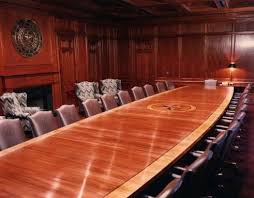
Closing was, quite frankly, exhilarating. But equally exhilarating was the odd thrill of having now four-month old twins, and especially my four-month old daughter, in that fancy mahogany boardroom with me, where the signing took place. Gave a whole new meaning to that cliched car window sticker “Baby on Board,” if you know what I mean.

Closings themselves are surreal, with multiple strangers in the room–bank representatives, lawyers, agents, plus the parties involved in the sale–and reams of papers passing back and forth. In my case, there were also two babies and one grandmother. Talk about crazy soup.

Humor me for a moment while I recap.

The transaction begins with the buyers’ lawyer asking them about their wills, and how, since they are not married, they would like to transfer the property should one of them meet with an untimely end. I sit across from them and try to render myself invisible during what seems like it should be a highly private exchange. My daughter sits perched on the dark wood table, staring into the middle distance. My mother paces the hallway with my son. My lawyer arrives, late.

The payoff woman arrives and sits with her parka still on, reading Something Borrowed, a chick lit staple. I find it amusing that the mortgage lady is reading a book with this title. I reflect, for a moment, on what’s really happening here. My life has changed drastically since the day I sat across a similar table as a first-time buyer. I have a new husband, two kids. I am 41 and at the beginning of what already feels like the very best chapter. Something old(ish) and something new. I inhale deeply. Baby Girl burps, then falls asleep.

Everything seems to be going swimmingly. Then, suddenly, mass panic over a missing lien search. Everyone’s on his and her cell phone, trying to track it down. I’m instructed to call the attorney who represented me during the purchase to see if he has it, only I can’t remember his name. At just this moment, my mother wanders in asking for help opening a formula bottle, holding Baby Boy, who looks nonplussed. Foreign words like “contin” and “endeminity” fly overhead. Someone says something about needing five thousand in escrow. All of a sudden, a fax comes in. Problem solved. And then, the furious writing of checks.

Baby Girl wakes up just as I sign the final documents. And it’s corny, maybe, but I flash forward and think about her in 40 years and wonder if she might be sitting at the head of a table like this one again one day. According to the latest report from Catalyst, women held 15.2 percent of board seats at Fortune 500 companies in 2009, the same as 2008. At this pace, it’s not looking good for Baby Girl if she decides she’d like to try her hand at corporate power, but still, a mama can dream.

And then, just like that, the closing is over. I awake. My broker pulls out a bottle of champagne, along with two Baby Gap bags with gifts for the babies. I kiss Baby Girl, I hug my broker, and my own mama and I pack up the babies and head back out into the Manhattan wind.

It’s a day of closure and a fresh start. Snuggled down in the Double Snap N Go, Baby Boy gurgles and gives me his broad, toothless grin. Baby Girl is sleeping again, and I can’t wait to tell her one day when she’s old enough to understand about the day she sat at the boardroom table, her hands in tight little fists, taking it all in.

/* Style Definitions */
table.MsoNormalTable
{mso-style-name:”Table Normal”;
mso-tstyle-rowband-size:0;
mso-tstyle-colband-size:0;
mso-style-noshow:yes;
mso-style-parent:””;
mso-padding-alt:0in 5.4pt 0in 5.4pt;
mso-para-margin:0in;
mso-para-margin-bottom:.0001pt;
mso-pagination:widow-orphan;
font-size:10.0pt;
font-family:”Times New Roman”;
mso-ansi-language:#0400;
mso-fareast-language:#0400;
mso-bidi-language:#0400;}

Last week, I faced a parenting moment that I knew would come eventually: my kids discovered a video game online that was, in my view, gratuitously and offensively violent—and I banished it from the screen. The game pits two characters (one controlled by the computer, one controlled by the player) who engage in face-to-face combat. It allows players to select weapons, beginning with a pre-modern arsenal of slingshots, bows and arrows, and Viking-style hatchets. But my boys soon worked their way up to machine guns, and their curiosity took over. The game got ugly, and they knew I wouldn’t approve. They showed me the game, and asked me if it was “OK” to play it. I said no, and we sat down for another round of mom’s edifying (or is that moralizing?) conversations (lectures?) on the subject of “why toy guns and violent video games are bad for kids.”

At the ages of 8 and 11, they still willingly participate in these discussions, though I know my days may be numbered. Since my boys were toddlers, I’ve done my best to keep plastic pistols out of their hands. I say “done my best” because in reality, we parents can’t control all the variables.  They’ve picked up water guns at the local pool, and they’ve received toy muskets as party favors—occasions that inspired my own half-hidden, disapproving eye-rolling.  They like to try their marksmanship with a Nerf-ball shooter, and I now realize that compared to the graphic, gory violence lurking in cyberspace, such playthings seem almost as tame as Legos.

But when it comes to micro-chip warfare, my boys know where I stand. And while they—like millions of other boys for whom these games are intended—are intrigued by cyber violence, they seem to get my point. My older son even wrote an essay last year titled “Why Kids Shouldn’t Play Violent Video Games”: a homework assignment that I was all too willing to help him with. Maybe I’m a walking cliché:  a forty-year-old suburban mother who detests violent video games with every fiber of my being. I’ve read books and articles on both sides of the issue: the experts who say that online violence “desensitizes” kids to real aggression; and the researchers who claim that it lets boys “blow off steam” while improving their manual dexterity. I’m more convinced by the former argument, but my reaction to violent games is more visceral and instinctive than rational or scientific. In a word, the sight of my children controlling a virtual machine gun—seeing a barrage of on-screen bullets emanating from their hands—makes me feel sick.

Honestly, I don’t get the appeal. But I’m not an eight-and-a-half-year-old boy. So over tacos last night, I asked my younger son and his friend why kids like these games. “It makes you feel awesome and super-strong,” his friend replied. Eli explained that games with brawls and fights are “more challenging and more addicting” because “you keep advancing to higher levels and getting better and better and beating them.” When I pointed out that Wii Sports or race car video games also provide those thrills, they agreed. “We like those games, too,” they said.

“Those games are OK,” I replied, mouthing the psycho-babble in the articles I’ve read, “because they let you gain skills and feel strong without destroying or killing another person. Even if you’re just pretending, feeling good because you can dominate or murder someone else isn’t a healthy or positive way to feel good about yourself.”

“So why do they make these games if they’re so bad?” my son asked. “Well isn’t that the 64,000 dollar question!” I replied. As I took the last bite out of my taco, I asked “do you guys want to stay here and talk about how video-game companies use violence to sell products and make money—or do you want to go upstairs and practice your magic tricks?” Fortunately, they chose the latter option, but I know the topic will re-surface around the dinner table again soon.

Last post I talked about the marathon boom, and how it’s being driven by women  http://girlwpen.com/?p=1821. Not coincidentally, I think, within the marathon community there has been a controversy about the boom, and whether or not the “slow” runners (those who take anywhere from four to seven hours to finish the race, thus running from a 10-minute to a sixteen-minute mile pace) really count as serious runners (a sixteen-minute pace is, after all, as slow as or slower than walking). See the New York Times article about the controversy: http://www.nytimes.com/2009/10/23/sports/23marathon.html?emc=eta1 Faster runners believe that running a marathon entails running a marathon–running the entire length at a fast pace, racing rather than merely participating.  Those in the slower group argue that participation is the point, and that speed is beside the point.  They run just to finish, and to have a good time.  As marathon numbers have swelled, primarily driven by the slower runners, the more competitive runners feel like their efforts are demeaned by those who participate but, for instance, stop to have lunch along the route, and that the marathon has become a social event rather than an athletic competition.  From the competitor’s perspective, the idea that “anyone can run a marathon” detracts from their distinctiveness as serious athletes.

An historical perspective that the debate has not incorporated suggests that these two conflicting attitudes, the competitive and the participatory, have a long cultural history that earlier split along gendered lines due to the gender role expectations of the early twentieth century.  According to historian Susan K. Cahn, in the U.S. in the 1920’s, women physical educators advocated an inclusive, participatory model of sport where the object was not to win, but enjoy oneself and better one’s health through participation.  This was a deliberate counter to the competitive sport model practiced by male athletic leaders, for whom winning was the bottom line http://www.amazon.com/s/ref=nb_sb_noss?url=search-alias%3Dstripbooks&field-keywords=Coming+on+Strong&x=11&y=18.  Of course there were women who were very competitive, and men who just wanted to participate, but the dominant attitude was that competition was for “real” athletes, while those who participated were wanna-be athletes at best.  This historical perspective raises interesting questions today:  what counts as athleticism?  Is participation enough?  Is sport a democratic, inclusive institution, or one based on the principles of competition, which necessarily involves exclusion?  Both?

I would argue that there is a third alternative we might consider as well.  While the competitive model of sport involves an internal focus while training, concentration on one’s breathing, pace, heart rate, etc., based around improving one’s performance, and the participatory model tends to involve an external focus, concentration on one’s surroundings or companions and enjoying the activity, there is an approach to sport than incorporates both of these ideas and that has links to the idea of sport as a form of spiritual practice.  I’ll call this the immersive model of sport–one in which sport is approached as a vehicle through which, as Professor Shirl James Hoffman puts it in the foreword to Sport and Spirituality http://www.amazon.com/Sport-Spirituality-Introduction-Ethics/dp/0415404827/ref=sr_1_1?ie=UTF8&s=books&qid=1267635442&sr=1-1, we “shape our spirits and create alternative realities and states of consciousness” (xi).  Sport experienced as an immersive practice can involve competition–training hard to perform your best–but it can also involve the joy of sheer participation, an appreciation of the body in movement, a way to step out of the ordinary frenzy of our daily lives filled with the barrage of things to get done and instead experience pure absorption into the activity itself, and a suspension of all other distractions.  Known as a “flow” state, this mode of sports participation can incorporate the best of both the competitive and participatory models, and avoid some of their pitfalls.  I’ll elaborate on this model of sport participation in my next post.