 Are you attending the 2016 SWS Winter Meetings this coming week in Memphis? If so, some of the Feminist Reflections Team will be presenting the following workshop/panel!
Encouraging Justice, Feminisms, & Diverse Voices
Through Feminist Public Sociology:
A panel/workshop on blogging as public sociology
Are you interested in blogging as public sociology? How can sociologists use blogging to promote justice, feminisms and diverse voices?
Come join us on Friday, 4-5:30 in Louis XVI!
Panel Description: In Feminist Reflections, we draw upon our personal experiences, linking them to our research and current social justice topics. In this panel, we will delve into the challenges of doing feminist public sociology to encourage justice and recognition of different feminist voices. We will share our experiences in order to encourage others to engage in feminist public sociology, especially the voices often left out.
The panel will consist of a short introduction by the editors and then discussion with participants about how to “do” public feminist sociology that draws our attention to feminisms, diverse voices, and the relationship between public feminist sociology and social justice. Panelists include Kristen Barber, Gail Wallace, Mindy Fried, Trina Smith and Tristan Bridges.
Hope to see you in Memphis!
 The 2016 Oscar nominations were just announced. This is the second year in a row that all 20 acting nominees are white–prompting the hashtag #OscarsSoWhite.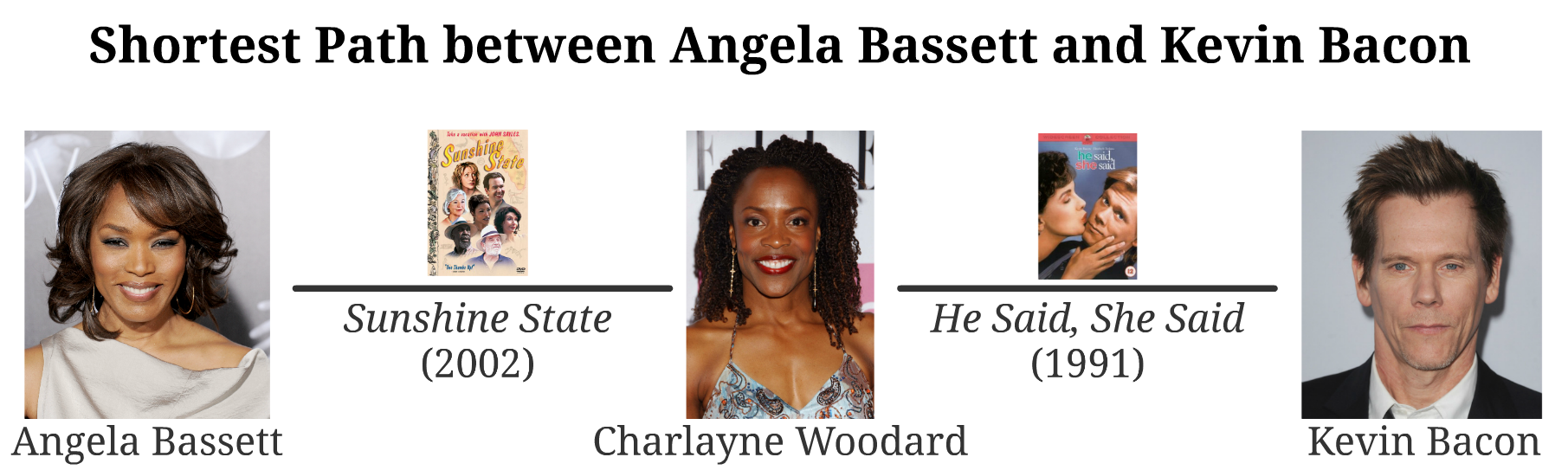
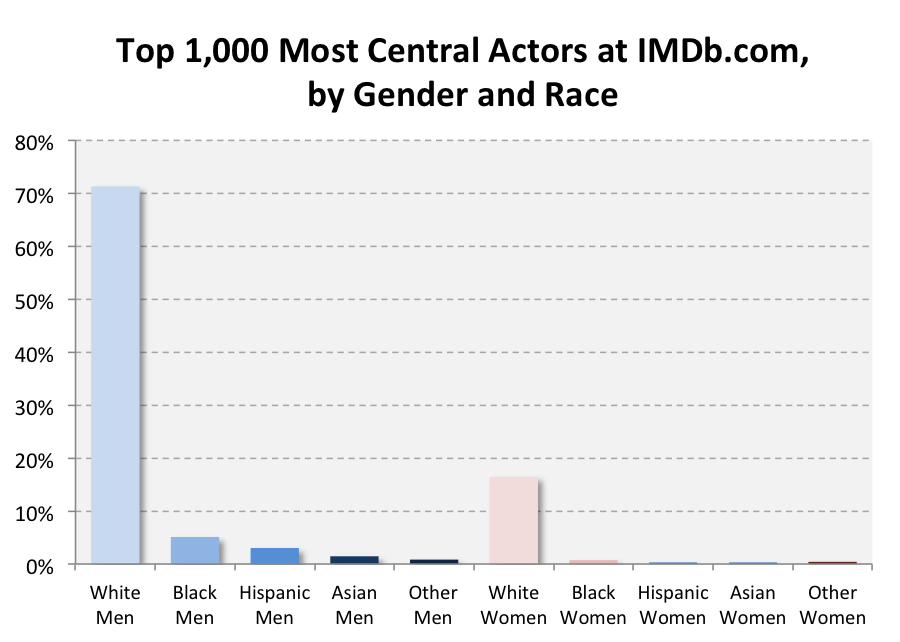 It’s a powerful way of saying that Hollywood continues to be a (white) boy’s club. But they’re also an old white boy’s club as well. I also collected data on birth year. And while the 50’s were the best decade to be born in if you want to be among the 1,000 most “central” actors today, the data for the men skews a bit older.** This lends support to the claim that men do not struggle to find roles as much as women do as they age–which may also support the claim that there are more complex roles available to men (as a group) than women.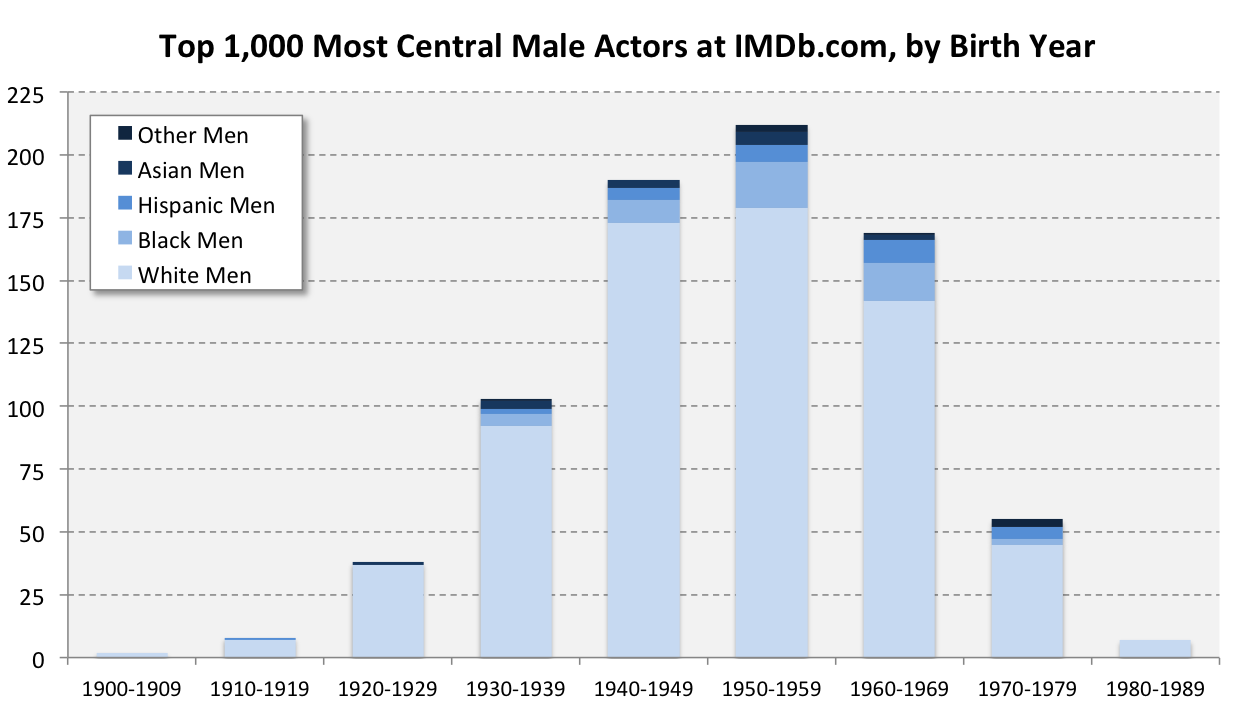
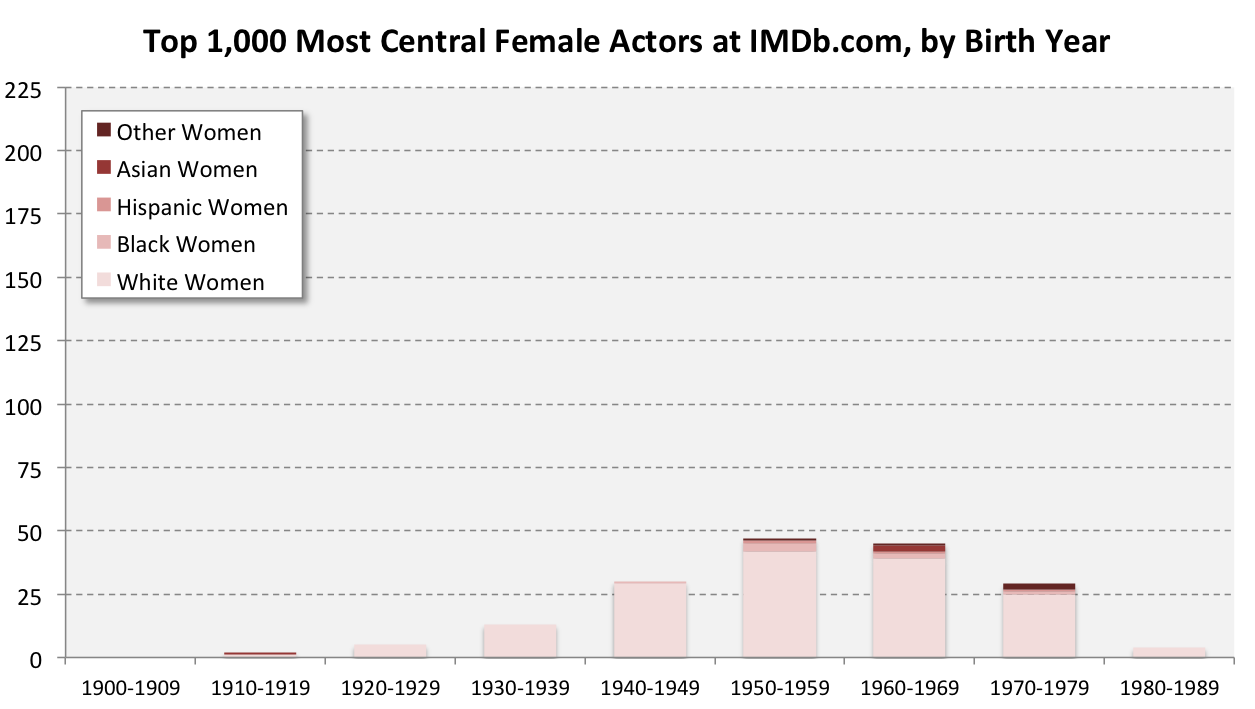 The other things I noticed quickly were that: (1) Hispanic and Asian men among the top 1,000 actors list are extremely likely to be typecast as racial stereotypes, and (2) there are more multiracial women among the top 1,000 actors than either Hispanic or Asian women.