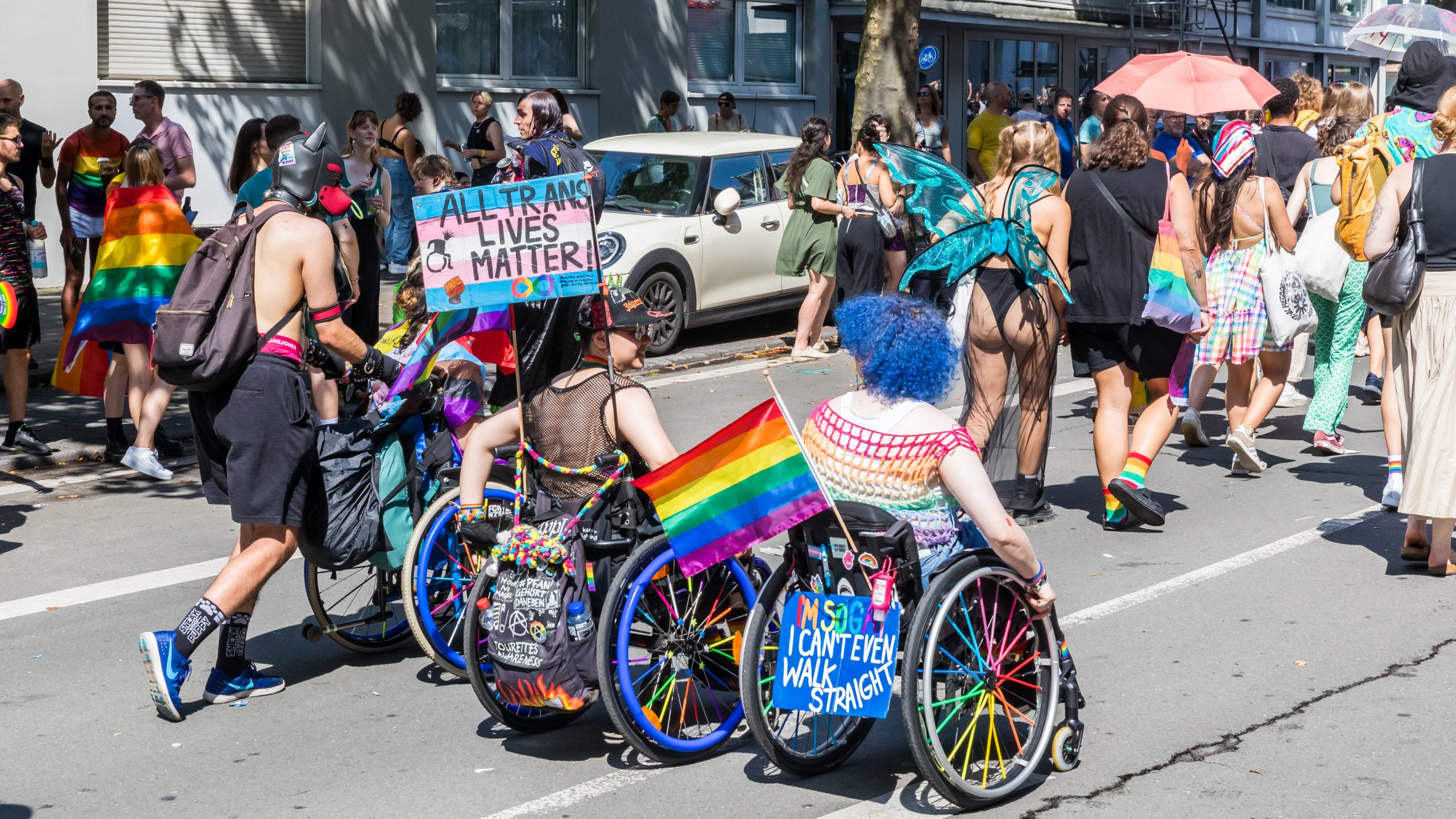

Increasing numbers of Americans identify as transgender in spite of the social and political pressures that enforce a gender binary. While knowledge and understanding of transgender people has grown over the past few decades, identifying as transgender still exposes people to stigma, discrimination, and violence. Varying from societal expectations about gender carries significant social risks. In a new study, Aven Peters explores an important factor that might impact people’s choices to defy gender norms anyway: having a physical disability.
Peters analyzes data from three large surveys of adults in the U.S. to explore how having a physical disability impacts people’s likelihood of identifying as transgender. They find a strong relationship: people who have a physical disability are significantly more likely to identify as transgender than people without disabilities. This was especially true among younger generations. In one of the surveys, for example, people born in 1980 were about twice as likely to identify as transgender if they had a physical disability, while people born in 2000 were over three times as likely to identify as transgender if they had a disability. The other surveys showed similar results.Peters argues that this pattern exists because disabled bodies are already viewed as abnormal and “disorderly” by society, which may make it easier for people with disabilities to depart from binary gender categories. For people who are not physically disabled, identifying as transgender could threaten their status as someone with a “normal” body, which introduces new social risks. For people with physical disabilities who are already viewed as having “abnormal” bodies, the added risks of identifying as transgender may feel lower.
This research highlights how people’s identities are shaped by their own bodily experiences as well as the intersecting power structures of the society around them. People who are marginalized for their disabilities may feel freer to subvert the social forces upholding the gender binary, too.
————–
Anastasia Dulle (she/her) is a PhD student in the Department of Sociology at the University of Minnesota. Her research interests revolve around religion, culture, politics, and rhetorical/narrative studies.
Comments