
Archive: Dec 2024

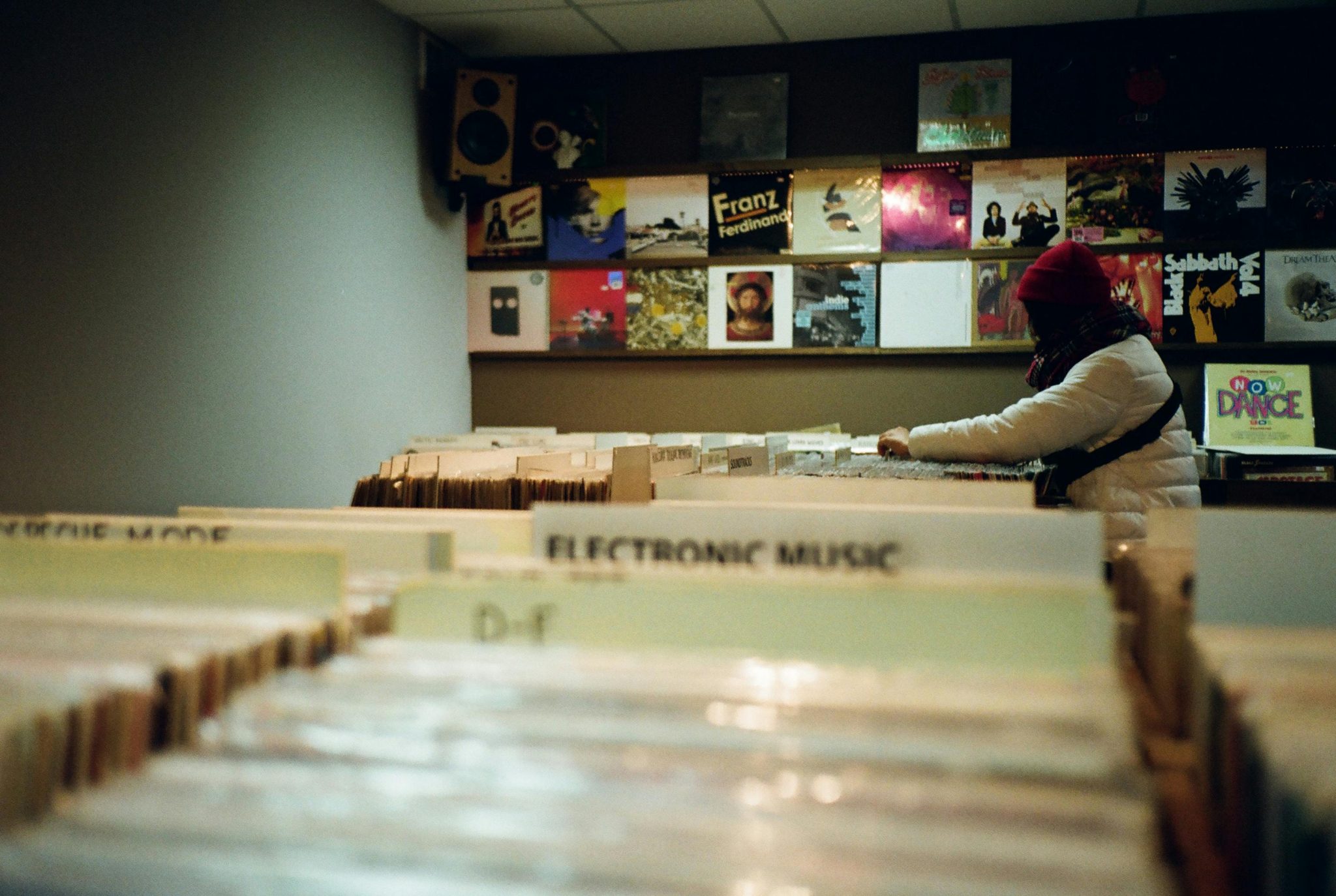
A vinyl record store. Image by Darya Sannikova under Pexels license.

How can you tell if a song is popular?

Two important measures of musical success in the US are Billboard magazine’s charts, which compare the current popularity of songs and albums, and the Recording Industry Association of America’s certification program, which aims to measure total sales. The RIAA awards the famous gold and platinum records.

Changes in technology often change these calculations. In a new article, Vincent Carter of Emory University showed how one change helped shape the development of R&B and hip-hop music.

Before the 1990s, Billboard magazine measured record sales by calling up record stores and asking for their sales numbers. This changed with SoundScan, which automatically recorded data using point-of-sale scanners. This is often praised for making charts more accurate. However, especially in the early days, not all stores had scanner technology. This was especially true of stores that served predominantly Black customers, the core audience for hip-hop and R&B music.

Carter argues that this technological disparity affected which R&B and hip-hop songs charted. To test this idea, he used data from two sources: Billboard’s charts, and the RIAA’s certification program. The Billboard charts are a relative measure of a song’s popularity at a specific time, either overall or in a specific category (in this case, R&B/Hip-Hop). The RIAA certification program is an absolute measure of how successful a song has been over time. Therefore, Carter used certification as a measure of a song’s success over time, while the charts are more short-term. In this study, Billboard’s Pop chart was used to measure a song’s mainstream popularity, while the R&B/Hip-Hop chart measured a song’s genre-specific popularity.

Before SoundScan, #1 songs that stayed for a longer time on the R&B/Hip-Hop chart and the more general “Pop” chart were more likely to be certified. After SoundScan, however, this relationship changed. Under the new system, songs that went to #1 on the R&B/Hip-Hop chart but stayed for a shorter period of time were more likely to be certified. However, certified songs were still more likely to spend longer on the Pop chart.

With this change, stores that served Black African-American customers had less impact on the sales numbers, though they still drove genre-specific chart performance. The overall influence of Black consumers on the chart therefore declined thanks to SoundScan’s technological disparity. The R&B/Hip-Hop charts were still measuring a song’s performance on R&B and hip-hop radio, better capturing Black audiences’ taste. Over time, genre-specific chart performance became “decoupled” or split off from the sales numbers.

Carter argues that this disempowered Black audiences, affecting which artists became successful and which types of music were made.

A slogan on the side of a truck. A U.S. flag is superimposed over an outline of the United States, above a large red banner emblazoned with the words “Made in America. This image, titled “Made in America Product Showcase,” is attributed to The White House and is marked with Public Domain Mark 1.0.

Contemporary American politics is filled with division and conflict. In this polarized climate, attention to truth and lies remains a central focus of public conversation. Concerns about and accusations of “misinformation” and “fake news” circulate frequently, giving rise to important questions. How important are evidence and facts in determining people’s support of politicians’ statements? And are liberals or conservatives more committed to the truth?

A recent study helps to answer these questions. Minjae Kim and colleagues researched how American voters evaluated factually untrue statements given by prominent politicians from the Republican and Democratic parties. Through online surveys, the researchers found that Americans across political lines had a pronounced tendency to support statements by politicians from their own party even after being told that the statements had been proven false.

These respondents justified accepting false statements in moral terms, answering that it’s more important their favored politician “sent the right message about American priorities” – in other words, that the ends justify the means. However, when judging statements by politicians from the opposing party (e.g. when Democrats were judging false statements from Republicans), respondents instead emphasized the importance of objective evidence and accountability. Again, the researchers found these patterns held for both Republican and Democratic voters.

This study reveals that facts tend to carry less weight than a person’s community and political commitments and how these shape American beliefs regarding “deeper truths” about political issues.

A woman holding two phones, one with “1000 likes” and the other with none.” “Person Holding Smartphones” by Kaboompics.com is licensed under Pexels License.

Women’s voices remain underrepresented in many types of online political participation,  even as digital platforms expand. But why do women participate less actively in these conversations than men? New research from Zhaodi Chen and Junghun Han investigates one potential factor: negative feedback mechanisms like “dislikes” and comment deletion.

Chen and Han conducted a survey experiment, in which research participants were presented with hypothetical scenarios. In these scenarios, participants were asked to imagine posting their opinions on COVID-19 social distancing anonymously in a public online forum. Depending on the scenario, the participant’s contribution faced either 1) negative feedback in the form of “dislikes” – such as downvotes on Reddit or dislikes on YouTube – or 2) complete deletion, such as on Wikipedia. The findings are revealing: for women, the possibility of their post being disliked did not deter them, but the risk of deletion significantly lowered their willingness to participate. For men, neither dislikes nor deletions significantly impacted their participation.

While past studies have shown that women face greater hostility in digital spaces, Chen and Han’s results suggest that the platforms’ engagement designs may also contribute to the gender gap online. Women’s reluctance to post when their contributions risk erasure shows how certain feedback mechanisms may unintentionally silence women and reinforce gender disparities in public discourse. Rethinking the use of these negative feedback mechanisms could be a step toward more inclusive online discussions.

An older man helping a young girl play pool. “Girl Playing Pool” by Rene Terp is licensed under is licensed under CC BY 2.0 under Pexels License.

Wealth distribution in the US has been a widely debated topic, often focusing on the differences between generations or between the richest and the poorest. Two generations that have appeared the most in these debates are Baby Boomers and Millennials, with Baby Boomers being considered wealthier than Millennials. But is this really true?

Rob Gruijters, Zachary Van Winkle, and Anette Eva Fasang found in their recent study that although less wealthy Baby Boomers fared better than Millennials when they were at the same period in life, the wealthiest Millennials are actually better off than Baby Boomers were. Using national longitudinal data from the US Bureau of Labor Statistics, they compared life trajectories for 6000 late Baby Boomers (born 1957-1964) with those of 6000 early Millennials (1980-84). Specifically, they looked at their young adult years, ages 18-35, and their changes in their work and wealth in these challenging years. 

One of the most common ways of assessing wealth is home ownership. The researchers found that 62% percent of Boomers owned homes at the age of 35, but only 49% of Millennials did. A potential reason why is the amount of debt (e.g., the rising costs of college) with 14% of Millennials having more debt than assets, as compared to 8.7% of Boomers. In addition to rising costs and larger debts, only 7.3% of Millennials entered high-status jobs (such as law and medicine) after college, as compared to 17% of Baby Boomers, instead entering other professional roles like social work and teaching or in service and retail sector jobs. Alongside different job trajectories, Baby Boomers also tended to marry at a younger age – all of which impact the ability to purchase a home.

As a result, when Millennials and Baby Boomers were hypothetically at the same age, the wealthiest Millennials, who ended up with middle-class life trajectories (college education, graduate level jobs, and started families later on) had more wealth than the wealthiest Baby Boomers. The poorest Millennials, who had working-class careers, had less wealth than the poorest Baby Boomers, and sometimes even had negative wealth, which was less common among Boomers. 

The circumstances that the Baby Boomers and Millennials grew up in have led to different life trajectories for people on the highest and lowest financial extremes. As costs of living grow increasingly higher, from daily needs like groceries to housing stability and ownership, the impacts of this wealth disparity will have further disproportionate consequences for people who are the most vulnerable.