

Archive: Aug 2024

A pharmacist wearing a white coat working at their lab station. Image by Polina Tankilevitch under Pexels license.

Over 500,000 Americans have died as a result of opioid overdose since 1999. Policymakers, police, and medical professionals are all trying to understand and prevent overdose. For example, pharmacists now use computer programs that track how often patients refill their prescriptions called ‘Prescription Drug Monitoring Programs’ (PDMPs). 

Because these prescription tracking programs were designed for law enforcement, some worry they might be subtly pressuring pharmacists to be more focused on policing than providing patients with care. Supporters of these PDMPs say they can eliminate biases by automating decisions about prescription eligibility and giving pharmacists a formal justification to turn patients away.

Elizabeth Chiarello interviewed 118 community-placed pharmacists to learn how the new PDMP databases affected their work routines and relationships with other professionals.  

Chiarello found that as pharmacists used the PDMPs, they reoriented their work around crime and the legal system, rather than health care logics. This shifted their treatment of prescription misuse from a rehabilitative one to a more punitive one. She therefore describes PDMPs as ‘Trojan Horse Technologies,’ based on the classic story of the soldiers hidden inside the giant horse that the Greeks gifted to the Trojans; 

“Whereas the Greeks leapt out of the horse to massacre their enemies,” Chiarello writes, “the criminal-legal logics embedded in the PDMP emerge slowly as pharmacists use PDMPs in daily practice,” which gradually transforms the pharmacy field.  

Pharmacists are now expected to act as an extension of law enforcement,  

Through the adoption of PDMPs, law enforcement may have subtly deputized pharmacists to criminalize prescription misuse. Although pharmacists have historically resisted this role, PDMPs have become systematized and made pharmacists more comfortable policing their patients. Chiarello concludes that pharmacists would be less inclined to police patients, and more inclined to care for them, if they had access to different treatment tools, such as the ability to provide medications for substance use treatment under a physician’s supervision. 
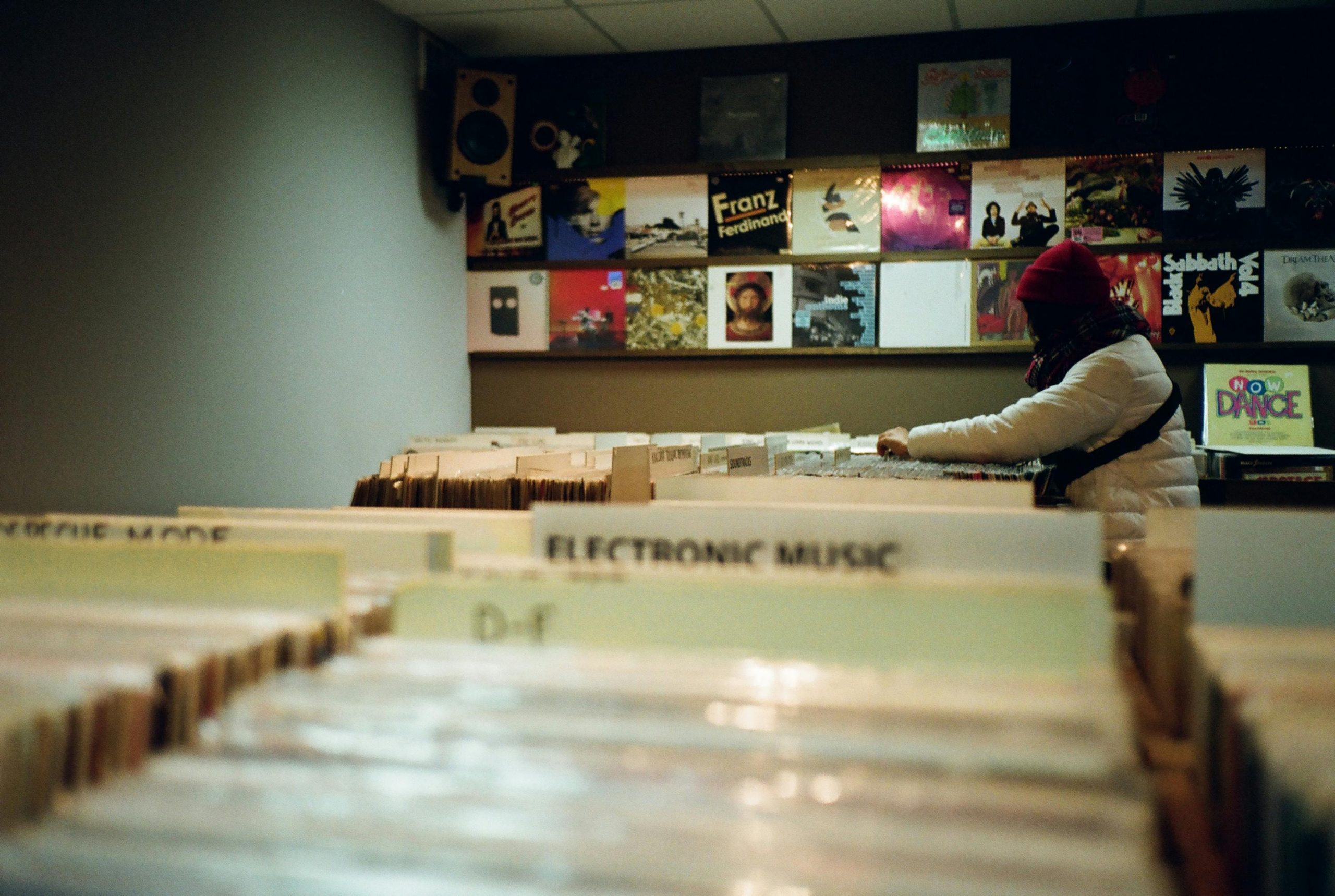
A vinyl record store. Image by Darya Sannikova under Pexels license.

How can you tell if a song is popular?

Two important measures of musical success in the US are Billboard magazine’s charts, which compare the current popularity of songs and albums, and the Recording Industry Association of America’s certification program, which aims to measure total sales. The RIAA awards the famous gold and platinum records.

Changes in technology often change these calculations. In a new article, Vincent Carter of Emory University showed how one change helped shape the development of R&B and hip-hop music.

Before the 1990s, Billboard magazine measured record sales by calling up record stores and asking for their sales numbers. This changed with SoundScan, which automatically recorded data using point-of-sale scanners. This is often praised for making charts more accurate. However, especially in the early days, not all stores had scanner technology. This was especially true of stores that served predominantly Black customers, the core audience for hip-hop and R&B music.

Carter argues that this technological disparity affected which R&B and hip-hop songs charted. To test this idea, he used data from two sources: Billboard’s charts, and the RIAA’s certification program. The Billboard charts are a relative measure of a song’s popularity at a specific time, either overall or in a specific category (in this case, R&B/Hip-Hop). The RIAA certification program is an absolute measure of how successful a song has been over time. Therefore, Carter used certification as a measure of a song’s success over time, while the charts are more short-term. In this study, Billboard’s Pop chart was used to measure a song’s mainstream popularity, while the R&B/Hip-Hop chart measured a song’s genre-specific popularity.

Before SoundScan, #1 songs that stayed for a longer time on the R&B/Hip-Hop chart and the more general “Pop” chart were more likely to be certified. After SoundScan, however, this relationship changed. Under the new system, songs that went to #1 on the R&B/Hip-Hop chart but stayed for a shorter period of time were more likely to be certified. However, certified songs were still more likely to spend longer on the Pop chart.

With this change, stores that served Black African-American customers had less impact on the sales numbers, though they still drove genre-specific chart performance. The overall influence of Black consumers on the chart therefore declined thanks to SoundScan’s technological disparity. The R&B/Hip-Hop charts were still measuring a song’s performance on R&B and hip-hop radio, better capturing Black audiences’ taste. Over time, genre-specific chart performance became “decoupled” or split off from the sales numbers.

Carter argues that this disempowered Black audiences, affecting which artists became successful and which types of music were made.