
Archive: Apr 2019

Photo of a lined piece of paper with writing on it and a stamp that says, application granted.
Photo of 1902 application for Cherokee Census Card. Photo by U.S. National Archives and Records Administration, public domain.

Contesting individual’s claims to Indigenous ancestry is nothing new; a notable example is Elizabeth Warren’s ancestry testing and Donald Trump’s repeated “Pocahontas” jeers. Proving authentic group heritage is something many Americans never think about, but such dynamics are common for Indigenous persons.

The labels, “Native American,” “Indigenous,” and “American Indian,” are social constructions rooted in the story of colonization. Indigenous populations in present-day United States were subject to state policies and institutions that lumped many different groups into the label, “Native American.” As a legacy of these policies, people have to provide proof of Native American ancestry to be considered official tribal members. In new research published in Sociology of Race and Ethnicity, Dwanna L. McKay explores how Indigenous people draw on different strategies to navigate these complicated systems of belonging and proving identity.

Interviewing 45 Native American participants, McKay describes two dominant methods they use to defend their identity as authentic Indigineous Peoples. First, there is “blood quantum,” a term that refers to how much Native ancestry or family a person can point to in their family tree. The other common way to display authenticity is producing one’s “Indian Card,” a certificate that some Indigenous people receive as proof of their heritage. For several interviewees, these cards not only represent a structural and political qualification, but also hold cultural and personal significance.  

Of course, blood quantums and Indian cards are specific to Native Americans; members of other races in the United States do not have to similarly prove their ancestry or identity. This distinct picture is a product of colonialism and the subsequent categorization, marginalization, and isolated Indigenous populations. Today, such history has affected how people experience race and negotiate Indigenous authenticity.

Hand holding American hundred dollar bills with a rubberband wrapped around the bills.
Photo by 401(K) 2012, Flickr CC

The heated condemnation of celebrities and business leaders in the recent Varsity Blues Scandal reveals how indifference to apparently harmless donations can transform into massive condemnation of a crime. In a recent study of moral reactions to questionable transactions, researchers Oliver Schilke and Gabriel Rossman asked people to rate their disapproval to dubious exchanges taking place under varying scenarios. Reactions varied according to the social context and components of the transaction, even when goods and the traders involved in the negotiation remained the same.

Schilke and Rossman created several vignettes describing real-world experiences, including political bribery, commercial bribery, and selling a baby. For example, in one of the vignettes a couple reaches out to a new mother with several types of offers in order to adopt her baby. In the first scenario, the couple and the mother undertake a quid pro quo arrangement, in which the couple compensates the mother with $10,000. In alternative scenarios, the couple conceals the monetary exchange by offering to pay off the medical costs of the delivery (pawning) or by buying the mother’s car for several times its real value (gift exchange). The couple still paid $10,000 in each scenario.

A different vignette describes the story of a defense contractor that asks a congressman to endorse his company’s equipment for testing by the Army. The quid pro quo exchange describes that the lobbyists offers $10,000 directly for the endorsement. In an alternative scenario, the defense contractor ‘suggests’ that the company expects compensation for previous contributions in past political campaigns.

Research participants rated the vignettes and the scenarios based on a 7-point scale of moral disapproval. As expected, respondents expressed more disapproval of direct payments than to the alternative scenarios. However, three factors lessened this disapproval:

  • First, people soften their reactions in scenarios when there is a lack of clarity about the exchangers’ real intentions (attributional opacity).
  • Second, moral disapproval declines when the acts of giving and receiving are distant in time (perceived transactionalism).
  • Finally, respondents lessened their disapproval when they believed the exchange wouldn’t provoke general disapproval in the population (collective validity).

Respondents also declared different levels of disapproval to the giver and the receiver in the transaction. For example, respondents empathized with the couple for their desire to raise a child, but they condemned the mother for giving the baby away. The stigma in illicit exchanges is likely to be more connected with traders’ roles and statuses in the transaction than with the nature of the good itself.

The line between acceptable and unacceptable exchanges is a gray area. This study reveals that people’s reactions towards transactions involving non-market goods, such as babies, democratic decisions, and college education, depends on social expectations and how people perceive the intentions and reciprocity of the exchange. In the midst of the massive scandals in college admissions, social science offers useful guidelines to understand societies’ moral values.

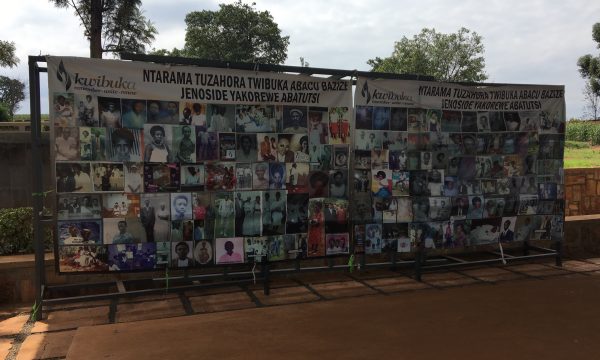
Photo shows a banner with photos of Rwandans lost in an attack on a church during the 1994 genocide at the Ntarama Memorial.
Photo of the Ntarama Memorial in Rwanda, where 5,000 people were killed at a church. Photo by Brooke Chambers

In 1994, 800,000 Tutsi were killed in the Rwandan genocide as UN peacekeepers stood by. Despite relentless requests from Force Commander Roméo Dallaire, UN headquarters and powerful governments refused to provide trucks or radio-blocking technology that could have protected civilians, and UN peacekeepers were under orders not to use force unless they were directly targeted. In the wake of the violence, international leaders promised legal solutions to prevent genocide and mass violence in-real-time through legal doctrine like the Responsibility to Protect (R2P).

Twenty-five years have now passed since the Rwandan genocide, but despite the optimism around R2P and other legal developments, mass violence and genocide continue to occur. And they are met with limited legal response as they unfold. Syria, the Central African Republic, and Yemen have all seen extreme violence against civilians in recent years. If the law prohibits such behavior, why is there no resulting global action?

In recent research, Katherine Southwich employs a classic legal model that shows how the naming, blaming, and claiming of violence are central to legal disputes. This allows her to pinpoint moments when political choice can affect the function of international law. Legally, a violation must first be “named” as harmful. Then “blame” for this harm must then be attributed on a group or individual. Finally, the victim must “claim” victimhood and seek remedy. Southwich argues that each of these stages are politically tenuous in international law.

The burden for claiming crimes against humanity is broad. The term “crimes against humanity” is meant to reflect that violations like torture or enslavement are an afront against not only the victim, but against all people. Based on this understanding, developments like R2P created a global responsibility to defend against such crimes in order to protect all of humankind. Southwich asserts that a diffusion of responsibility makes it less likely for anyone to act. And in terms of naming, no central body exists that determines whether or not a crime is genocide. States or international bodies may adopt the language, but there is no group that defines the crime. When such assessments are inherently challenging, especially in-real-time, naming is often put off until it’s too late to help targeted groups.

Southwich uses the case of the Rohingya in Myanmar to examine the failures of international institutions in upholding promises of civilian protection. The Rohingya have faced persecution in Myanmar for decades, with many experts calling for legal action during this ongoing genocide. But despite restrictions to health care, destroyed villages, and mass killings, judicial processes to address the violence are largely at a stand-still. In the meantime, the humanitarian situation escalates, with Rohingya refugees fleeing to neighboring countries that struggle to support them.

Many states have chosen to dwell in semantic disputes to avoid response. And there are many reasons they may choose to not act – they may see Myanmar as a potential business partner, or they may be hesitant to endanger their own soldiers in peacekeeping missions. As experts still remain divided about the best strategies to respond to mass violence or genocide, many states decide their own costs outweigh potential benefits to victims.

The existence of legal protection doctrine does little alone.  Political will is necessary to mobilize the law and to promote protections for civilians. Powerful states and international organizations must choose to uphold their legal commitments. Twenty-five years after the Rwandan genocide, the need to protect civilians from genocide and mass violence remains as crucial now as it was in 1994.

College basketball player shooting a foul shot while fans look on.
Photo by Beaverbasketball, Flickr CC

“I find that the three major administrative problems on a campus are sex for the students, athletics for the alumni and parking for the faculty.”

This somewhat humorous 1957 quotation from University of California President Clark Kerr captures just how highly athletics rank in the priorities of university administrators. Today, as new research from Ryan King-White and Adam Beissel demonstrates, athletics continue to be at the center of university governance because they are assumed to assist universities with branding, recruiting, and revenue-raising.

The prevailing logic of American higher education holds that opportunities for corporate partnership are always good, that universities are competing for student-consumers, and that high-profile athletics will assist in both of those realms. King-White and Beissel use the case study of Towson University’s decision-making on athletics to demonstrate how that logic allows university leadership to expand athletics without real input or opposition and hide the actual cost to students.

King-White and Beissel are long-time professors, students, and coaches at Towson University, and they use these positions to develop a rich case study drawing on interviews, ethnographic observation, and archival data to chronicle the rapid expansion and promotion of Towson athletics. They label Towson, a public university in Maryland, an “aspirational university” that invested in athletics and facilities as part of an effort to grow the brand and prestige of the school. Towson made the decision to move to Division I NCAA athletics in the late 1970s, with football joining in 1987. In 2007, a new president doubled down on what had previously been a fits and starts expansion and poured resources into men’s football and basketball to attempt to become a true “peer” to the other public state school, the University of Maryland, College Park.

The investment did change the campus. Towson built new facilities, contracted with Aspire Group, and signed corporate agreements with Pepsi, UnderArmour, and Van Wagner Sports and Entertainment. But despite hopes that it would be self-sufficient, today Towson is one of the most subsidized athletic departments in the nation, with 79% of its budget coming from student fees or direct subsidies from campus. Student fees have increased 545% since 1980.

The decision-making process at Towson didn’t raise too many eyebrows because — despite mixed research on the actual effectiveness of athletics in raising revenue or a school’s profile — using athletics in this way is consistent with how Americans expect university leaders to act. That means that when Towson treated students like consumers, overrode concerns from faculty, and treated athletics as a potential revenue stream, it wasn’t acting outside of the logic of any other university in its same position. The idea of athletics as a solid investment in the standing of the school fits neatly into our image of American colleges, despite also knowing the actual costs.