
Archive: Feb 2017

Photo by Paul Sableman, Flickr CC

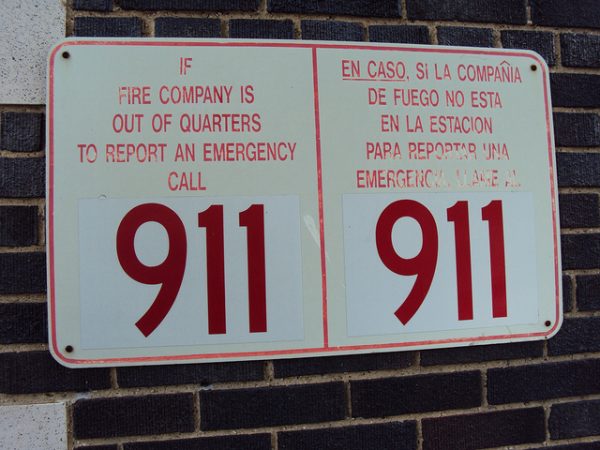
Recent high-profile incidents of police violence against black citizens have spoiled the reputation and legitimacy of legal authorities among many Americans. In a new study, Matthew Desmond, Andrew V. Papachristos, and David S. Kirk investigate one of the consequences of this police misconduct and its accompanying legal cynicism — people are less likely to call 911 to report criminal activity.

Using 911 call data from Milwaukee, Wisconsin, and U.S. Census neighborhood characteristics, the researchers analyze how crime reporting calls fluctuated in the weeks following the high-profile beating of Frank Jude, a black male citizen. Controlling for the level of crime reporting before the incidents, time variation, and neighborhood block-group characteristics, they find that levels of citizen reporting significantly decreased in the weeks following the incident, and that this effect was particularly strong in majority black neighborhoods. This drop in crime reporting lasted for over a full year after the beating, and resulted in an estimated 22,200 fewer 911 crime reporting calls. The researchers also replicate this finding with three other cases of police violence, and show that 911 calls for car accidents were not altered in response to the incidents, suggesting that the reduction in calls was not due to some concurrent event impacting emergency calls overall. 

This study illustrates how the high-profile cases of police force do not just impact those closely connected to the perpetrator and victim, but have broader consequences for police-community relations. The decrease in citizen crime reporting can have tragic outcomes for public safety, and the authors note that the uptick in Milwaukee homicides following the Frank Jude beating could be, in part, the result of decreased 911 calls. Overall, the research highlights how seemingly “isolated incidents,” at least as framed by police departments and politicians, can have wide-ranging effects across a community.

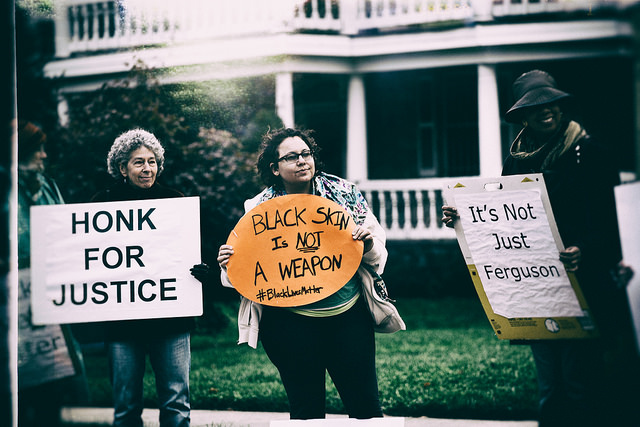
Photo by NEC Corporation of America , Flickr CC

When people have health concerns, they typically turn to doctors because of the years of medical training that makes doctors experts on human health. When it comes to the health of trans people, however, doctors often lack knowledge and experience, and the typical evidence-based guidelines (EBM) for making medical decisions can be more confusing than helpful for trans health cases. In a new study, stef m. shuster finds that “uncertainty” characterizes most provider’s experiences with trans patients, though they navigate this uncertainty in different ways.

To understand how healthcare providers treat trans patients, shuster interviewed 23 physical and mental healthcare providers. These providers included primary care physicians, OB/GYN, family and internal medicine specialists, physician’s assistants, psychologists, therapists, and counselors/social workers. Rather than asking about specific interventions with transgender patients, which could breach ethics of confidentiality, shuster engaged in conversations about the providers’ backgrounds, their professional associations, their workplace climates, and general experiences with trans patients.

shuster found that providers use two strategies to negotiate EBM guidelines when it comes to treating trans patients: following them to the letter or interpreting them as flexible strategies they use in other cases of medical uncertainty. More senior providers draw on their experience in the field when faced with uncertainty, while newer providers more often consulted the evidence-based medical guidelines to inform their decisions. However, for cases with trans patients, few providers had much prior experience, and turned to the EBM guidelines. shuster described how close followers of the guidelines act as medical gatekeepers; particularly for patients who want to physically transition via hormones and surgery, care providers try to contain uncertainty surrounding gender, identity, and health by insisting on following long bureaucratic processes for obtaining these expensive, difficult to reverse interventions. On the other hand, some providers interpret the EBM guidelines more as suggestions than law, and embrace the uncertainty of how to tailor their care for specific patients’ needs. 

Photo by Johnny Silvercloud, Flickr CC

Due to the increased scrutiny of racial bias among the police, the stop and frisk policies of the NYPD continued to fall out of favor in 2016.  Despite concerns of racial bias in police forces around the country, very little is known about the ways that inflammatory events may influence racial bias in policing — we tend to know more about where discrimination in policing takes place than what may influence when it occurs. To address this issue, Joscha Legewie explores how local acts of violence against law enforcement influence discriminatory use of force by the police after the fact.

Using data from 3.9 million police stops of pedestrians in New York City between 2006 and 2012, Legewie compared the effects of four significant incidents involving the death of police officers on the subsequent use of force by law enforcement. Of these four incidents, two NYPD officers were fatally shot by black suspects in two separate events in 2007 and 2011, while three officers were killed in two separate incidents by a Hispanic and a white suspect. 

The findings reveal a race-specific pattern. The two shootings by black suspects resulted in an increased use of physical force against blacks, but the two shootings involving a white and Hispanic suspect did not result in a similar increase in force against any group. However, this increase in the use of force lasted 10 days after the event in 2011, where it only lasted 3.5 days following the event in 2007. This pattern of racial discrimination remains even when accounting for the time, location, and the circumstances of the stop, as well as the characteristics and behavior of the stopped individual. Whether this discriminatory response in the use of force is the result of implicit racial stereotypes or an explicit retaliation by law enforcement remains to be uncovered (and it may very well be a combination of both). Regardless, this study shows how violence against police triggers race-specific reactions.