

Archive: Nov 2016

The new arena, Rogers Place. Photo by Kurt Bauschardt, Flickr CC

Debates regarding the use of public funds to construct new world-class sport arenas continue, as some believe it will foster economic and social growth in the host city while others strongly disagree this idea. Yet resistance has proven difficult. In a recent paper, sport sociologist Jay Scherer documented the efforts of one such grassroots organization—Voices of Freedom (VFD) in Canada—in their attempts to stop the Edmonton Oilers hockey arena from 2011 to 2013.

In opposition to the estimated $606.5 million arena for the Edmonton Oilers, concerned citizens formed the VFD to inform the public of the financial concerns regarding the arena. VFD first gained traction when they questioned the conclusions of the City Shaping report because it failed to include the potential pitfalls of constructing a new arena. The organization sought to mobilize public resistance by conducting city-wide telephone surveys, distributing brochures, purchasing billboards, and creating informative websites.

Scherer collected ethnographic accounts of his two-year personal experiences working with the Board of Directors of the VFD. He also conducted in-depth interviews with board members. While initially promising, VFD experienced many difficulties, such as lack of human, financial, and material resources needed to maintain public interest in opposing public funding for the Oilers arena. Additionally, Scherer found that citizens could not fully participate because of the complexity in understanding deliberations associated with development projects. Investors also intimidated board members and citizens who wanted to participate in public debates regarding the arena. These citizens feared personal, financial, and professional ramifications for openly opposing the arena development. Ultimately, VFD ceased of operations.

Scherer’s research highlights the limitations of grassroots organizations such as Voices for Democracy to compete in the political arena when it comes to stopping public funds being used for sport arenas. His work also helps us think about the importance of political officials’ accountability to their communities regarding the use of public funds to support these large projects.
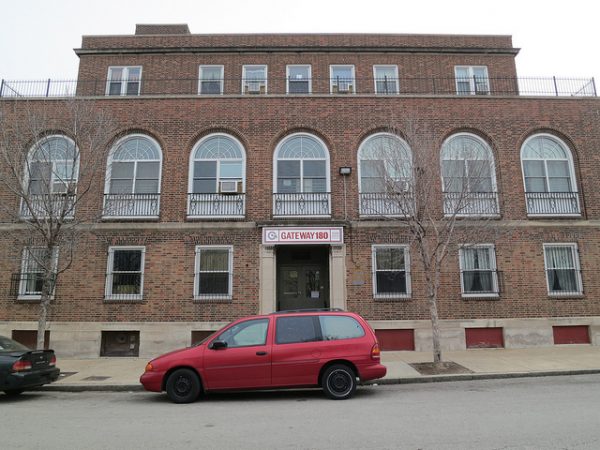

Photo by Paul Sableman, Flickr CC

Criminological theory suggests that voluntary organizations — nonprofit groups that provide services to the neighborhood — are associated with decreased levels of crime. Research shows that voluntary organizations create neighborhood cohesion and decrease potential stressors that have been found to increase criminal activity. Yet, there is research on this relationship that finds weak, or even opposite, effects than the theory suggests, with some studies finding voluntary organizations to actually increase crime levels. In a new study, James WoJohn Hipp, and Adam Boessen complicate the relationship by taking into account how long the voluntary association operates within a particular neighborhood.

Using data from the National Center of Charitable Statistics, the U.S. Census, and local police departments, the researchers find that neighborhoods with more voluntary organizations are weakly associated with lower levels of crime after controlling for between neighborhood and city variation. But when they consider the length of time each voluntary organization has operated in each neighborhood, they find an “age-graded effect.” That is, organizations that have spent more time in the neighborhood are more effective in reducing crime. The effect also varies by association, and civil advocacy and community associations, for example a minority rights association, are associated with the most consistent decreases in crime across types of crime.

The results of this new study reveal that not only are certain organizations more effective in reducing certain types of crimes, but significant resources, leadership, and time must be devoted to an organization before it has a significant impact on the level of crime in an area. The authors note that organizations may face challenges upon startup, such as gaining trust with the community or funding issues, or they may have services or events that take time to take effect. Although the stakeholders in voluntary organizations want, or even need, to show tangible effects for funding or legitimacy, the research here suggests that the longer you let the voluntary centers incubate, the more extensive their impact on community safety.  

Photo by Dave Nakayama, Flickr CC

In recent years, the political landscape of criminal justice in the United States has shifted away from the “get tough on crime” era of the 80s and 90s,and politicians from all backgrounds seem to be embracing more lenient criminal justice reforms. However, a recent study by Katherine Beckett, Anna Reosti, and Emily Knaphus challenges the assumption that there is a general consensus. Instead, they argue that the state of criminal justice politics and policies is more aptly defined by complexity and contradictions, which may hinder meaningful reductions in prison populations.

Beckett and her colleagues analyzed state correctional policies collected by the National Council of State Legislatures to assess the punitive or nonpunitive nature of legal provisions enacted from 2000 to 2013. The findings suggest that prior to the recession, many states enacted punitive anti-crime policies, but following 2007, more lenient provisions outnumbered punitive ones by nearly 3 to 1. However, these nonpunitive reforms were mainly limited to drug and parole policies, and a punitive trend towards violent or sex offenses remained and even intensified in some states.

The researchers also reviewed newspaper articles and editorials about criminal justice reform from 2008 to 2014 to understand the surrounding political discussions.  Their results suggest that most news coverage regarding criminal justice reform focused on fiscal concerns as the main justification for reducing correctional populations, while the human costs of mass incarceration were rarely mentioned. Moreover, the intended beneficiaries of these reforms were those individuals who were convicted of a nonviolent or drug offenses. There were only two mentions of policies aimed to benefit those convicted of violent offenses within the 163 articles that were analyzed.

While we are witnessing meaningful progress in reducing prison populations, the current reforms are only geared towards nonviolent offenses. Further, political discourse is typically focused on the money lost to mass incarceration, as opposed to its negative effects on the lives of millions of Americans. Reversing mass incarceration will require incorporating broader reforms that address the social costs of imprisonment and emphasize the humanity of all the individuals under correctional supervision.

Photo by Beatrice Murch, Flickr CC

We often hear about women who “experiment” with their sexuality during college — they hook up with another woman just to “see what it’s like.” But focusing on the same-gender sexual experiences of college women disregards a large portion of women who never go to college, and a 2011 study argues that women with the lowest levels of educational achievement actually have the highest rates of same-gender sex. So how does same-gender sex function for less educated women, especially those with children or who are married to men?

Jamie Budnick conducted in-depth interviews with 35 women who indicated having at least one non-heterosexual experience. Budnick recruited these women based on their answers to supplemental questions in the Relationship Dynamics and Social Life Survey. Of these women, fewer than half attended any four year college and those who did went to schools that were not elite or highly selective.

While all of the women in the study reported some kind of non-heterosexual behavior, only 16% identified as something other than “straight.” Unlike studies of women at elite colleges, the women in Budnick’s study were far more likely to identify as “bisexual” than “queer,” as the term “queer” was often considered derogatory in their social circles. At the time of the interviews, some women remained in relationships with their children’s fathers or felt their same-gender sexualities were simply irrelevant after having children. Instead, having sex with other women — friends in many cases — was a safe and meaningful way to explore same-gender sex and desire. 

Budnick explains that for many of these women, early motherhood forecloses the possibility to develop or claim an LGBTQ identity and instead these women prioritize their identity as a self-sacrificing parent. And although women in less privileged positions may have fewer choices in how they identify, Budnick argues they likely face less pressure to match their identities with their behavior than more privileged women. Thus, Budnick’s findings demonstrate the importance of social context for understanding same-gender desire and LGBTQ identity.