reflexivity

There's A LOT more to (self-)tracking than Quantified Self
There’s A LOT more to (self-)tracking than Quantified Self

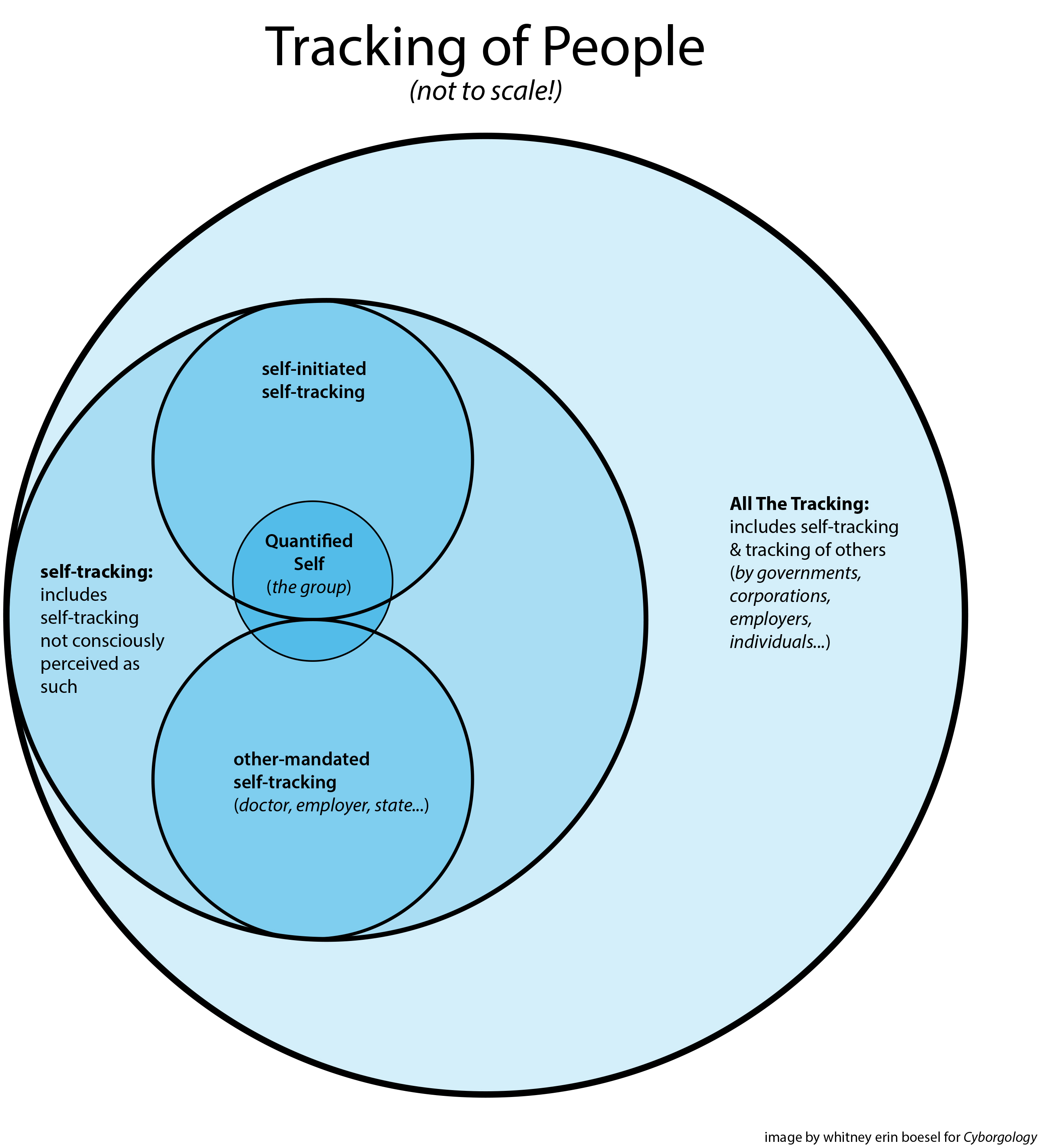
When people ask me what it is that I’m studying for my PhD research, my answer usually begins with, “Have you ever heard of the group Quantified Self?” I ask this question because, if the person says yes, it’s a lot easier for me to explain my project (which is looking at different forms of mood tracking, primarily within the context of Quantified Self). But sometimes asking this return question makes my explanation more difficult, too, because a lot of people have heard the word “quantified” cozy up to the word “self” in ways that make them feel angry, uncomfortable, or threatened. They don’t at all like what those four syllables sometimes seem to represent, and with good reason: the idea of a “quantified self” can stir images of big data, data mining, surveillance, loss of privacy, loss of agency, mindless fetishization of technology, even utter dehumanization.

But this is not the Quantified Self that I have come to know. more...

This is part of a series of posts highlighting the Theorizing the Web conference, April 14th, 2012 at the University of Maryland (inside the D.C. beltway). See the conference website for information as well as event registration.

As Theorizing the Web 2012 approaches, I think it’s worthwhile to consider what the conference itself really means. I mean, yes, clearly it means awesome panels and a fabulous keynote and free pizza, as well as a chance for us to hang out with cool people who we really like. But I think TtW, in both its current incarnation and in the ideals that originally drove its creation, says some important things about conferences as spaces for the production and examination of knowledge.

PJ Rey and Nathan Jurgenson, our intrepid chairs, originally characterized Theorizing the Web as “the conference that we would all ideally want to attend”; clearly, then, there are some things about the conferences that we often find ourselves attending that we wanted to avoid. Last year David Banks highlighted some of these points in his piece on TtW2011’s reflexive nature;

Personally, I am tired of visiting a corporate hotel, adding another tote bag to my collection, and rushing from tablecloth-clad conference rooms to bad catered dinners, so I can make it to a plenary talk about the politics of the discipline. That needs to be over, or academia will stagnate in a pool of its own hypocrisy. Its time for the academic conference to take a reflexive turn. We need to practice what we preach.

What I see driving TtW is more than just putting together a conference that’s fun for all of us. It’s about opening up spaces for the production of knowledge. It’s about making all of this stuff more accessible by being more reflexive about both design and content.

more...

Rush Limbaugh is experiencing an advertiser exodus, and social media is playing a big part.

It’s the kind of story that writes itself. A popular media entity, on one of the oldest forms of electronic mass media, bears the brunt of activists’ Facebook wrath. It combines two old rivalries: liberals and conservatives and new media versus old media. In case you missed it, here’s the brief synopsis of events from ABC news:

Rush Limbaugh remains in big trouble. Advertisers – 11 at last count – are pulling spots off his radio talk show because of the reaction to his calling Georgetown University law student Sandra Fluke a “slut” and a “prostitute.” Opponents are mobilizing on social media for a long campaign to try to convince even more sponsors to drop his program. Ms. Fluke herself has rejected as insufficient Mr. Limbaugh’s attempts at apology

Fluke had testified before congress about the importance of “the pill” for medical uses beyond birth control. Rush concluded that she was having so much sex that she needed the American tax payer to help defer the cost of her contraceptives. (This has led to some speculation that conservatives don’t know how hormonal birth control works.) Thousands of people are organizing to get advertisers to pull their money out of Rush Limbaugh’s show, and many of them are organizing via Twitter and Facebook. Will we be subjected to another round of technologically deterministic news stories about “cyber revolution,” or are we going to have a more nuanced conversation? More precisely, does Rush have a social media problem or has he -all things being equal- just gone too far this time? more...

Editors PJ Rey and Nathan Jurgenson introduce keynote speaker danah boyd

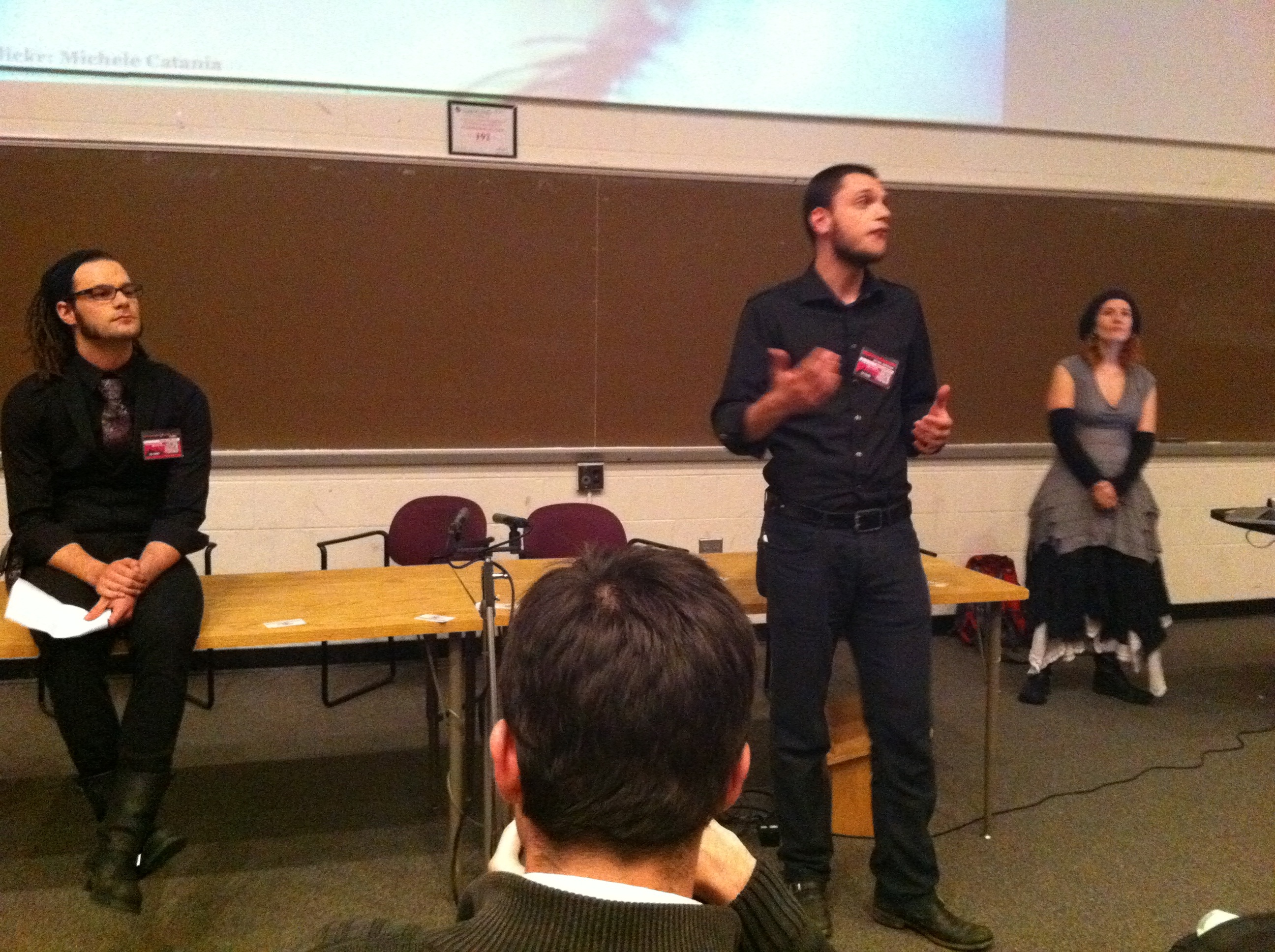
This past weekend Cyborgology editors PJ Rey and Nathan Jurgenson treated over two hundred (mostly) young academics to a new kind of conference. In some ways it was like any other conference: some people (me included) did the necessary grousing about waking up early; there were minor technical mangles [mangle of practice]; and there were some awkward glances at name tags as everyone tried to remember the names of their new professional acquaintances. But unlike some of the larger (dare I say, “mainstream”) conferences, there was a palpable sense of ownership over all aspects of the the project. We were doing this for a reason, and it was not to pad our CV’s. It was to play with the medium. We theorized the web, but in so doing, we also reconsidered the purpose of conferences.

more...