
When most people hear “BDSM,” they think of whips and chains, maybe a Fifty Shades reference, and then politely change the subject. What rarely gets discussed—but is central to how kink practitioners actually live—is the way BDSM communities foster connection, care, and growth in deeply intentional ways.
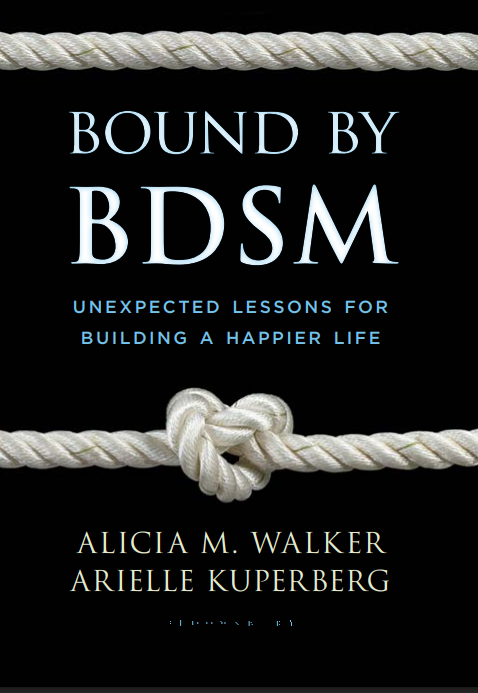
In our book Bound by BDSM: Unexpected Lessons for Building a Happier Life, Arielle Kuperberg and I set out not to document erotic practices, but to ask what else we might learn from people who participate in consensual kink. The answer, it turns out, isn’t about sex at all.
It’s about community and how radically different it looks when people stop pretending that happiness is a solo project.
When you’re seen as deviant, you build your own safety net
Many of the people we interviewed for the book spoke candidly about being misjudged. Friends and family didn’t always understand their desires. Therapists sometimes pathologized them. And pop culture offered little more than cartoonish stereotypes.
So, kink practitioners did what marginalized groups often do: they built community with each other. And not just social networks, but intentional, rule-governed, emotionally attuned communities, spaces where consent is explicit, identity is fluid, and power is discussed out loud.
In a world where most people fumble through relationship norms inherited from movies and childhood, BDSM practitioners are constantly customizing the script. They negotiate expectations. They check in. They reflect. And they don’t just do this with romantic or sexual partners. They do it with each other, as part of a larger social fabric.
One person we interviewed described their local scene not as a place to “play,” but as a place to be honest. “I can show up broken here,” they said. “I don’t have to pretend I’m okay to be welcome.”
What if more of us had spaces like that?
Community isn’t a bonus. It’s the point
In the vanilla world, we often treat community as an afterthought. You know, something you’ll get around to once you’ve handled your own healing, perfected your self-care, or completed your personal transformation.
But for many in the kink world, community is the container that makes growth possible. You don’t work through shame alone. You work through it with people who’ve done the same. You don’t figure out what boundaries you need in a vacuum. You learn by watching others, hearing their stories, and being offered tools.
That’s not some utopian fantasy. It’s a deeply practical, often messy, but remarkably effective way of being with others. It requires trust. It requires clear norms. And it requires a collective willingness to believe that people can change when they’re held, challenged, and supported.
It also flies in the face of how mainstream American culture talks about happiness.
The self-help model of happiness isn’t working
If you listen to the broader culture, happiness is something you earn through individual effort. Fix your mindset. Optimize your morning routine. Take time for yourself. Say no to others. Meditate more. Journal harder.
But as sociologists, we know that happiness is profoundly social. It doesn’t live inside your head, but within your relationships, your sense of belonging, your ability to be seen and accepted as you are.
The BDSM community offers a striking counter-narrative to the individualist pursuit of wellness. Instead of saying “you’re responsible for your own healing,” these communities say, we can do this together. Instead of self-help, they practice collaborative care.
One example? The practice of “aftercare,” where partners check in after an intense scene to see how everyone is feeling emotionally, physically, and relationally. Sometimes that means cuddling. Sometimes it means water, or silence, or reassurance. But the point is: you don’t just leave someone hanging after a vulnerable experience.
Imagine if we did that in other parts of life. After a hard conversation. After a breakup. After a job loss or a public embarrassment. What would it mean to live in a culture where we expect to be supported in the messy aftermath, not left to process it all alone?
Boundary work as collective responsibility
One of the most misunderstood things about BDSM is the centrality of boundaries. Not in a reactive, “you crossed a line” kind of way, but in a proactive, let’s agree on what we want and don’t want kind of way.
This kind of clear, mutual boundary-setting requires more than personal insight. It takes practice. Modeling. Community norms. And people who won’t shame you for naming what you need.
For many of our interviewees, learning to set and respect boundaries wasn’t something they figured out through therapy or reading a book. It happened in dungeons, discussion groups, and online forums. It happened by talking with others, seeing what worked, and building trust over time.
This kind of boundary literacy is a powerful skill, one that many “vanilla” people struggle with precisely because we treat boundaries as personal property rather than shared agreements.
Building better lives means building better communities
We didn’t write Bound by BDSM to recruit anyone into kink. We wrote it because we believe BDSM practitioners are doing something that matters, not just to them, but to the rest of us, if we’re willing to listen.
In a time when loneliness is epidemic, polarization is everywhere, and so many people feel disconnected, BDSM communities offer a working model of something else: intentional connection, co-created structure, and radical mutual care.
What would it look like to stop chasing happiness as a product of self-optimization and start building it together?
We think the kinksters might be onto something.
Alicia M. Walker is Associate Professor of Sociology at Missouri State University and the author of two previous books on infidelity, and a forthcoming book, Bound by BDSM: Unexpected Lessons for Building a Happier Life (Bloomsbury Fall 2025) coauthored with Arielle Kuperberg. She is the current Editor in Chief of the Council of Contemporary Families blog, serves as Senior Fellow with CCF, and serves as Co-Chair of CCF alongside Arielle Kuperberg. Learn more about her on her website. Follow her on Twitter or Bluesky at @AliciaMWalker1, Facebook, and Instagram @aliciamwalkerphd
Comments