For the 5th year in a row, Sexuality & Society brings you its (highly subjective and mostly North American/U.S.-centered) list of top ten sexual stories of the year!
One of the satisfying aspects of compiling these stories each year is noticing their connections to past stories. Collectively, these “sexual” stories are critical to the societal narratives that are told and retold and sometimes sold to make sense of our lives. Below are some of the stories which struck us as worth retelling and analyzing…..Check out our lists for 2009, 2010, 2011, and 2012!
Also: We maintain an active Facebook Page — please find us there as well!
———–
10. Iowa court says it’s ok to fire women who are “irresistible”
This story is so ludicrous that it is difficult to believe that it is not out of The Onion. Nonetheless, it relies on 19th Century Victorian notions of femininity whereby women were viewed as responsible for controlling men’s sexual desires, and thus ensuing calls for modesty were viewed as minimizing the possibility of sexual attention from men. See below for a 2013 version of this Victorian mentality:
Melissa Nelson was fired because her boss found himself unable to restrain himself around her “irresistible” charms. An all male jury and judge agreed that the scourge of irrisistible women must be stopped.
(CNN) — Melissa Nelson lost her bid Friday to have Iowa’s top court reverse its ruling that held the former dental assistant did not suffer gender bias when she was fired for being “irresistible.”
The Iowa Supreme Court stood by its December finding that Dr. James Knight was legally able to fire the assistant after his wife became concerned about the relationship between the two.
Knight’s conduct was not sex discrimination in violation of the Iowa Civil Rights Act, the court said.
The all-male court had previously ruled against Nelson, finding that employees who are seen as an “irresistible attraction” by their employers can be fired in such circumstances.
9. Susan B. Komen rejects money donated by exotic dancers
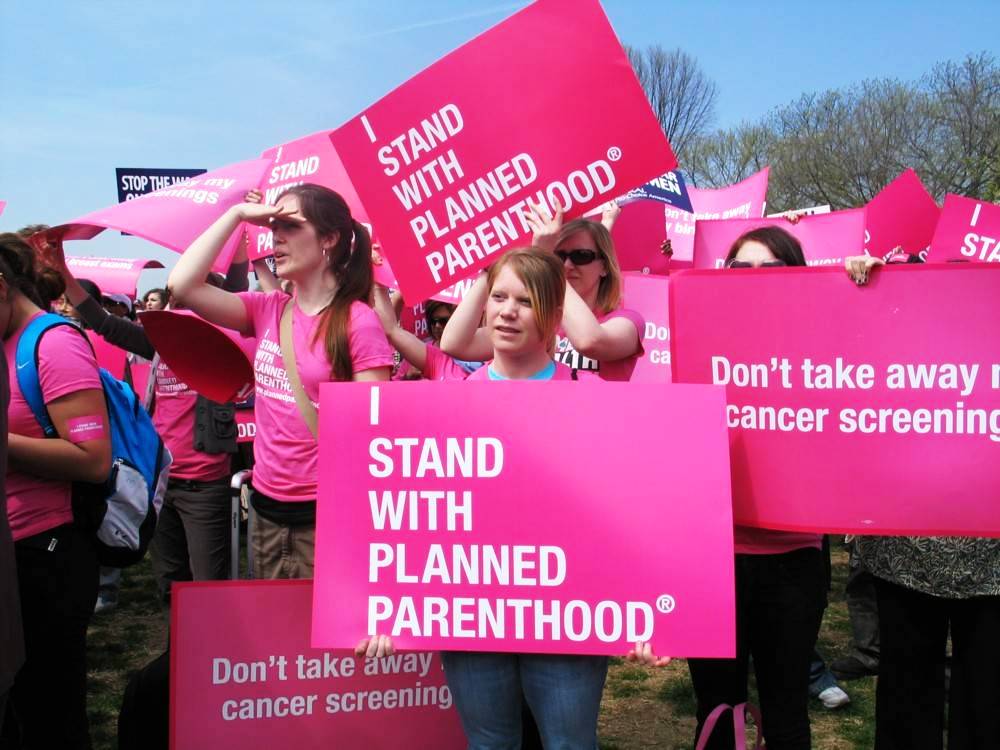
The Pink foundation has made our list for a second year in a row …. (remember last year, when they cut funding to Planned Parenthood due to anti-abortion politics within the foundation? But then they changed their mind?). This year they kept themselves under the public radar but still received some press when they refused money from a fundraiser held by exotic dancers. Their rationale? “Southern Nevada’s Executive Director Stephanie Kirby said it’s Susan G. Komen’s national policy to not partner with certain businesses, especially ones that may sexualize women.”
“It just doesn’t fall in line with who we are as an organization. There are too many survivors out there who no longer have the body part that is being displayed at a lot of these shows,” Kirby said.”
One of many T-shirts available for purchase at the Save the Ta-Tas Foundation.
Meanwhile, the Komen Foundation also appears to be consistent in their distancing from sexualized breasts as they have no official partnership with the Save the Ta-Ta’s Foundation — a breast cancer research and for-profit organization which sells T-shirts like “Save a life; grope your wife.”
8. Teen girls criminalized for their consensual sexual relationships
Kailyn Hunt (18) was prosecuted and eventually jailed for her relationship with a 14 year old girl.
In the state of Florida the age of sexual consent is 16. The problem is that the age of sexual exploration is much earlier than this. Given increased attention to the issue of child sexual abuse over the past couple of decades (a good thing), there have been many cases of older teenage partners now being defined as sex offenders, even if the relationship with consensual and non-violent (a bad thing). This is what appears to have happened to Kaitlyn Hunt, who was 18 when she entered into a sexual relationship with a girl four years her junior. The younger girl’s parents objected, and found that they could enforce their objections by law. Given the threat of going to prison and being a registered sex offender, Hunt chose a plea bargain, plead guilty to all charges and is now in jail. (Source: http://www.cnn.com/2013/10/02/justice/florida-gay-teen-kaitlyn-hunt-case/)
7. Russia instigates state-sponsored terrorism against sexual, ethnic, and artistic diversity (e.g.: gay people, labor migrants, and the punk rock band Pussy Riot).
Since 2011, thousand of people have gathered for Anti-Putin demonstrations such as this one in Moscow. See: http://en.wikipedia.org/wiki/2011–13_Russian_protests
In June of 2013, Putin signed into law an “anti-gay propaganda bill” which sought to punish individuals for “promoting” homosexuality. The law imposes fines for those members of society who “disseminate information at minors that are directed at forming nontraditional sexual setups” or which cause “distorted understandings” that gay and heterosexual relationships are “equivalent.” (see http://www.huffingtonpost.com/huff-wires/20130630/eu-russia-gay-rights/)
AmericaBlog reported on these events by stating that “Russian President Vladimir Putin signed into law … one of the most draconian anti-gay laws on the planet.” (right up there with Uganda: see # 6 below).
“The new law, coming only seven months before Russia is to host the Winter Olympics in Sochi, would ban anything considered pro-gay, from gay-affirmative speech, to gays holding hands in public, to even wearing rainbow suspenders. The law also contains a provision permitting the government to arrest and detain gay, or pro-gay, foreigners for up to 14 days before they would then be expelled from the country. That provision ought to send chills to anyone gay, lesbians, bisexual or transgender who is planning to attend or participate in the Winter Olympics.” (see: http://americablog.com/2013/07/russia-olympics-sochi-gay-law-putin.html)
The Russian media is also under fire by Putin: One Russian news media outlet is now under investigation for reporting on a gay teacher who was recently fired for being gay (he was said to teach that gay relationships are equivalent to heterosexual relationships). The news coverage did not report negatively (enough) about the gay teacher. (see http://www.advocate.com/news/world-news/2013/11/14/russian-newspaper-accused-violating-gay-propaganda-law)
While the Putin regime is also instigating crackdowns on ethnic minority labor migrants in Moscow, there is an increased movement to oppose Putin’s politics both inside and outside of Russia. The recently released members of the Punk band, Pussy Riot — imprisoned for two years as punishment for their anti-Putin demonstration in an Orthodox Russian Church — have promised to be part of this ongoing movement for greater sexual and social justice in Russia. See: http://www.ft.com/cms/s/0/927f4516-6f0c-11e3-bc9e-00144feabdc0.html#axzz2pBljprat
6. U.S. preacher behind Uganda “kill the gays” efforts will be tried for crimes against humanity
Since 2009 we have been following the story about the connection between US conservative evangelical preachers and the push by some lawmakers in Uganda for strident and violent anti-gay laws. See our first post on this here:
Scott Lively, a US based anti-gay evangelical pastor who went to Uganda to preach his hatred, is now being tried for crimes against humanity.
Despite widespread global opposition, a version of this bill passed on Dec. 20, 2013. However, the story continues to evolve with now Ugandan GLBT activists pushing for accountability for the U.S. religious leaders who stirred up this mess. In what is being called a “landmark decision” .. “a federal US judge (has) ruled that the case filed by a Ugandan LGBT advocacy group against American anti-gay evangelist Scott Lively, for his collaboration with religious and government officials in Uganda that lead to the introduction of the African nation’s “Kill the Gays” bill, will be allowed to proceed.”
“As reported in Gay Star News, Michael Ponsor, the US District Judge in Massachusetts, said “Widespread, systematic persecution of LGBTI people constitutes a crime against humanity that unquestionably violates international norms.” This marks the first ruling by a federal U.S. judge calling the persecution of LGBT persons a crime against humanity, possibly setting a precedent for the human rights of sexual minorities will be protected under international law.”
—
“The case against Lively stems from the evangelist’s 2009 lecture tour of Uganda, the theme of which according to its Ugandan organizer, was “the gay agenda – and the threat homosexuals posed to Bible-based values and the traditional African family.”
A 2010 article published in , The New York Times, wrote about on one of Lively’s speaking engagements in Uganda.”[T]housands of Ugandans, including police officers, teachers and national politicians,” reportedly attended the conference. Lively and his colleagues “discussed how to make gay people straight, how gay men often sodomized teenage boys and how ’the gay movement is an evil institution’ whose goal is ’to defeat the marriage-based society and replace it with a culture of sexual promiscuity.’” Lively wrote days later that “someone had likened their campaign to ’a nuclear bomb against the gay agenda in Uganda.’” (Source: http://www.edgeonthenet.com/?148277)
5. Regnerus’ anti-gay “study” condemned by the American Sociological Association
The past year showed us not just that U.S. based anti-gay pastors have influenced the laws of other countries (see #4 above), but that flawed empirical studies conducted by credentialed researchers can also inflict malicious impacts. The most striking example of this can be seen with the case of Mark Regnerus, who has a Ph.D. in sociology and is an Associate Professor at University of Texas, Austin. In the words of John Becker from The Huffington Post:
“The study was widelydiscredited for its flawed methodology, its wildly inaccurate conclusions and its alleged partiality. Nonetheless, it has been breathlessly touted by the anti-gay right as evidence justifying their opposition to equal marriage rights for same-sex couples. Many of the Supreme Court briefs filed by equality opponents rely on the Regnerus study, but the American Sociological Association — Regnerus’ own professional organization — has just demolished those arguments.”
Indeed, given its serious flaws combined with the intent by anti-gay activists to use it to justify anti-gay discrimination, leaders of the American Sociological Association have roundly condemned Regnerus’ study, including but not limited to the 42 page Supreme Court brief in support of overturning the Defense of Marriage Act (DOMA).
Fortunately, law makers in the U.S. are also listening to the reasoning of the ASA as well as human rights activists to nip in the bud any ongoing legal influence of the Regnerus study. On November 12, 2013, we saw this news from a Florida judge:
In today’s opinion, Orange County Circuit Judge Donald Grincewicz ruled that emails and documents possessed by University of Central Florida (UCF) related to the flawed study’s peer-review process must be turned over to John Becker, who sought the documents under Florida’s Public Records Act. UCF houses the journal Social Science Research, which published the Regnerus study, and the editor of the journal, UCF Professor James Wright, led the peer-review process for the research. Becker is represented by the Law Office of Andrea Flynn Mogensen, P.A., and Barrett, Chapman & Ruta, P.A; and the Human Rights Campaign Foundation funded the litigation. (Source: Human Rights Campaign press release found at http://joemygod.blogspot.com/2013/11/florida-judge-orders-ucf-to-release.html)
While Regnerus’ study has been discredited by experts and law makers in the United States, other law makers with malicious anti-gay intent have and will continue to grasp at any “evidence” which supports anti-gay messages. For example, in Russia (see #6 above) the Regnerus study was presented to the Russian legislature and may have played a role in supporting Russia’s recent move to outlaw non-heterosexuality. See: http://www.bilerico.com/2013/08/anti-gay_regnerus_study_to_russia_with_love.php
4. Transgender justice and visibility
Laverne Cox plays the role of Sophia Burset, a transwoman prisoner in Orange is the New Black.
In 2013, many tuned into U.S.-based media and saw several stories featuring transgender individuals and issues. Perhaps the most visible faces were Chelsea (formerly: Bradley) Manning — a U.S. solider who was incarcerated for releasing war-related documents to Wikileaks; and Laverne Cox, one of the stars of the Netflix series hit centered in a women’s prison, Orange is the New Black.
The media attention on the real life and fictional stories of Manning and Cox inspired a press release from the Sylvia Rivera Law Project on “the realties for transgender and gender non-conforming people in prison, jails, and detention centers:”
“A significant amount of media fascination with transgender people in prison is about accessing surgery and focusing on the criminalized act underlying an individual’s sentence. Not only do transgender people in prison have problems accessing healthcare, but they experience a heightened level of gender policing. The clothing they wear, their hairstyles and grooming practices, their bodies, mannerisms and identities are scrutinized and controlled by the state. Any deviance from norms can lead to violence at the hands of corrections officers or other people who are incarcerated. Legal “protections” are hard to access as there is little accountability on the inside. If one is brave enough to risk retaliation and file a grievance, they must follow up with that grievance and timely appeal any denials. It is not until those appeals (usually two) are denied that one can access the court system. Finding a lawyer or representing one’s self pro se (without a lawyer) is another difficult barrier that one must overcome, as SRLP’s report IT’S WAR IN HERE has documented.”
Beyond high rates of incarceration, trangender individuals also face an alarming rate of violence and harassment in the US and worldwide and this intersects with race, class, and other social locations. According to a recent report from the National Coalition of Anti-Violence Programs, in the U.S., LGBTQ people of color experience 1.8 times the violence of white LGBTQ individuals. 73% of all LGBTQ homicide victims are people of color. Transgender people are 3 times more likely to experience police violence than non-transgender individuals, with transgender women experiencing the highest rates.
In one legal step toward transgender rights, in August 2013, Jerry Brown signed into law AB1266 that offered the right for individuals “to participate in sex-segregated programs, activities and facilities” (including bathrooms) based on their gender identity rather than by birth sex. Predictably, conservative groups and religious individuals immediately rallied in protest, creating a new “war on privacy rights.” California Republicans support a referendum that is being prepared to overturn AB1266. While the law goes into effect on January 1, 2014 and the state plans to continue to issue same-sex marriage licenses, there could be enough signatures on Jan 8 against same-sex marriage to push the referendum process forward. We’ll be watching this case unfold in 2014.
3. The Papacy changes its guard
Despite the fact the the majority of the world is not Catholic, the Pope, as leader of the Worldwide Catholic Church, tends to have a lot of influence on sexual politics. (Recent church statistics indicate that 17.5% of the world’s population is Catholic). The Changing of Papal leadership was important in several ways, including the historic resignation of Pope Benedict XVI and the election of the left-leaning Pope Francis.
The old (Pope Benedict XVI , left) vs. the new (Pope Francis, right). Source: http://www.tmz.com/2013/03/13/old-pope-vs-new-pope-whod-you-rather/#ixzz2p6HNNQB2
“Pope Francis faulted the Roman Catholic church for focusing too much on gays, abortion and contraception, saying the church has become “obsessed” with those issues to the detriment of its larger mission to be “home for all,” according to an extensive new interview published Thursday.
The church can share its views on homosexuality, abortion and other issues, but should not “interfere spiritually” with the lives of gays and lesbians, the Pope added in the interview, which was published in La Civilta Cattolica, a Rome-based Jesuit journal.
“We have to find a new balance, otherwise even the moral edifice of the church is likely to fall like a house of cards, losing the freshness and fragrance of the Gospel,” Francis said in the interview.
2. Utah finds itself in a pickle about its marriage politics.
Utah, a state founded by members of the Church of Latter Day Saints (Mormon) church, has long been a bit of an outsider compared to the rest of the nation; indeed it was only after leaders defined marriage as being between one man and one woman that it was accepted into statehood. This was after a long history of plural marriages:
In 1852 church leaders publicized the previously secret practice of plural marriage, a form of polygamy.[52] Over the next 50 years many Mormons (between 20% and 30% of Mormon families)[53] entered into plural marriages as a religious duty, with the number of plural marriages reaching a peak around 1860, and then declining through the rest of the century. (source: http://en.wikipedia.org/wiki/Mormons)
Given the need for the Mormon church to divorce itself from plural marriages it is likely that for Mormon leaders, the moral mantra of monogamous heterosexual marriage is likely undergirded by an ongoing quest for mainstream assimilation. Indeed the success of Proposition 8, the anti-gay marriage ballot proposition in the 2008 California elections, can largely be connected to money from the Mormon Church, which is headquartered in Salt Lake City Utah. (See, for example the documentary 8: the Mormon Proposition.)
Thus, when in December, a federal judge struck down Utah’s anti-polygamy stance on the grounds that one cannot “prohibit cohabitation” mainstream Mormon religious leaders were not happy. The challenge to the law was brought by the Reality TV star Kody Brown who stars along with his four female partners (and 17 children) in the reality TV show “Sister Wives.” The Brown family successfully argued that the Utah cohabitation law violated their rights to privacy and to religious freedom.
Ironically, during the same month, Federal Officials also shot down Utah’s discrimination against same-sex marriage — thus striking down the original requirement by the Feds a century and a half earlier that Utah define marriage as a dyad between one man and one woman. U.S. District Court Judge Robert Shelby stated that the law to ban same-sex marriage conflicted with the U.S. Constitution which guarantees equal protection and due process. Thus even though 2/3 of the voters voted to ban same-sex marriage on a ballot in 2004, in 2013 Utah became the 18th state in the United States (17 states and the District of Columbia) that allows same-sex couples to be legally married.
While same-sex couples flooded the county clerk’s office seeking to be married, movements to reverse both legal the Utah polygamy and same sex marriage decisions are underway. We’ll be following both stories as they progress in 2014.
1. Two victories for sex workers’ rights: Decriminalization of Prostitution in Canada, and the repeal of the Anti-Prostitution Pledge
Finally, we end with two major developments in support of global rights and justice for individuals who work in the sex trade.
The movement for decriminalization of prostitution (much like that of moves historically and currently against criminalization of homosexuality) — arises out of the work of a range of global human rights activists. And after years of work by Canadian activists, on December 20, 2013 prostitution was decriminalized in Canada.
“The Supreme Court of Canada has struck down the country’s major prostitution laws, saying that bans on street soliciting, brothels and people living off the avails of prostitution create severe dangers for vulnerable women and therefore violate Canadians’ basic values.
In a similar spirit, in June of 2013, the U.S. Supreme Court ruled against the Anti-Prostituion Pledge, stating that “it is a violation of the First Amendment for the federal government to force groups to endorse the government’s views opposing prostitution in order to receive funding to combat AIDS overseas.” (Source: http://apps.washingtonpost.com/g/page/politics/read-supreme-court-strikes-down-required-anti-prostitution-pledge-for-hiv-and-aids-workers/243/). Finally! A brief breath of relief from global health workers and sex worker activists across the globe — but more work needs to be done as this ruling still only protects US-based organizations.
—–
Happy New Year from Sexuality & Society! Thanks to all the activists, scholars, and practitioners working towards sexual and social justice. May 2014 be filled with stories of hope and justice.
As the Gregorian calendar year officially comes to a close, we offer once again a sampling of the year’s top ten sexual stories. While certainly not a complete, in-depth, or globally representative list, we do think that this list contains snippets that have both disturbing and hopeful implications for sexual justice.
Rick Perry in a replica of the jacket worn by Heath Ledger in "Brokeback Mountain."
“By now, you’ve probably seen Rick Perry’s “Strong” ad, in which he opines, “There’s something wrong in this country when gays can serve openly in the military but our kids can’t openly celebrate Christmas or pray in school.” Not only are gays in our military, they’re also composing music for our campaign ads. As the Harvard Political Reviewpoints out, the music that plays in the background of Perry’s ad is inspired by or directly taken from Aaron Copland, a gay composer.” (Nick Greene, Dec. 10, 2011, Village Voice).
Presidential hopeful Herman Cain’s campaign abruptly crashed and burned after news media learned of his long time extra-marital lover. But this was after his multiple cases of sexual harrassment and assault against his former employees were also aired. Most news media, including reputable news outlets like the Washington Post, failed to differentiate between Cain’s alleged criminal and consensual acts, using the language of “accusation” to describe both. See for example this story with a headline of “Ginger White accuses Herman Cain of long affair.”
…”Cain denied the accusations. In an interview that aired before White’s allegations were broadcast, Cain told CNN’s Wolf Blitzer that he knows White and that the two had been friends but that there had been no sexual contact and no “affair.” He characterized their relationship as “trying to help a friend” because of her “not having a job etcetera and this sort of thing.””
The story then goes on to simply state that:
“This month, Cain was accused of sexually harassing several women.”
Such lack of differentiation between criminal and consensual sexual scandals is common among contemporary American mainstream media. Gratefully, Amanda Marcotte (Alternet, Nov. 30, 2011) provides a helpful guide for assessing the significance different kinds of sex scandals. See Marcotte’s article here: “6 Kinds of Sex Scandals: What Should be exposed? What should be left private?”
8. Wienergate
… AND speaking of the need to have more sophisticated interpretative filters around why and how some Wieners constitute a “scandal” … see article above, again. … See also our post about Anthony Weiner:
“In contrast to the Dutch, Americans love sex scandals. We love them so much that in a good year we produce and consume not just one of these high-profile scandals, but several. For many of us interested in sexual justice, the juiciest stories are those of the hypocrites: the Elliot Spitzers who lead anti-prostitute campaigns while purchasing sex; the George Rekers who champion the anti-gay movement while hiring “rent boys,” and the Newt Gingrichs who lead impeachment hearings while engaging in their own extra-marital affairs.”
“In what can only be called an astounding move by an Administration that pledged on inauguration day that medical and health decisions would be based on fact not ideology and for which women are a major constituency, today Kathleen Sebelius, Secretary of the Department of Health and Human Services (HHS) overruled a much-awaited decision by the U.S. Food and Drug Administration (FDA) to make emergency contraception (EC) available over-the-counter (OTC) to women of all ages.
6. The politics of Rape. Rape committed by men against women was frequently in the news during 2011, not because the dynamics of it have changed (it’s always about maintaining/exerting symbolic power), but because some people and institutions have found new tactics of exerting and/or maintaining heterosexism. Here’s a sampling of three such tactics.
Ms Magazine posted several stories on rape this year. This image comes from: http://msmagazine.com/blog/blog/2011/05/02/25-facts-about-rape-in-america/
5. Penn State & masculinist cultures of sexual abuse. Rape and sexual abuse committed by men against boys was again in the news this year. While the Catholic Church and the Military managed to avoid serious spotlight time in 2011, another site of masculine privileged culture — American college football –wasn’t as lucky.
“With former Penn State football assistant coach Jerry Sandusky charged with sexually abusing children—and school officials including iconic former football coach Joe Paterno dismissed for purportedly failing to report Sandusky’s alleged crimes to law enforcement—many observers have compared the situation to a series of similar cases that have rocked the Vatican.”
After all these dire (and at times ludicrous) sexual stories, we will end with four stories on a slightly more hopeful note …
4.Mainstreaming of Transgender stories (including both opportunities and misses for gender transformation).
Transgender actress Harmony Santana
While images of Chaz Bono’s new book and his stint with Dancing with the Stars were ubiquitous, the inclusion of transgender individuals in policies and programs were just as, if not more, influential. Any sort of mainstreaming can bring missed opportunities for radical transformation (in this case for the institution of gender). But Mara Keisling, executive director of the National Center for Transgender Equality details 14 reasons why 2011 was “a game-changing year for transgender rights.” (See full story in The Advocate, Dec. 28, 2011).
GENEVA — The Obama administration announced on Tuesday that the United States would use all the tools of American diplomacy, including the potent enticement of foreign aid, to promote gay rights around the world.
In a memorandum issued by President Obama in Washington and in a speech by Secretary of State Hillary Rodham Clinton here, the administration vowed to actively combat efforts by other nations that criminalize homosexual conduct, abuse gay men, lesbians, bisexuals or transgendered people, or ignore abuse against them. (Myers and Cooper, New York Times, Dec. 8, 2011).
1. The Sexual Politics of Egypt’s Arab Spring, featuring:
Happy New Year from Sexuality & Society! Thanks to all the activists and scholars working toward sexual and social justice; may 2012 be filled with your stories!
When the Obama administration took office on Jan. 1, 2009, many scientists and scholars were hopeful that empirical evidence would play a greater role in defining a range of domestic and international policies, ranging from justifications for war, to global warming, to sex education, to policies about human trafficking. The hope was that the administration would turn away from making decisions that were rooted in ideological agendas and make decisions that were informed more directly by reliable empirical data. To some extent, this has been the case. [E.G.: see the State Department’s (remarkable) response to evidence of human rights violations against people in the sex trade].
However, when it comes to directly criticizing the State Department about its international policies — even using solid empirical data — it is probably inevitable that the State Department machine will kick into defense mode. And this is what is happening now in response to Rhacel Salazar Parreñas, a professor of sociology at the University of Southern California, for her book Illicit Flirtations: Labor, Migration, and Sex Trafficking in Tokyo which is based on her ethnographic research with bar hostesses in Tokyo. The State Department argues that women who are similar to those Parreñas included in her study need to be “rescued.” Parreñas’ research suggests otherwise, and adds to the mounting evidence which indicates that calls for “rescuing” adult women are simplistic, not based in reliable evidence, and are ultimately harmful to the women who allegedly “need” to be “rescued.”
Parreñas’ more complicated and empirically-grounded analysis puts a wet blanket on widespread popular discourse about “sex trafficking” — a “victim/rescue” narrative that many critical feminist, human rights, and labor scholars critique as a colonialist, patronizing, (ironically) sexualizing fantasy of White Knights swooping in to rescue helpless women. Parreñas’ work also provides yet another push to the State Department — and other all parties interested in alleviating human trafficking — to ground their approaches in rigorous data collection, as well as analysis that addresses labor and migrant rights in the context of global economic inequalities.
See below for Nina Ayoub’s story which briefly summarizes Parreñas’ findings and the State Department’s response:
The author of a new scholarly book from Stanford University Press has become the target of criticism from an unusual source: the U.S. Department of State.
In recent weeks, Rhacel Salazar Parreñas, a professor of sociology at the University of Southern California, has received media attention for Illicit Flirtations: Labor, Migration, and Sex Trafficking in Tokyo, a book about Filipina women working as bar hostesses in the Japanese capital. Bloomberg News ran excerpts of her work. She was called the “literary lovechild of Barbara Ehrenreich and Naomi Wolf” by Zócalo Public Square, which said the book will “inspire indignation for reasons you didn’t expect.” Parreñas also was interviewed onThe World, a program of Public Radio International. Following that broadcast, the State Department asked—essentially—for equal time.
The issue? Parreñas was highly critical of the ways in which State Department policies on international sex trafficking characterize the women who are the focus of her book, minimizing, she says, their individual agency as migrant laborers, and seeking to “rescue” them and regulate their lives in ways that Parreñas argues may leave them worse off.
On November 4, Alison Kiehl Friedman, deputy director of the State Department’s Office to Monitor and Combat Trafficking in Persons was interviewed on The World to “clarify U.S. policy on sex trafficking.” She told the host that “we agree with Dr. Parreñas that there is exploitation inherent in what is going on, and we agree that not all the people there are trafficking victims. And we agree that there needs to be more done to get unscrupulous labor recruiters out of the system and better protect migration flows. Where we disagree is that somebody can go in, have a personal experience for a couple of months, and categorically say these people weren’t sex-trafficking victims, and somehow calling some of them sex-trafficking victims is worse than ignoring their exploitation and trying to address it.”
In an e-mail interview, The Chronicle asked Parreñas for her response. Is she surprised at the public attention her research is getting from the State Department?
“As a scholar who is committed to ‘public sociology,’ that is, sociology that aims to transcend the academy and reach a wider audience, I couldn’t be anything but pleased that policy implementers have given attention to my work,” she writes. “Unfortunately, they seemed to have also misinterpreted the work.”
Parreñas adds: “I do wish that the U.S. State Department gave greater attention to the evidence-based research on human trafficking by scholars such as myself, and others including the anthropologist Denise Brennan, the legal scholar Dina Haynes, and the anthropologist Tiantian Zheng.” The department does not, she charges. Instead, they “insist on making unsubstantiated claims on human trafficking.”
What the sociologist is chiefly calling “unsubstantiated” is the Trafficking in Persons Report, which the State Department describes as its “principal diplomatic tool to engage foreign governments” on the subject. She is critical of the State Department, she says, for not fully accounting for its methods, as well as for its informants and sources. “The TIP Report would get an F if it were a social-science-research project.”
Parreñas says she is fairly sure that her critics at the agency have not yet read her book. “Otherwise, they would not be able to dismiss my methodology as ‘having a personal experience for a couple of months.’” she writes. As a qualitative sociologist, she used a varied set of methods, including “in-depth interviews with hostesses, brokers, club owners; participant-observation both as a customer (in nine clubs) and as a hostess (in one club primarily); archival research; and interviews with government representatives in both Japan and the Philippines. I spent not just ‘a couple of months’ but a total of 11 non-continuous months in Tokyo to conduct my project.”
Unlike Friedman and the TIP Report, she says, “all the claims that I have made about the situation of hostesses—a group they say are ‘forced into prostitution’—are based on evidence, i.e., concrete interviews with migrant Filipina hostesses who I made sure represented a diverse group.” The women included “those who are college educated and those who are high-school dropouts; some work in high-end bars and others in low-end bars; some undress in the club where they work and others never sit next to a customer at a club when at work.”
Speaking on the radio of the Filipina hostesses, Friedman, the State Department official, used an analogy she said her boss was fond of. “I think that focusing on how they got there and whether there was any initial consent to travel is really beside the point,” she told The World. “It’s almost like criminalizing driving to the bank robbery, but not the bank robbery itself.”
In her e-mail to The Chronicle, Parreñas counters: “As I explicitly described in the interview, the work of hostesses is not prostitution. Instead, the work is to flirt professionally with customers.”
Friedman, notes Parreñas, “said we should not focus on how one gets to commit a robbery, but to focus on the robbery. This statement just goes to show that she chooses not to consider the circumstances of people’s lives and the particular needs that arise out of those circumstances.
In the case of hostesses, she says, “these women are often from the poorest of the poor in the Philippines. We cannot understand why they do hostess work unless we consider the structural contexts that have shaped their lives.” Those who prefer they not become hostesses, she says, should work on easing the structural inequalities that limited their choices and made hostess work the best of bad options.
“But let us say I agree with Friedman’s boss,” she adds. “Let us look at the act of bank robbery. Let us disregard how they got there. In this case, we would look at the act of hostess work. We would actually see that the work is not prostitution but professional flirtation. Professional flirting could be performed in a variety of ways—via showing acts of care such as spoon feeding sensually, dancing on stage (clothed or unclothed), singing, verbal teasing. I would ask Friedman—what is wrong with professional flirting? What is so different between professional flirting and working as a waitress in Hooters?”
“Yes, I would say let us look at the act of ‘bank robbery’ or the act of ‘hostess work.’ If we were going to do it accurately, we would actually rely on evidence to know the specifics of that ‘bank robbery.’ We would perhaps realize that the robber walked away with three pieces of mint candy from the bank and not wads of cash. If one looks at the TIP Report,one sees that the U.S. Department of State provides no evidence related to working conditions. So it is questionable if they know anything about the ‘bank robber.’”
Commenting on Friedman’s statement that “compelled service is frequently misidentified as consent,” Parreñas says that the official is “cloaking the problem of human trafficking. She is looking at the surface and not the structure.” Most migrant workers, she says, are not free laborers. They are often guest workers whose legal residency binds them to a sponsoring employer. This leaves them in a highly unequal relationship of dependency. This, she writes, would apply to farm workers in North Carolina, non-immigrant-visa domestic workers in Washington, D.C.; likewise, domestic workers in Singapore, or the kafala system in the United Arab Emirates, or au pairs in Denmark, or migrant teachers in Baltimore.
“Eminent scholars such as Carole Vance and Ann Jordan have expressed their puzzlement over the obsession of the U.S. State Department on sex workers as well as their conflation of sex trafficking and prostitution,” says Parreñas. She says that the department’s “over-obsession with finding ‘prostitutes’ who are ‘sex trafficked’” has led them to misidentify migrant Filipina hostesses. “Hostess work is not a euphemism for prostitution,” says Parreñas. Yet, she claims, the U.S. Department of State, “without evidence,” misidentifies the hostesses as not just prostitutes but women “forced into prostitution.”
This misidentification is a “setback,” she argues, “because it has eliminated the jobs of tens of thousands of women, many of whom are now living in poverty in the Philippines.” This shift, the book indicates, occurred when Japan changed its visa policies on “Filipina entertainers” in a way that conformed with U.S. preferences. The scholar also cites the research of her Ph.D. student Maria Hwang at Brown University, where Parreñas taught before going to the University of Southern California. Hwang has found a sizeable number of Filipina hostesses displaced from Tokyo working as migrant sex workers in Hong Kong. Hwang’s research, says Parreñas, shows us that “falsely rescuing them from prostitution has actually forced them into prostitution.”
Her student’s finding “tells us that it is very important that the U.S. Department of State only provide evidence-based research in their reports. Not having evidence-based research could backfire on them in more ways than one.”
Parreñas will continue her research on migrant labor. She says she is preparing a second edition of her 2001 book, Servants of Globalization: Women, Migration and Domestic Work (Stanford), which compared Filipina migrant domestic workers in Rome and Los Angeles. She is conducting new research in both cities to update their situations. She also has a new project that will compare the experiences of domestic workers whose legal residency in a country binds them to a citizen sponsor employer, meaning “that they cannot quit their job unless they are willing to be deported.” She will compare domestic workers in that situation in Denmark, the United Arab Emirates, and the United States.
Last Friday, March 18, 2011, was a day of celebration for sex worker activists and allies, as well as for global advocates of sexual health, justice, and human rights. Why the celebration? The United States made public its new position that: “No one should face violence or discrimination in access to public services based on sexual orientation or their status as a person in prostitution.”Inside a Human Rights Council session
The first part of this position regarding sexual orientation was not a surprise. (Despite predictable and periodic right-wing backlashes, GLBT justice movements have continued to make gains at all levels of US society, including increased federal recognition by the Obama administration that sexual orientation is not a valid litmus test for full citizenship.)
The second part of this statement, however – a commitment to uphold the human rights of all sex workers — is completely unprecedented at the federal level of the United States.
The occasion for this public statement on the part of the US was the first Universal Periodic Review (UPR) at the United Nations Human Rights Council. The UPR is new process where the UN community evaluates the human rights record of each member state. Upon its first UPR review in November 2010, the US received 228 recommendations by its global peers for improving its human rights record, including recommendation #86 from member state Uruguay: “undertake awareness-raising campaigns for combating stereotypes and violence against gays, lesbians, bisexuals and [transgender people], and ensure access to public services paying attention to the special vulnerability of [sex] workersto violence and human rights abuses.[i]
On Friday, March 18, at the Palais des Nations in Geneva, Switzerland, the US presented its written response to each of the 228 recommendations (including the one listed at the top of this post). Additionally, Harold Koh, Legal Advisor for the US Department of State, delivered a verbal summary statement of the US commitment to human rights. Invoking the spirit of more recent US history including the civil rights movement, Koh stated that it is now “a fundamental American belief” that “society as a whole is transformed for the better through our work to protect and promote the civil and human rights of its least powerful members.”
Following Koh’s remarks, ten UN member state representatives were allowed to read two-minute prepared response statements, followed by statements read by ten civil society representatives. The process of getting a speaking position in this forum resembles a competitive race, with adversarial member states (such as Cuba and Iran) highly motivated to achieve a speaking slot. As a result of perseverance, luck, and sponsorship by the Sexual Rights Initiative and member group Action Canada for Population and Development, sex worker and transgender rights activist Darby Hickey[ii] was able to secure the 10th and last civil society speaking position. Below are segments from her speech:
Thank you, Mr. President. I am a sex worker and transgender rights activist from the United States. On behalf of hundreds of civil society organizations that called on the U.S. government to ensure the human rights of people engaged in sex work, I would like to both congratulate and thank the U.S. delegation for accepting recommendation #86. We believe that it is the first instance of affirmation of sex workers‚ rights in this forum.
Due to stigma and criminalization, sex workers — and those profiled as such — are subjected to violence and discrimination, and are often barred from necessary services and the right to equal protection under the law. State agents themselves, specifically police officers, commit physical and sexual violence against sex workers. These abuses are particularly rampant in low income, African-American and immigrant communities and also greatly affect transgender, bisexual, lesbian, and gay people. Globally, U.S. policies, such as the “anti-prostitution pledge,” have negatively affected international HIV/AIDS efforts.
As part of such implementation, it is critical that the government work to systematically involve sex workers in policy decisions that affect them. Specifically, we hope to see the government eliminate federal policies that conflate sex work with human trafficking, investigate and prevent human rights abuses perpetrated by state agents against sex workers, and examine the impact of criminalization on our communities. Protecting the human rights of sex workers is also connected with broader efforts to ensure sexual and reproductive rights and address the problems of the criminal justice system in the U.S.
We are deeply appreciative of the respect for, openness to, and engagement with civil society that the U.S. government has shown throughout this UPR process. We stand ready to work with the administration to implement this recommendation and others.
This first UPR has brought about an unprecedented opportunity for dialogue between government and civil society around issues of human rights. At the close of the United States’ UPR process we face a unique opportunity – a global mandate – to begin implementing human rights principles into policies around sex work and human trafficking. In his concluding statement to the UN on Friday, Harold Koh stated that “this is an ongoing process leading to concrete policy and self conscious change.” We (A broad coalition of sex work activists and researchers in the fields of sexual and reproductive health, human rights, and justice) are excited and prepared to begin implementing these principles into policy.
Useful Links:
Archived video of Darby Hickey’s speech, as well as that of Harold Koh and others available here. http://www.un.org/webcast/unhrc/archive.asp?go=110318#pm2 (UN Human Rights Council, Sixteenth session, at the Palais des Nations in Geneva, Switzerland. 36th Plenary Meeting, Archived video, Friday 18 March 2011. )
“Human Rights for All”( http://www.humanrightsforall.info/), is the group of organizations and individuals (including myself) who organized on behalf of recommendation #86. Included on this site are primary documents and evidence including: the original UPR report (written by members of Best Practices Policy Project and Desiree Alliance), a policy brief for the US state department, and a call to action with dozens of stakeholder signatures.
i The translation of Uruguay’s recommendation uses the term “transsexuals.” “sexual workers.” In our advocacy response to this recommendation we inserted the terms “transgender people” and “sex workers” which more accurately reflects terms used in the United States.
ii Darby Hickey is a member of the Best Practices Policy Project.
Great news for advocates of sexual health, human rights, and social justice! See my story below (first posted March 15, 2011 at Ms Magazine Blog):
———————-
Recently I blogged about how the United Nations’ Human Rights Council flagged sex worker rights in its periodic review of the United States’ human-rights record. Member state Uruguay recommended that the U.S. “ensure access to public services paying attention to the special vulnerability of sexual workers [sex workers] to violence and human rights abuses.”
Within four months of Uruguay’s recommendation to the U.S., and after a subsequent flurry of advocacy efforts by sex worker activists, researchers, and allies (including me), the State Department has released its response. To each of the 228 Universal Periodic Reviewrecommendations, the State Department replied in one of three ways: “fully support,” “partially support” or “do not support.”
In what is being heralded as a victory for sex workers’ rights, the State Department chose to “fully support” Uruguay’s recommendation, stating: “No one should face violence or discrimination in access to public services based on sexual orientation or their status as a person in prostitution.”
This simple statement marks a potential monumental shift in U.S. policy: a new recognition that anti-trafficking policy alone is not an adequate response to the human rights violations of all sex workers. There is mounting evidence that current anti-trafficking policy ignores (and even exacerbates) human rights violations of adult, consensual sex workers and of people working under coercive or trafficked conditions.
Members of my group, Human Rights For All: Concerned Advocates for the Rights of Sex Workers and People in the Sex Trade (HRA) were ecstatic. “People in the sex trade have been marginalized and stigmatized when seeking public services, including through law enforcement. This is a big step forward to acknowledging sex workers’ human rights,” says Kelli Dorsey, Executive Director of Different Avenues, a group dedicated to reproductive justice by and for girls and women of color.
“We were long overdue for the United States to take the needs of sex workers seriously, particularly the need to stem violence and discrimination,” says attorney Sienna Baskin, Co -Director of the Sex Workers Project at the Urban Justice Center in New York.
On Friday, March 18, sex workers will stage demonstrations in cities across the country to celebrate the adoption of Recommendation #86. For further information on the demonstrations, as well as supporting documents, see the HRA website.
For the past few months, I have been honored to be part of a team of activists and researchers responding to developments involving the United Nations Human Rights Council, the US State Department, and matters concerning human rights abuses against sex workers. The team of which I am a part is one of many civil society groups invited to engage in dialogue with the State Department in response to the UN’s Universal Periodic Review of the human rights record of the United States. For this blog post, submitted on March 3 – International Sex Workers’ Rights Day – I will briefly share highlights of this unprecedented historic process.
The Universal Periodic Review is a relatively new procedure created by the United Nations Human Rights Council (which itself was only created in 2006). Over the past three years (beginning in 2008 and ending in 2011) the human rights record of all member states of the global community have been and/or will be reviewed by the United Nations Human Rights Council in Geneva, Switzerland. This past November (2010), it was the turn for the current human rights record of the United States (as well as 15 other UN member states) to be reviewed. Upon review of the US record, more than 200 recommendations were made to the Obama administration, including the following by member state Uruguay[i]: “undertake awareness-raising campaigns for combating stereotypes and violence against gays, lesbians, bisexuals and [transgender people], and ensure access to public services paying attention to the special vulnerability of [sex] workers to violence and human rights abuses.”
Since its review in November, the US State Department has engaged in meetings with civil society representatives to help inform its response to the 228 UN recommendations. (The entire list of recommendations to the US can be found here).
Uruguay’s recommendation has generated an exciting and productive dialogue among people concerned with the welfare of sex workers and people in the sex trade. This historic moment has also created a refreshing opportunity to discuss sex work BOTH as a human rights issue AND as an issue that cannot be adequately addressed by responses to sex trafficking alone.
Will the US administration recognize this UPR recommendation, and make concrete steps to improving human rights for all, including sex workers (meaning ALL sex workers, including adult consensual sex workers AND those who are exploited or trafficked)? We are hopeful that it will. Judging by the outpouring of support we have received from leading researchers and organizations — representing sexual and reproductive health, law, and criminal justice — we are far from alone in this hope. Several formal letters of support have been received, including from former Surgeon General Dr. Jocelyn Elders, the Center for Health and Gender Equity (CHANGE), and Change.org. Dozens of other researchers, experts, and organizations have given signatures of support including Human Rights Watch, Sexuality Information and Education Council (SIECUS), and Amnesty for Women.
These letters and signatures, along with other documents including a policy brief discussing violence against sex workers, have been submitted to the State Department for review. Below are segments of this policy brief (see end of post for list of authors and collaborators).
“In November 2010, the current human rights record of the United States was reviewed by the United Nations Human Rights Council. As part of this process, members of the U.N. made a series of recommendations toward improving human rights in the U.S. In recommendation #92.86, member state Uruguay called on the Obama Administration to “undertake awareness-raising campaigns for combating stereotypes and violence against gays, lesbians, bisexuals and [transgender people],[ii] and ensure access to public services paying attention to the special vulnerability of [sex] workers[iii] to violence and human rights abuses.”[iv]
“This recommendation from the global community highlights human rights issues that have gone unnoticed for too long. Sex workers—that is people who engage in sexual commerce for income and subsistence needs—are members of families and communities in all parts of the United States. Because of stigma and criminalization sex workers—and those profiled as such—are subjected to violence and discrimination, and are impeded from accessing critical services, such as healthcare, and the right to equal protection under the law. State agents themselves, specifically police officers, commit physical and sexual violence against sex workers. These abuses are particularly rampant in poor and working class, urban, majority African-American and immigrant communities and also greatly affect lesbian, bisexual and transgender (LGBT) people. Globally, the U.S. federal anti-prostitution policies, such as the “anti-prostitution pledge,” have had dire consequences for international HIV/AIDS efforts.
Our policy brief discusses and critiques three policy areas in need of improvement: 1) Federal policies that conflate sex work and trafficking, 2) Federal approaches to HIV/AIDS, and 3) Criminalization (including state level laws) and Policing. Below is our language on Federal policies that conflate sex work and trafficking:
“Some current federal policies are rooted in the misconception that sex work and human trafficking (a serious human rights abuse acknowledged by the U.S. Government under the Trafficking Victims Protection Act of 2000 and subsequent re-authorizations) are the same issue. This misconception, combined with pressure from some advocates seeking to use concern about human trafficking as a way of diverting resources into anti-prostitution campaigns, has had significant impact on efforts to provide the services and support needed by sex workers both within the United States and globally.
“Globally, the U.S. imposes the Anti-prostitution Loyalty Oath or the “anti-prostitution pledge” on groups funded by the President’s Emergency Plan for AIDS Relief (PEPFAR) to provide services internationally to address HIV/AIDS.[v] In order to receive funds organizations must adopt a policy indicating that they oppose prostitution and “sex trafficking.” This policy runs counter to documented best practices for HIV/AIDS interventions[vi] and have lead some groups to avoid offering any health and safety services for sex workers.[vii][viii] As a result, the global and public health community has been virtually unanimous in its calls for revoking the anti-prostitution pledge. [ix][x][xi][xii][xiii] Two lawsuits against the U.S. government were filed on behalf of three U.S.-based NGOs engaged in HIV-prevention, leading to U.S. Court Judgments concluding that the “anti-prostitution pledge” is unconstitutional on the basis of violating the first amendment right to freedom of speech.[xiv] The Department of Justice has appealed both cases; the second case is still in court.[xv]
“Federal policies that conflate sex work and trafficking also impact sex workers’ human rights domestically. Federal funding and other resources intended to protect victims of trafficking have instead been used to arrest and incarcerate adult sex workers based on state laws. For example, ongoing federal taskforces aligned with regional and municipal law enforcement agencies, such as “Operation Cross Country,” use funds that are allocated for services for trafficking victims.[xvi] There is mounting evidence that anti-trafficking brothel raids of this kind place migrant sex workers and trafficked persons at greater risk of incarceration, deportation, and trauma.[xvii]”
After careful consultation with organizations run by and serving sex workers, as well as human rights activists and members of the State Department, we have made a number of recommendations to the US government. These recommendations, in their shortened version are the following:
The U.S. Federal Government can show progress in addressing human rights abuses against sex workers by a) accepting recommendation #92.86, and b) engaging in concrete, politically-feasible steps that can minimize human rights abuses including at a minimum:
Building capacity for states to address human rights violations through research and dialogue.
Modifying or eliminating existing federal policies that conflate sex work and human trafficking and prevent sex workers from accessing services such as healthcare, HIV prevention and support.
Investigating and preventing human rights abuses perpetrated by state agents, such as law enforcement officers.
Investigating the impact of criminalization, including state level criminal laws, on sex workers and other groups.
These recommendations, if approved and implemented, will address the needs of a population that disproportionately impacts low-income women, but will also serve a population that is extremely diverse in terms of sex, gender presentation, sexual orientation, race, class, and nation of origin. In the midst of numerous and devastating political assaults on women’s health care in the US, the movement for a human rights policy approach for sex workers and people engaged in sex trade work in the United States is a breath of hope. Stay tuned: the State Department is scheduled to release its response the the UPR recommendations soon.
[i] Uruguay has already shown clear leadership in sexual rights and social justice; Uruguay was the first South American country to recognize civil unions for both same sex and different sex partners in 2007 and legalize same sex adoption in 2009; it has low levels of income inequality, and is ranked at the top of South America countries for a range of quality of life and prosperity measures. http://en.wikipedia.org/wiki/Uruguay
[ii] The translation of member state Uruguay recommendation uses the term “transsexuals.” We have inserted the term “transgender people” which is a translation that more accurately reflects terms used in the United States.
[iii] The translation of member state Uruguay recommendation uses the term “sexual workers.” We have inserted the term “sex workers” which is a translation that more accurately reflects terms used in the United States.
[v] Organizations within the U.S. were also subject to the pledge under Trafficking Victims Protection Reauthorization Act but recent policy changes now allows groups to say that they have no policy on prostitution and will remain neutral during the term of the grant.
[viii] Human Trafficking, HIV/AIDS, and the Sex Sector: Human Rights for All. (October 2010). Center for Health and Gender Equity (CHANGE) and Center for Human Rights and Humanitarian Law at American University Washington College of Law. (See P. 22). http://www.genderhealth.org/files/uploads/change/publications/Human_Trafficking_HIVAIDS_and_the_Sex_Sector_12_3_2010_FINAL.pdf
[x] Middleberg, M.L. 2006. “The Anti-Prostitution Policy in the US HIV/AIDS Program.” Health and Human Rights 9, 1: 3-15.
[xi] Roehr, B. 2005. “Charity Challenges US ‘Anti-Prostitution’ Restriction.” BMJ 331(7514): 420.
[xii] Schleifer, R. 2005. “United States: Funding Restrictions Threaten Sex Workers’ Rights.” HIV/AIDS Policy Law Review 10, 2: 26-7.
[xiii] Center for Health and Gender Equity. 2008 (August). “Policy Brief: Implications of U.S. Policy Restrictions for HIV Programs Aimed at Commercial Sex Workers.” http://www.genderhealth.org/loyaltyoath.php
[xv] For an in-depth discussion of the anti-prostitution pledge and its current legal status, see Pp. 18-26 of Human Trafficking, HIV/AIDS, and the Sex Sector: Human Rights for All. (October 2010). Center for Health and Gender Equity (CHANGE) and Center for Human Rights and Humanitarian Law at American University Washington College of Law. http://www.genderhealth.org/files/uploads/change/publications/Human_Trafficking_HIVAIDS_and_the_Sex_Sector_12_3_2010_FINAL.pdf
[xvi] More information available at: http://www.examiner.com/sex-trafficking-in-national/fbi-arrests-885-suspects-nationwide-child-sex-trafficking-sting-operation
[xvii] See: Sex Workers Project. 2009. Use of Raids to Fight Trafficking in Persons.” Sex Workers Project. http://www.urbanjustice.org/pdf/publications/Kicking_Down_The_Door_Exec_Sum.pdf. Based on interviews with self-identified trafficking victims, this report recommends a rights-based (rather than a law-enforcement based) approach to identifying and assisting trafficking victims.
————————————-
*Policy Brief Authors and collaborators:
Kari Lerum, Ph.D., Associate Professor, Interdisciplinary Arts & Sciences, University of Washington, Bothell
Penelope Saunders, Ph.D., Director, Best Practices Policy Project
Dara Barlin, Board of Directors, Sex Worker Outreach Project USA
Stephanie Wahab, PhD., Associate Professor, Department of Social Work, Portland State University
Jayne Swift, M.A. Cultural Studies & Doctoral Candidate
In consultation with representatives from the following organizations:
This year’s top ten sexual stories: an incomplete list from our subjective, North American perspective, containing a mixture of disturbing, entertaining, and hopeful developments.
“Thursday morning, the PBS children’s show announced that a scheduled appearance by Perry, queen of the most inappropriate whipped-cream bra ever, had been canceled. On Monday, a clip of Perrywearing a sweetheart-cut dress, singing a G-rated version of her hit “Hot N Cold” and begging to “play” with Elmo, was leaked on the Web. Parents, outraged by Perry’s C-cup-accentuating dress,immediately protested. “You’re going to have to rename [Sesame Street] Cleavage Avenue,” wrote one commenter, while another simply joked, “My kid wants milk now.” (LA Times, Sept. 23, 2010).
“Reached by New Times before a trip to Bermuda, Rekers said he learned Lucien was a prostitute only midway through their vacation. “I had surgery,” Rekers said, “and I can’t lift luggage. That’s why I hired him.” (Medical problems didn’t stop him from pushing the tottering baggage cart through MIA.)” (Bullock, P. and Thorp, B., Miami New Times, May 6, 2010).
“Constance McMillen has been named one of Glamour Magazine’s ‘Women of the Year’ for 2010. We came to know Constance through her personal ordeal with Itawamba Agricultural High School in Fulton, Mississippi. The school board rejected her request to bring her girlfriend to the prom as her date, and even further, didn’t allow Constance to wear a tuxedo as she had planned.” (Sledjeski, J. GLAAD, Nov. 5, 2010).
“The “family values” Republican National Committee spent almost $2,000 last month at an erotic, bondage-themed West Hollywood club, where nearly naked women – and men – simulate sex in nets hung from above.” (Bazinet, K, and Saltonstall, D. Daily News, March 29, 2010).
“For the past four years, Pastor Dunfee and some of his New Beginnings church members have picketed and protested the strip club in their local community; they’ve even videotaped visitors to the club and posted the videos online in an attempt to hold them accountable for their actions. Pastor Dunfee said the regular protests were to avoid “sharing territory with the devil.”
Irritated by the protests, employees of the club have decided to protest the church—they arrived early in the morning Monday wearing swimwear and toting barbeques, picnic food, sunscreen, and lawn chairs, along with signs reading Matthew 7:15: Beware of false prophets who come to you in sheep’s clothing and Revelation 22:11: He that is unjust, let him be unjust still. ” (Aug.16, 2010; ChurchLeaders.com).
“In December, the European Court of Human Rights ruled that Ireland’s constitutional ban on abortion violates the rights of pregnant women to receive proper medical care in life-threatening cases. Each year, more than 6,000 women travel abroad from Ireland to obtain abortion services, often at costs of over $1,500 per trip. In a statement on the ruling, the Irish Family Planning Association—the IWHC partner that helped bring about this decision—said the court sent “a very strong message that the State can no longer ignore the imperative to legislate for abortion.” (Top Ten Wins, International Women’s Health Coalition, December 23, 2010).
“Asking if the “G-spot” exists can be a bit like asking if God (the other G-spot) exists: It depends on who you ask. And in both cases, science is (thus far) ill equipped to adequately measure either G-spot. ”
“In a break with his traditional teaching, Pope Benedict XVI has said the use of condoms is acceptable “in certain cases”, in an extended interview to be published this week.”
“After holding firm during his papacy to the Vatican’s blanket ban on the use of contraceptives, Benedict’s surprise comments will shock conservatives in the Catholic church while finding favour with senior Vatican figures who are pushing for a new line on the issue as HIV ravages Africa.” (Kington, T., and Quinn, B. Guardian UK, Nov. 21, 2010).
“More than 20 years ago, the International Women’s Health Coalition (IWHC) convened 44 women from 20 countries who conceived of a substance, like contraceptive foam or jelly, which could be inserted vaginally to prevent HIV infection. We named it a “microbicide,” and set out to find scientists and money to develop it. Until recently, progress has been slow, but in July, results from a clinical trial in South Africa found a new gel to be nearly 40 percent effective in protecting women against HIV during intercourse.” (Top Ten Wins, International Women’s Health Coalition, December 23, 2010).
“The recent rash of high profile suicides by boys who were bullied for gender and sexual non-conformity has created a wake up call for parents and school administrators in the U.S. To create a broader base of support from heterosexual allies, as well as to reach out to GLBT youth themselves, a number of new educational and activist initiatives have emerged. Dan Savage created the “It Gets Better”video project, directed at GLBT youth in despair over hostile treatment and at risk of killing themselves. The Gay and Lesbian Alliance against Defamation (GLAAD) declared Oct. 20, 2010 Spirit Day to call attention to and memorialize the recent suicides. Secretary of State Hillary Clinton even released her own version of an “It Gets Better” video. ” (Lerum, K. Sexuality & Society, Nov. 18 2010).
WASHINGTON — “The military’s longstanding ban on service by gays and lesbians came to a historic and symbolic end on Wednesday, asPresident Obama signed legislation repealing “don’t ask, don’t tell,” the contentious 17-year old Clinton-era law that sought to allow gays to serve under the terms of an uneasy compromise that required them to keep their sexuality a secret.” (New York Times, Dec. 22, 2010).
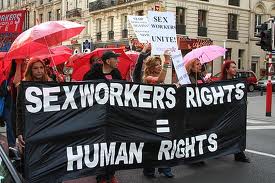
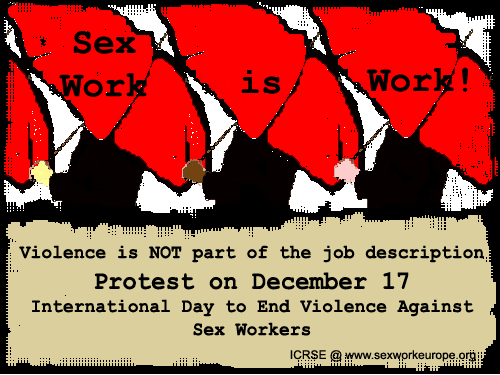
For the past 7 years, December 17th has been recognized by sex workers and their allies as a day to recognize that violence against sex workers is endemic to many societies. It is also a day to commit energy toward making the cultural and working conditions of sex work safer. This is very different from simply telling people not to be sex workers (Imagine criminalizing the mining industry and jailing miners as a way to protect them; imagine how much more dangerous the mining industry would be if there were no health and safety regulations in place). The work of making any cultural and work environment safer for all is to recognize the right of individuals to be agents over their own bodies, to achieve personal livelihood, and to live a life free of terror.
This work, on a larger scale, also entails the recognition of the potential social value of sex work. This does not mean that all sex workers love their job, any more than all miners love theirs; what it does mean is that it is not enough to listen only to the tragic stories (reaffirming the notion that people involved in this work must be punished), while covering ones eyes and ears to other stories (which suggest that the work is not intrinsically dangerous, evil, or otherwise worthy of punishment). As academics, policy makers, and citizens we don’t have to personally become providers or consumers of sex work (or the mining industry) to have compassion. But we must take seriously people’s claims that they, their families, and their communities can benefit economically or socially from their work, and ask what it is that we can do to make their work safer.
This year’s Dec. 17 vigils, at least in the US, will be tinged with a new sense of urgency given the recent discovery of 4 bodies in Long Island, some or all of whom were women sex workers. (See NBC news link here). Targeted violence on this scale is a form of war, of terrorism, of outright hatred for a particular category of people. Can you imagine the media and political response if the bodies were of children, or of politicians, or a particular ethnic or religious group?
Today, and all this week, a number of progressive media outlets are featuring stories about the importance of Dec. 17 anti-violence vigils. Rh Reality Check is featuring a series of stories, one of which I’m reposting in full below: “Treating Violence Against Sex Workers as a Hate Crime” By Rosie Campbell and Shelly Stoop. (Other links also provided at the end of this article).
—————–
Treating Violence Against Sex Workers as a Hate Crime
By Rosie Campbell and Shelly Stoops
December 16, 2010 – 6:40pm
Published under: Women’s Rights | End Violence Against Sex Workers Day 2010 | England | Prostitution | sex work
Rosie Campbell and Shelly Stoops’s blog | Printer-friendly version | Login or register to post comments | ShareThis
This article is part of a series published by RH Reality Check in partnership with the Global Network of Sex Work Projects (NSWP) to commemorate the International Day to End Violence Against Sex Workers, December 17th, 2010. It is excerpted from Research For Sex Work 12, published 17 December 2010 by the NSWP, an organization that upholds the voice of sex workers globally and connects regional networks advocating for the rights of female, male, and transgender sex workers. Download the full journal, with eight more articles about sex work and violence, for free at nswp.org. See all articles in this series here.
Over the last decade sex work projects, the police and other agencies in Liverpool (United Kingdom) have been addressing violence against sex workers, encouraging reporting and taking crimes committed against sex workers seriously. In recent years Armistead Street, a sex work outreach and support project in Liverpool, has worked with Merseyside Police to continue to build on this legacy. This partnership has led to unprecedented increases in the number of street sex workers reporting crimes committed against them to the police, the number of active investigations of such crimes, and the numbers of people being charged, brought before the courts and convicted of crimes. Key to this success is the practice in Liverpool of treating crimes against sex workers as hate crime.
Liverpool is a city in the North West of England. The majority of women involved in street sex work in the city experience problematic drug use, with high levels (over 90 percent) of heroin and crack cocaine use. They also experience social exclusion including homelessness. Research in the city, and frontline project work, has for over a decade reported high levels of violence against street sex workers, 80 percent of them reporting they have experienced violence in the course of their work. These studies showed there was noticeable under-reporting of incidents to the police. The key reasons identified for not reporting were: sex workers believing they would not be taken seriously or would not be treated with respect by the police; a lack of trust in the police; poor previous experience with law enforcement; fear of revenge from attackers; fear of arrest for soliciting; anxiety about court cases and fear that involvement in sex work would become public.
Groundbreaking Move
Liverpool has had more than its share of tragic loss of lives amongst sex workers in the UK, with eight women who were involved in street sex work murdered since 1990, of which five cases remain unsolved. The most recent murder of Anne Marie Foy in September 2005 led to a debate in the city about how to manage street sex work, resulting in strong support to address violence against street-based sex workers. During the murder investigation, Merseyside Police acknowledged that relationships with agencies and sex workers were ad hoc, that there were difficulties contacting and maintaining contact with vital witnesses, and that there was a continued lack of trust in the police amongst sex workers.
In a groundbreaking move in late 2006 Merseyside Police agreed a policy that all crimes against sex workers be treated as hate crime. They were the first, and at the time of writing, the only force in the UK to do so. In this country, the hate crime model has been developed for dealing primarily with racially motivated and homophobic crime. In policing policy, if a reported crime is classified as a hate crime, it will receive an enhanced response with more attention and police resources being allocated to it. The hate crime approach implicitly recognises that violence against sex workers is shaped by discrimination and attitudes of hostility and prejudice.
In the same period of time, Armistead Street was the first sex work project to secure government funding for an Independent Sexual Violence Advisor (ISVA) located within the project.2 ISVA’s were introduced as part of the national government strategy to address rape and sexual abuse. Armistead Street’s ISVA is a specially trained member of staff who co-ordinates initiatives in the sex work project to address violence and safety, liaises with the police, offers training and awareness-raising sessions to other agencies and last but not least, supports sex workers who have been victims of crime to ensure all their holistic health and social care needs are met. This includes advocacy and intensive support if cases are progressing through the criminal justice system. Key concerns in this regard have been, first, to improve the quality of evidence, and second, to support sex workers in getting their cases to court. The approach used is victim-centered and low-threshold (see below). The ISVA works closely with the Sexual Assault Referral Centre (SARC) which opened in Liverpool in 2008. SARCs are regional centres that provide holistic care – including the collection of forensic evidence – for victims of rape and other forms of sexual violence.
Ugly Mugs
One of the tasks of the ISVA is to coordinate the ‘ugly mugs’ (‘bad date’) scheme. After each incident, sex workers are encouraged to make formal reports to the police as well as fill out an ugly mugs form. An ugly mugs report describes the incident, characteristics of the perpetrator, e.g., clothing, hair, accent, approximate age and height, and descriptions of his car or the location where the incident took place. Not only does the report serve to warn other sex workers of dangerous individuals, it can also be (anonymously) shared with the police to aid investigation and in some cases, support evidence.
In 2007/2008, 65 ugly mugs reports were made to the project, 2 for robbery, 29 for rape and other serious sexual offences, and 16 for assaults. The rest covered a range of offences such as being held against one’s will, verbal abuse and threats of violence. Ugly mugs reporting forms and processes have been developed with advisory input from Merseyside Police. There is a formally agreed process for the processing and analysis of ugly mugs reports by the police. For instance, the information is used in the official investigation of the incident it reports on, as well as shared with police officers in areas where street sex work takes place. Further, the forms are used for monitoring and analyzing incidents related to sex work.
Supporting Cases Getting to Court
Armistead Street has adopted an approach which puts the victim of violence first and tries to eliminate all barriers that make it difficult for him or her to access justice. For instance, early evidence can be taken by outreach staff (including the ISVA), who carry early evidence kits. Further, the ISVA can be present when a police officer interviews a victim, using video. This interview can also take place at the project’s premises as Armistead has its own video interview equipment. Normally, two police officers will conduct such interviews but as the ISVA has had specialist training from the police on interviewing vulnerable witnesses, she can replace one of them. Outreach staff assist victims of violence from clients in filling out an ugly mugs form.
If a sex worker wants to press charges, the ISVA will support him or her in filing an official complaint with the police. If a particular case is going to court, the ISVA will apply early for ‘special measures’, so witnesses can give evidence from behind screens or via a video link to protect their identity and avoid having to face their attacker at court. She will also work with the courts to avoid where possible that the victim has to spend a long time at court waiting to give evidence. If someone is on a methadone prescription, the ISVA can liaise to arrange for people to collect the medicines before court and if someone is homeless, accommodation can be arranged during trials. The work in Liverpool has seen tangible outcomes. The proportion of sex workers giving permission to share their ugly mugs form and full details with the police and willing to make a formal report, increased almost fivefold, from about 20 to 95 percent. Of the eighteen people who have been brought before the court since 2006, fifteen have been found guilty, a conviction rate of 83 percent. Since the Sexual Assault Referral Centre and Rape Support Unit opened, 98 percent of all sex workers experiencing sexual offences have gone to the SARC for full forensic medical examination. No sex workers supported by Armistead have withdrawn their formal statement or refused to proceed. News of success travels fast. Recently, Armistead Street’s example has been followed by other organisations: a further five sex work projects secured funding for an ISVA located in their service in 2010.
Gaining Trust
Building confidence in the police amongst sex workers and gaining trust has been very important in creating these achievements. Strong partnership work with ongoing liaison and communication between Merseyside Police, the sex work project and sex workers has been key. Since 2006, the police have appointed a sex work liaison officer. Linked to this has been a commitment to getting the message out that crimes against sex workers will not be tolerated in the city, hence challenging attitudes that such violence is acceptable. For instance, senior police officers have engaged with the media to communicate the message that sex workers are part of the community and will get the full protection of the law.
The police have also worked at building trust with sex workers providing ‘friendly faces’, routes for reporting, and information and reassurance via leaflets and the media, as well as utilising the intermediary role of the Armistead Street project. Information about cases brought to court and the successful outcomes are shared with sex workers via outreach work and mechanisms such as the ugly mugs newsletter.
All this has seen a real shift in the relationship between street sex workers and the police in terms of violence against sex workers. Many sex workers now expect that the police will take them seriously and many will independently report to the police as well as to the project, through ugly mugs forms. There has been a real shift in balance within wider policing policy of street sex work. The safety of sex workers and collecting evidence are now priorities, and whilst a degree of law enforcement in response to community complaints regarding soliciting does take place, there is continuous contact with Armistead Street. The police now consider the impact of each planned action on the safety of sex workers. Sex workers are also encouraged to work in areas covered by video surveillance for their security.
There is still a long way to go. For example, the police policy applies to sex workers in all sectors of the sex industry but proactive work building trust with indoor sex workers is underdeveloped. Nevertheless, the work in Liverpool shows that real in-roads can be made into enabling reporting, investigating and prosecuting crimes against sex workers if there is commitment and resources are dedicated to do this. Indeed this can happen even within a challenging and problematic framework in which street sex work is criminalised. This highlights that addressing actual violence against sex workers needs to be a strategic and operational priority in all legal settings.
The following update on the Uganda anti-gay movement comes from the Box Turtle Bulletin:
——————
American Evangelist To Rally Against Gays In Uganda
Jim Burroway
April 21st, 2010
The month of May will be a very dangerous time to be gay in Uganda, as Pentecostal churches there gear up for a series of crusades, marches and rallies commemorating the 50th Jubilee of the Pentecostal movement there. An anonymous BTB reader in Uganda reports that television is already carrying commercials advertising at least one event, a three-day conference to be held at the sports grounds at Makerere University (Uganda’s largest institution of higher learning) with a march and rally to be held the following Friday, May 7.
In the midst of that expected furor steps yet another American anti-gay extremist, Lou Engle of The Call, who has announced plans to hold a rally in Kampala on May 2, also at the Makerere University Sports Field. The Call Uganda’s web site gives these reasons for holding the rally:
It is intended to awaken and revive the young and the old, men and women, church and family, government and the public and to fight vices eating away at our society. We shall all join our hearts across tribal, political, denominational, and generational boundaries, to cry to God to help us with the challenges in our country such as:
The heightened political tensions and wrangles in the country, especially as we go towards the 2011 general elections
The increasing level of social evils in our society, some which are threatening our values and lifestyles e.g.
Witchcraft and human sacrifice
Homosexuality and increased immorality
Disasters and the resultant suffering of the people
The decay of morals and infrastructure of our city Kampala
Engle’s emotionally-charged extremism and violence-laden rhetoric has become quite familiar here in the U.S. Engle believes that gays are possessed by demons, and was part of a major rally for Prop 8 in San Diego where he called for Christian martyrs. Casey Sanchez, of the Southern Poverty Law Center describes one talk that Engle gave this way:
“I believe we’re headed to an Elijah/Jezebel showdown on the Earth, not just in America but all over the globe, and the main warriors will be the prophets of Baal versus the prophets of God, and there will be no middle ground,” said Engle. He was referring to the Baal of the Old Testament, a pagan idol whose followers were slaughtered under orders from the prophet Elijah.
“There’s an Elijah generation that’s going to be the forerunners for the coming of Jesus, a generation marked not by their niceness but by the intensity of their passion,” Engle continued. “The kingdom of heaven suffers violence and the violent take it by force. Such force demands an equal response, and Jesus is going to make war on everything that hinders love, with his eyes blazing fire.”
Engle has also said, “The most ‘dangerous terrorist’ is not Islam but God. One of God’s names is the avenger of blood. Have you worshiped that God yet?”
Last year, a BTB reader shared with me his experience of attending a Call rally in Nashville in 2007. Tyler (his last name is being withheld) remembers that day vividly — July 7, 2007 (07/07/07 was their “Holy Date”):
I went to Nashville and the day was a whole day of fasting and prayer to “turn the nation back to God.” Their tactics include, in my opinion, a lot of manipulation using emotionally-driven songs, yelling, dancing, and the like to get individuals charged up.
The Call Uganda’s web site lists the following endorsements by Ugandan Christian leaders:
Bishop Simon Peter Emiau – Chairman Evangelical Fellowship of Uganda;
Archbishop Luke Henry Orombi – Archbishop of the Anglican Church of Uganda;
Pastor Jotham Mutebi – Chairman Full Gospel Churches of Uganda;
Pastor Titus Oundo – Chairman Deliverance Churches of Uganda;
Apostle John Mulinde – World Trumpet Mission, which also has extensive staff in Orlando, Florida under International Director Mark Daniel.
Apostle Jackson Ssenyonga – Christian Life Ministries;
Pastor Gary Skinner – Watoto (formerly Kampala Pentecostal) Church. An elder of that church is Stephen Langa, who helped to organize last year’s anti-gay conference featuring three American anti-gay activists. That conference delivered the “nuclear bomb” that served as a precursor and catalyst to the draconian Anti-Homosexuality Bill that is now before Uganda’s Parliament.
Apostle Joseph Ssewadda – General Overseer of Born Again Federation;
Peter Asiimwe – Uganda Evangelical Mission Agency;
Pastor Fred Wantaate – Coordinator for Pentecostal Golden Jubilee – Full Gospel Church.
The next several weeks will prove to be exceedingly dangerous for LGBT Ugandans. Last year’s conference led to a massive public anti-gay pogrom that included a public vigilante campaign in a major Ugandan tabloid and various FM stations in Kampala in which gay people were forcibly outed. We have reports that several people lost their jobs and were abandoned by their families as a result. Several were arrested, and there are reports of at least one death in the eastern city of Mbale.
Frank Mugisha, president Sexual Minorities of Uganda, said, “Gay people are already fleeing their homes and have to move from house to house because of threats to their lives. Americans need to stop Lou Engle from coming to Uganda.”
When we first reported on the anti-gay conference last March in Uganda, we warned that it was a very dangerous move. But even knowing and warning of those dangers, we had no idea that it would ultimately lead to a proposal to put gay people to death under certain circumstances.
After that experience, there now can be no excuse. We know what can happen following rallies like this one. And whatever happens as an aftermath of this rally, no one can say they could not predict what would happen next. Given the virulent hatred openly expressed by ordinary Ugandans and their religious leaders toward the gay community, Engle’s rally is a dangerous and reckless escalation.
——————————————————–
I’d like to know this: at what point will other countries began offering political refuge for gay Ugandans? At what point will there will be airlift evacuations? When will American people of faith intervene with these extremist religious leaders?
Last week Iceland made history by becoming the first European nation to abolish strip clubs — made effective by passing a law that makes it illegal to profit from the nudity of employees. The law will take effect on July 1, 2010. What is perhaps even more unusual on a global scale is this law is being reported as a NOT a result of religious, but of feminist influence. Julie Bindel in Guardian UK writes:
Kolbrún Halldórsdóttir, the politician who first proposed the ban, firmly told the national press on Wednesday: “It is not acceptable that women or people in general are a product to be sold.”
Bindel continues:
According to Icelandic police, 100 foreign women travel to the country annually to work in strip clubs. It is unclear whether the women are trafficked, but feminists say it is telling that as the stripping industry has grown, the number of Icelandic women wishing to work in it has not.
This news (all of it: that strip clubs will be banned and that mostly foreign women work in those clubs) came as a surprise to many including me. But then again, my only experience of that country comes from a short layover in Reykjavik a few years ago on my way to Oslo. From my window airplane seat I looked down on a landscape unlike any I’d ever before witnessed, a fascinating result of glaciers, earthquakes, and volcanic eruptions. At the Reykjavik airport in my jetlagged state, I looked for Bjork and wondered if perhaps the plane had mistakenly landed on the moon.
"The Road Home to Reykjavik" wallpaper, from HDR Landscape Wallpapers
Now that Iceland is back on my radar (and I’m not currently jetlagged), I thought it would be a good time to take a better look and to investigate how and why strip clubs are being banned on this North Atlantic island. Bindel’s Guardian UK article credits the triumph of feminism, calling Iceland “the world’s most feminist country.” I’m intrigued by what does appear to be a very strong showing of feminist abolitionist (anti-sex work) sexual politics. But I’m also curious about how the demographic context — including the sex and race/ethnicity of migrant laborers — may be influencing this current abolitionist stance.
For some feminist commentators these cultural and structural factors explain how strip clubs became ousted from Iceland. After all, aren’t all feminists and lesbians opposed to the commercial sex industry?
Because the answer to this question above is “no,” I’ll move to another line of inquiry: Might other, demographic, variables also be encouraging this abolitionist stance?
Let’s look at who lives in Iceland. According to Statistics Iceland, the population of Iceland has decreased for the first time since 1889:
On 1 January 2010 the population was 317,630, compared with 319,368 1 January 2009. The population decrease is due to a record negative net migration in 2009, while the natural increase (births less deaths) was 1%.
In other words, people are leaving Iceland, and those who are staying aren’t having many babies. The TOTAL population of Iceland is LESS than the population of most major US cities, and comparable to the population of many Carribbean and South Pacific islands (see list of world populations by country here). The vast majority of people in Iceland live in the Reykjavik area (120,000 in the city proper.)
(Side note: Reykajavik is a small town. It’s not usually a good idea to work as a stripper in the same small town where you grew up. Things quickly get uncomfortable when your brother, uncle, friend, former coach, and dad show up. If you are an Icelandic woman who wants to be a stripper, go elsewhere!)
Given Iceland’s decreasing population, it makes sense that immigrant workers may be needed in many occupational sectors. Indeed, there has been an increase in citizenship granted to immigrants:
“The largest number of those who are granted Icelandic citizenship come from Europe. In 2009 the majority of those originated from Poland (153) and Serbia (76). Asians are the second largest group, with 106 who had formerly a Philippine citizenship and 51 Vietnamese.” (Statistics Iceland).
Click on the graph to see a larger version
This pattern of immigration from Europe and Asia is not new, at least within the past few decades. As seen in the graph to the right, since 1991 there have been relatively stable (and low) patterns of immigration from Europe, Asia, the US and Africa. What has changed however since 2001 is an increase of immigrants from Europe.
It is interesting that in the news coverage of the strip club ban (which has mostly replicated the Guardian UK article quoted above), the topic of “trafficking” is mentioned. What is curious is that there does not appear to be any direct evidence for women being trafficked (forced) in to Iceland to work in strip clubs. If there is, it’s not being reported. Instead, readers are left with comments such as Julie Bindel, who writes:
“I have visited a strip club in Reykjavik and observed the women. None of them looked happy in their work.”
Not exactly reliable evidence of trafficking.
And so I am left once again with the suspicion that this ban isn’t about protecting workers from being trafficked. It’s about the tensions that arise over immigration; it’s about a conflict over the meaning(s) and use(s) of sexuality; it’s about not recognizing sex work as labor, and hence not assuming that sex workers deserve basic labor rights. It’s also about a lack of reliable research which, at minimum, investigates the experiences of people in the industry. Visiting a strip club and thinking that people don’t “look happy” doesn’t count.
Some people, the majority perhaps, cannot imagine ever choosing to be a sex worker. Since they cannot imagine it, they assume that they must be forced into it (and thus either must be saved or punished). Some people also believe this about gay people. It is no coincidence that the GLBT movement has long fought for freedom from arrogant attempts to “save” and/or punish them. Thus I find it more ironic than understandable that a lesbian Prime Minister has decided to outlaw the sexual and occupational choices of others.
—
For more reading about the misdirected politics of anti-trafficking and anti-sex work policies, see Laura Austin’s recent article on the South Africa preparing for the World Cup.




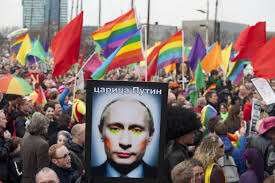
 the American Sociological Association have roundly condemned Regnerus’ study, including but not limited to the 42 page Supreme Court brief in support of overturning the Defense of Marriage Act (DOMA).

 cohabitation” mainstream Mormon religious leaders were not happy. The challenge to the law was brought by the Reality TV star Kody Brown who stars along with his four female partners (and 17 children) in the reality TV show “Sister Wives.” The Brown family successfully argued that the Utah cohabitation law violated their rights to privacy and to religious freedom.
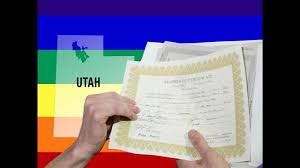 While same-sex couples flooded the county clerk’s office seeking to be married, movements to reverse both legal the Utah polygamy and same sex marriage decisions are underway. We’ll be following both stories as they progress in 2014.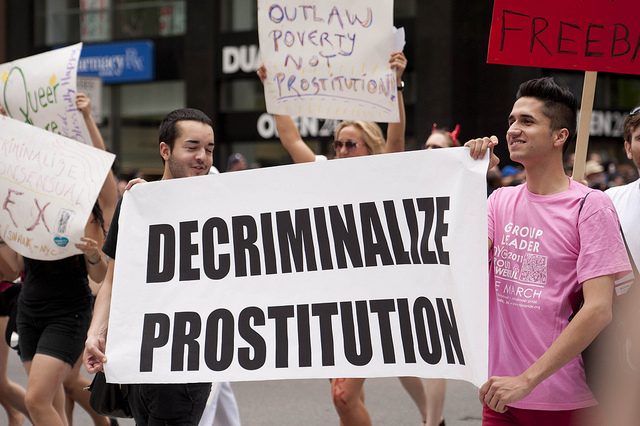





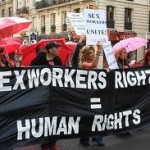


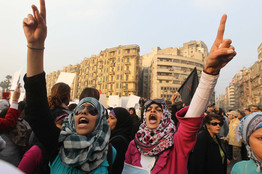
 “As a scholar who is committed to ‘public sociology,’ that is, sociology that aims to transcend the academy and reach a wider audience, I couldn’t be anything but pleased that policy implementers have given attention to my work,” she writes. “Unfortunately, they seemed to have also misinterpreted the work.”