tron

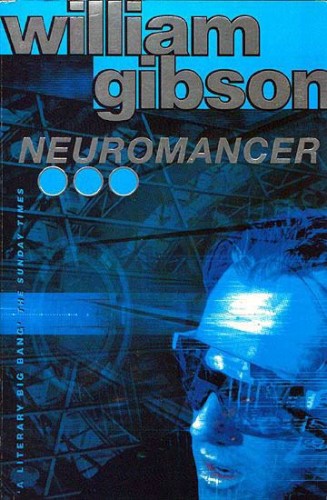
The words and ideas we use to make sense of the Web owe as much to science fiction (particularly, the cyberpunk genre) as they do to the work of technicians or to rigorous scientific inquiry. This by no means a bad thing; the most powerful of such literary works call upon our collective imagination and use it to direct society to prepare for major transformations looming on the horizon. William Gibson’s (1984) Neuromancer was, no doubt, one such work. Neuromancer features  the exploits of a “console cowboy” (i.e., a computer hacker) named Case, who travels across a dystopian world serving a mysterious employer. The work is notable for popularizing the term “cyberspace,” which Gibson coined a couple years earlier in a short story called “Burning Chrome.”

In Neuromancer, Gibson described cyberspace as a”consensual hallucination” and more specifically: “A graphic representation of data abstracted from the banks of every computer in the human system. […] Lines of light ranged in the nonspace of the mind, clusters and constellations of data.” Rather than just staring into a computer screen, hackers “jack in” directly interfacing with these visual representations of data in their minds. The images described here are reminiscent of those portrayed in movies such as Tron (1982),  Hackers (1995), and, to a lesser extent, The Matrix (1999). more...
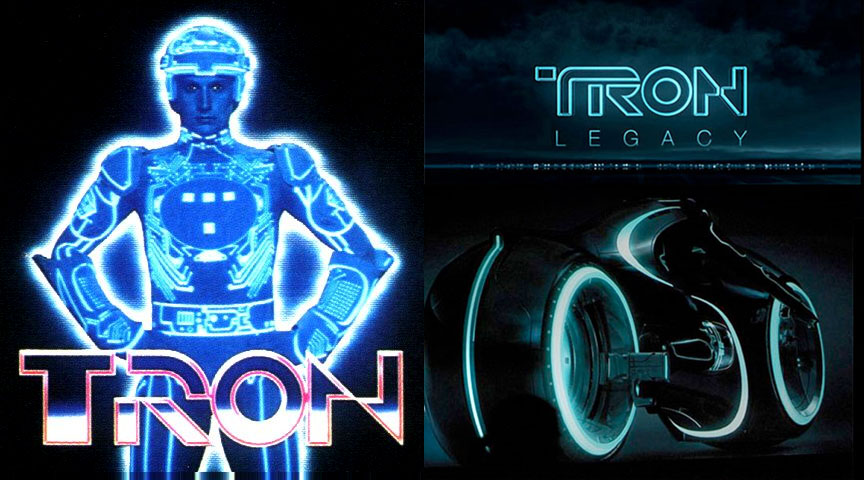
Cyborgology is sponsoring a local meetup event at PJ’s place on Wednesday, June 1st.  We’ll be enjoying a Tron Double Feature.  Use this link to contact PJ for details: http://is.gd/n5WwyE.

Last week, I posted a review of the film Tron: Legacy (2010) on this blog. This week I have a review of Ondi Timoner‘s wonderful 2009 documentary We Live in Public. This review is found in the latest issue of one of my favorite journals, Surveillance and Society.

The issue is here. Free .pdf download of the review here.

I explore theoretical connections between the movie and the rise of social network sites such as Facebook. I look at privacy, publicity, surveillance and our increasingly augmented reality. Many of the points are elaborations of topics posted by myself and others on this blog. It is particularly exciting to see these theoretical ideas travel so smoothly across mediums such as film, radio, the blogosphere and academic journals.

Yes, even a CGI-filled big-budget glowing Disney spectacle can provide opportunity for theorization. Of the recent Internet-themed blockbusters – namely, Avatar (2009); The Social Network (2010) – Tron: Legacy (2010) best captures the essence of this blog: that the digital and the physical are enmeshed together into an augmented reality.

This seems surprising given that the film is premised on the existence of a separate digital world. Indeed, the first Tron (1982) is all about a strict physical-digital dualism and the sequel plays on the same theme: physical person gets trapped in a digital world and attempts to escape. However, Tron: Legacy explores the overlapping of the physical and digital. The story goes that Flynn, the hero from the 1982 film, develops a digital world that does not have the imperfections of its physical counterpart. His grand vision was to gloriously move humanity online. Simultaneously, the beings in the digital world want to export their perfection out of the digital world and to colonize the offline world, removing all of its imperfections (i.e., us). Flynn comes to realize that enforced perfection (read: Nazism) is unwanted. Instead of a highly controlled and orderly universe, what has to be appreciated is what emerges out of chaos. And it is here that the film makes at least two theoretical statements that are well ahead of most movies and popular conceptions of the digital.

First is the tension between more...