

the real

A 1916 American Mug Shot

Visual technologies continue to play an increasingly key role in strategies for monitoring and surveillance in modern capitalist societies in crime prevention and detection, and the apprehension, recording, documenting and classification of criminals and criminal activities. Still and moving ‘visual evidence’ is stored in state archives, used in courtrooms as evidence, and disseminated across almost every major media platform: from the printed press to the World Wide Web.

The relationship between visual technologies and the criminal justice system can be traced back to the emergence of photography and the invention of the camera as a tool for documenting ‘reality’ in the nineteenth century. The camera was widely believed, even more so than today, to be able to objectively and truthfully record social reality. A photograph was perceived to be like a window on the world – a mechanically produced, impartial and literal representation of the real world. more...
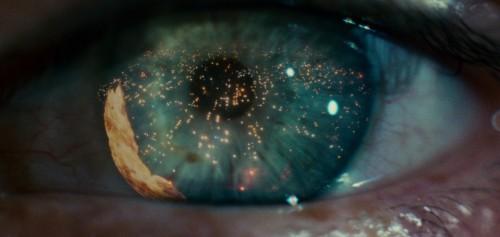
Last week, I wrote a piece entitled “There is no Cyberspace,” where I argued the today’s World Wide Web bears little resemblance to the thing that cyberpunk authors like William Gibson imagined as cyberspace. I explained that Gibson defined cyberspace as a “consensual hallucination” and proceeded to argue that the Web was neither consensual nor hallucinatory. I noted that even Gibson himself acknowledges that the cyberspace concept is outmoded—that, rather than being sucked into the world behind the screen, computers have “everted,” overlaying the physical with the digital. I concluded that the term “cyberspace” confounds our ability to makes sense of a social Web that has very real consequences in our lives because it evokes images of fantastical space apart from reality that we can enter and exit at our leisure.  The piece received thorough feedback and critique in posts by Mike Bulajewski (on his Mr. Teacup blog)  and Jeremy Antley (on his Peasant Muse blog), which has encouraged me to further develop my argument.

My claim that the “cyberspace” misleadingly evokes elements of fantasy left room for possible confusion insofar as I failed to define what I meant by fantasy. Bulajewski, for example, attempted to invert my argument, making a sort of post-Modern claim that “there is only cyberspace” because both our individual psyches (à la Sigmund Freud) and our collective consciousness (à la Emile Durkheim) mediate and interpret experience through the lens of our history, memory, traumas, etc. As Immanuel Kant (and his sociological successor Georg Simmel) explained long ago, there is no access to “real,” unmediated experience—all subjective input is filtered through the pre-existing structures of our consciousness. Bulajewski wants to call all experience “fantasy” because it is historically and culturally relative. Perhaps this is an important distinction in an arcane philosophical context, but I’m rather more concerned with what people actually mean when they say “real” in the context of the Web, as in: “real” life vs. cyberspace. more...

photo by John Hill

For all those folks whose only impediment to climbing Mount Everest has been their inability to Tweet updates while on the journey: your excuses are now dried up. Representatives from Ncell, Nepal’s main mobile network, announced recently that they have installed cellular service that reaches all the way to the top of Mount Everest, the world’s highest point. According to the Reuters report:

“The installation could help the tens of thousands of mountain climbers and trekkers who visit the Mount Everest region in the Solukhumbu district every year. They have to depend on expensive satellite phones to remain in touch with their families as the remote region lacks proper communication facilities.”

This development has interesting implications for the Cyborgology blog’s ongoing discussion of augmented reality and the limits of material experience. When we think about the material world being augmented by virtual content, we tend to think about it in an urban context, usually in tandem with marketing or networking efforts. But how do we begin to think about augmenting the reality that exists in the remotest and most dangerous of regions, like the summit of Mount Everest?

The statistics aren’t entirely clear, but best estimates say that the number of climbers who have successfully reached the summit of Everest only goes into the low two thousands, and at least two hundred of those who have attempted the climb have perished. Most of those who the mountain has claimed remain where they died, frozen into the rock for all time. Some of those bodies are plainly visible from established routes up the mountainside, mummified by the dry air and harsh wind at that altitude. That’s some pretty real reality right there. So how augmented could it get? more...