
tea party

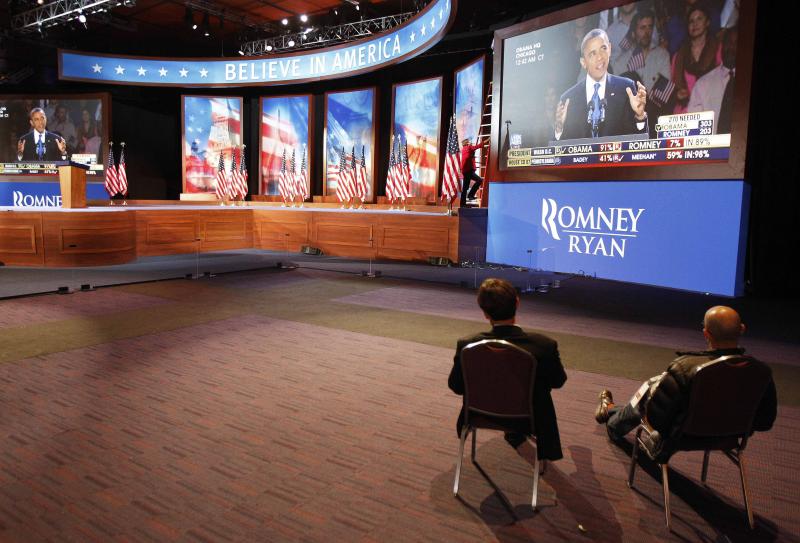
Obama Victory Speech at the Romney Headquarters. Image c/o White People Mourning Romney

In the aftermath of what both sides agree was the most substanceless presidential election in our nation’s history, some variation of the phrase “post-truth politics” has begun haunting the pages of op-eds and news show roundtables (Seriously, its everywhere. Here’s the first five that I found: one, two, three, four, five.).  To say that we live in an age of “post-truth politics” isn’t totally inaccurate, nor is it unworthy of the attention it is getting, but the discussion has yet to truly wrestle with the characeristics of commodified information. Information can be true, and it can be false, but how that information is disseminated, used, and ignored is what truly matters. Information doesn’t (just) want to be free, it also wants to be exploited. more...
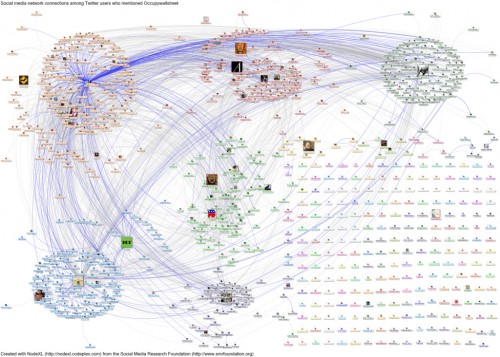
Marc Smith of the Social Media Research Foundation analyzed twitter associations of Occupy Wall Street tweets and found a viral, highly decentralized network of individuals. They compared this to the Tea Party, which had a much more centralized group dynamic.

Americans have gotten so good at being consumers that it almost seems hackneyed to acknowledge such a thing. I say “almost” because there are still wonderfully interesting things being said in some literary and academic circles that continually find deeper levels of meaning in the seemingly shallow end of the societal pool. Our near-perfect systems of consumption not only make it technically possible to exchange beautifully designed plastic gift cards,but  it makes it socially acceptable as well. A gift-giver can reliably assume that the recipient a thousand miles away has access to the same stores, with almost the exact same products. The gift-giver can also assume a certain level of homogeneity about gift-giving practices. Most of us share a set of common beliefs about what constitutes a good gift: It should, relate to our interests, be useful, carry sentimental value, reflect the nature of a relationship, provide entertainment, and/or fill a need. When you give a gift card, you are acknowledging the need or want, but allowing the receiver to specify its final material (or digital) form. This system relies on stability and uniformity to function smoothly. There must be a common culture, as well as a reliable stream of goods and services. But such stability is becoming less, and less likely. Whether it is peak energy, financial collapse, or a little bit of both- our world is becoming less predictable and the systems that rely on steady streams of capital and petroleum are breaking down. In their place, we might begin to find self-organizing systems that are not only more efficient, but also much more just forms of resource distribution. more...

Credit: Andrew Hoppin

Cyborgology editors Nathan Jurgenson (@nathanjurgenson) and PJ Rey (@pjrey) live-tweeted Personal Democracy Media’s From the Tea Party to Occupy Wall Street and Beyond: A Flash Conference. Below is an archive of the conference backchannel (also here) as well as the video from the event. more...

laptops at the #occupy protests

Mass collective action is in the air, on the ground, on the web; indeed, there exists today an atmosphere conducive for revolutions, flash mobs, protests, uprisings, riots, and any other way humans coalesce physically and digitally to change the normal operation of society. [Photos of protests around the globe from just the past 30 days].

Some gatherings have clear goals (e.g., ousting Mubarak), however. there is also the sense that massive gatherings are increasingly inevitable today even when a reason for them is not explicit (e.g., the ongoing debate over the reasons for the UK Riots or the current #occupy protests). For some this is terrifying and for others it is exhilarating. And still others might think I am greatly overstating the amount of protest actually happening. True, we do not yet know if this second decade of the 21st Century will come to be known for massive uprisings. But if it is, I think it will have much to do with social media effectively allowing for the merging of atoms and bits, of the on and offline; linking the potential of occupying physical space with the ability of social media to provide the average person with information and an audience.

For example, the current #occupy protests across the United States more...