radio

Rush Limbaugh is experiencing an advertiser exodus, and social media is playing a big part.

It’s the kind of story that writes itself. A popular media entity, on one of the oldest forms of electronic mass media, bears the brunt of activists’ Facebook wrath. It combines two old rivalries: liberals and conservatives and new media versus old media. In case you missed it, here’s the brief synopsis of events from ABC news:

Rush Limbaugh remains in big trouble. Advertisers – 11 at last count – are pulling spots off his radio talk show because of the reaction to his calling Georgetown University law student Sandra Fluke a “slut” and a “prostitute.” Opponents are mobilizing on social media for a long campaign to try to convince even more sponsors to drop his program. Ms. Fluke herself has rejected as insufficient Mr. Limbaugh’s attempts at apology

Fluke had testified before congress about the importance of “the pill” for medical uses beyond birth control. Rush concluded that she was having so much sex that she needed the American tax payer to help defer the cost of her contraceptives. (This has led to some speculation that conservatives don’t know how hormonal birth control works.) Thousands of people are organizing to get advertisers to pull their money out of Rush Limbaugh’s show, and many of them are organizing via Twitter and Facebook. Will we be subjected to another round of technologically deterministic news stories about “cyber revolution,” or are we going to have a more nuanced conversation? More precisely, does Rush have a social media problem or has he -all things being equal- just gone too far this time? more...
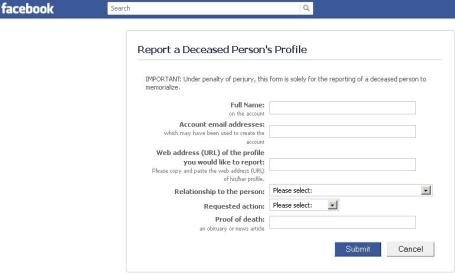
Last week, Cyborgology editors Nathan Jurgenson and PJ Rey were on WYPR (Baltimore’s NPR affiliate) talking about death and dying on Facebook. This is part of the conversation, the rest will be aired in the near future.

Click here to listen to the audio.

The Cyborgology editors were on the radio (WYPR, Baltimore’s NPR affiliate) talking about the Theorizing the Web 2011 conference. We discuss the Twitter backchannel and the notion of an augmented conference, and how Facebook is similarly a backchannel to our Face-to-face interactions. Also, conference attendee Bonnie Stewart is mentioned!

Listen to the full audio here.

The 2012 presidential race is beginning to take shape, and it is interesting to see how social media is being differently used by candidates. Obama kicked off his re-election campaign on YouTube and is at Facebook today with Zuckerberg to do a Facebook-style town-hall Q&A. Mitt Romney (R-MA) annouced his presidential bid on Twitter and Tim Pawlenty (R-MN) announced on Facebook and even created a Foursquare-style gaming layer where supporters earn points for participating in his campaign. I’ll be analyzing how social media is used throughout the 2012 cycle, but I’d like to start all of this with the question: who will be our first social media president?

FDR became the radio president with his famous “fireside chats” and JFK the television president with his image-centered debates with Nixon. Many consider Obama the first social media president due to his massive fund raising and organizing efforts during the 2008 campaign using the web (though, Howard Dean was there four years earlier – remember his use of meetup.org). However, now that Obama has been in office for more than two years, has he really used the social web effectively in interesting new ways? The New York Times states that Obama treats the Internet like a “television without knobs,” using it primarily to simply upload videos for us to consume. Obama-as-president has thus far been a Web 1.0 leader instead of embracing the Web 2.0 ethic of users collaboratively and socially creating content.

To put it another way, go to Obama’s Twitter account and ask yourself if he is really using the medium in an effective way? It is clearly more...