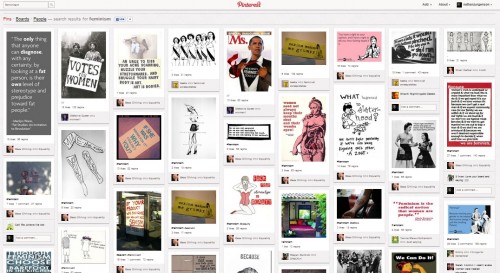
“Otherness” has long been a concern of social scientists. It refers to those who are marked, set-apart, excluded, or included with qualification. Those who fail to fit into normative conceptions of belongingness are treated, unsurprisingly, as though they do not belong. They are a polluting force, an intruder, an outsider. In this post, we discuss the dual nature of Otherness and the Othered subject, as they must navigate a social space in which they are either excluded or fetishized, but never fully integrated. We exemplify this dual nature with a discussion of new Yahoo CEO Marissa Mayer—a tech industry power player marked with femininity, amplified by pregnancy. We begin with a theoretical discussion of Otherness.
The Dirty Other
As suggested by Sigmund Freud and Marry Douglas, “Dirt is matter out of place”; it threatens the integrity of boundaries—moral, aesthetic, symbolic, experiential and otherwise. The removal or neutralization of dirt is not an easy matter for its methods of contamination are many. The most effective method of contamination occurs within and through fantasy. Case in point, the non-normative Other acquires her pollution powers from the fantastic projections of “Normals.” But in analyzing the non-normative Other, we find that not all dirt is abject. Rather than demonstrating the power of horror, dirt may acquire the quality of seduction, indulgence and exotic profundity. Of course, Kristeva notes that the abject—while maintaining its horrifying quality—is the sight of fascination. Although such a stipulation is relevant to the present discussion, we may note that said fascination need not coincide with horror. For example, the “out of place” position of non-normative others facilitates the fantastic lure of systemic escape, reparation or atonement. After all, that which is not dirt: the normative, the systemic, the homogenized, carries the weight of morality and social judgment.