
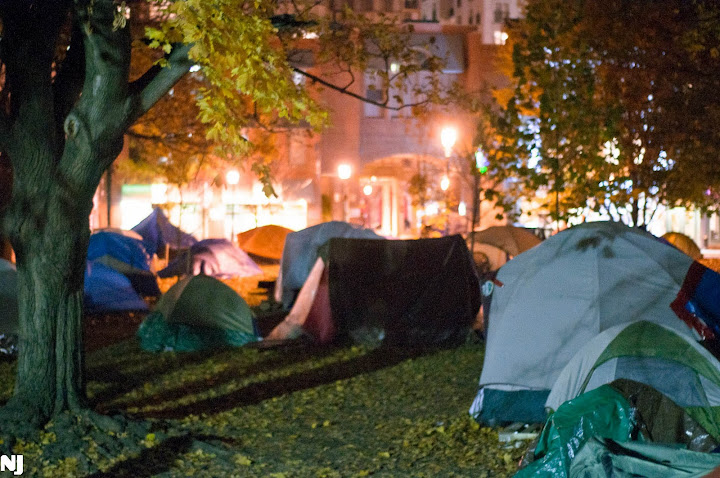
At exactly the moment when tents are disappearing, when, at least for the winter, Occupy is trading long-term omnipresence for short-term actions, Occupy DC made news for building a large, wooden, winterized structure in a city park. The Occupy DC barn fiasco can be understood, in part, as a move to double-down on the endurance of the Occupy movement precisely when it is at risk of losing that secret ingredient that made it powerful: time.
As Sarah Wenechak wrote, tents pitched in city parks come to be more than practical but also symbolic. And part of this value is that they represent time. Overall, much of the writing about Occupy has focused on space. Traditional protest actions, like marches, claim physical space but merely do so for short periods of time (especially as the march moves from location to location occupying any particular space for a only very brief amount of time). While that big umbrella term “occupy” certainly refers to space, there has also been a special focus on time.
A tent, for example, proclaims that more...