new york

The idea that technology and techno-scientific urbanization/development is making life more noisy is not new. Luigi Russolo wrote about this in his famous futurist manifesto The Art of Noise. “In antiquity,” he argues, “life was nothing but silence. Noise was not really born before the 19th century, with the advent of machinery. Today noise reigns supreme over human sensibility” (4). Russolo’s manifesto was written in 1913. “ON IT” like usual, The New York Times published a couple of stories about it last week.
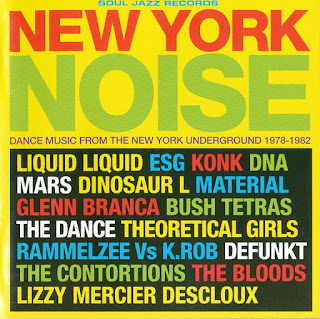
Not all of NYC’s noise was bad.

While it’s certainly not news that cities are noisy, the Times article does suggest that the politics of urban noise have changed significantly since Russolo’s time. Urban noise works (or produces political effects) differently because it is understood differently–it’s not industrial and machinic, but post-industrial and affective. more...

c/o inhabitat.com

Science and Technology studies scholars have long understood that the physical structures and architectures of everyday life both reflect and construct human values, propensities, lines of action, and behavioral and social constraints. This was famously described by Langdon Winner with regards to the segregationist role of Robert Moses’ low bridges on the New York highway system.  Recently on this blog, David Banks (@DA_Banks) wrote a beautiful essay on the technology, and technological artifacts of Troy New York.  Indeed, the architectures of spaces in which we move shape how we move and reflect normative expectations about how we ought to move. more...

Original: http://instagram.com/p/R0mwsdzeVH/

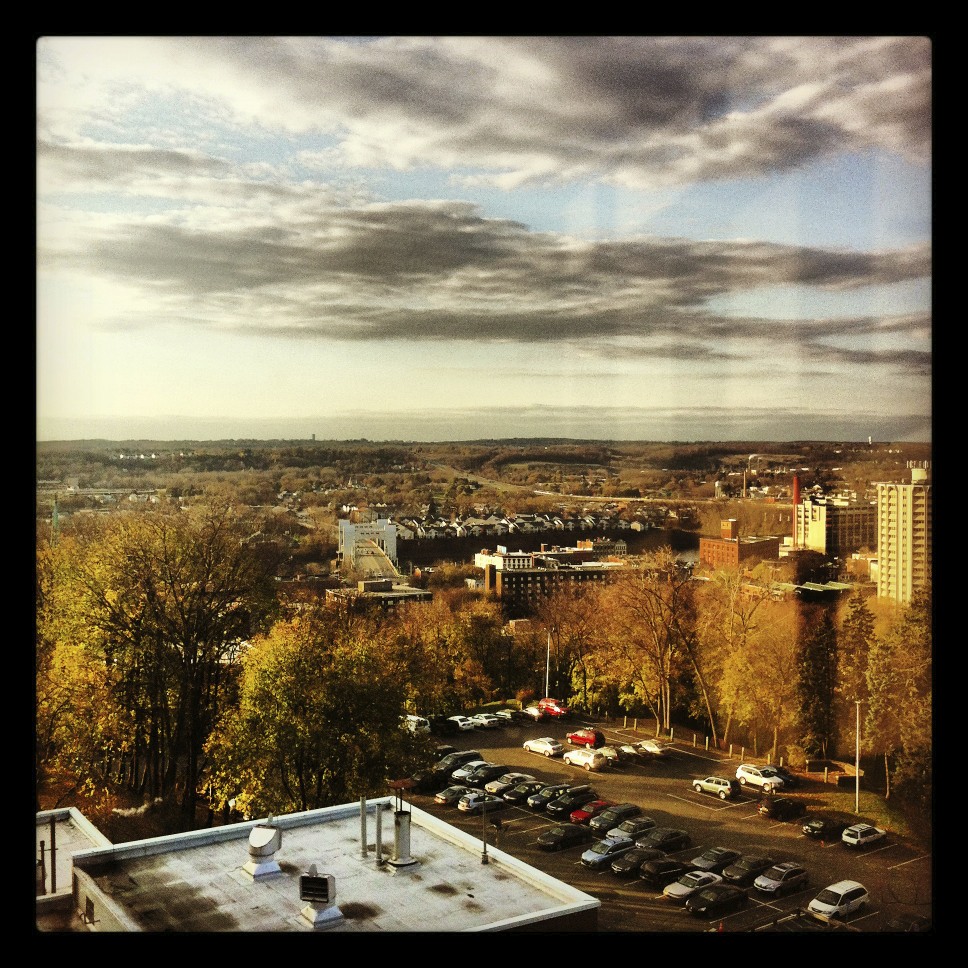
There’s nothing particularly glamorous about Troy, New York. Troy is a city that, in an alternative universe, might have been a major metropolitan region. It stumbled early though, one of the first places to suffer the oxidation of the iron belt. What it lacks in size or elegance it makes up for in internal contradictions and a special brand of awkward coquettish charm.  It is the home of Uncle Sam and the setting for Kurt Vonnegut‘s novels. Its buildings have been painted by Norman Rockwell and torn down by public officials in search of progress. The local university has one of the highest-paid presidents, but also hosts the Yes Men. My campus office is on the fifth floor of a 19th century chemistry laboratory. The former lab sits atop a steep hill, providing a view that, on clear days, can go for miles.  The view from my office (above) is an eclectic blend of multiple decades of technological achievements and blunders. Highways, public housing, suburban enclaves, and the husks of Victorian factories stand in conversation with one-another like old friends. It is obvious that they need each other.  Some get along better than others, but they would be lost without the others’ continued existence.  New technology may be introduced to us as singular entities; improvements and replacements that make the old obsolete and irrelevant. More often than not however, these technologies find themselves sitting next to veterans of past technological revolutions. I have lived in Troy for almost three years now, and each day is a lesson in the history of technology.  more...

all photos in this post by nathan jurgenson

The role of new, social media in the Occupy protests near Wall Street, around the country and even around the globe is something I’ve written about before. I spent some time at Occupy Wall Street last week and talked to many folks there about technology. The story that emerged is much more complicated than expected. OWS has a more complicated, perhaps even “ironic” relationship with technology than I previous thought and that is often portrayed in the news and in everyday discussions.

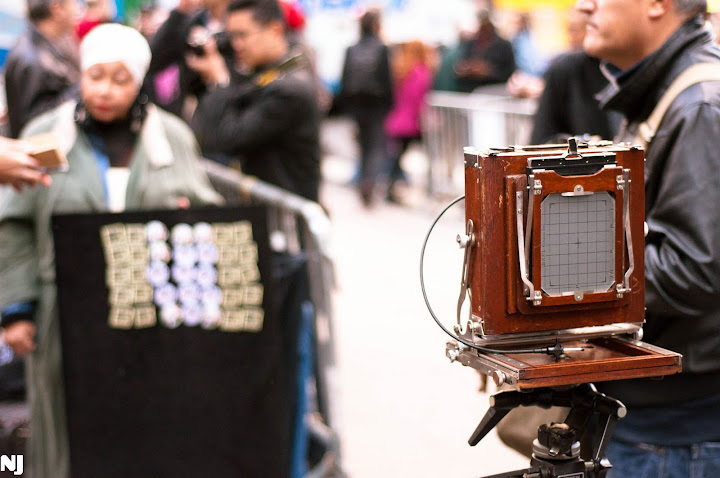
It is easy to think of the Occupy protests as a bunch of young people who all blindly utilize Facebook, Twitter, SMS, digital photography and so on. And this is partially true. However, (1) not everyone at Occupy Wall Street is young; and (2), the role of technology is certainly not centered on the new, the high-tech or social media. At OWS, there is a focus on retro and analogue technologies; moving past a cultural fixation on the high-tech, OWS has opened a space for the low-tech.

What I want to think about there is the general Occupy Wall Street culture that has mixed-feelings about new technologies, even electricity itself. I will give examples of the embracing of retro-technology at OWS and consider three overlapping explanations for why this might be the case. I will also make use of some photographs I took while there. more...

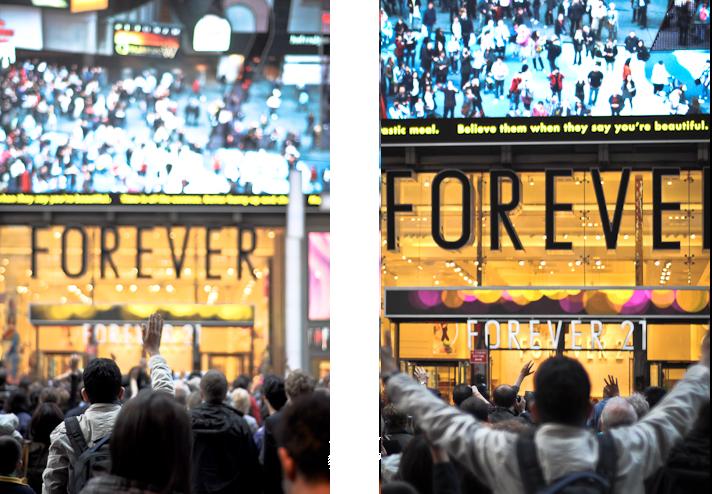
Crowds in Times Square waving at themselves on the big screen. Photos in this post by nathan jurgenson.

Something interesting has been happening in Times Square this summer. As has been occurring for a century, the crowds gather with necks perched upward looking at all the famously illuminated billboards. But now there is a new type of buzz in the crowd: they stand together facing the same direction, cameras held high and their hands waving even higher. They are not just watching celebrities or models in this the most expensive ad-space in the world; today, they are watching themselves on the big screen.

This is all part of a new billboard for the company Forever 21 currently in use in Times Square in the heart of New York City. It struck me that this billboard is nothing short of a consumer-capitalism-happening, and started snapping photos and thinking about what this all might mean. more...