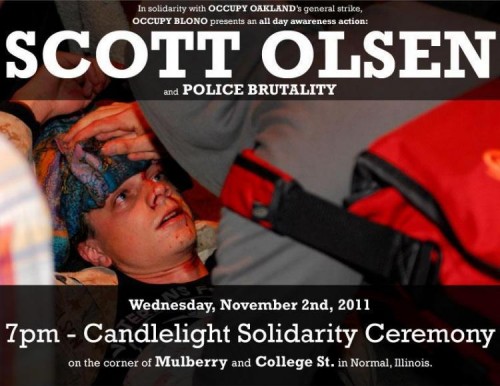
The idea that bodies are the loci and the focus for the movement of power is a well-established one in sociological thought. In this sense, bodies are inherently political things – they are not just sites for the production and reproduction of social power but they also have political significance. What they do matters; what happens to them and why matters. In social theory this is often centered around Foucauldian concepts of discipline and the production of knowledge, but for the purposes of this post I want to go back to a previous post, where I made an argument specifically about the political significance of bodies in contexts of violent protest:
[B]odies have symbolic weight and power, and often they have the most symbolic weight and power of any other part of the movement. A dramatic flush of international outrage was generated around the film of Neda Agha-Soltan bleeding to death in a Tehran street, but it was the physical suffering and death of her physical body that generated that rage. Outrage grew exponentially out of the footage and images of Lt. John Pike pepper-spraying seated UC Davis students, but again, that outrage was generated by and situated around the physical suffering of physical bodies.
It’s important to emphasize the aspect of physical suffering in itself; the body carries political, discursive significance not only when it is intact but when – sometimes especially when – it is in the process of being damaged and destroyed. And the context of this damage and destruction – the circumstances under which it occurs – is part of what imbues the body with its significance and alters what nature it already has.