
middle east

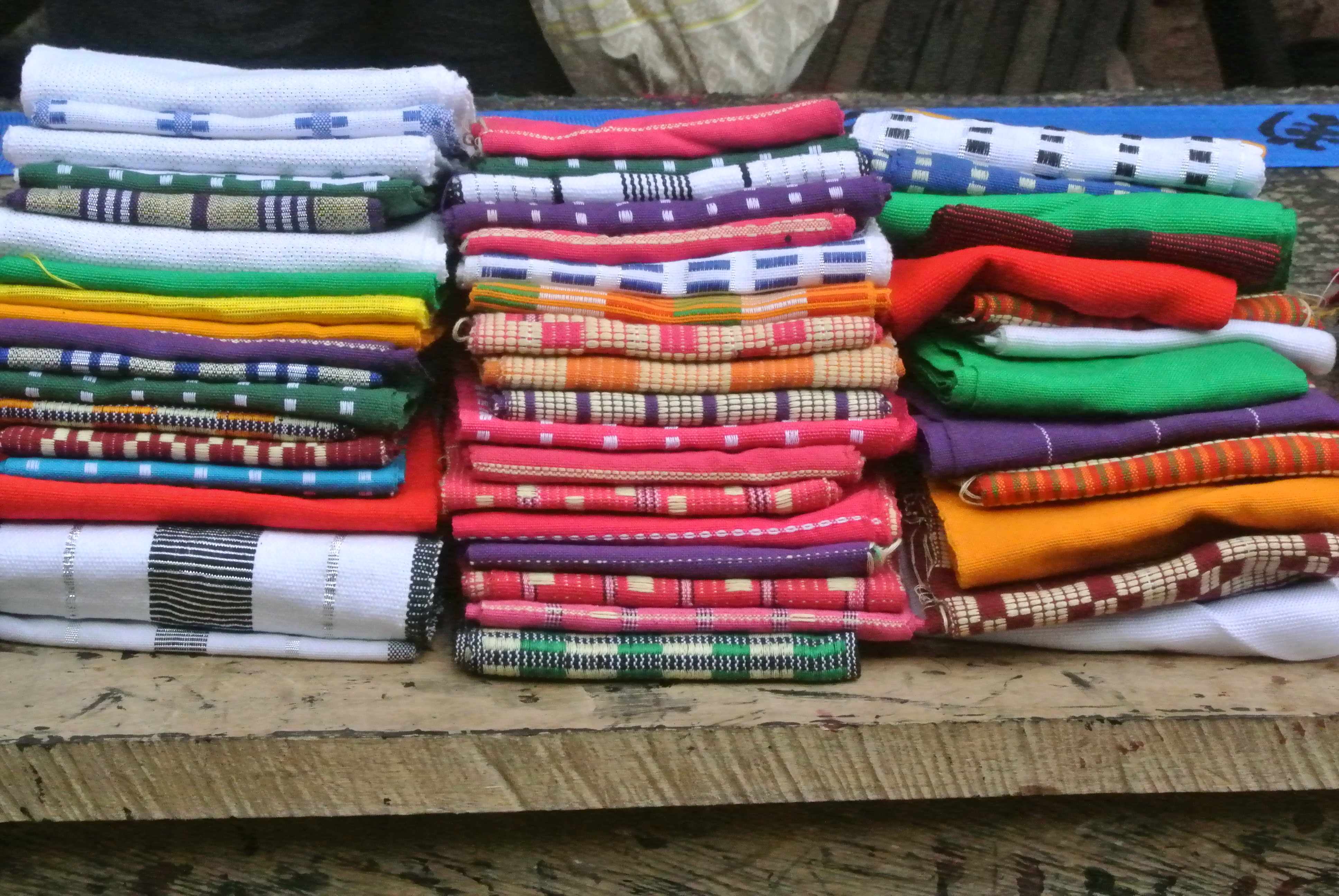
Stacks of Kente and cotton cloth sit in piles, waiting to be stamped with Adinkra patterns. Note the “pixelated” patterns in the center stack.

In part 1 I opened with a run down of the different kinds of “digital divides” that dominate the public debate about low income access to technology. Digital divide rhetoric relies on a deficit model of connectivity. Everyone is compared against the richest of the rich western norm, and anything else is a hinderance. If you access Twitter via text message or rely on an internet cafe for regular internet access, your access is not considered different, unique, or efficient. Instead, these connections are marked as deficient and wanting. The influence of capitalist consumption might drive individuals to want nicer devices and faster connections, but who is to say faster, always on connections are the best connections? We should be looking for the benefits of accessing the net in public, or celebrating the creativity necessitated by brevity. In short, what kinds of digital connectivity are western writers totally blind to seeing? The digital divide has more to do with our definitions of the digital, than actual divides in access. What we recognize as digital informs our critiques of technology and extends beyond access concerns and into the realms of aesthetics, literature and society. I think it is safe to say that most readers of this blog think they know better: Fetishizing the real is for suckers. The New Aesthetic, a nascent artistic network, is all about crossing the boarder between the offline and the online. Pixelated paint jobs confuse computer scanners and malfunctioning label makers print code on Levis. The future isn’t rocket-powered, its pixelated. Just as the rocket-fueled future of the 50s was painstakingly crafted by cold warriors, the New Aesthetic of today is the product of a very particular worldview. The New Aesthetic needs to be situated within its global context and reconsidered as the product of just one kind of future. more...


Given the recent events in the Middle East (and elsewhere, as protests continue in Wisconsin and ominous rumblings begin to issue from the direction of China) a great deal has been written in the past few weeks on the topic of social media and social movements/revolutions. Some of it has been a bit frothy, while much of it—including this, this, and this commentary on the Cyborgology blog—has been very insightful. However, while commentators have come at this issue from various angles, there hasn’t yet been much in the way of writing that seeks to wed an analysis of these forms of social action with existing theories of social movements and contentious politics.

The speed at which events have moved is a point on which a number of people have remarked. The wave of political anger expressed as protest that spread from Tunisia to Egypt, Yemen, Libya, Bahrain, and points beyond has been likened to dominoes falling—or, and this is more appropriate to the point I want to make, to the spread of a contagious disease. Democracy, it has been said, has “gone viral”. more...

Zygmunt Bauman (pictured above) provides a famous liquidity metaphor that I find infinitely useful for thinking about the Internet. My previous post on Wikileaks and our Liquid Modernity outlins how the Internet and digitality are making information more fluid, nimble and difficult to contain. Using the liquidity metaphor, I argue that WikiLeaks is an example of increasingly liquid and leak-able information.

I further argue that “heavy” structures need to become more porous; that is, allow for some amount of liquidity in order to withstand the torrent of contemporary fluidity. Julian Assange argued that his WikiLeaks project will cause governments to become more secretive, or, using Bauman’s metaphor, those structures become more solid and thus become washed away by seeming out of date to current, more liquid, realities. I believe we saw a scenario just like this play out in Egypt. more...