human

he1

what’s a bot and what’s human and where do we draw the line and should we draw that line

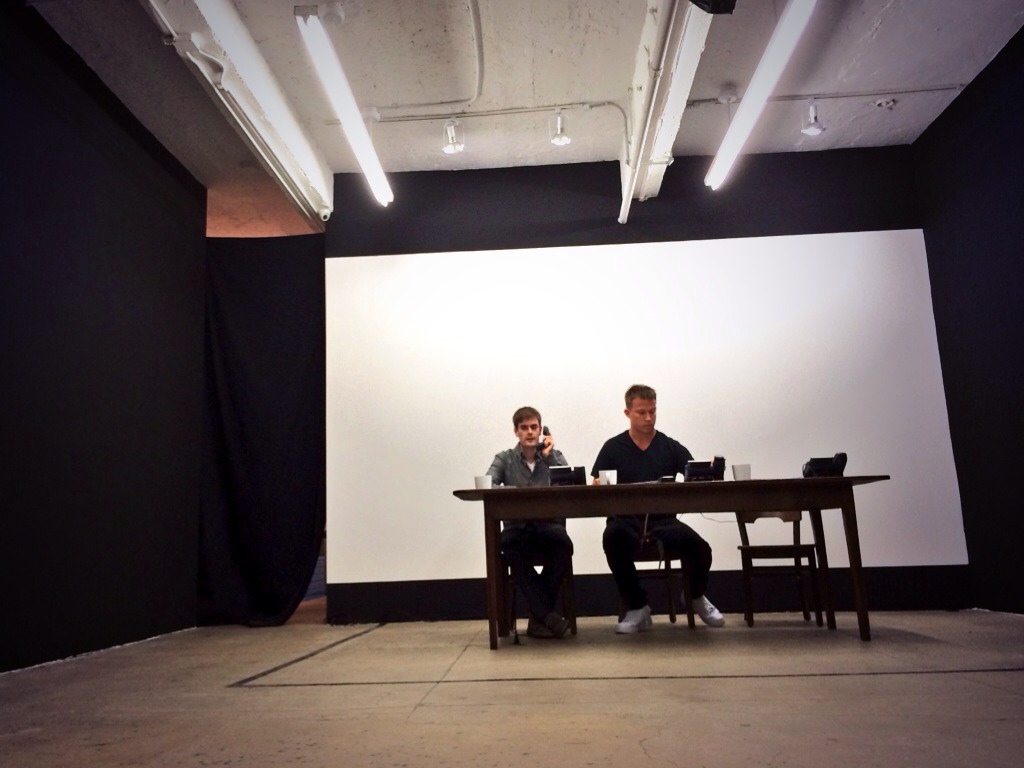
Yesterday, we learned that the most infamous Weird Twitter account, @Horse_ebooks, wasn’t a algorithmically-programmed “bot” but instead the product of a person tweeting as if. The revelation was accompanied by a live performance of the account in a Manhattan art gallery. While much is being written about the account, I’d like to share one thought about the live performance and what this all says about what is real and virtual, “bot” and human. In one day, @Horse_ebooks went from bot to human, and as I’ll argue, embodied in an art gallery, right back towards bot. more...
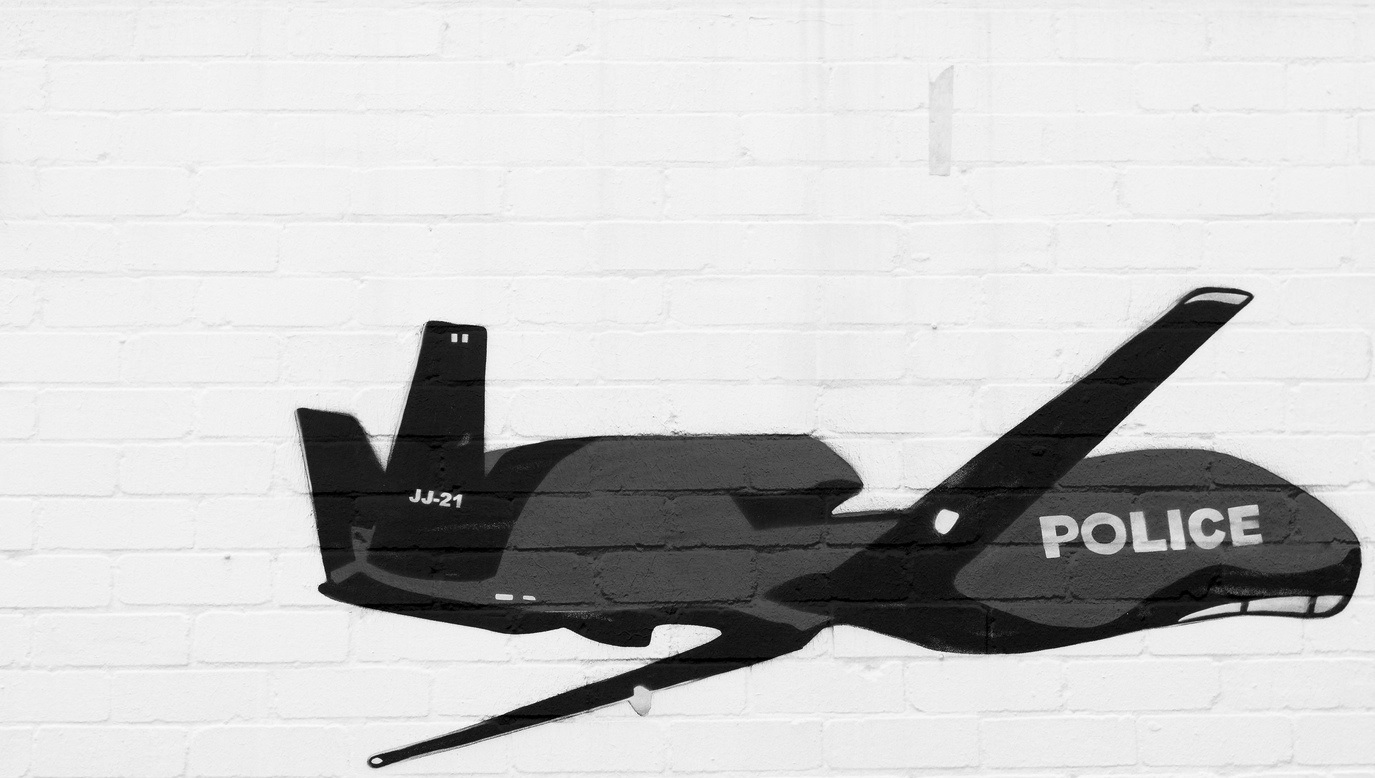
police-drone-graffitiAs drones become increasingly autonomous, there is growing concern that they lack some fundamentally “human” capacity to make good judgment calls. In the penultimate episode of this season’s Castle (yes, the Nathan Fillion-staring cheez-fest that is nominally a cop procedural)–titled “The Human Factor” (S5 E23)–addresses just this concern. In it, a bureaucrat explains how a human operator was able to trust his gut and, unlike the drone protocols the US military would have otherwise used, distinguish a car full of newlyweds from a car full of (suspected) insurgents. Somehow the human operator had the common sense that a drone, locked into the black and white world of binary code, lacked. This scene thus suggests that the “human factor” is that ineffable je ne sais quois that prevents us humans from making tragically misinformed judgment calls. more...

Over the last couple of weeks I’ve put together a two part essay/review-like object that explores how one particular work of science fiction speaks directly to certain ideas of what cyborgs are and what it means to be them, with an eye toward a broader appreciation for how fiction allows for a richer understanding of theory. The full piece is below.

Cyborg writing is about the power to survive, not on the basis of original innocence, but on the basis of seizing the tools to mark the world that marked them as other.  –Donna Haraway

Inanna cast down Tammuz and stamped upon him and put out his name like an eye. And because Tammuz was not strong enough, she cut him into pieces and said: half of you will die, and that is the half called Thought, and half of you will live, and that is the half called Body, and that half will labor for me all of its days, mutely and obediently and without being King of Anything, and never again will you sit on my chair or wear my beautiful clothes or bear my crown of being.

You might be surprised, but this is a story about me.  –Catherynne M. Valente

Speculative fiction and this blog are not strangers to each other; it’s been written about here before,  as a means to understanding how the present has come to look the way it does, and as a means for the imagining of potential futures (also zombies). Indeed, the term cyborg always brings with it a host of connotations firmly rooted within SF, however much it may also describe a current and very real state of being. The important thing to pay attention to here is the power of stories – the ways in which they can serve as a way to do theory in a kind of experimental setting that would otherwise be impossible. In SF – and in fiction in general – we can take the implications of theory and watch them play out, see what they would look like, solidify them in words and images, pick parts of them up and move them around. We can tweak settings and watch other worlds unfold in response.

more...

Photo by Howard Schatz

My post today comes from a class on ableism and disabled bodies that I taught earlier this past semester in my Social Problems course. Its inception came from the point at which I wanted to introduce my students to Donna Haraway’s concept of cyborgs, because I saw some useful connections between one and the other.

My angle was to begin with the idea of able-bodied society’s instinctive, gut-level sense of discomfort and fear regarding disabled bodies, which is outlined in disability studies scholar Fiona Kumari Campbell’s book Contours of Ableism. Briefly, Campbell distinguishes between disableism, which are the set of discriminatory ideas and practices that construct the world in such a way that it favors the able-bodied and marginalizes the disabled, and ableism, which is the set of constructed meanings that set disabled bodies themselves apart as objects of distaste and discomfort. In this sense, disabled bodies are imbued with a kind of queerness – they are Other in the most physical sense, outside and beyond accepted norms, unknown and unknowable, uncontrollable, disturbing in how difficult they are to pin down. Campbell identifies this quality of unknowability and uncontainability as especially, viscerally horrifying.

more...

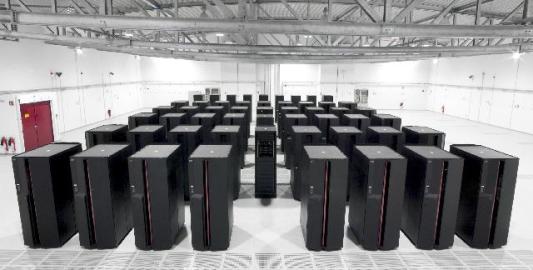
I attended a viewing and panel discussion for the final episode of Jeopardy! IBM Challenge in which IBM’s Watson supercomputer beat reigning champions Ken Jennings and Brad Rutter in a 3-night challenge of standard Jeopardy! games. Check out my previous post to read more about the tech behind Watson and what IBM hopes to do with this impressive technology.  This post will focus more on the public perception of Watson, and what it means to have a technology that is credited with producing very accurate conclusions based on complex data.

The panel discussion and viewing event was hosted at Rensselaer Polytechnic Institute in Troy, NY.  In the interest of full disclosure- I am currently enrolled as an M.S./Ph.D student in RPI’s Science and Technology Studies Dept.  It’s also worth noting that Principal Investigator, David Ferrucci; research scientist Chris Welty; and Senior Software Engineer Adam Lally, are all RPI alumni.

I asked a few RPI students, during the preceding reception, two questions: 1) what they foresaw as the first application of Watson, and 2) whether or not they were afraid of Watson.  A group of three guys, Alex, Sean, and Thomas wanted to see this technology replace the Google algorithm or WebMD.  Two women, Anna and Karen, repeated what they’d heard the previous night, that Watson would be a tool to deal with “information overload.”  For the second question, all five students seemed puzzled.  How could a machine that sorts data, be evil? more...