

After my annual in-class Race and Halloween conversation, one of my students sent me this BuzzFeed link. Check it out, and then see below for commentary.
After my annual in-class Race and Halloween conversation, one of my students sent me this BuzzFeed link. Check it out, and then see below for commentary.

There are no more media in the literal sense of the word (I’m speaking particularly of electronic mass media) – that is, of a mediating power between one reality and another, between one state of the real and another. Neither in content, nor in form. Strictly, this is what implosion signifies. The absorption of one pole into another, the short-circuiting between poles of every differential system of meaning, the erasure of distinct terms and oppositions, including that of the medium and of the real… Circularity of all media effects. Hence the impossibility of meaning in the literal sense of a unilateral vector that goes from one pole to another. One must envisage this critical but original situation at its very limit: it is the only one left us… the medium and the real are now in a single nebula whose truth is indecipherable.
Jean Baudrillard, Simulacra and Simulation
Halloween is said to be a secularized celebration of the traditional Christian holiday, All Hallows Eve (itself appropriated from pagan ceremonies to remember the dead). This, of course, is false. Symbols of death and of our connection to what lies beyond (e.g., pumpkins, jack-o-lanterns, ghosts, witches, etc.) do little more than provide a textured backdrop to masses of fantasy heroes/heroines, sexy [fill-in-the-blank], cross-dressers, and, increasingly, it seems, racial/cultural appropriators. During Halloween, we do not celebrate our traditions; we cannibalize them. And, that is what makes Halloween unique. Halloween is a celebration of the present–a reveling in the zeitgeist of our time. Halloween is the quintessence of our post-Modern cultural logic. more...

Happy Halloween Week, everyone!! As much as I love free candy from strangers and the widespread creativity of costuming, Halloween inevitably brings with it a darker reality—and I’m not talking about monsters or ghouls. Unfortunately, Halloween becomes a showcase of Americans’ systemic racism, as displayed through ill-conceived racially fraught costume choices.
Below, I’ve compiled some nice resources to share with undergraduate students (or anyone, really) to facilitate discussions about and dissuasion from, the racist choices so many people make this time of year.
Keep in mind, the most effective form of anti-racist conversation is the one that happens *before* someone has a chance to engage in racist behavior. You get to avoid all of the messy defensiveness.
This list is far from exhaustive, but has some really useful material. Additional suggestions welcome in the comments section
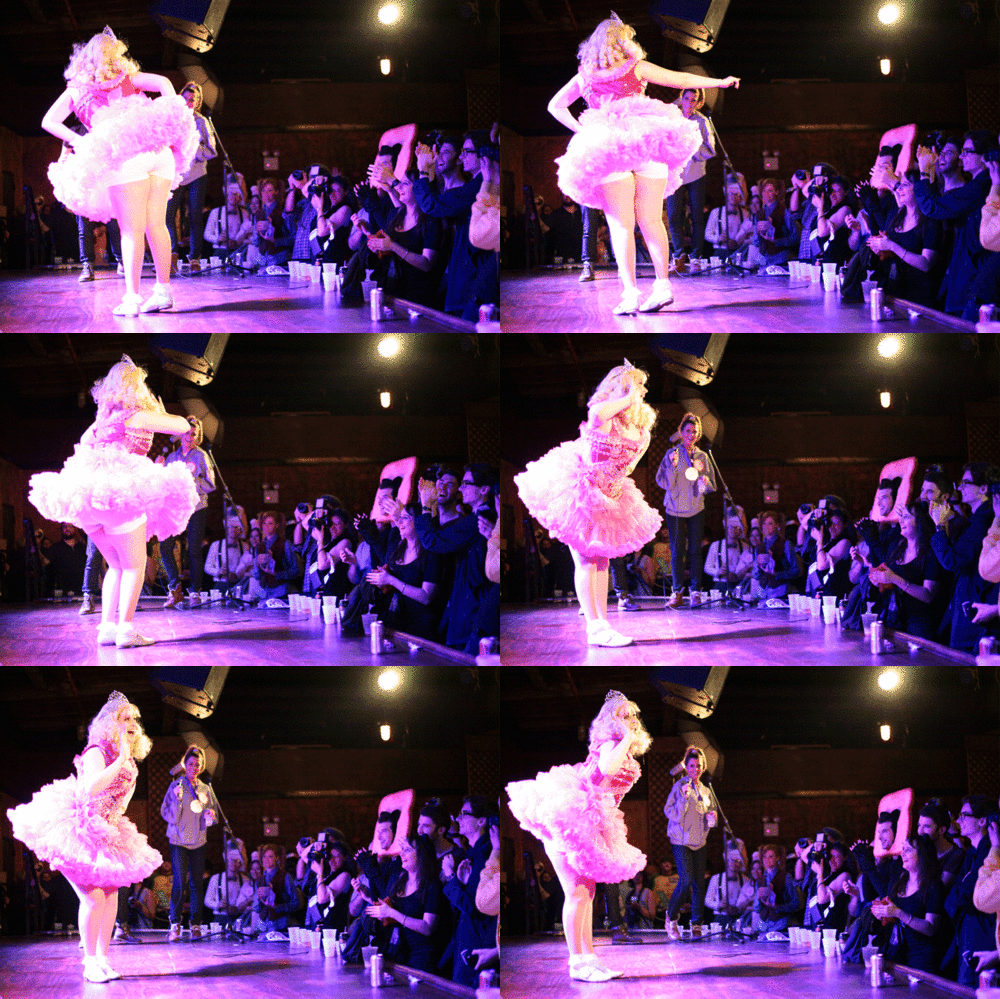
This is a GIF picture from the 4th Annual Hallowmeme costume party in New York City. I got it from this awesome AngleFire site I found: http://www.hallowme.me. I couldn’t go because it was too expensive and none of my friends with licenses wanted to go. What is up with that? Sometimes I think people who are really excited to get some government document are secretly lame. Its like the government tells people to think that the people with licenses are cool so that people will get more licenses. I don’t think making people drive cars to get places is a great way to build cities and towns, etc. What is up with that? Anyway, I think its interesting that people like to dress up like things on the Internet and take pictures of each other and put them back on the Internet. more...
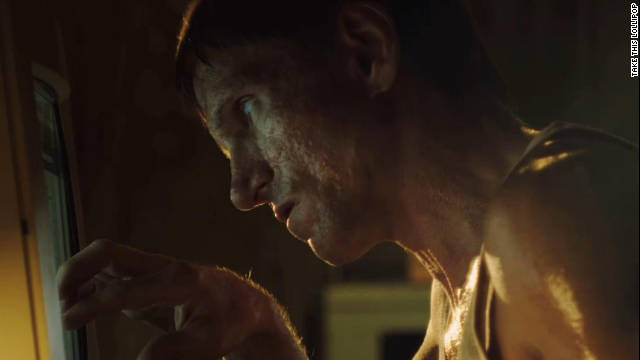
A short psychological thriller titled “Take This Lollipop” has been circulating The Net just in time for Halloween. This video depicts a presumably psychotic man (pictured above) hacking into and becoming irate about, YOUR Facebook page. Not only does the video literally embody fears about digital security, but captures numerous aspects of the web 2.0 culture. The experience is personalized and interactive, as the video incorporates actual content from each viewer’s Facebook page. The experience is augmented, as the viewer’s heavily digital experience (watching an online video, about digital insecurity, incorporating the viewer’s own digital persona) elicits corporeal fear. Finally, the experience is broadcast and re-documented, as people tape themselves watching the video and share their reactions on YouTube (see one after the jump). more...