
Gamification

I’m posting to get some feedback on my initial thoughts in preparation for my chapter in a forthcoming gamification reader. I’d appreciated your thoughts and comments here or @pjrey.

My former prof Patricia Hill Collins taught me to begin inquiry into any new phenomenon with a simple question: Who benefits? And this, I am suggesting, is the approach we must take to the Silicon Valley buzzword du jure: “gamification.” Why does this idea now command so much attention that we feel compelled to write a book on it? Does a typical person really find aspects of his or her life becoming more gamelike? And, who is promoting all this talk of gamification, anyway?

It’s telling that conferences like “For the Win: Serious Gamification” or “The Gamification of Everything – convergence conversation” are taking place in business (and not, say, sociology) departments or being run by CEOs and investment consultants. The Gamification Summit invites attendees to “tap into the latest and hottest business trend.” Searching Forbes turns up far more articles (156) discussing gamification than the New York Times (34) or even Wired (45). All this makes TIME contributor Gary Belsky seems a bit behind the time when he predicts “gamification with soon rule the business world.” In short, gamification is promoted and championed—not by game designers, those interested in game studies, sociologists of labor/play, or even computer-human interaction researchers—but by business folks. And, given that the market for videogames is already worth greater than $25 billion, it shouldn’t come as a surprise that business folk are looking for new growth areas in gaming.

more...

The Pew Internet and American Life Project released a survey collecting expert opinions on one a hot new(-ish) concept amongst the Silicon Valley digerati: gamification. The survey offers some interesting insights and features commentary from folks like danah boyd, Clay Shirky, Jeff Jarvis, and Amber Case; it also cites me a bit talking playbor (play + labor) and weisure (work + leisure).

The survey shows that tech commentators are split on whether gamification is destined to become an ubiquitous feature of the Web (53% agree, 42% disagree). The subtext of these sorts of conversations—given that tech commentators overwhelmingly have backgrounds in business—is: How can we use gamification to make a killing. We shouldn’t be to suprised about all the excitement from those invested in the tech industry. After all, gamification is all about getting people to view labor (i.e., the production if value) as play. And, if workers don’t view work as work, they may just do it for free.

more...

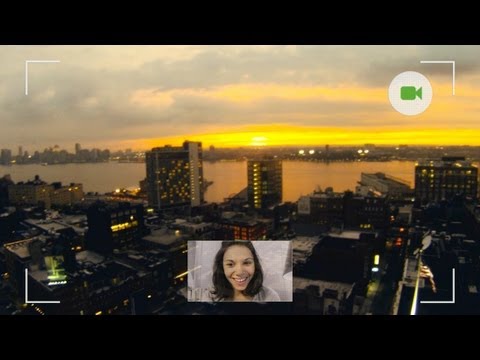
Google’s “Project Glass,” is the Augmented Reality (AR) Heads-up-Display (HUD) glasses offering that Google is designing for a near future Internet interactive experience.

YouTube Preview Image

(Video credit: Google)

From watching their demonstration video, I certainly have some questions and observations. Google’s vision (no pun intended) of the future is a place where people ignore women except as witnesses to their achievements, talk with their mouth full, and put their live friends on hold to interact with a machine (oh wait, that’s what people do now); and is one without ads (wait…what?). Thankfully, rebelliouspixels mixed them in: more...

MVS Virtual Cable™ and Virtual Signs™

In early February, I attended a fascinating conference hosted by the Telecom Council of Silicon Valley. This is a first rate organization and the conference did not disappoint. Many executives were present from various telecom, mobile, middleware, AR, audio, video, electronics and computer companies to discuss the future of the “connected car.”

The car is apparently one of the next battlefields for ownership of our personal data and privacy. It is an intimate environment and there will soon be enough sensors to document every human habit and behavior within it. While cars will become the panoptic reporter to our every move, people will also be burdened with an overwhelming amount of data ostensibly aimed at “aiding” them in the driving task. There will be touch activated windshields, Augmented Reality (AR) navigation lines projected onto the windshield that guide drivers on a track of navigation, and the blending of both scenarios with the addition of ads showing up on screen. Audio feedback based on sensor activity is currently available as a service in certain commercial vehicles. Installed sensors monitor driver behavior and provide immediate audio feedback if a driver changes lanes suddenly, is speeding or engages in other unsafe behaviors. more...